Classics in Women’s Studies - Böcker
Visar alla böcker i serien Classics in Women’s Studies. Handla med fri frakt och snabb leverans.
8 produkter
8 produkter
434 kr
Skickas inom 10-15 vardagar
Originally published as Course of Popular Lectures, the works collected in this volume display the gift for oratory and range of progressive ideas that made Frances Wright (1795-1852) both a sought-after lecturer and a controversial figure in early nineteenth-century America.Born in Scotland, this pioneering freethinker and abolitionist emigrated to America in her twenties and became friends with Thomas Jefferson and James Madison. In 1828, she joined Robert Dale Owen's socialist community at New Harmony, Indiana, and helped him edit his New Harmony Gazette. The next year she and Owen moved to New York City, where they published Free Enquirer, which advocated liberalized divorce laws; birth control; free, state-run, secular education; and organization of the disadvantaged working class. It was at this time that she began delivering the popular lectures here collected. Some persistent themes that run throughout these well-argued pieces are: the importance of free, impartial inquiry conducted in a scientific spirit and not influenced by religious superstition or popular prejudice; the need for better, universal education that trains young minds in scientific inquiry rather than religious dogma; the advantage of focusing on the facts of the here-and-now rather than theological speculations; and the failure of American society to live up to its noble ideals of equality and justice for all. With an insightful introduction by Wright scholar Susan S. Adams (Emeritus Professor of English, Northern Kentucky University), these stimulating lectures by an early feminist and freethinker will be of interest to students and scholars of women's studies, humanism, and freethought.
365 kr
Skickas inom 10-15 vardagar
In 1915, shortly after the outbreak of World War I, between twelve hundred and two thousand women representing twelve nations journeyed to The Netherlands to plead for peace at The Hague. At this first International Congress of Women they called for "continuous mediation" until peace was restored, and they met with representatives of the warring governments in an idealistic attempt to halt the military clash. Although they did not stop the war, their proposals are still used as guidelines for most diplomatic negotiations between hostile nations.Three highly talented, progressive women led the American delegation: two Nobel Peace Prize winners--Jane Addams (cofounder of Hull-House in Chicago) and Emily G. Balch (a distinguished sociologist who taught at Wellesley College)--as well as Alice Hamilton (the first industrial physician in the United States and also the first woman to join the faculty of Harvard University).This book is the first-hand report by these three remarkable women of their mission for peace. Balch and Hamilton devote several chapters to a description of their travels, their visits with various heads of state, and meetings with pacifists in different countries. In a controversial chapter, Addams sharply criticizes the older male patriarchal leadership that manipulates young men to fight needless wars. Addams concludes the volume by advocating women's full participation as voting citizens to promote the cause of peace and the spirit of internationalism.This edition is enhanced by an introduction by University of Nebraska scholar Mary Jo Deegan, this new edition of a valuable historical document will be of interest to students of women's studies, history, and international relations.
354 kr
Skickas inom 10-15 vardagar
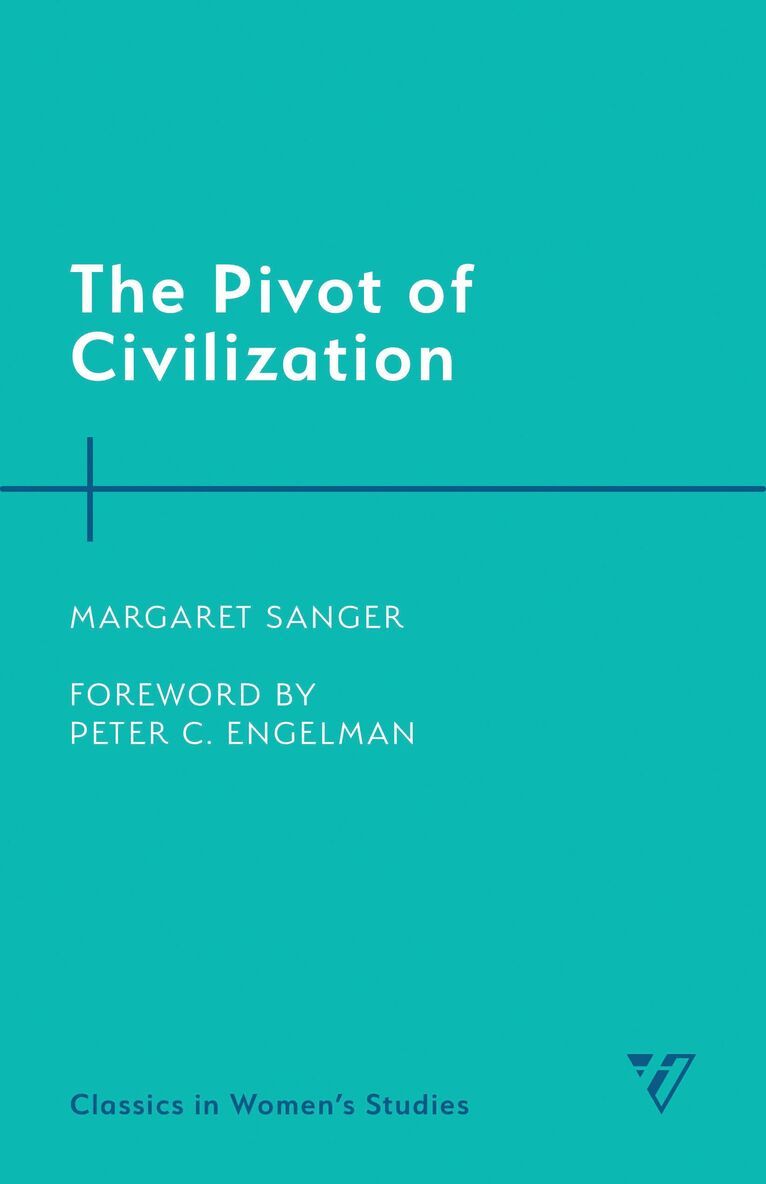
Arguably her most important and influential book, this controversial work, first published in 1922 by pioneering birth-control advocate Margaret Sanger, attempted to broaden the still-radical idea of birth control beyond its socialist and feminist roots. Moving away from a single-minded focus on women's reproductive rights to the larger issue of the general health and economic prosperity of the whole human race, Sanger argued that birth control was pivotal to a rational approach toward dealing with the threat of overpopulation and its ruinous consequences in poverty and disease. Through this book Sanger hoped to persuade the medical establishment to assume control over contraceptive distribution, and thereby to lessen the religious, legal, and moral opposition that continued to restrict access to contraceptive information. However important this book is to the history of women's rights, it remains a very problematic work from our more scientifically informed perspective today. In arguing for population control Sanger made frequent reference to the then fashionable "science" of eugenics. She also adopted its rhetoric, using such callous phrases as "the feeble-minded" and the "unfit" and advocating birth control as a means of limiting the breeding of "defectives, delinquents and dependents." Although she incorporated views and terminology commonly held in respectable medical and scientific circles of the day, Sanger's writings on eugenics, and this book in particular, have become fodder for her critics both on the left and the right, who seek to diminish her achievements and obscure what is ultimately a powerful feminist message: when women gain greater control over their fertility, they will improve the human race. This unusual and historically significant book is complemented by a thoughtful and informative introduction by Peter C. Engelman, assistant editor of The Margaret Sanger Papers Project, who provides much insight by placing this work in the context of the age and Sanger's life.
434 kr
Skickas inom 10-15 vardagar
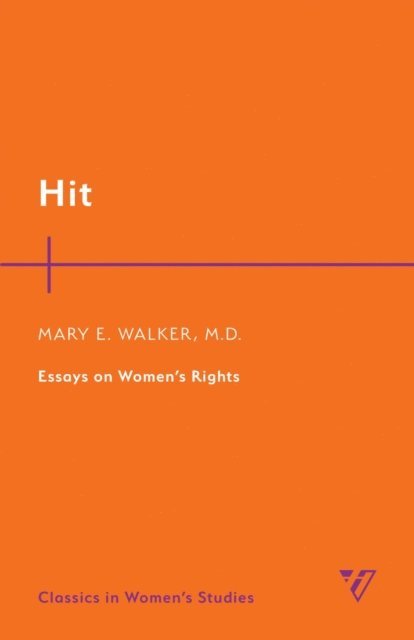
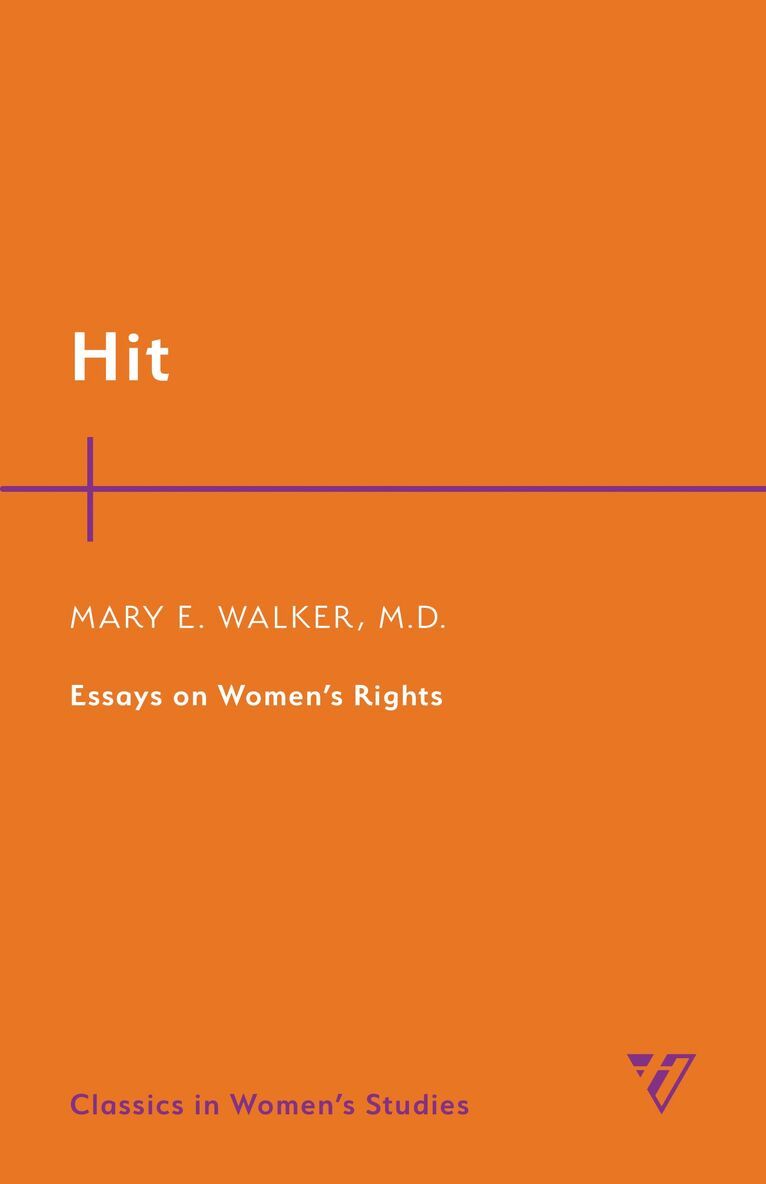
The only woman to receive the Congressional Medal of Honor for her service during the Civil War, Dr. Mary E. Walker (1832-1919) was a surgeon, a public lecturer, and an outspoken champion of women's rights. One of the first women in the country to be awarded a medical degree, she served as an assistant surgeon for the 52nd Ohio Infantry and was cited for valor in going behind enemy lines to attend to the sick. Though her early career was highly distinguished, her subsequent life became controversial and, in some respects, tragic. Always a woman of great independence, she publicly expressed strong opinions about the need for women's rights and harshly criticized prevailing patriarchal attitudes and the enforced subservience of women. After the war she published Hit, an enigmatically titled book in which she advanced her radical ideas on topics from love and marriage and dress reform to woman's suffrage and religion. With an insightful foreword by Walker specialist Mercedes Graf (professor of psychology, Governors State University, University Park, Illinois), this new edition of a little-known work by a pioneering feminist will be of great interest to anyone concerned about women's rights.
447 kr
Skickas inom 10-15 vardagar
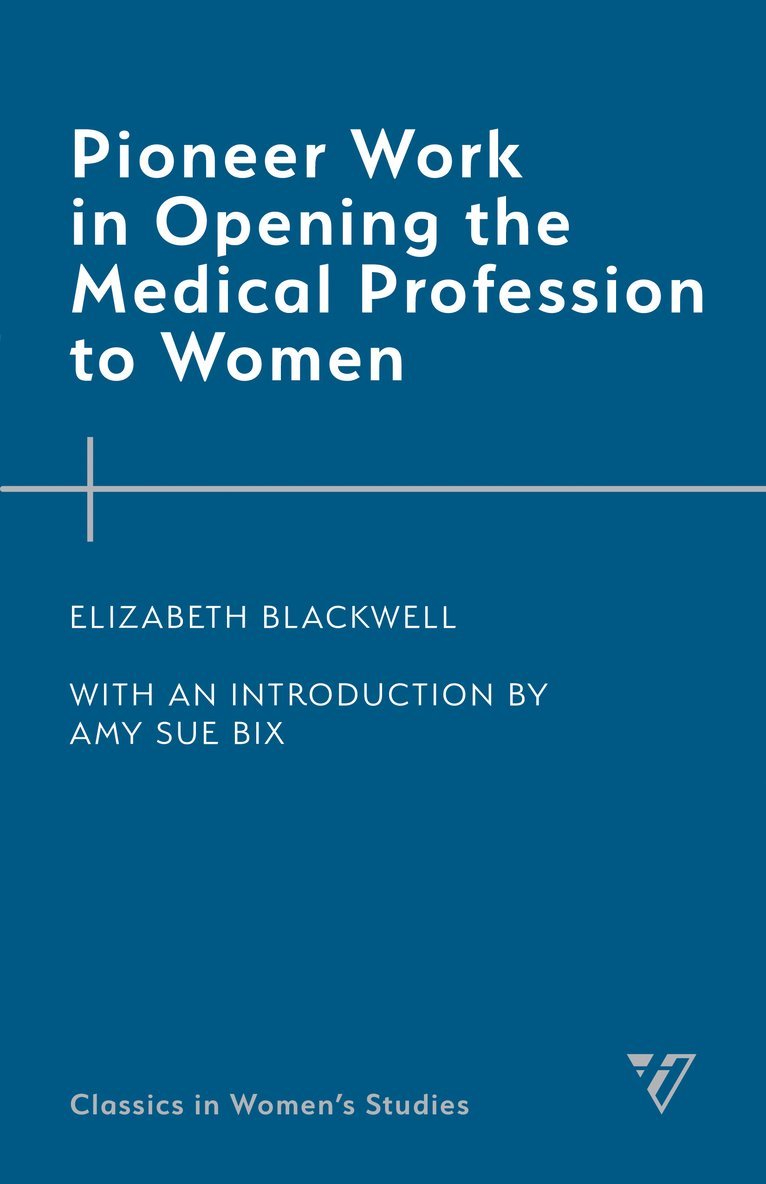
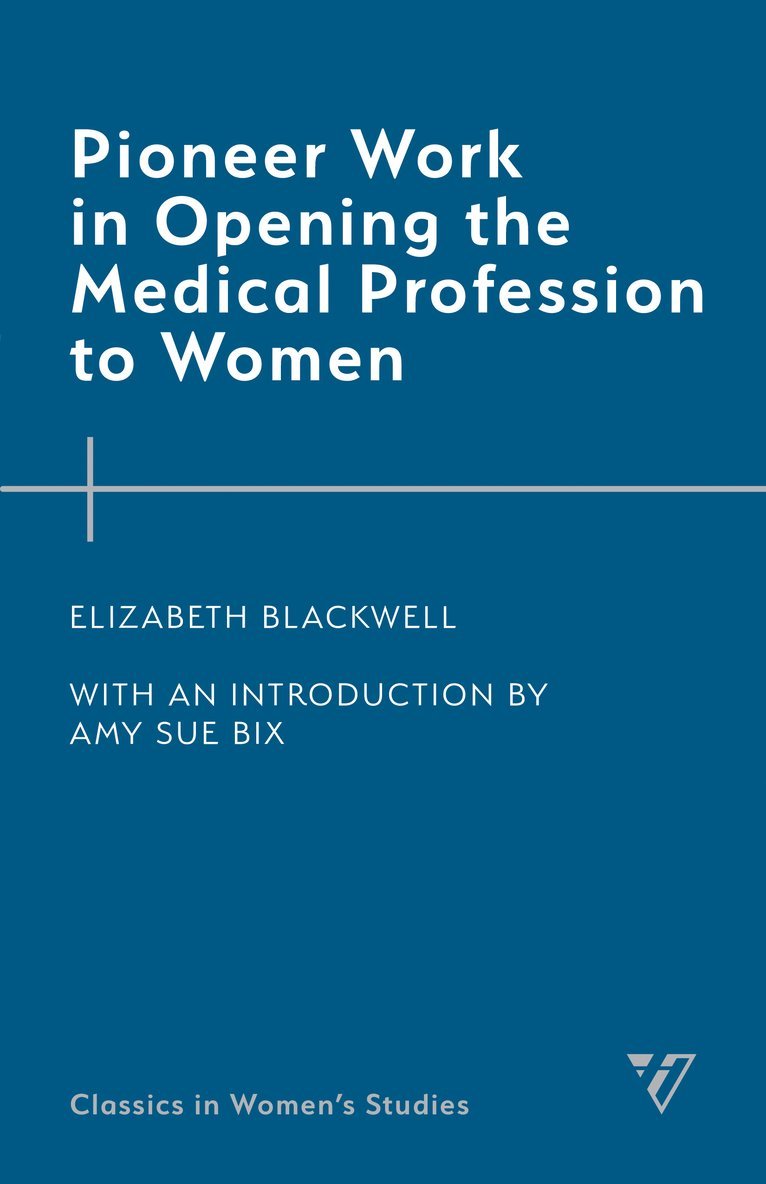
Elizabeth Blackwell (1821-1910) was the first woman awarded the MD degree in the United States. She opened up a small dispensary of her own in a slum district, and in 1859 the now greatly enlarged dispensary was incorporated as the New York Infirmary for Women and Children. By 1868, after consultation with Florence Nightingale, she was able to open up the Woman’s Medical College at the infirmary, which remained in operation for thirty-one years. During the American Civil War she performed valuable service by helping to organize the Woman’s Central Association of Relief, which selected and trained nurses for the war, and the U.S. Sanitary Commission. In 1869, Blackwell moved permanently to England, where she established a successful private practice and was appointed professor of gynecology at the London School of Medicine for Women. She retired in 1907. Pioneer Work in Opening the Medical Profession to Women is the story of Elizabeth Blackwell’s groundbreaking struggle to practice medicine, eloquently told in her own words. Full of insightful reflections on the philosophy of medicine, women's education, the evils of slavery, and the nature of American society in the nineteenth century, this unique autobiography will interest scholars and students of women's studies and the history of science.
1 142 kr
Skickas inom 10-15 vardagar
The only woman to receive the Congressional Medal of Honor for her service during the Civil War, Dr. Mary E. Walker (1832-1919) was a surgeon, a public lecturer, and an outspoken champion of women's rights. One of the first women in the country to be awarded a medical degree, she served as an assistant surgeon for the 52nd Ohio Infantry and was cited for valor in going behind enemy lines to attend to the sick. Though her early career was highly distinguished, her subsequent life became controversial and, in some respects, tragic. Always a woman of great independence, she publicly expressed strong opinions about the need for women's rights and harshly criticized prevailing patriarchal attitudes and the enforced subservience of women. After the war she published Hit, an enigmatically titled book in which she advanced her radical ideas on topics from love and marriage and dress reform to woman's suffrage and religion. With an insightful foreword by Walker specialist Mercedes Graf (professor of psychology, Governors State University, University Park, Illinois), this new edition of a little-known work by a pioneering feminist will be of great interest to anyone concerned about women's rights.
1 177 kr
Skickas inom 10-15 vardagar
Elizabeth Blackwell (1821-1910) was the first woman awarded the MD degree in the United States. She opened up a small dispensary of her own in a slum district, and in 1859 the now greatly enlarged dispensary was incorporated as the New York Infirmary for Women and Children. By 1868, after consultation with Florence Nightingale, she was able to open up the Woman’s Medical College at the infirmary, which remained in operation for thirty-one years. During the American Civil War she performed valuable service by helping to organize the Woman’s Central Association of Relief, which selected and trained nurses for the war, and the U.S. Sanitary Commission. In 1869, Blackwell moved permanently to England, where she established a successful private practice and was appointed professor of gynecology at the London School of Medicine for Women. She retired in 1907. Pioneer Work in Opening the Medical Profession to Women is the story of Elizabeth Blackwell’s groundbreaking struggle to practice medicine, eloquently told in her own words. Full of insightful reflections on the philosophy of medicine, women's education, the evils of slavery, and the nature of American society in the nineteenth century, this unique autobiography will interest scholars and students of women's studies and the history of science.
301 kr
Skickas inom 10-15 vardagar
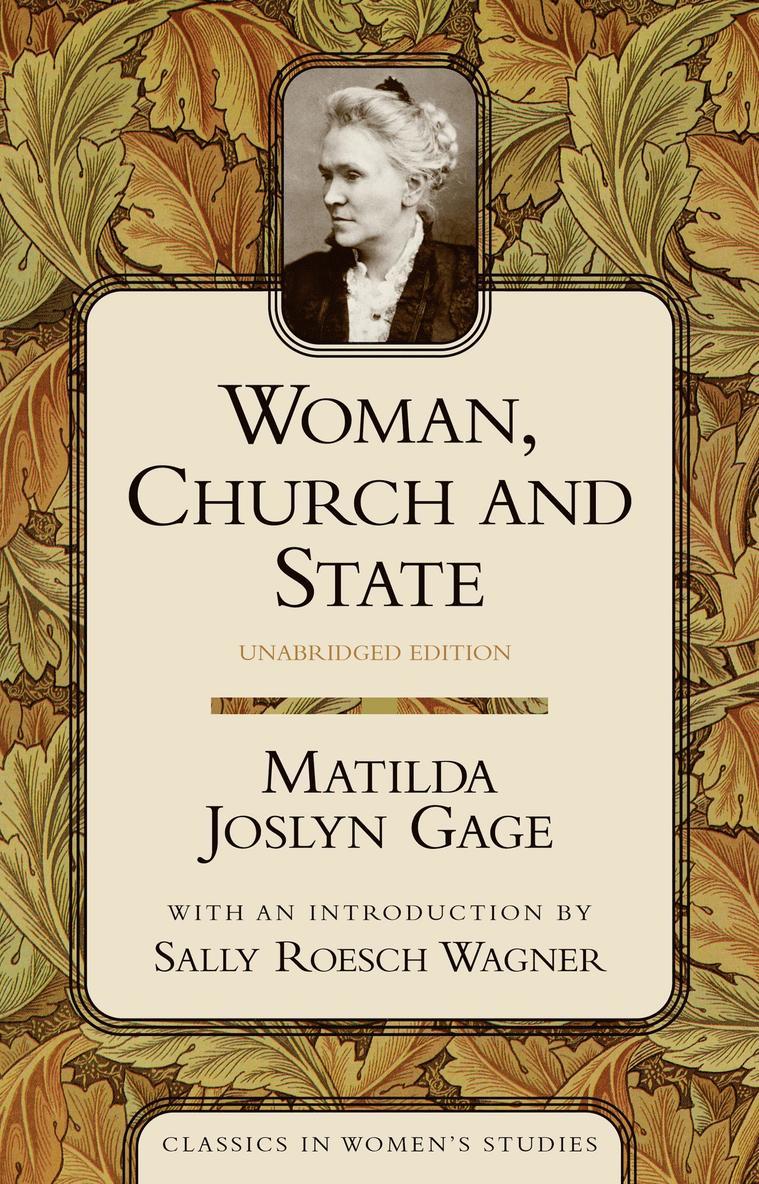
This classic history of woman's oppression is one of the first attempts to document the sad legacy of injustice and discrimination against women, which is unfortunately inseparable from the history of both Christianity and the evolution of the Western state. Beginning in the pre-Christian era, where she finds more evidence of freedom for women than in subsequent eras, pioneering women's rights advocate Matilda Joslyn Gage traces the patterns of male domination in both church and state that kept women in virtual bondage. Among the topics of her research is the medieval exaltation of celibacy as an expression of the male belief that women were unclean and the cause of original sin, the gross discrimination against women in canon law, abuse of women in the feudal system, the persecution of women as witches, the virtual slave status of wives and their almost total legal subjugation to their husbands, toleration of polygamy, the debilitating drudgery of woman's daily work, and the widespread opposition to women's education by both church and state.Perhaps the most farseeing and radical of the early feminists, Gage had the vision to realize that society's fundamental institutions had to be drastically reformed before women would begin to enjoy equal rights. Many of her concerns sound very modern: she deplored the unequal treatment of the prostitute vs. her client, the practice of non-conviction or of pardoning in rape trials, unequal pay, wife battering, the sexual abuse of female children, and many other abuses that only today are being seriously addressed. Originally published in 1893, this work was the fruit of twenty years of research and should be read by everyone who supports equality between men and women.This new edition is complemented by an introduction by renowned author, lecturer, and historical performer Sally Roesch Wagner, who helped found one of the country's first programs in women's studies. She is executive director of the Matilda Joslyn Gage Foundation.