Collected Works of George L. Mosse – serie
Visar alla böcker i serien Collected Works of George L. Mosse. Handla med fri frakt och snabb leverans.
9 produkter
9 produkter
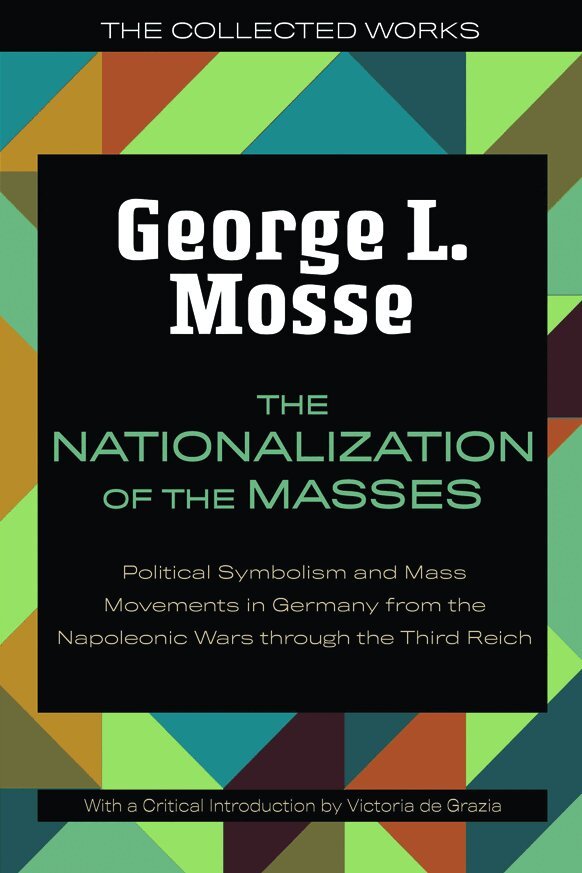
Nationalization of the Masses
Political Symbolism and Mass Movements in Germany from the Napoleonic Wars Through the Third Reich
Häftad, Engelska, 2023
241 kr
Skickas inom 10-15 vardagar
First published in 1975, The Nationalization of the Masses is George L. Mosse’s major statement about political symbols and the means of their diffusion. Focusing on Germany and, to a lesser degree, France and Italy, Mosse analyzes the role of symbols in fueling mass politics, mass movements, and nationalism in a way that is broadly applicable and as relevant today as it was almost fifty years ago. In this analysis Mosse introduces terms like “secular religion,” “political liturgy,” “national mystique,” “the new politics,” and “the aesthetics of politics” that are now standard in studies of nationalism and fascism, demonstrating the importance of his cultural, anthropologically informed lens to contemporary discourse. This new edition contains a critical introduction by Victoria de Grazia, Moore Collegiate Professor of History at Columbia University, contextualizing Mosse’s research and exploring its powerful influence on subsequent generations of historians.
241 kr
Skickas inom 10-15 vardagar
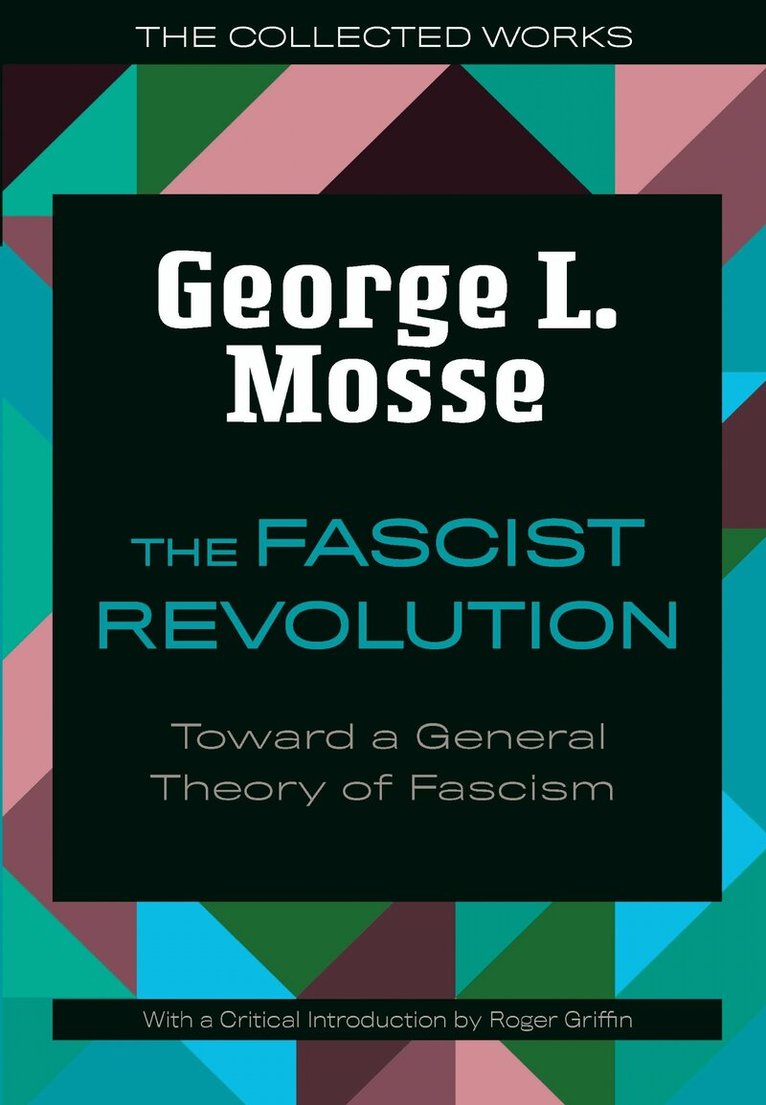
The Fascist Revolution is the culmination of George L. Mosse's groundbreaking work on fascism. Originally published posthumously in 1999, the volume covers a broad spectrum of topics related to cultural interpretations of fascism from its origins through the twentieth century. In a series of magisterial turns, Mosse examines fascism's role in the French Revolution, its relationship with nationalism and racism, its use by intellectuals to foment insurrection, and more as a means to define and understand it as a popular phenomenon on its own terms. This new edition features a critical introduction by Roger Griffin, professor emeritus of modern history at Oxford Brookes University, contextualizing Mosse's research as fascism makes a global resurgence.
241 kr
Skickas inom 10-15 vardagar
The Culture of Western Europe, George L. Mosse’s sweeping cultural history, was originally published in 1961 and revised and expanded in 1974 and 1988. Originating from the lectures at the University of Wisconsin–Madison for which Mosse would become famous, the book addresses, in crisp and accessible language, the key issues he saw as animating the movement of culture in Europe. Mosse emphasizes the role of both rational and irrational forces in making modern Europe, beginning with the interplay between eighteenth-century rationalism and nineteenth-century Romanticism. He traces cultural and political movements in all areas of society, especially nationalism but also economics, class identity and conflict, religion and morality, family structure, medicine, and art. This new edition restores the original 1961 illustrations and features a critical introduction by Anthony J. Steinhoff, professor in the department of history at the UniversitÉ du QuÉbec À MontrÉal, contextualizing Mosse’s project and arguing for its continued relevance today.
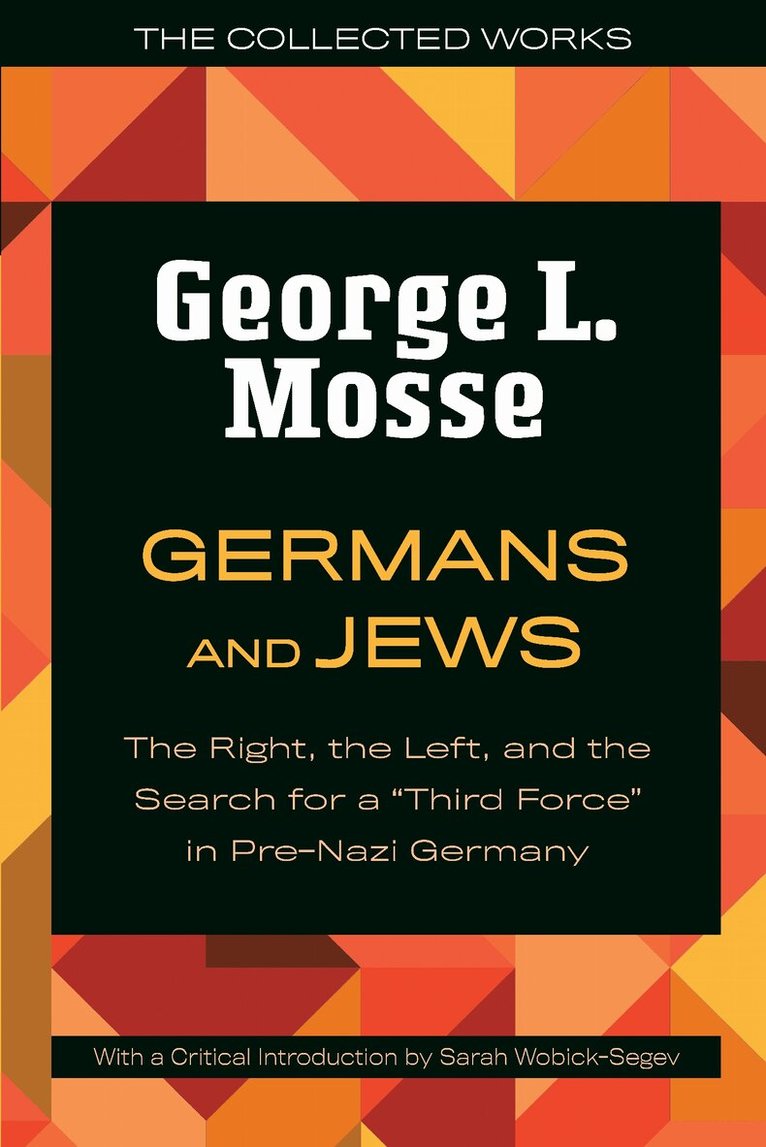
Germans and Jews
The Right, the Left, and the Search for a "Third Force" in Pre-Nazi Germany
Häftad, Engelska, 2023
241 kr
Skickas inom 10-15 vardagar
Originally published in 1970, Germans and Jews brings together George L. Mosse’s thoughts on a critical time in German history when thinkers on both the left and the right shared a common goal. In the late nineteenth and early twentieth centuries, intellectuals across the political spectrum aimed to solve the problems of contemporary society by creating a force that would eliminate both state Marxism and bourgeois society: a “third force” beyond communism and capitalism. This pervasive turn in ideology had profound effects on German history. In Mosse’s reading, left-wing political efforts became increasingly unrelated to reality, while the right finally discovered in fascism the force it had been seeking.This innovative perspective has implications for understanding not only the rise of fascism and Nazism in Germany but also the rise and fall of the New Left in the United States and Europe, which was occurring at the time of Mosse’s writing. A new critical introduction by Sarah Wobick-Segev, research associate at the University of Hamburg, places Mosse’s work in its historical and intellectual contexts and draws lessons for students and scholars today.
241 kr
Skickas inom 10-15 vardagar
Confronting the Nation brings together twelve of celebrated historian George L. Mosse’s most important essays to explore competing forms of European nationalism in the nineteenth and twentieth centuries. Mosse coins the term “civic religion” to describe how nationalism, especially in Germany and France, simultaneously inspired and disciplined the populace through the use of rituals and symbols. The definition of citizenship shaped by this nationalism, however, frequently excluded Jews, who were stereotyped as outsiders who sought to undermine the national community. With keen attention to liberal forms of nationalism, Mosse examines the clash of aspirational visions of an inclusive nation against cultural registers of nativist political ideologies. Mosse considers a broad range of topics, from Nazi book burnings to Americans’ search for unifying national symbols during the Great Depression, exploring how the development of particular modes of art, architecture, and mass movements served nationalist agendas by dictating who was included in the image of the nation. These essays retain their significance today in their examination of the cultural and social implications of contemporary nationalism. A new critical introduction by Shulamit Volkov, professor emerita of history at Tel Aviv University, situates Mosse’s analysis within its historiographical context.
310 kr
Skickas inom 10-15 vardagar
In fourteen essays that speak to the full breadth of George L. Mosse’s intellectual horizons and scholarly legacy, Masses and Man explores radical nationalism, fascism, and Jewish modernity in twentieth-century Europe. Breaking from the conventions of historical analysis, Mosse shows that “secular religions” like fascism cannot be understood only as the products of socioeconomic or intellectual histories but rather must be approached first and foremost as cultural phenomena.Masses and Man comprises three parts. The first lays out a cultural history of nationalism, essentially the first of its kind, emphasizing the importance of sacred expressions like myths, symbols, and rituals as appropriated in a political context. The second zeroes in on fascism’s most dramatic irruptions in European history in the rise of Italian Fascism and the Nazi Party in Germany, elucidating these as not just political movements but also cultural and even aesthetic ones. The third part considers nationalism and fascism from the particular standpoint of German Jews.Taken in full, the volume offers an eloquent summation of Mosse’s groundbreaking insights into European nationalism, fascism, and Jewish history in the twentieth century. A new critical introduction by Enzo Traverso helpfully situates Mosse’s work in context and exposes the many ways in which Masses and Man, first published in 1980, remains relevant today.
241 kr
Skickas inom 10-15 vardagar
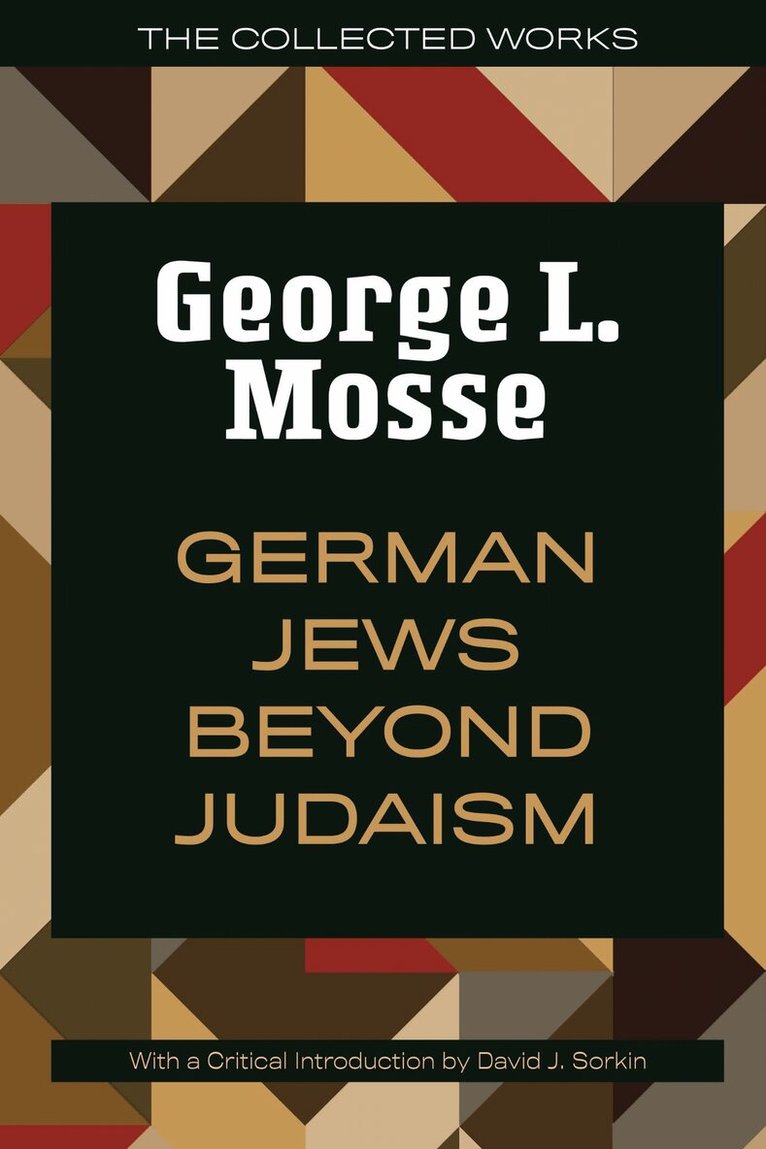
First published in 1985, German Jews Beyond Judaism is George L. Mosse’s sweeping exploration of German Jewish secular identity across the nineteenth and twentieth centuries. In Germany, Jews were emancipated at a time when cultural education was becoming an integral part of German society. They felt a powerful urge to find their Jewish substance within German culture and thus craft an identity as both Germans and Jews. Mosse argues that they did so by adopting the concept of Bildung―the idea of intellectual and moral self-cultivation―combined with key Enlightenment ideals of human potential, individualism, and the connection between knowledge and morality through aesthetics. He traces how Jewish artists, writers, and thinkers actively sought to participate in German culture through popular culture, scholarship, and political activity. Despite the eventual dissolution of German-Jewish dialogue due to the emergence of a virulently racist nationalism, important Jewish heritage emerged as a result of this attempt to integrate both identities.German Jews Beyond Judaism was, in Mosse’s own estimation, his “most personal book, almost a confession of faith.” David J. Sorkin’s new critical introduction illustrates how Mosse’s life and values both shaped and exemplified his historical analysis and offers potential meanings of his intellectual legacy for the present day.
306 kr
Skickas inom 7-10 vardagar
The revised and updated edition of a seminal text, Europe in the Sixteenth Century weaves the distinct histories of various European states into a vivid and complex tapestry. Focusing on similarities of experience across borders, including the centralization of town life and development of market economics, the authors reexamine familiar subjects of the era—from religious upheaval to imperial conflict to artistic revolutions—creating a dynamic, unified narrative of change. This third edition features a new introduction by Magda Teter, tracing the influence of H. G. Koenigsberger, George L. Mosse, and G. Q. Bowler’s work on the historiography of Europe well into the twenty-first century.
292 kr
Kommande
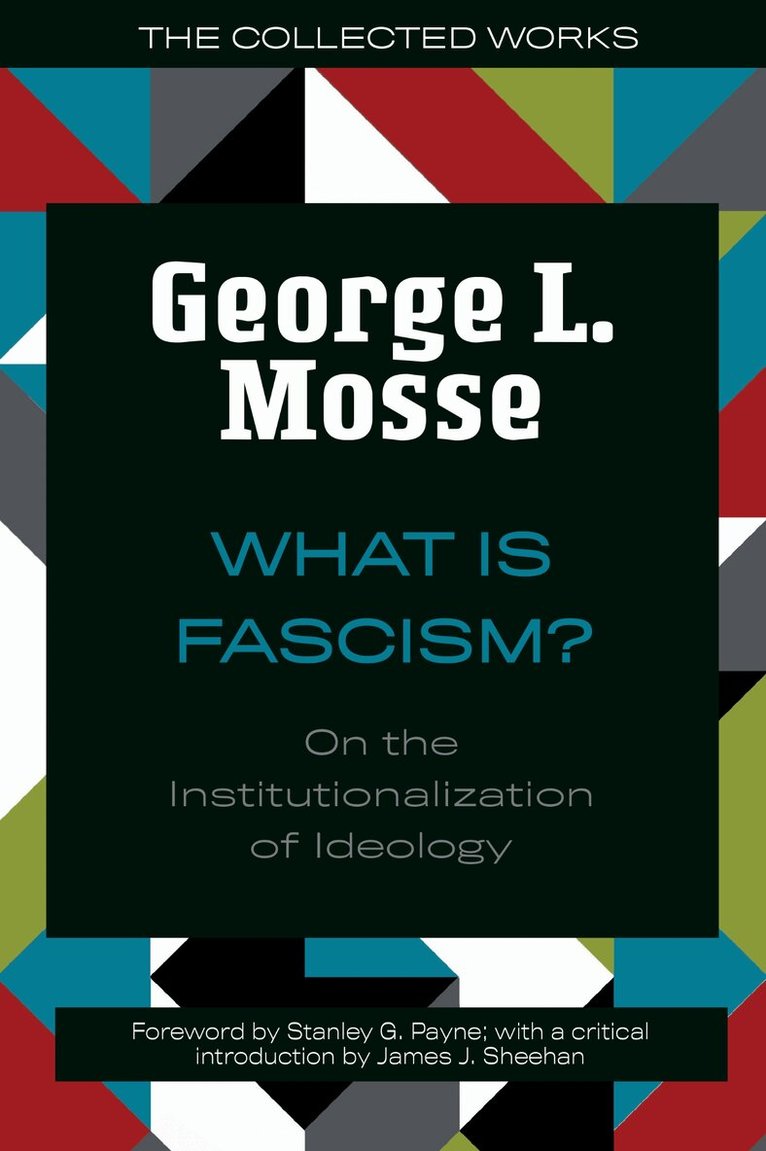
In 1963, nearly two decades after the end of the most destructive war in human history, George L. Mosse assembled a group of interdisciplinary scholars from diverse backgrounds to answer a seemingly simple question: What is fascism? The landmark seminar that followed, held at Stanford University, came to define the intellectual conversation about European fascism throughout the postwar era. Mosse strove to better understand the legacy of fascism by debating its origins—often contentiously—with the sharpest minds of his generation.In this volume, which collects Mosse’s lectures as well as his peers’ responses, Mosse and his colleagues wrestle with fascism’s origins and impact. The straightforward question that launched the seminar quickly expands to deeper debates. What are the intellectual foundations of right-wing populist political movements? How had this particular movement risen to power so quickly and then left so much devastation in its wake? Were charismatic leaders like Hitler and Mussolini the driving forces, or did the various incarnations of fascism throughout Europe and beyond constitute a broader revolution? What was the relationship of religious and cultural institutions to fascism’s rise and cataclysmic fall? As the word “fascism” takes on new meaning in the twenty-first century, it is more urgent than ever to revisit the work of scholars who witnessed its birth—and its defeat. In the foreword, Stanley G. Payne situates the lively debate in its historical context, and in the critical introduction, James J. Sheehan shares his own memories of the seminar and reflects on how the experience drove Mosse’s later work.