Collection on Technology and Work - Böcker
Visar alla böcker i serien Collection on Technology and Work. Handla med fri frakt och snabb leverans.
11 produkter
11 produkter
1 518 kr
Skickas inom 10-15 vardagar
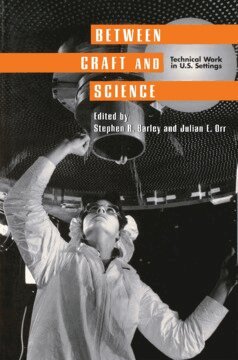
Between Craft and Science brings together leading scholars from sociology, anthropology, industrial relations, management, and engineering to consider issues surrounding technical work, the most rapidly expanding sector of the labor force. Part craft and part science, part blue-collar and part white-collar, technical work demands skill and knowledge but is rarely rewarded with commensurate status or salary.The book first considers the anomalous nature of technical work and the difficulty of locating it in any conventional theoretical framework. Only an ethnographic approach, studying the actual doing of the work, will make sense of the subject, the authors conclude. The studies that follow report daily practice filled with disjunctures and ironies that mirror the ambiguities of technical work's place in the larger culture. On the basis of those studies, the authors probe questions of policy, management, and education.Between Craft and Science considers the cultural difficulties in understanding technical work and advances coherent, practice-oriented insights into this anomalous phenomenon.
1 518 kr
Skickas inom 10-15 vardagar
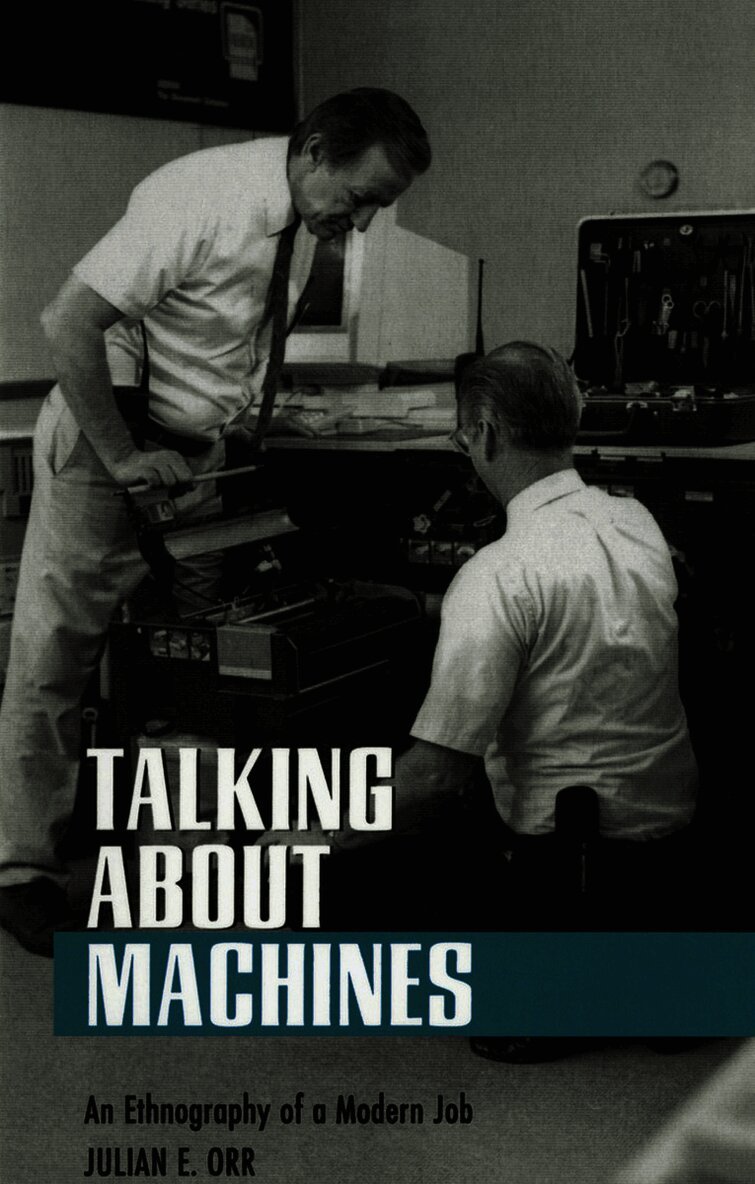
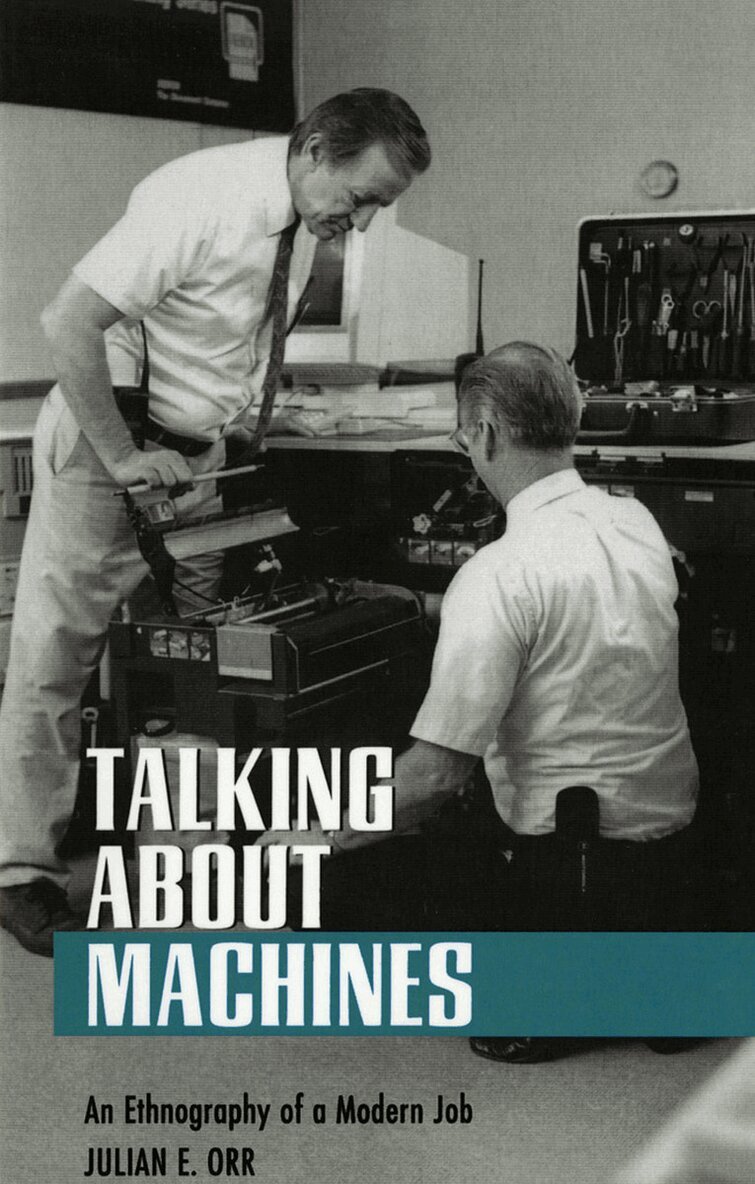
This is a story of how work gets done. It is also a study of how field service technicians talk about their work and how that talk is instrumental in their success. In his innovative ethnography, Julian E. Orr studies the people who repair photocopiers and shares vignettes from their daily lives. He characterizes their work as a continuous highly skilled improvisation within a triangular relationship of technician, customer, and machine. The work technicians do encompasses elements not contained in the official definition of the job yet vital to its success. Orr's analysis of the way repair people talk about their work reveals that talk is, in fact, a crucial dimension of their practice. Diagnosis happens through a narrative process, the creation of a coherent description of the troubled machine. The descriptions become the basis for technicians' discourse about their experience, and the circulation of stories among the technicians is the principal means by which they stay informed of the developing subtleties of machine behavior. Orr demonstrates that technical knowledge is a socially distributed resource stored and diffused primarily through an oral culture.Based on participant observation with copier repair technicians in the field and strengthened by Orr's own years as a technician, this book explodes numerous myths about technicians and suggests how technical work differs from other kinds of employment.
636 kr
Skickas inom 3-6 vardagar
Most books on the subject of work focus on the increased amount of time Americans spend on the job. Peter Meiksins and Peter Whalley address the counter-trend, examining the difficult path traversed by people who choose to work less than the standard, forty-hour week. Their fascinating investigation of alternative work arrangements speaks directly to the concerns of all workers who must balance career with other commitments.Through interviews with technical professionals from a wide range of employment settings, Putting Work in Its Place refutes the popular myth of the customized work schedule as inevitably a "mommy-track" or a return to traditionalism among women. Most of these workers—male and female, young and old—remain strongly committed to their jobs, but wish to combine work with other activities they value just as highly. This can mean family for some, but for others encompasses community service or various avocations.By viewing their work arrangements in the longer term, and not as short-term expedients, these professionals are challenging the accepted view of time requirements for careers in organizations. They are also helping to shape a new agenda for the future of the workplace: to transform their individual successes into a normal practice of customized work time.
721 kr
Skickas inom 10-15 vardagar
In Surgeons and the Scope, James R. Zetka Jr. describes the impact of the video laparoscope on the work lives of contemporary surgeons. The video laparoscope allows surgeons to peer into the inner abdomen with a miniaturized camera, thereby enabling them to perform complex operations without large incisions through small ports punched into the abdominal wall. This technological innovation revolutionized surgery as we know it. Zetka blends rich interview and archival data into a compelling account of an important technological development. He shows how the new laparoscopic technology challenged surgeons to rethink their approaches to surgery, to relearn basic hand-eye coordination, to master complex machinery, and to shift from individualistic to team-based work strategies. Zetka then explains how and why general surgeons embraced this disruptive technology by examining the breakdown of the division of labor between general surgeons and gastroenterologists in response to the unintended and unanticipated outcomes of the scope technology. In Surgeons and the Scope, Zetka weaves cultural, structural, and political economic developments into a sophisticated account of technological change. By viewing the advent of laparoscopic surgery within the context of the history, culture, and ideology of medicine, Zetka provides a deeper understanding of the politics of technology, particularly its effects on job skills, occupations, and worker control.
1 563 kr
Skickas inom 10-15 vardagar
Selling Technology offers a look at high-tech markets from within, through the experience of salespeople, purchasing agents, and engineers who construct markets for emergent technologies through their daily engagement in sales interactions. Although sales occupations comprise 12 percent of the American labor force, sales work has been a neglected area of study. Asaf Darr's ethnographic exploration of the sales process for standard and emergent technology argues that our cultural stereotypes of sales work and salespeople, shaped during the industrial era and through popular images of the Yankee peddler and the car salesman, no longer apply to the changing nature of sales in an information economy. In the high-technology settings in which cutting-edge artifacts are traded, Darr finds that sales work deviates sharply from our traditional cultural images. The educational level and technical skills of the sales force are increasing, sellers' and buyers' engineers engage in co-development, and long-term collaborative relationships are replacing brief sales encounters. A growing number of work tasks and skills previously performed and mastered in the design or production phases have become part of the sale of emergent technology. New control mechanisms over the work of the sales engineers are also appearing. Unlike most ethnographic studies of salespeople, which focus on the insurance, finance, and retail sectors., Darr's groundbreaking book turns to the daily sales practices of an information economy.
1 271 kr
Skickas inom 10-15 vardagar
Contract work is more important than ever—for better or for worse, depending on one's perspective. The security once implied by a full-time job with a stable employer is becoming rarer, thereby erasing one of the major distinctions between "freelance work" and a "steady gig." Why hang on to a regular job for the sake of security if security can no longer be assumed? Instead, contractors, hired temporarily for specific knowledge and skills, market their expertise as they move from project to project. Even though their employment is precarious, a great many consider freelancing preferable to holding a "regular" job: the control they feel over their time and careers is well worth the risks that come with relatively uncertain cash flow. Freelancing Expertise is a qualitative study of decision making, work practices, and occupational processes among writers and editors who work in print and Web communications and programmers and engineers who work in software and systems development. Debra Osnowitz conducted sixty-eight extended interviews with representatives of both groups and twelve interviews with managers and recruiters, observed four different work settings in which contractors work alongside employees, and monitored blogs and online discussions among contractors. As a result, she provides a unique and sensitive assessment of a cultural shift in occupations and organizations. Osnowitz calls for a reconfiguration of the employer/employee relationship that accepts more variation and flexibility: just as "freelancing" has, over time, taken on many traits considered characteristic of traditional career paths, so might regular jobs make themselves more appealing to today's workforce by mimicking some of the positive aspects of transactions between clients and contract workers.
364 kr
Skickas inom 10-15 vardagar
Selling Technology offers a look at high-tech markets from within, through the experience of salespeople, purchasing agents, and engineers who construct markets for emergent technologies through their daily engagement in sales interactions. Although sales occupations comprise 12 percent of the American labor force, sales work has been a neglected area of study. Asaf Darr's ethnographic exploration of the sales process for standard and emergent technology argues that our cultural stereotypes of sales work and salespeople, shaped during the industrial era and through popular images of the Yankee peddler and the car salesman, no longer apply to the changing nature of sales in an information economy. In the high-technology settings in which cutting-edge artifacts are traded, Darr finds that sales work deviates sharply from our traditional cultural images. The educational level and technical skills of the sales force are increasing, sellers' and buyers' engineers engage in co-development, and long-term collaborative relationships are replacing brief sales encounters. A growing number of work tasks and skills previously performed and mastered in the design or production phases have become part of the sale of emergent technology. New control mechanisms over the work of the sales engineers are also appearing. Unlike most ethnographic studies of salespeople, which focus on the insurance, finance, and retail sectors., Darr's groundbreaking book turns to the daily sales practices of an information economy.
337 kr
Skickas inom 10-15 vardagar
Contract work is more important than ever—for better or for worse, depending on one's perspective. The security once implied by a full-time job with a stable employer is becoming rarer, thereby erasing one of the major distinctions between "freelance work" and a "steady gig." Why hang on to a regular job for the sake of security if security can no longer be assumed? Instead, contractors, hired temporarily for specific knowledge and skills, market their expertise as they move from project to project. Even though their employment is precarious, a great many consider freelancing preferable to holding a "regular" job: the control they feel over their time and careers is well worth the risks that come with relatively uncertain cash flow. Freelancing Expertise is a qualitative study of decision making, work practices, and occupational processes among writers and editors who work in print and Web communications and programmers and engineers who work in software and systems development. Debra Osnowitz conducted sixty-eight extended interviews with representatives of both groups and twelve interviews with managers and recruiters, observed four different work settings in which contractors work alongside employees, and monitored blogs and online discussions among contractors. As a result, she provides a unique and sensitive assessment of a cultural shift in occupations and organizations. Osnowitz calls for a reconfiguration of the employer/employee relationship that accepts more variation and flexibility: just as "freelancing" has, over time, taken on many traits considered characteristic of traditional career paths, so might regular jobs make themselves more appealing to today's workforce by mimicking some of the positive aspects of transactions between clients and contract workers.
514 kr
Skickas inom 10-15 vardagar
Between Craft and Science brings together leading scholars from sociology, anthropology, industrial relations, management, and engineering to consider issues surrounding technical work, the most rapidly expanding sector of the labor force. Part craft and part science, part blue-collar and part white-collar, technical work demands skill and knowledge but is rarely rewarded with commensurate status or salary.The book first considers the anomalous nature of technical work and the difficulty of locating it in any conventional theoretical framework. Only an ethnographic approach, studying the actual doing of the work, will make sense of the subject, the authors conclude. The studies that follow report daily practice filled with disjunctures and ironies that mirror the ambiguities of technical work's place in the larger culture. On the basis of those studies, the authors probe questions of policy, management, and education.Between Craft and Science considers the cultural difficulties in understanding technical work and advances coherent, practice-oriented insights into this anomalous phenomenon.
260 kr
Skickas inom 10-15 vardagar
This is a story of how work gets done. It is also a study of how field service technicians talk about their work and how that talk is instrumental in their success. In his innovative ethnography, Julian E. Orr studies the people who repair photocopiers and shares vignettes from their daily lives. He characterizes their work as a continuous highly skilled improvisation within a triangular relationship of technician, customer, and machine. The work technicians do encompasses elements not contained in the official definition of the job yet vital to its success. Orr's analysis of the way repair people talk about their work reveals that talk is, in fact, a crucial dimension of their practice. Diagnosis happens through a narrative process, the creation of a coherent description of the troubled machine. The descriptions become the basis for technicians' discourse about their experience, and the circulation of stories among the technicians is the principal means by which they stay informed of the developing subtleties of machine behavior. Orr demonstrates that technical knowledge is a socially distributed resource stored and diffused primarily through an oral culture.Based on participant observation with copier repair technicians in the field and strengthened by Orr's own years as a technician, this book explodes numerous myths about technicians and suggests how technical work differs from other kinds of employment.
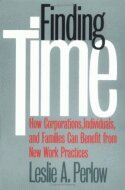
Finding Time
How Corporations, Individuals, and Families Can Benefit from New Work Practices
Häftad, Engelska, 1997
252 kr
Skickas inom 10-15 vardagar
Why do Americans work so hard? Are the long hours spent at work really necessary to increase organizational productivity? Leslie A. Perlow documents the worklife of employees who assume that for their own success and the success of their organization they must put in extended hours on the job. Perlow doesn't buy it. She challenges the basic assumption that the more employees work, the better the corporation will do.For nine months, Perlow studied the work practices of a product development team of software engineers at a Fortune 500 corporation. She reports her findings in detailed stories about individual employees and in more analytic chapters. Perlow first describes the individual heroics necessary to succeed in the existing work culture. She then explains how the system of rewards perpetuates crises and continuous interruptions,while discouraging cooperation. Finally, she shows how the resulting work practices damage both organizational productivity and the quality of individuals' lives outside of work. Perlow initiated a collaborative effort to restructure the way team members worked. Managers who were involved credit the project for the rare and important on-time launch of the product the engineers were developing. In the end, Finding Time shows that it is possible to create new work practices that enable individuals to have more personal and family time while also improving the corporation's productivity.