Columbia London Law Series – serie
Visar alla böcker i serien Columbia London Law Series. Handla med fri frakt och snabb leverans.
4 produkter
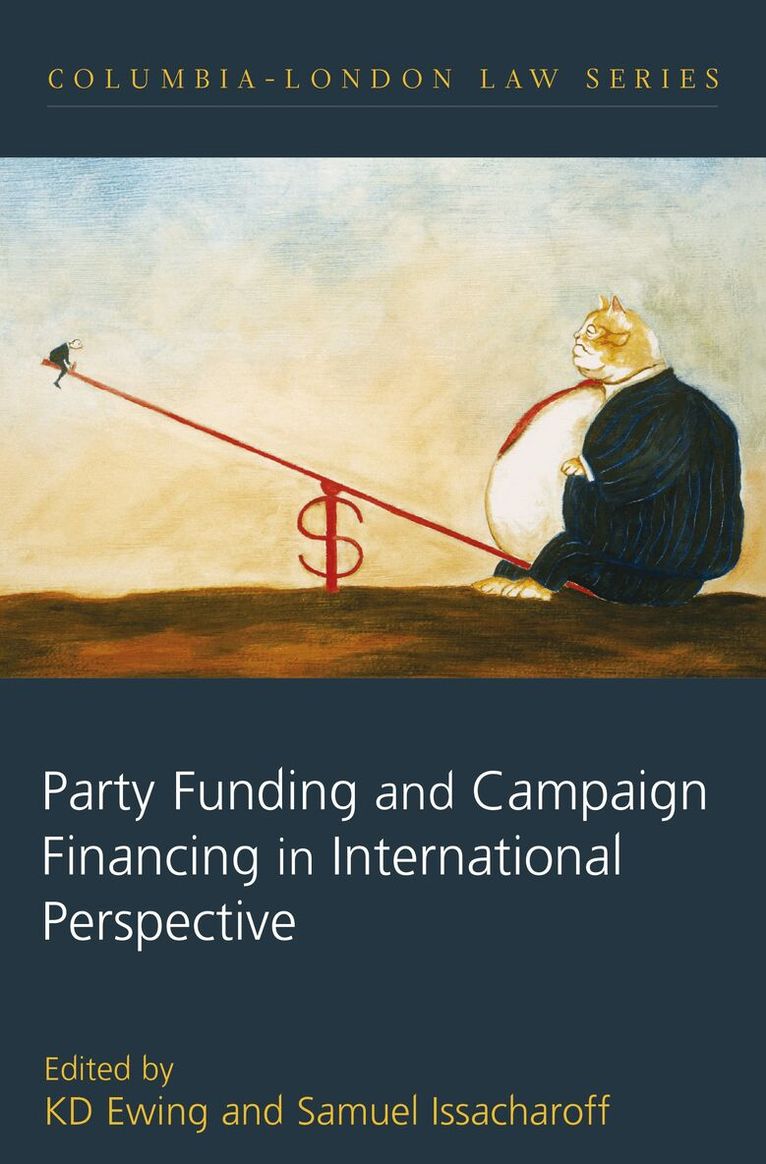
Party Funding and Campaign Financing in International Perspective
Av KD Ewing, Samuel Issacharoff
Inbunden, 2006
1305 kr
Lägg i varukorg
This volume deals with questions of political party funding and campaign financing, issues which arouse controversy in many parts of the world. How are the central actors in the political arena supposed to gather the funds necessary to operate effectively on behalf of their chosen political ends? …
Regulating Labour in the Wake of Globalisation
New Challenges, New Institutions
Av Brian Bercusson, Cynthia Estlund
Inbunden, 2008
1305 kr
Lägg i varukorg
In recent decades, the prevailing response to the problem of unacceptable labour market outcomes in both Europe and North America - national regulation of labour standards and labour relations, coupled with collective bargaining - has come under increasing pressure from the economic and …
Party Funding and Campaign Financing in International Perspective
Av KD Ewing, Samuel Issacharoff
E-bok, 2006
1434 kr
Lägg i varukorg
This volume deals with questions of political party funding and campaign financing, issues which arouse controversy in many parts of the world. How are the central actors in the political arena supposed to gather the funds necessary to operate effectively on behalf of their chosen political ends? …
Regulating Labour in the Wake of Globalisation
New Challenges, New Institutions
Av Brian Bercusson, Cynthia Estlund
E-bok, 2008
1434 kr
Lägg i varukorg
In recent decades, the prevailing response to the problem of unacceptable labour market outcomes in both Europe and North America - national regulation of labour standards and labour relations, coupled with collective bargaining - has come under increasing pressure from the economic and …