Studies of the East Asian Institute, Columbia University – serie
Visar alla böcker i serien Studies of the East Asian Institute, Columbia University. Handla med fri frakt och snabb leverans.
3 produkter
3 produkter
914 kr
Tillfälligt slut
Japan and the Republic of Korea (ROK) have been two of the most critical pillars of peace, stability, and prosperity in the Asia-Pacific region for the past thirty years. At the same time, their relationship has fluctuated markedly and unpredictably. Despite the existence of a common ally in the United States and common security threats from the former Soviet Union, China, and North Korea, bilateral relations between Japan and South Korea have been persistently marred by friction. In the first in-depth study of this puzzling relationship in over fifteen years, the author compares the commonly accepted explanation for this relationship historical enmity with one that focuses on policies of the United States as the key driver of Japan-ROK relations. He finds that while history and emotion certainly affect the ways in which Japanese and Koreans regard each other, cooperation and dissension in the relationship are better understood through what he calls a quasi-alliance model: two states that remain unallied but have a third party as a common ally.
1 549 kr
Skickas inom 10-15 vardagar
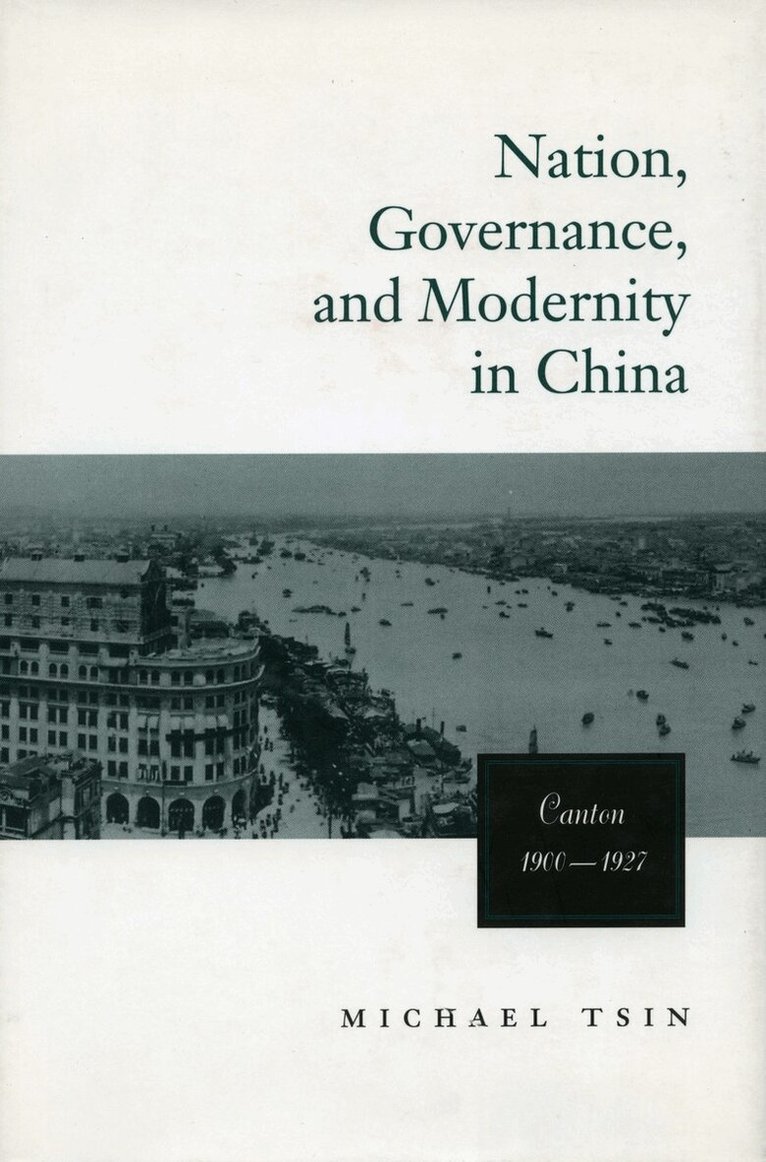
This is the first detailed study in English of the city of Canton (Guangzhou), the cradle of the Chinese revolution, in the first quarter of the twentieth century. In retracing various fragments of the city's history in this period, the book argues that modernist politics as practiced by the Nationalists and Communists represented a specific political rationality embedded in the context of a novel conception of the social realm.Modern governments invariably base their claim to legitimacy on the support of "society" or "the people." The mobilization of hitherto disenfranchised constituents into the political process is thus a central component of the nation-state. Modern governments also produce schemes for categorizing and organizing these same constituents to ensure social unity and their base of support. The author analyzes this apparent paradox of modern governance—emancipation and discipline—as shown in the discourse and practice of Canton elites and the lives of the city's inhabitants.Canton, which witnessed the modernization of both its physical and social structures in the early twentieth century, was the site of the first modernist government in Chinese history. The new governing elites, the Nationalists and Communists, attempted to dissect and classify their constituents into different classes or segments and to transform them into disciplined members of a new body social. Contrary to their expectations, extensive organizational work, though empowering the newly mobilized, did not lead to the formation of a well-ordered society. Instead, it brought into sharp focus the heterogeneity of Canton society and highlighted the impossibility of its analysis and management as a totality. To the dismay of the modernizers, social discipline could be restored only through violence.
374 kr
Skickas inom 7-10 vardagar
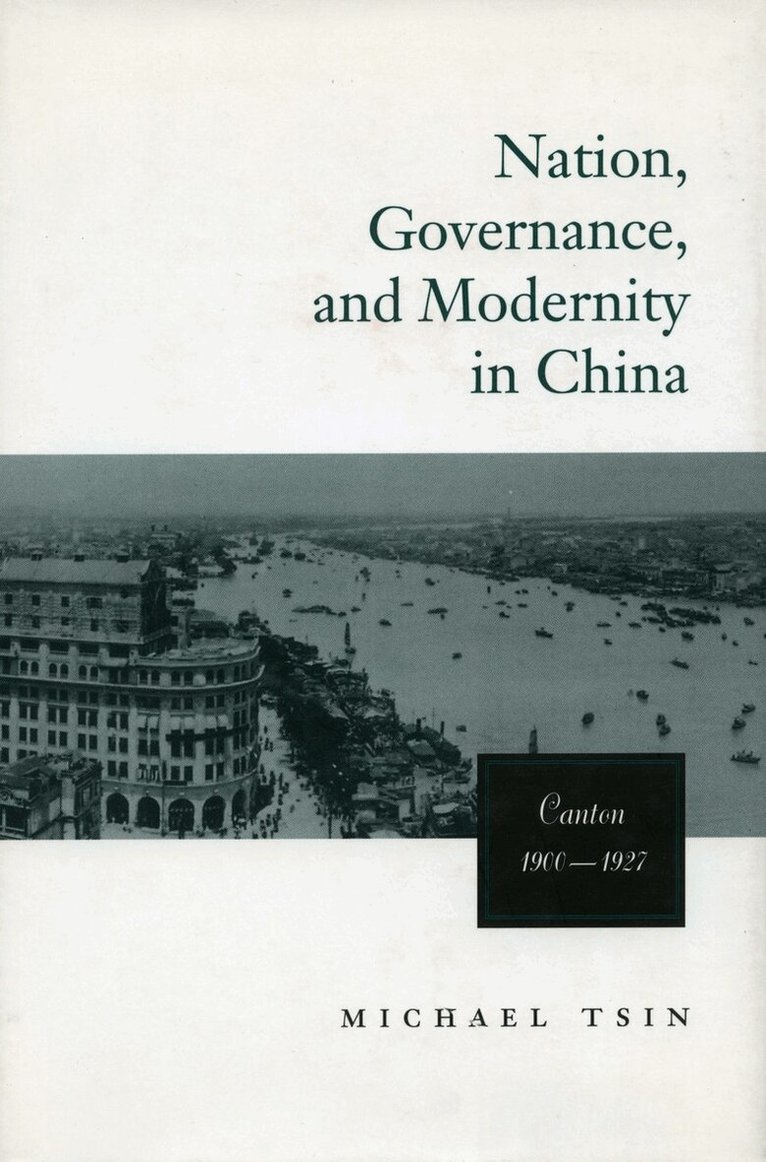
This is the first detailed study in English of the city of Canton (Guangzhou), the cradle of the Chinese revolution, in the first quarter of the twentieth century. In retracing various fragments of the city's history in this period, the book argues that modernist politics as practiced by the Nationalists and Communists represented a specific political rationality embedded in the context of a novel conception of the social realm.Modern governments invariably base their claim to legitimacy on the support of "society" or "the people." The mobilization of hitherto disenfranchised constituents into the political process is thus a central component of the nation-state. Modern governments also produce schemes for categorizing and organizing these same constituents to ensure social unity and their base of support. The author analyzes this apparent paradox of modern governance—emancipation and discipline—as shown in the discourse and practice of Canton elites and the lives of the city's inhabitants.Canton, which witnessed the modernization of both its physical and social structures in the early twentieth century, was the site of the first modernist government in Chinese history. The new governing elites, the Nationalists and Communists, attempted to dissect and classify their constituents into different classes or segments and to transform them into disciplined members of a new body social. Contrary to their expectations, extensive organizational work, though empowering the newly mobilized, did not lead to the formation of a well-ordered society. Instead, it brought into sharp focus the heterogeneity of Canton society and highlighted the impossibility of its analysis and management as a totality. To the dismay of the modernizers, social discipline could be restored only through violence.