• Fri frakt över 249 kr
  • •
  • Snabba leveranser
  • •
  • Billiga böcker
Kundservice

Du är på sajten för privatpersoner.

Företag, bibliotek eller offentlig verksamhet?

Du handlar på classic.bokus.com, där alla dina funktioner finns intakta.
Till classic.bokus.com
Bokus logotyp. Gå till startsidan.
  • Erbjudanden
  • Nyheter
  • Student
  • Topplistor
  • Barn & ungdom
  • Bokus Play
  • E-böcker
  • Pocketböcker
  • Spel & pussel

10% rabatt på allt med kod NYSTART10 →

Sidfot

Mina sidor

    Hjälp

    • Kundservice
    • Vanliga frågor och svar
    • Frakt och leverans
    • Retur vid ångerrätt
    • Reklamera vara
    • Betalning
    • Köpvillkor
    • Allmänna villkor
    • Information om webbplatsens tillgänglighet

    Om Bokus

    • Om oss
    • Pressrum
    • För studenter
    • För företag
    • För bibliotek och offentlig verksamhet
    • För leverantörer
    • Hållbarhet

    Populärt

    • Aktuella erbjudanden
    • Presentkort
    • Studentlitteratur
    • Nya böcker
    • Topplistor
    • Signerade böcker
    • Engelska böcker

    Inspiration

    • Boktips
    • BookTok
    • Populära bokserier
    • Barnbokskaraktärer
    • Populära författare
    Logotyp för Bokus
    Följ oss på Facebook (extern länk)Följ oss på Instagram (extern länk)Följ oss på YouTube (extern länk)Följ oss på TikTok (extern länk)
    bokus @ CookiesAnpassa cookiesIntegritetspolicyKöpvillkor
    Till Citymail hemsida (extern länk)Till Budbee hemsida (extern länk)Till Postnord hemsida (extern länk)Till Schenker hemsida (extern länk)Till Early Bird hemsida (extern länk)Till Walleys hemsida (extern länk)
    1. Samhälle och politik
    2. Politik och statsskick
    3. Internationella relationer

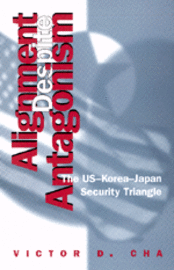
    Alignment Despite Antagonism

    United States-Korea-Japan Security Triangle

    AvVictor Cha

    Inbunden, Engelska, 1999

    Del i serien Studies of the East Asian Institute, Columbia University

    918 kr

    Tillfälligt slut

    Beskrivning

    Japan and the Republic of Korea (ROK) have been two of the most critical pillars of peace, stability, and prosperity in the Asia-Pacific region for the past thirty years. At the same time, their relationship has fluctuated markedly and unpredictably. Despite the existence of a common ally in the United States and common security threats from the former Soviet Union, China, and North Korea, bilateral relations between Japan and South Korea have been persistently marred by friction. In the first in-depth study of this puzzling relationship in over fifteen years, the author compares the commonly accepted explanation for this relationship historical enmity with one that focuses on policies of the United States as the key driver of Japan-ROK relations. He finds that while history and emotion certainly affect the ways in which Japanese and Koreans regard each other, cooperation and dissension in the relationship are better understood through what he calls a quasi-alliance model: two states that remain unallied but have a third party as a common ally.

    Produktinformation

    • Utgivningsdatum:1999-05-01
    • Mått:163 x 238 x 30 mm
    • Vikt:647 g
    • Format:Inbunden
    • Språk:Engelska
    • Serie:Studies of the East Asian Institute, Columbia University
    • Antal sidor:373
    • Förlag:Stanford University Press
    • ISBN:9780804731911

    Utforska kategorier

    • Internationella relationer inom Samhälle och politik

    Recensioner i media

    'Alignment Despite Antagonism is a carefully researched treatment of the highs and lows of US-Japan-South Korea trilateral policy coordination - one of the most difficult yet important relationships of US security interests in Asia. It merits reading by both scholars and parctitioners of East Asian security.' William J. Perry, Former Secretary of Defense and Special Advisor to the President on North Kores Policy

    Innehållsförteckning

    • A note to the reader; Abbreviations; Introduction: the puzzle and its importance; 1. The enigma of history; 2. The argument: quasi alliances; 3. Cooperation under the nixon doctrine, 1969-1971; 4. Detente and the heightening crisis, 1972-1974; 5. Vietnam and the Carter years, 1975-1979; 6. The 1980s: evolution and friction during the Reagan years; Conclusion: quasi allies or adversaries in the Post-Cold war era?; Appendix tables; Notes; Index.