Comprehensive Immunology - Böcker
Visar alla böcker i serien Comprehensive Immunology. Handla med fri frakt och snabb leverans.
9 produkter
9 produkter
550 kr
Skickas inom 10-15 vardagar
Until recently, understanding of the lymphomas was limited and largely descriptive. Attention has been focused, for the most part, upon morphological issues and clinical matters. Although useful, this approach has many shortcomings. The true cytoidentity of primary neoplastic cells was not established by these methods, nor could their clonal nature be recognized. The more overt changes in immunological function, such as monoclonal gammopathies and immunodeficiencies, were appre ciated as important components of these diseases. However, subtle immunological perturbations were not recognized. Furthermore, associations were not established between the lymphoreticular neoplasms on the one hand and both primary and secondary immunological abnormalities on the other. There has been considerable recent progress in the fields of immunobiology, cytology, and immunochemistry. These new approaches have proved readily applicable to studies on the lymphomas. The term "lymphoma" has been applied to a heterogeneous group of neo plasms that involve lymphoid tissues. This term is not altogether satisfactory, since it implies that cells of primarily the lymphoid series are involved in the neoplastic process. Some neoplasms, heretofore classified as "lymphomas," now appear, from the results of penetrating analysis using newer methodology, to be malignan cies of the macrophage series, rather than of the lymphocytic series. These neo plasms include Hodgkin's disease and a minority of neoplasms previously referred to as "histiocytic" lymphomas. The majority of these "histiocytic" lymphomas are now known to be lymphoid malignancies involving the B-cell series.
550 kr
Skickas inom 10-15 vardagar
By 1940, immunological mechanisms had been proved to have fundamental influ ences on a great number and variety of skin reactions, and skin diseases had brought to light a great number of fundamental immunological mechanisms that were basic to a wide range of different diseases, dermatological and nondermato logical. The preeminence of dermatological research in the advancement of immu nological knowledge should not astonish anyone. For the skin is not only the most easily accessible tissue for producing and studying immunological reactions, it is also the great organ of protection that meets the first onslaughts of inimical environmental forces and agents-potential enemies, both living and dead. And protection is in essence what immunology is all about. To get an idea of the long-established role that testing the skin and the study of its many reactions has played in advancing general immunology, one need recall only smallpox vaccination; tuberculin testing; testing with fungal extracts; skin testing in hay fever, asthma, and serum sickness; skin tests with toxins and toxoids; the patch test; the passive transfer of skin-adhering antibodies (reagins); skin sensitization by simple chemicals; and similar dermatological procedures that have exerted their influence on medical and scientific disciplines far beyond dermatology.
1 094 kr
Skickas inom 10-15 vardagar
Immunopharmacology: A New Discipline of Immense Potential Among the looming triumphs of the biologic revolution is the rapidly developing understanding of the mechanisms of bodily defense. In the short span of 35 years, knowledge of immunologic machinery has progressed from crudest description to major understanding in cellular and molecular terms. Antibodies, immunoglobulins, and the complement system have been almost completely defined in detailed molecular terms. Organs, like thymus, spleen and lymph nodes-so long enigmatic black boxes-are beginning to be understood not only in cellular terms but in molecular, physiologic, and endocrinologic terms. With this surging new information about the immune system comes the possi bility of developing a pharmacology which can modulate and control immunologic functions. Immunopharmacology most broadly conceived must address (1) control of development and function of the cellular components of the immunologic appara tus; (2) facilitation and suppression of function of the immunologically competent cells of the several subclasses, like T helpers, suppressors, and effectors, and B effectors and suppressors; (3) manipulation and repair of the major biologic amplifi cation systems, e. g. , the complement system and kinin-kallikrein system, and (4) utilization, modulation, and inhibition of the galaxy of molecules generated by T lymphocytes, the lymphokines. This new pharmacology must deal with the funda mental effector mechanisms of immunity, namely inflammation, phagocytosis, vascular reactivity, and blood coagulation. Furthermore, immunopharmacology must address and manipulate cell-cell communication and interaction, so vital to control of the immunological apparatus.
550 kr
Skickas inom 10-15 vardagar
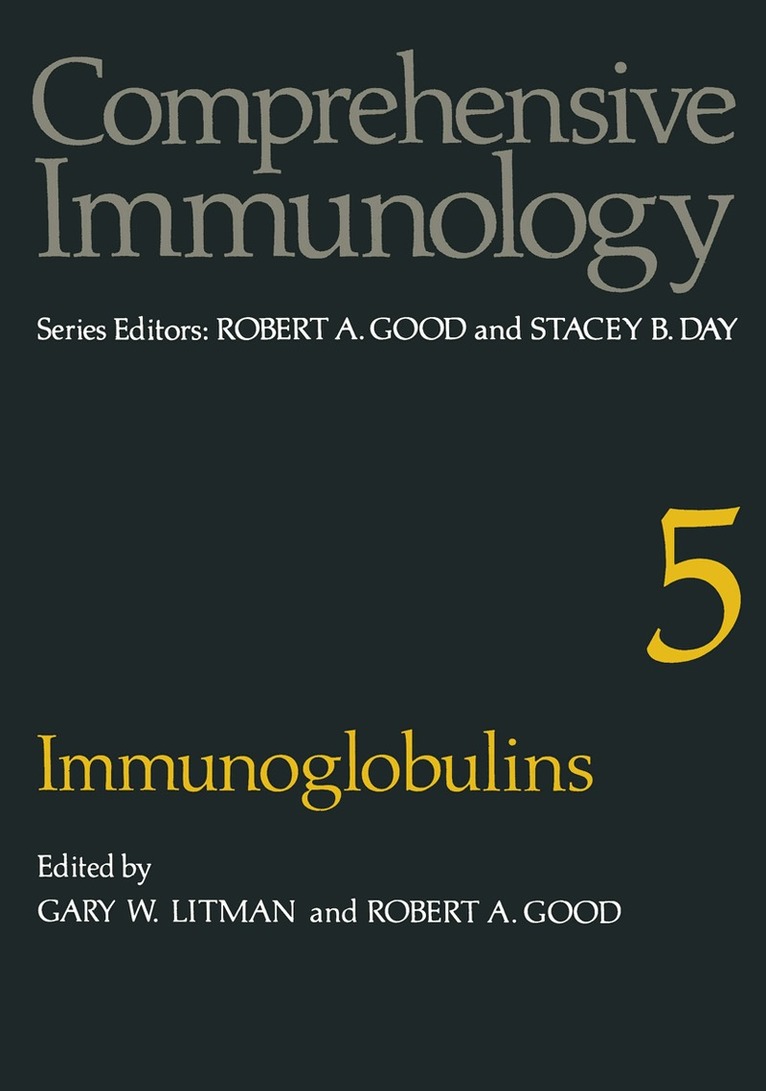
Since the discovery more than thirty years ago that antibody actlvlty could be localized to discrete plasma protein fractions, the study of immunoglobulin struc ture and function has dominated the field of immunochemistry. During this time, sources of homogeneous immunoglobulin molecules have been discovered, the subunit nature of the proteins has been defined, and the three-dimensional struc tures of the antigen-recognition portion of several antibody molecules have been elucidated. Insights into the complicated genetic control of these proteins are being gained rapidly through analysis of amino acid sequences of naturally occurring and induced homogeneous immunoglobulins. Immunoglobulins have been analyzed by protein chemists as models of complex multimeric systems, examined by geneticists studying serum protein polymorphisms, and employed by molecular biologists as highly selective probes capable of distinguishing minor features of molecular topog raphy. Clinical applications have ranged from the now routine quantitation of immunoglobulin levels to the use of antibodies to detect trace levels of a variety of natural products and drug metabolites. All these applications have depended ulti mately on a thorough understanding of the immunoglobulin and its antigen-combin ing site. To cover the entire field of immunoglobulin structure and function would require many volumes this size; therefore, subjects presented in this volume represent those which we felt contribute most to our current understanding of this protein family. The first chapters deal with the structure and function of the immunoglobulin molecule.
1 094 kr
Skickas inom 10-15 vardagar
Impressive progress has been made in the general field of immunology which has made possible new understanding and pragmatic approaches to the patient with allergic disease. Indeed, one working in the field of immunology senses a major revolution of immunobiologic thinking, much of which has relevance to the clinical practice of allergy. To the practicing allergist, pediatrician, or internist who must deal with allergic patients, the surging new information may seem confusing and bewildering. As part of our comprehensive series on modern immunobiology which aims to digest this progress, we believe it is appropriate to devote an entire volume to the fundamental principles, new knowledge, and clinical lore on which the modern practice of allergy must be based. In the present volume we strive to bring together relevant contributions from leaders in the field of immunobiology with those whose work stands at the forefront of clinical practice. The advancing understanding has in numerous instances reached the point of clinical application, and we have tried to encompass in this volume the entire scope of modern allergy.
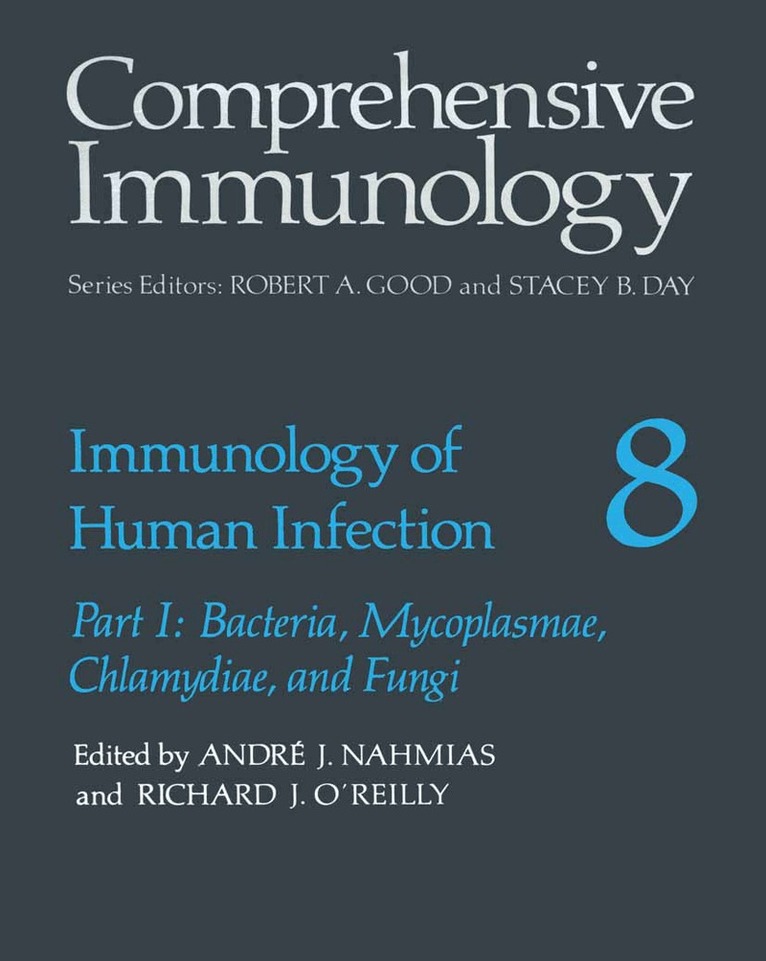
Immunology of Human Infection
Part I: Bacteria, Mycoplasmae, Chlamydiae, and Fungi
Häftad, Engelska, 2012
550 kr
Skickas inom 10-15 vardagar
When we were first approached by the senior editors of this series to edit a book on interactions between the host and infectious agents, we accepted this offer as an exciting challenge. The only condition, readily agreed upon, was that such a book should focus on the immunology of infections in humans. Our reasons, if not biases, were severalfold. We sensed that the fields of microbiology and im munology, which had diverged as each was focusing on its individual search, were coming together. In agreement with the opinions expressed by Dr. Richard Krause in the Introduction, we strongly believed that the development of the immune system evolved in response to infectious agents and that the evolution of these agents was influenced in turn by the character of the host's responses. An inten sive examination of the multitude of primitive or more recently developed host defense mechanisms to determine their relative contribution to man's resistance to a given infectious agent appeared to us to be of crucial basic and practical interest. Many immune mechanisms studied in animals were being explored in humans and it appeared timely to focus particularly on what was known about man's resistance to infectious agents, correlating this information with lessons learned from relevant experiments in animal models.
Immunology of Human Infection
Part II: Viruses and Parasites; Immunodiagnosis and Prevention of Infectious Diseases
Häftad, Engelska, 2012
550 kr
Skickas inom 10-15 vardagar
When we were first approached by the senior editors of this series to edit a book on interactions between the host and infectious agents, we acceptedthis offer as an exciting challenge. The only condition, readily agreed upon, was that such a book should focus on the immunology of infections in humans. Our reasons, if not biases, were severalfold. We sensed that the fields of microbiology and im munolgy, which had diverged as each was focusing on its individual search, were coming together. In agreement with the opinions expressed by Dr. Richard Krause in the Introduction, we strongly believed that the development of the immune system evolved in response to infectious agents and that the evolution of these agents was influenced in turn by the character of the host's responses. An inten sive examination of the multitude of primitive or more recently developed host defense mechanisms to determine their relative contribution to man's resistance to a given infectious agent appeared to us to be of crucial basic· and practical interest. Many immune mechanisms studied in animals were being explored in humans and it appeared timely to focus particularly on what was known about man's resistance to infectious agents, correlating this information with lessons learned from relevant experiments in animal models.
1 094 kr
Skickas inom 10-15 vardagar
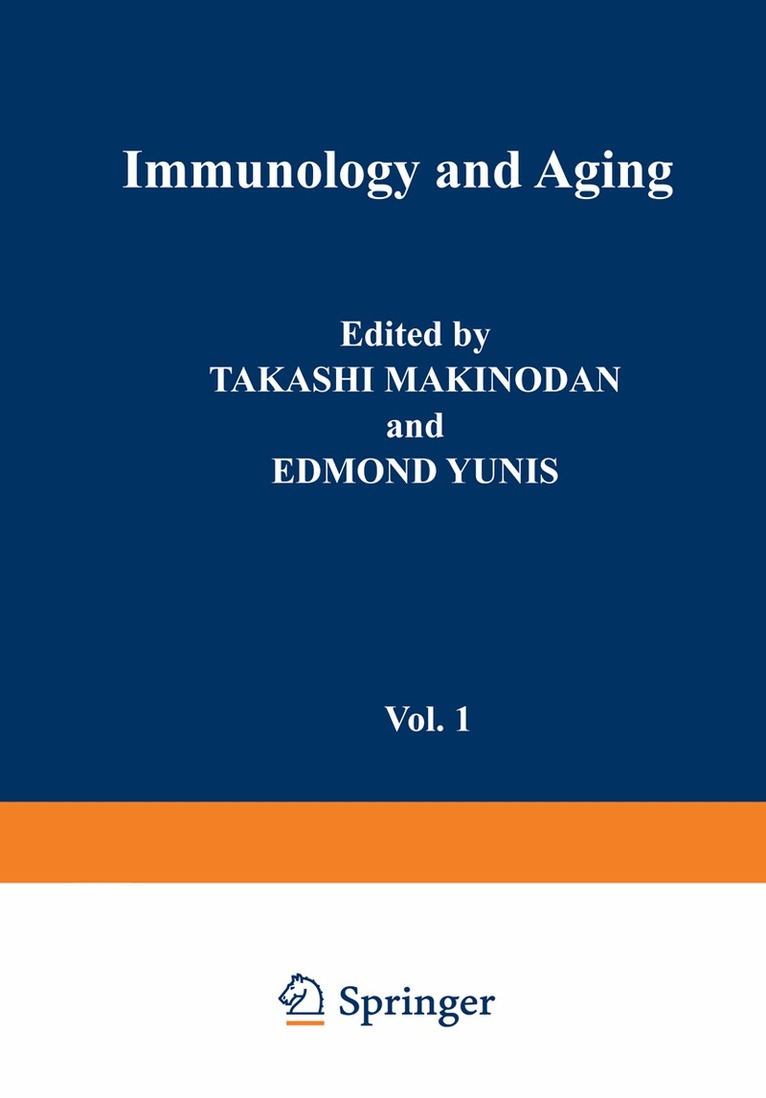
In the classic sense, immunity is the ability of an organism to resist disease. On the one hand, we must distinguish between age and disease; on the other hand, the interaction between them is of considerable theoretical and practical interest. To the gerontologic research community, therefore, immunity also becomes the ability of an organism to resist age. Were the immune and other protective systems of the body able to maintain themselves over the course of time, and if there were no degradation related to age, the everyday loss of energy and vitality that occurs in the lives of older people as a consequence of viruses, arthritis, and other debilitating circumstances would be greatly lessened. The objective of gerontologists is not just to extend the life span but rather to improve the vigor, health, and quality oflife. To date, we have not developed a single index to measure immunity that is of use clinically in the evaluation of older people and of their immunologic compe tence. It may not be surprising that just such a clinical index may be available in the not-too-distant future. We can also look forward to the assembling of a greater body of information explaining how and why the immune system fails with age while, paradoxically, the incidence of autoimmune diseases increases with age. It is this latter phenomenon that may playa part in a wide range of chronic diseases from rheumatoid arthritis to senile dementia.
Del 2 - Comprehensive Immunology
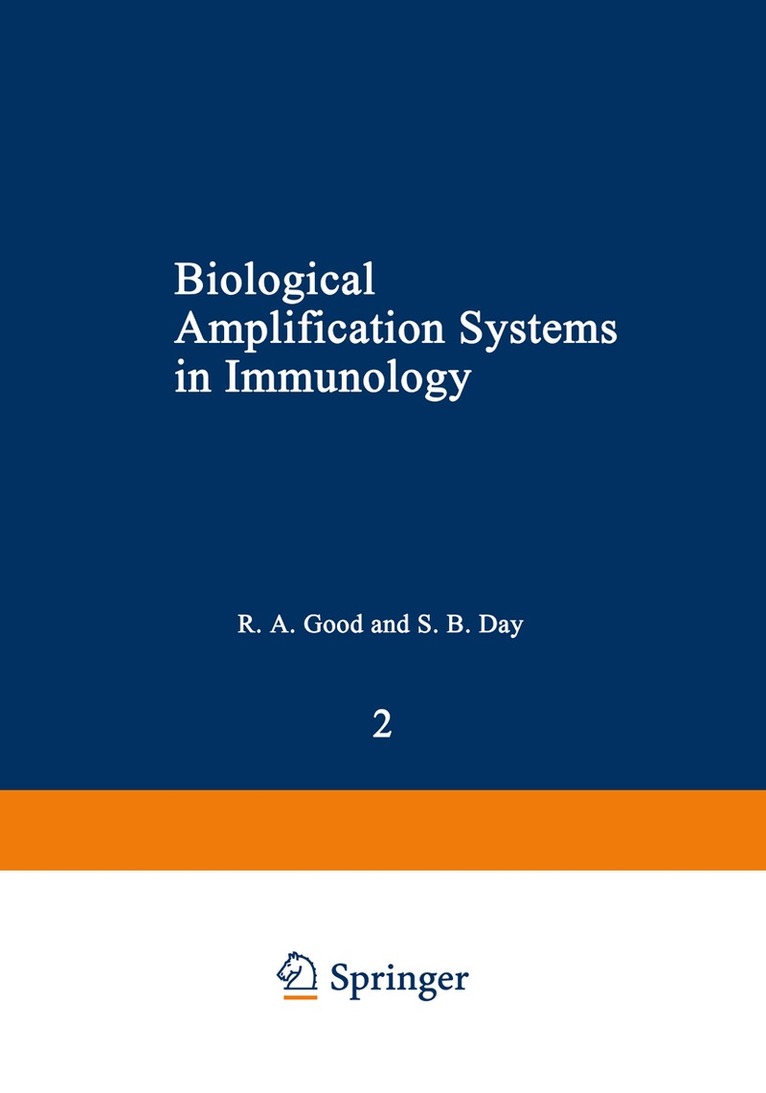
Biological Amplification Systems in Immunology
Häftad, Engelska, 2012
550 kr
Skickas inom 10-15 vardagar
Interest in complement developed at the end of the nineteenth century from observations on cellular and humoral defense mechanisms against bacteria. It was recognized at that time that there were factors in body fluids of animals and man that were capable of killing and lysing bacteria in the absence of cellular factors. Due to the efforts of two of the founders of immunology, Bordet and Ehrlich, and their colleagues, by 1912 the multicomponent nature of complement action was well recognized, the sequence of reaction of the components in the lysis of erythrocytes was defined, complement fixation as a major tool for studying antibody-antigen interaction was well established, and studies on the physicochemical properties of the components had been started. Yet, with a few notable exceptions, research on complement was largely abandoned by most "mainstream" immunologists for the following two or three decades. When one looks at the contents of the present volume, it is hard to imagine that as recently as 20 years ago, there were probably fewer than ten major laboratories where complement research was the primary theme. The contents attest to the fact that there are today dozens of laboratories on three continents where research on complement is pursued in depth. It is not easy to point to all the advances that have occurred in complement research during the past few years.