Robert A. Good – författare
Visar alla böcker från författaren Robert A. Good. Handla med fri frakt och snabb leverans.
14 produkter
14 produkter
Häftad, Engelska, 2019
959 kr
Skickas inom 10-15 vardagar
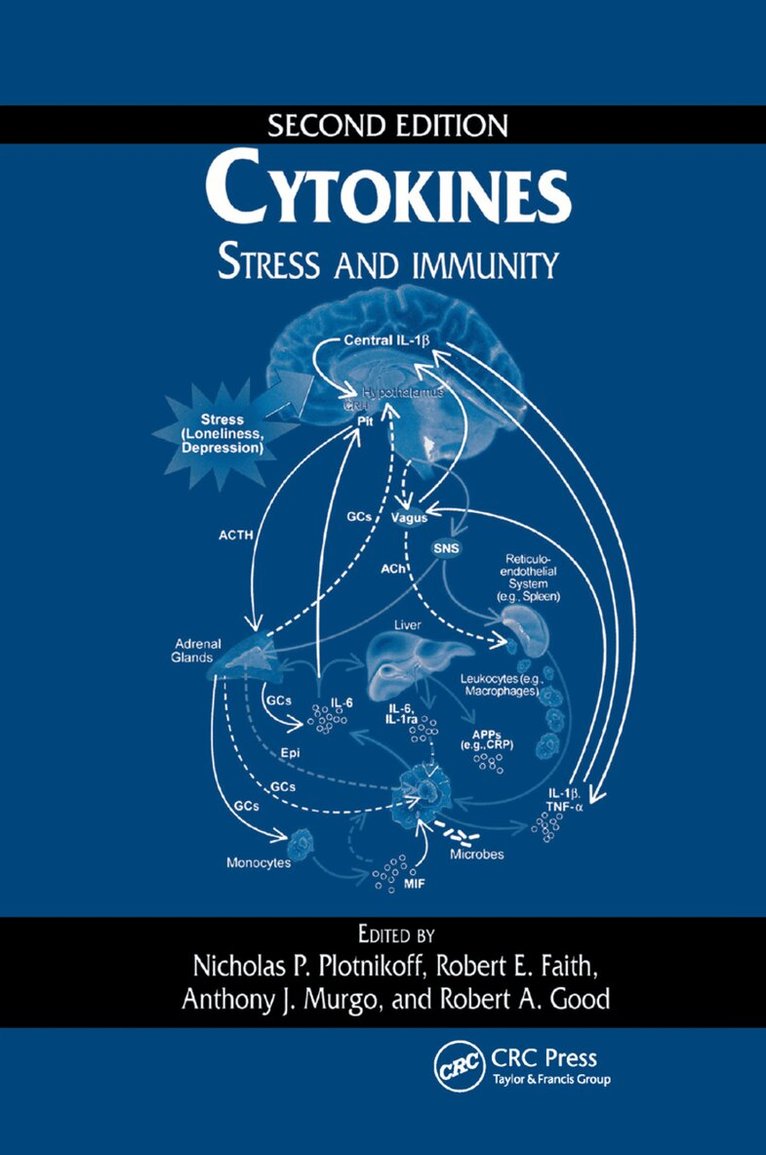
Cytokine involvement in the immune system's response to stress is now very well documented. Cytokine activity has been implicated in a variety of mental and physical diseases, and has been shown to have a significant role in fueling the vicious circle of depression and illness.The first edition of Cytokines: Stress and Immunity pointed out that the immune system does not stand alone, but is profoundly affected by other organ systems, especially the central nervous and the neuroendocrine systems, with cytokines being the common tool of communication. This edition continues on the trailblazing path of the original to once again present current research that informs our evolving understanding of how cytokines function and the clinical implications of cytokine activity.Completely rewritten by the top authorities in their fields, this volume includes 16 entirely new chapters, which document dramatic new developments. It provides a comprehensive overview of the role of cytokines in the neuroendocrine and immune systems, while also addressing the interactions between these systems. It examines cytokine activity and clinical implications from a number of perspectives, including those of immunology, pharmacology, oncology, endocrinology, and psychiatry. Researchers involved with the most specific aspects of cell signaling as well clinicians dealing with the effects of immunosuppression-related diseases will find a wealth of interesting and instantly applicable information.This new edition begins with an extended dedication and tribute to the late Robert A. Good, the father of modern immunology. It documents the life and groundbreaking achievements of Dr. Good who served as an editor for both the former and current editions of this work.
Inbunden, Engelska, 2006
2 676 kr
Skickas inom 10-15 vardagar
Cytokine involvement in the immune system's response to stress is now very well documented. Cytokine activity has been implicated in a variety of mental and physical diseases, and has been shown to have a significant role in fueling the vicious circle of depression and illness.The first edition of Cytokines: Stress and Immunity pointed out that the immune system does not stand alone, but is profoundly affected by other organ systems, especially the central nervous and the neuroendocrine systems, with cytokines being the common tool of communication. This edition continues on the trailblazing path of the original to once again present current research that informs our evolving understanding of how cytokines function and the clinical implications of cytokine activity.Completely rewritten by the top authorities in their fields, this volume includes 16 entirely new chapters, which document dramatic new developments. It provides a comprehensive overview of the role of cytokines in the neuroendocrine and immune systems, while also addressing the interactions between these systems. It examines cytokine activity and clinical implications from a number of perspectives, including those of immunology, pharmacology, oncology, endocrinology, and psychiatry. Researchers involved with the most specific aspects of cell signaling as well clinicians dealing with the effects of immunosuppression-related diseases will find a wealth of interesting and instantly applicable information.This new edition begins with an extended dedication and tribute to the late Robert A. Good, the father of modern immunology. It documents the life and groundbreaking achievements of Dr. Good who served as an editor for both the former and current editions of this work.
E-bok
Engelska, 20061 103 kr
Läs direkt efter köp
Cytokine involvement in the immune system''s response to stress is now very well documented. Cytokine activity has been implicated in a variety of mental and physical diseases, and has been shown to have a significant role in fueling the vicious circle of depression and illness.The first edition of Cytokines: Stress and Immunity pointed out
E-bok
PDF, Engelska, 2013708 kr
Läs direkt efter köp
By 1940, immunological mechanisms had been proved to have fundamental influ ences on a great number and variety of skin reactions, and skin diseases had brought to light a great number of fundamental immunological mechanisms that were basic to a wide range of different diseases, dermatological and nondermato logical. The preeminence of dermatological research in the advancement of immu nological knowledge should not astonish anyone. For the skin is not only the most easily accessible tissue for producing and studying immunological reactions, it is also the great organ of protection that meets the first onslaughts of inimical environmental forces and agents-potential enemies, both living and dead. And protection is in essence what immunology is all about. To get an idea of the long-established role that testing the skin and the study of its many reactions has played in advancing general immunology, one need recall only smallpox vaccination; tuberculin testing; testing with fungal extracts; skin testing in hay fever, asthma, and serum sickness; skin tests with toxins and toxoids; the patch test; the passive transfer of skin-adhering antibodies (reagins); skin sensitization by simple chemicals; and similar dermatological procedures that have exerted their influence on medical and scientific disciplines far beyond dermatology.
Häftad, Engelska, 2012
565 kr
Skickas inom 10-15 vardagar
By 1940, immunological mechanisms had been proved to have fundamental influ ences on a great number and variety of skin reactions, and skin diseases had brought to light a great number of fundamental immunological mechanisms that were basic to a wide range of different diseases, dermatological and nondermato logical. The preeminence of dermatological research in the advancement of immu nological knowledge should not astonish anyone. For the skin is not only the most easily accessible tissue for producing and studying immunological reactions, it is also the great organ of protection that meets the first onslaughts of inimical environmental forces and agents-potential enemies, both living and dead. And protection is in essence what immunology is all about. To get an idea of the long-established role that testing the skin and the study of its many reactions has played in advancing general immunology, one need recall only smallpox vaccination; tuberculin testing; testing with fungal extracts; skin testing in hay fever, asthma, and serum sickness; skin tests with toxins and toxoids; the patch test; the passive transfer of skin-adhering antibodies (reagins); skin sensitization by simple chemicals; and similar dermatological procedures that have exerted their influence on medical and scientific disciplines far beyond dermatology.
E-bok
PDF, Engelska, 2014779 kr
Läs direkt efter köp
Clinical Immunobiology, Volume 1 is a 12-chapter introductory text to the several aspects of immunobiology field. The opening chapters describe the structural and functional development, as well as the molecular and cellular nature of the immune apparatus. The subsequent chapters deal with the relation of structure to function in the lymphoid system and its molecules. These topics are followed by discussions of the fundamental issues of tolerance, inflammation, immunological mediators and amplifiers, and immunogenetics. The remaining chapters explore the immunobiological aspects of transplantation, allergy, tumor immunity, autoimmunity, immunodeficiency, and immunosuppression. This book will be of great value to clinical immunobiologists, practicing physicians, researchers, and medical and biology students.
E-bok
PDF, Engelska, 2014779 kr
Läs direkt efter köp
Clinical Immunobiology, Volume 2 covers the advances in the field being made to apply bone marrow transplantation to the treatment of several diseases. This volume is divided into 11 chapters and begins with surveys of the clinical considerations of bone marrow transplantation. Considerable chapters are devoted to the application of this transplantation to the treatment of various diseases, including aplastic anemia, aregenerative pancytopenia, leukemia, uniformly fatal severe combined immunodeficiency diseases, and Wiskott-Aldrich syndrome. Other chapters examine the cellular engineering in the form of bone marrow and thymus transplantation. The remaining chapters consider the effects of exposure to excessive amounts of radiation or cytotoxic chemicals, as well as the hematopoietic failure based on malfunction of the complex process of normal hematological development and maintenance. This book will be of great value to clinical immunobiologists, practicing physicians, researchers, and medical and biology students.
E-bok
PDF, Engelska, 2014779 kr
Läs direkt efter köp
Clinical Immunobiology, Volume 3 covers a variety of methods used for assaying the immune status of an individual. This volume is composed of 21 chapters and begins with a presentation of the background and issues to which clinical tests would be applied. The succeeding chapters outline the methodological procedures used in the analyses. Other chapters present some examples of the kinds of data that can be generated with the procedures used and provide guidelines for interpretation of the tests. The remaining chapters discuss the value of the immunological test procedures in differential diagnosis and analysis of diseases. These chapters also explore the usefulness of these procedures in prognosis of disease and the consequences of immunological manipulation undertaken for treatment or prevention of disease. This book will be of great value to clinical immunobiologists, biochemists, and researchers.
E-bok
PDF, Engelska, 2014779 kr
Läs direkt efter köp
Clinical Immunobiology, Volume 4 is a 13-chapter text that covers the advances in understanding of the concepts and practical applications of lymphoid subpopulations and the major histocompatibility complex (MHC). The first chapter presents an overview of the problems of various subpopulations of cells involved in the immune system. The succeeding chapters describe the techniques used for cell classification, either by their cell surface phenotype or by their responsiveness to a series of different stimuli. These chapters include surveys of the methods of detection of complement receptors and expression of these receptors on the surface of both normal and leukemic human lymphocytes. A discussion of the evidence that different T-lymphocyte populations differentially express receptor for IgG and IgM is also provided. Other chapters describe the relationship of MHC to serology of cell surface antigens and reactivity in the mixed leukocyte culture test. This work also explores the methods that employ the so-called "proliferative and cytotoxic responses". The remaining chapters look into the association between HLA antigens and a variety of different diseases. These chapters also discuss other genetic markers in the HLA linkage group. This book will be of great value to clinical immunobiologists, practicing physicians, researchers, and medical and biology students.
E-bok
Engelska, 20141 008 kr
Läs direkt efter köp
Membranes and Viruses in Immunopathology covers the proceedings of the 1972 symposium by the same title, held at the University of Minnesota Medical School, sponsored by the Bell Museum of Pathology. This book is composed of 40 chapters that highlight the significant advances in fundamental experiments of membrane structure chemistry. Considerable chapters explore the diagnosis and analysis of slow and oncogenic virus infections, as well as the role of immunobiologic processes in the pathogenesis, prevention, and treatment of disease. The remaining chapters contain research works on the detailed mechanisms that may contribute to cancer induction and dissemination. This book will prove useful to immunopathologists and practicing physicians.
E-bok
PDF, Engelska, 2012708 kr
Läs direkt efter köp
In the last decade, remarkable advances have been made in bone marrow transplantation (BMT), which is now becoming a powerful tool in the treatment of diseases such as leukemia, aplastic anemia, and congenital immunodeficiency. In animal experiments, it has been found that BMT can be used to treat not only systemic autoimmune diseases but also organ-specific autoimmune diseases. In humans, it has recently been shown that rheumatoid arthritis, ulcerative colitis, and Crohn''s disease can be successfully treated after BMT. This volume contains new information on how to prevent graft rejection, how T cell functions can be completely restored, and how concomitant BMT can prevent the rejection of organ allografts without the use of immunosuppressive agents. BMT will become an increasingly useful and powerful treatment for various currently intractable diseases, and this book will contribute by providing details of the latest research in the field.
Häftad, Engelska, 2012
565 kr
Skickas inom 10-15 vardagar
In the last decade, remarkable advances have been made in bone marrow transplantation (BMT), which is now becoming a powerful tool in the treatment of diseases such as leukemia, aplastic anemia, and congenital immunodeficiency. In animal experiments, it has been found that BMT can be used to treat not only systemic autoimmune diseases but also organ-specific autoimmune diseases. In humans, it has recently been shown that rheumatoid arthritis, ulcerative colitis, and Crohn's disease can be successfully treated after BMT. This volume contains new information on how to prevent graft rejection, how T cell functions can be completely restored, and how concomitant BMT can prevent the rejection of organ allografts without the use of immunosuppressive agents. BMT will become an increasingly useful and powerful treatment for various currently intractable diseases, and this book will contribute by providing details of the latest research in the field.
Inbunden, Engelska, 1996
565 kr
Skickas inom 10-15 vardagar
Since the 1980s, remarkable advances have been made in bone marrow transplantation (BMT), which is now becoming a powerful tool in the treatment of such diseases as leukaemia, aplastic anaemia and congenital immunodeficiency. This text contains information on how to prevent graft rejection, how T cell functions can be completely restored, and how concomitant BMT can prevent the rejection of organ allografts without the use of immunodepressive agents.
E-bok
Engelska, 2006984 kr
Läs direkt efter köp
Cytokine involvement in the immune system''s response to stress is now very well documented. Cytokine activity has been implicated in a variety of mental and physical diseases, and has been shown to have a significant role in fueling the vicious circle of depression and illness.The first edition of Cytokines: Stress and Immunity pointed out