Computational Social Science - Böcker
Visar alla böcker i serien Computational Social Science. Handla med fri frakt och snabb leverans.
3 produkter
3 produkter
929 kr
Skickas inom 7-10 vardagar
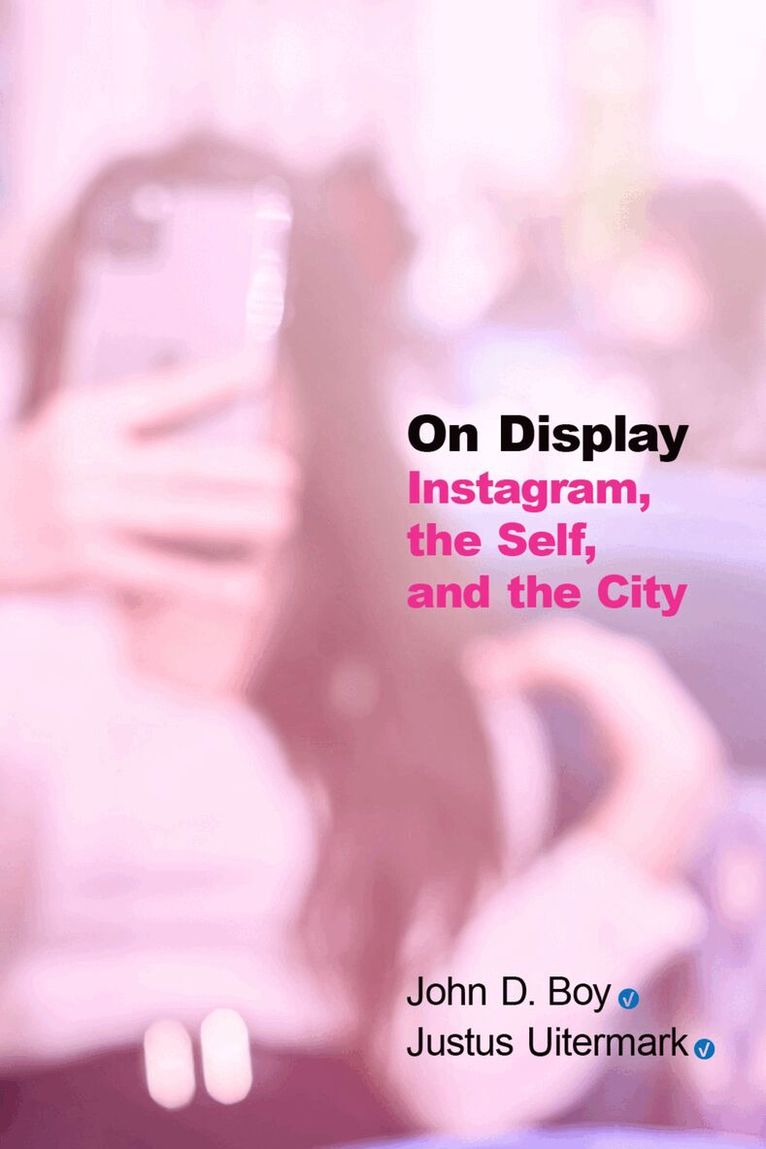
Two billion people around the world use Instagram, but so far social scientists have done little research on the platform. Despite Instagram's reputation for shallowness, the ongoing self-presentation it demands confronts users with profound dilemmas. Who are we? What do we want to show of ourselves? What do we aspire to be?On Display is a book about how people remake their worlds through social media. John D. Boy and Justus Uitermark provide an encompassing account of how a platform that is unfailingly polished and ruthlessly judgmental shapes us and our environments. They examine how personalities, relations, social movements, urban subcultures, and city streets change as they are represented on Instagram. Interviews and ethnographic vignettes render an intimate account of the desires and anxieties that animate the platform. Just as importantly, Boy and Uitermark reveal how Instagram is implicated in social inequalities.While previous accounts have argued that social media promote polarization, On Display shows that this is not the case for Instagram where users belong to large and diverse networks, compelling them to take many, often contradictory expectations into account. This means users shy away from producing statements or images that may cause offense as a way to preserve their public image and their social connections. Drawing on sociological theory, long-term qualitative inquiry in Amsterdam, and computational analyses, Boy and Uitermark argue that grasping the power of Instagram--and other social media platforms--requires seeing them not as digital networks of communication and sharing, but as a stage for the expression and affirmation of social status.
1 098 kr
Skickas inom 5-8 vardagar
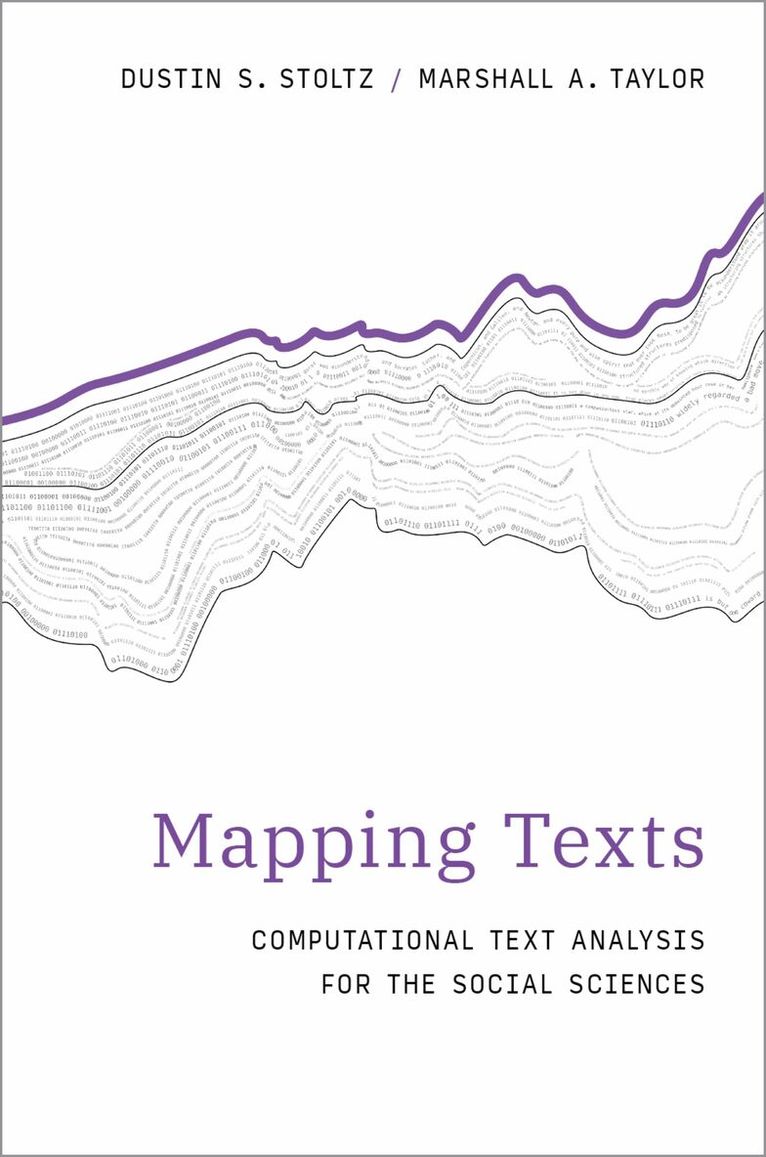
Learn how to conduct a robust text analysis project from start to finish--and then do it again. Mining is the dominant metaphor in computational text analysis. When mining texts, the implied assumption is that analysts can find kernels of truth--they just have to sift through the rubbish first. In this book, Dustin Stoltz and Marshall Taylor encourage text analysts to work with a different metaphor in mind: mapping. When mapping texts, the goal is not necessarily to find meaningful needles in the haystack, but instead to create reductions of the text to document patterns. Just like with cartographic maps, though, the type and nature of the textual map is dependent on a range of decisions on the part of the researcher. Creating reproducible workflows is therefore critical for the text analyst.Mapping Texts offers a practical introduction to computational text analysis with step-by-step guides on how to conduct actual text analysis workflows in the R statistical computing environment. The focus is on social science questions and applications, with data ranging from fake news and presidential campaigns to Star Trek and pop stars. The book walks the reader through all facets of a text analysis workflow--from understanding the theories of language embedded in text analysis, all the way to more advanced and cutting-edge techniques.The book will prove useful not only to social scientists, but anyone interested in conducting text analysis projects.
261 kr
Skickas inom 5-8 vardagar
Learn how to conduct a robust text analysis project from start to finish--and then do it again. Mining is the dominant metaphor in computational text analysis. When mining texts, the implied assumption is that analysts can find kernels of truth--they just have to sift through the rubbish first. In this book, Dustin Stoltz and Marshall Taylor encourage text analysts to work with a different metaphor in mind: mapping. When mapping texts, the goal is not necessarily to find meaningful needles in the haystack, but instead to create reductions of the text to document patterns. Just like with cartographic maps, though, the type and nature of the textual map is dependent on a range of decisions on the part of the researcher. Creating reproducible workflows is therefore critical for the text analyst.Mapping Texts offers a practical introduction to computational text analysis with step-by-step guides on how to conduct actual text analysis workflows in the R statistical computing environment. The focus is on social science questions and applications, with data ranging from fake news and presidential campaigns to Star Trek and pop stars. The book walks the reader through all facets of a text analysis workflow--from understanding the theories of language embedded in text analysis, all the way to more advanced and cutting-edge techniques.The book will prove useful not only to social scientists, but anyone interested in conducting text analysis projects.