Concise Lincoln Library - Böcker
Visar alla böcker i serien Concise Lincoln Library. Handla med fri frakt och snabb leverans.
15 produkter
15 produkter
202 kr
Skickas inom 11-20 vardagar
Abraham Lincoln looms large in American memory. He is admired for his many accomplishments, including his skills as an orator and writer, his Emancipation Proclamation, and his unswerving leadership during the strife-ridden years of the Civil War. Now, Michael S. Green unveils another side to the sixteenth president of the United States: that of the astute political operator. Lincoln and the Election of 1860 examines how, through a combination of political intrigue and deep commitment to the principle of freedom, Lincoln journeyed from Republican underdog to an improbable victor who changed the course of American history.Although Lincoln rose to national prominence in 1858 during his debates with Stephen Douglas, he was unable to publicly stump for the presidency in a time when personal campaigning for the office was traditionally rejected. This limitation did nothing to check Lincoln’s ambitions, however, as he consistently endeavoured to place himself in the public eye while stealthily pulling political strings behind the scenes. Green demonstrates how Lincoln drew upon his considerable communication abilities and political acumen to adroitly manage allies and enemies alike, ultimately uniting the Republican Party and catapulting himself from his status as one of the most unlikely of candidates to his party’s nominee at the national convention. As the general election campaign progressed, Lincoln continued to draw upon his experience from three decades in Illinois politics to unite and invigorate the Republican Party. Democrats fell to divisions between North and South, setting the stage for a Republican victory in November—and for the most turbulent times in U.S. history.Moving well beyond a study of the man to provide astute insight into the era’s fiery political scene and its key players, Green offers perceptive analysis of the evolution of American politics and Lincoln’s political career, the processes of the national and state conventions, how political parties selected their candidates, national developments of the time and their effects on Lincoln and his candidacy, and Lincoln’s own sharp—and often surprising—assessments of his opponents and colleagues. Green frequently employs Lincoln’s own words to afford an intimate view into the political savvy of the future president.The pivotal election of 1860 previewed the intelligence, patience, and shrewdness that would enable Lincoln to lead the United States through its greatest upheaval. This exciting new book brings to vivid life the cunning and strength of one of America’s most intriguing presidents during his journey to the White House.
203 kr
Skickas inom 7-10 vardagar
On the American stages of politics and journalism in the mid-nineteenth century, few men were more influential than Abraham Lincoln and his sometime adversary, sometime ally, New York Tribune editor Horace Greeley. In this compelling new volume, author Gregory A. Borchard explores the intricate relationship between these two vibrant figures, both titans of the press during one of the most tumultuous political eras in American history. Packed with insightful analysis and painstaking research, Abraham Lincoln and Horace Greeley offers a fresh perspective on these luminaries and their legacies. Borchard begins with an overview of the lives of both Lincoln and Greeley, delving particularly into their mutual belief in Henry Clay's much-debated American System, and investigating the myriad similarities between the two political giants, including their comparable paths to power and their statuses as self-made men, their reputations as committed reformers, and their shared dedication to social order and developing a national infrastructure. Also detailed are Lincoln's and Greeley's personal quests to end slavery in the United States, as well as their staunch support of free-soil homesteads in the West.Yet despite their ability to work together productively, both men periodically found themselves on opposite ends of the political spectrum. Their by turns harmonious and antagonistic relationship often played out on the front pages of Greeleys influential newspaper, the New York Tribune. Drawing upon historical gems from the Tribune, as well as the personal papers of both Lincoln and Greeley, Borchard explores in depth the impact the two men had on their times and on each other, and how, as Lincoln's and Greeley's paths often crossed and sometimes diverged they personified the complexities, virtues, contradictions, and faults of their eras.Abraham Lincoln and Horace Greeley goes beyond tracing each mans personal and political evolution to offer a new perspective on the history-changing events of the times, including the decline of the Whig Party and the rise of the Republicans, the drive to extend American borders into the West; and the bloody years of the Civil War. Borchard finishes with reflections on the deaths of Lincoln and Greeley and how the two men have been remembered by subsequent generations.Sure to become an essential volume in the annals of political history and journalism, Abraham Lincoln and Horace Greeley is a compelling testament to the indelible mark these men left on both their contemporaries and the face of America's future.
277 kr
Skickas inom 7-10 vardagar
Long before the Civil War, Abraham Lincoln recognized the challenge American slavery posed to the ideals of the Declaration of Independence. A constitutional amendment would be the ideal solution to ending slavery, yet the idea of such an amendment conflicted with several of Lincoln’s long-held positions. In this study, Christian G. Samito examines how Lincoln’s opposition to amending the United States Constitution shaped his political views before he became president, and how constitutional arguments overcame Lincoln’s objections, turning him into a supporter of the Thirteenth Amendment by 1864–65.For most of his political career, Samito shows, Lincoln disputed changing the constitution, even to overturn rulings with which he disagreed. Well into his presidency, he argued that emancipation could take place only on the state level because the federal government had no jurisdiction to control slavery in the states. Between January 1863 and mid-1864, however, Lincoln came to support a constitutional amendment to abolish slavery because it worked within the constitutional structure and preserved key components of American constitutionalism in the face of Radical Republican schemes.Samito chronicles lobbying efforts, the final vote in the House on the amendment resolution, and various charges of corruption and back-room deals. He also considers the Hampton Roads conference, Lincoln’s own thoughts on the meaning of the amendment, and the impact of Lincoln’s assassination on the reading of the amendment. Closing with a lively discussion that applies the Thirteenth Amendment to current events, this concise yet comprehensive volume demonstrates how the constitutional change Lincoln helped bring about continues to be relevant today.
254 kr
Skickas inom 11-20 vardagar
Lincoln’s enduring relationship with the American immigrantBetween 1840 and 1860, America received more than four and a half million people from foreign countries as permanent residents, including a huge influx of newcomers from northern and western Europe, hundreds of thousands of Mexicans who became Americans with the annexation of Texas and the Mexican Cession, and a smaller number of Chinese immigrants. While some Americans sought to make immigration more difficult and to curtail the rights afforded to immigrants, Abraham Lincoln advocated for the rights of all classes of citizens. In this succinct study, Jason H. Silverman investigates Lincoln’s evolving personal, professional, and political relationship with the wide variety of immigrant groups he encountered throughout his life, revealing that Lincoln related to the immigrant in a manner few of his contemporaries would or could emulate. From an early age, Silverman shows, Lincoln developed an awareness of and a tolerance for different peoples and their cultures, and he displayed an affinity for immigrants throughout his legal and political career. Silverman reveals how immigrants affected not only Lincoln’s daytoday life but also his presidential policies Lincoln’s opposition to the Know Nothing Party and the antiforeign attitudes in his own Republican Party, his reliance on German support for his 1860 presidential victory, his appointment of political generals of varying ethnicities, and his reliance on an immigrant for the literal rules of war. The first book to examine Lincoln and the place of the immigrant in America’s society and economy, Silverman’s pioneering work offers a rare new perspective on the renowned sixteenth president.
209 kr
Skickas inom 7-10 vardagar
Winner, Abraham Lincoln Institute Book Prize, 2018Winner, ISHS Annual Award for a Scholarly Publication, 2018Abraham Lincoln was the first president to make storytelling, jokes, and laughter tools of the office, and his natural sense of humor has become legendary. Lincoln’s Sense of Humor registers the variety, complexity of purpose, and ethical dimension of Lincoln’s humor and pinpoints the political risks Lincoln ran in telling jokes while the nation was engaged in a bloody struggle for existence.Complete with amusing anecdotes, this book shows how Lincoln’s uses of humor evolved as he matured and explores its versatility, range of expressions, and multiple sources: western tall tales, morality stories, bawdy jokes, linguistic tricks, absurdities, political satire, and sharp wit. While Lincoln excelled at self-mockery, nothing gave him greater pleasure than satirical work lampooning hypocrisy and ethical double standards. He particularly enjoyed David R. Locke’s satiric writings by Petroleum V. Nasby, a fictional bigoted secessionist preacher, and the book explores the nuances of Lincoln’s enthusiasm for what he called Locke’s genius, showing the moral springs of Lincoln’s humor.Richard Carwardine methodically demonstrates that Lincoln’s funny stories were the means of securing political or personal advantage, sometimes by frontal assault on opponents but more often by depiction through parable, obfuscation through hilarity, refusal through wit, and diversion through cunning. Throughout his life Lincoln worked to develop the humorist’s craft and hone the art of storytelling. His jokes were valuable in advancing his careers as politician and lawyer and in navigating his course during a storm-tossed presidency. His merriness, however, coexisted with self-absorbed contemplation and melancholy. Humor was his lifeline; dark levity acted as a tonic, giving Lincoln strength to tackle the severe challenges he faced. At the same time, a reputation for unrestrained, uncontrollable humor gave welcome ammunition to his political foes. In fact, Lincoln’s jocularity elicited waves of criticism during his presidency. He was dismissed as a “smutty joker,” a “first rate second rate man,” and a “joke incarnated.”Since his death, Lincoln’s anecdotes and jokes have become detached from the context that had given them their political and cultural bite, losing much of the ironic and satiric meaning that he had intended. With incisive analysis and laugh-inducing examples, Carwardine helps to recapture a strong component of Lincoln’s character and reanimates the good humor of our sixteenth president.
277 kr
Skickas inom 7-10 vardagar
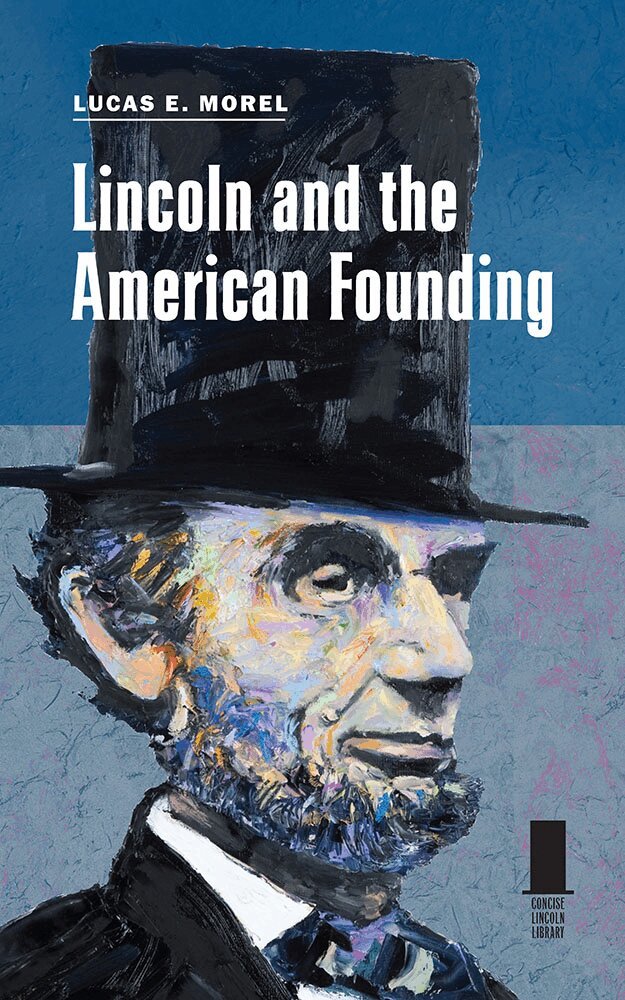
In this persuasive work of intellectual history, Lucas E. Morel argues that the most important influence on Abraham Lincoln’s political thought and practice was what he learned from the leading figures of and documents from the birth of the United States. In this systematic account of those principles, Morel compellingly demonstrates that to know Lincoln well is to understand thoroughly the founding of America.With each chapter describing a particular influence, Morel leads readers from the Founding Father, George Washington; to the founding documents, the Declaration of Independence and Constitution; to the founding compromise over slavery; and finally to a consideration of how the original intentions of the Founding Fathers should be respected in light of experience, progress, and improvements over time. Within these key discussions, Morel shows that without the ideals of the American Revolution, Lincoln’s most famous speeches would be unrecognizable, and the character of the nation would have lost its foundation on the universal principles of human equality, individual liberty, and government by the consent of the governed.Lincoln thought that the principles of human equality and individual rights could provide common ground for a diverse people to live as one nation and that some old things, such as the political ideals of the American founding, were worth preserving. He urged Americans to be vigilant in maintaining the institutions of self-government and to exercise and safeguard the benefits of freedom for future generations. Morel posits that adopting the way of thinking and speaking Lincoln advocated, based on the country’s founding, could help mend our current polarized discourse and direct the American people to employ their common government on behalf of a truly common good.
209 kr
Skickas inom 7-10 vardagar
209 kr
Skickas inom 7-10 vardagar
Between 1840 and 1860, America received more than four and a half million people from foreign countries as permanent residents, including a huge influx of newcomers from northern and western Europe, hundreds of thousands of Mexicans who became U.S. citizens with the annexation of Texas and the Mexican Cession, and a smaller number of Chinese immigrants. While some Americans sought to make immigration more difficult and to curtail the rights afforded to immigrants, Abraham Lincoln advocated for the rights of all classes of citizens. In this succinct study, Jason H. Silverman investigates Lincoln’s evolving personal, professional, and political relationship with the wide variety of immigrant groups he encountered throughout his life, revealing that Lincoln related to the immigrant in a manner few of his contemporaries would or could emulate.From an early age, Silverman shows, Lincoln developed an awareness of and a tolerance for different peoples and their cultures, and he displayed an affinity for immigrants throughout his legal and political career. Silverman reveals how immigrants affected not only Lincoln’s day-to-day life but also his presidential policies and details Lincoln’s opposition to the Know Nothing Party and the antiforeign attitudes in his own Republican Party, his reliance on German support for his 1860 presidential victory, his appointment of political generals of varying ethnicities, and his reliance on an immigrant for the literal rules of war.Examining Lincoln's views on the place of the immigrant in America’s society and economy, Silverman’s pioneering work offers a rare new perspective on the renowned sixteenth president.
277 kr
Skickas inom 7-10 vardagar
Exploring Lincoln's Evolving Views of Citizenship At its most basic level, citizenship is about who belongs to a political community, and for Abraham Lincoln in nineteenth-century America, the answer was in flux. The concept of 'fellow citizens,' for Lincoln, encompassed different groups at different times. In this first book focused on the topic, Mark E. Steiner analyzes and contextualizes Lincoln's evolving views about citizenship over the course of his political career. As an Illinois state legislator, Lincoln subscribed to the by-then-outmoded belief that suffrage must be limited to those who met certain obligations to the state. He rejected the adherence to universal white male suffrage that had existed in Illinois since statehood. In 1836 Lincoln called for voting rights to be limited to white people who had served in the militia or paid taxes. Surprisingly, Lincoln did not exclude women, though later he did not advocate giving women the right to vote and did not take women seriously as citizens. The women at his rallies, he believed, served as decoration. For years Lincoln presumed that only white men belonged in the political and civic community, and he saw immigration through this lens. Because Lincoln believed that white male European immigrants had a right to be part of the body politic, he opposed measures to lengthen the time they would have to wait to become a citizen or to be able to vote. Unlike many in the antebellum north, Lincoln rejected xenophobia and nativism. He opposed black citizenship, however, as he made clear in his debates with Stephen Douglas. Lincoln supported Illinois's draconian Black Laws, which prohibited free black men from voting and serving on juries or in the militia. Further, Lincoln supported sending free black Americans to Africa-the ultimate repudiation and an antithesis of citizenship. Yet, as president, Lincoln came to embrace a broader vision of citizenship for African Americans. Steiner establishes how Lincoln's meetings at the White House with Frederick Douglass and other black leaders influenced his beliefs about colonization, which he ultimately disavowed, and citizenship for African Americans, which he began to consider. Further, the battlefield success of black Union soldiers revealed to Lincoln that black men were worthy of citizenship. Lincoln publicly called for limited suffrage among black men, including military veterans, in his speech about Reconstruction on April 11, 1865. Ahead of most others of his era, Lincoln showed just before his assassination that he supported rights of citizenship for at least some African Americans.
277 kr
Skickas inom 7-10 vardagar
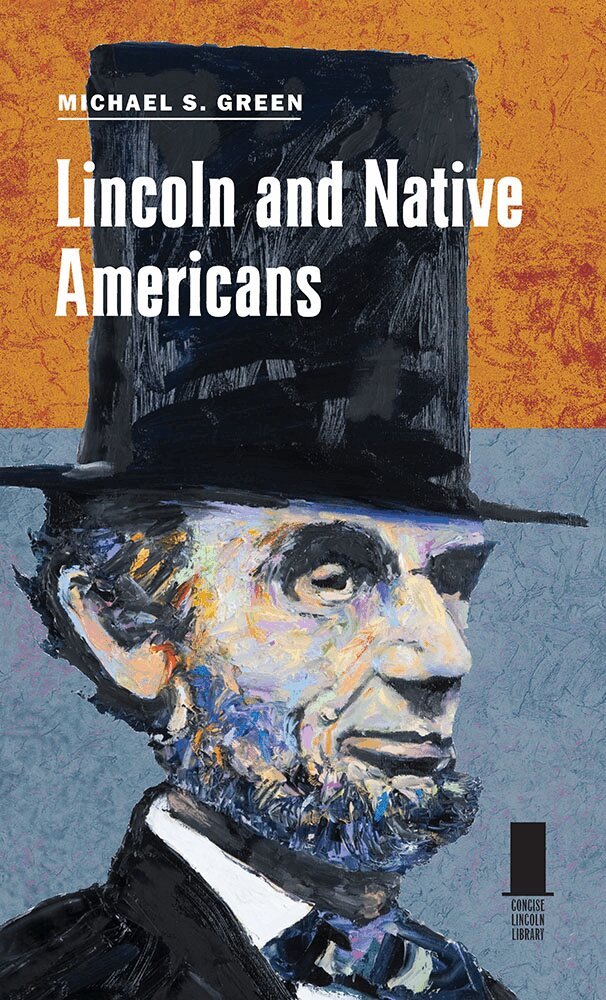
First exploration of Lincoln's relationship with the Native population in more than four decadesPresident Abraham Lincoln ordered the largest mass execution of Indigenous people in American history, following the 1862 uprising of hungry Dakota in Minnesota and suspiciously speedy trials. He also issued the largest commutation of executions in American history for the same act. But there is much more to the story of Lincoln's interactions and involvement, personal and political, with Native Americans, as Michael S. Green shows. His evenhanded assessment explains how Lincoln thought about Native Americans, interacted with them, and was affected by them. Although ignorant of Native customs, Lincoln revealed none of the hatred or single-minded opposition to Native culture that animated other leaders and some of his own political and military officials. Lincoln did far too little to ease the problems afflicting Indigenous people at the time, but he also expressed more sympathy for their situation than most other politicians of the day. Still, he was not what those who wanted legitimate improvements in the lives of Native Americans would have liked him to be.At best, Lincoln's record is mixed. He served in the Black Hawk War against tribes who were combating white encroachment. Later he supported policies that exacerbated the situation. Finally, he led the United States in a war that culminated in expanding white settlement. Although as president, Lincoln paid less attention to Native Americans than he did to African Americans and the Civil War, the Indigenous population received considerably more attention from him than previous historians have revealed. In addition to focusing on Lincoln's personal and familial experiences, such as the death of his paternal grandfather at the hands of Indians, Green enhances our understanding of federal policies toward Native Americans before and during the Civil War and how Lincoln's decisions affected what came after the war. His patronage appointments shaped Indian affairs, and his plans for the West would also have vast consequences. Green weighs Lincoln's impact on the lives of Native Americans and imagines what might have happened if Lincoln had lived past the war's end. More than any other historian, Green delves into Lincoln's racial views about people of color who were not African American.
209 kr
Skickas inom 7-10 vardagar
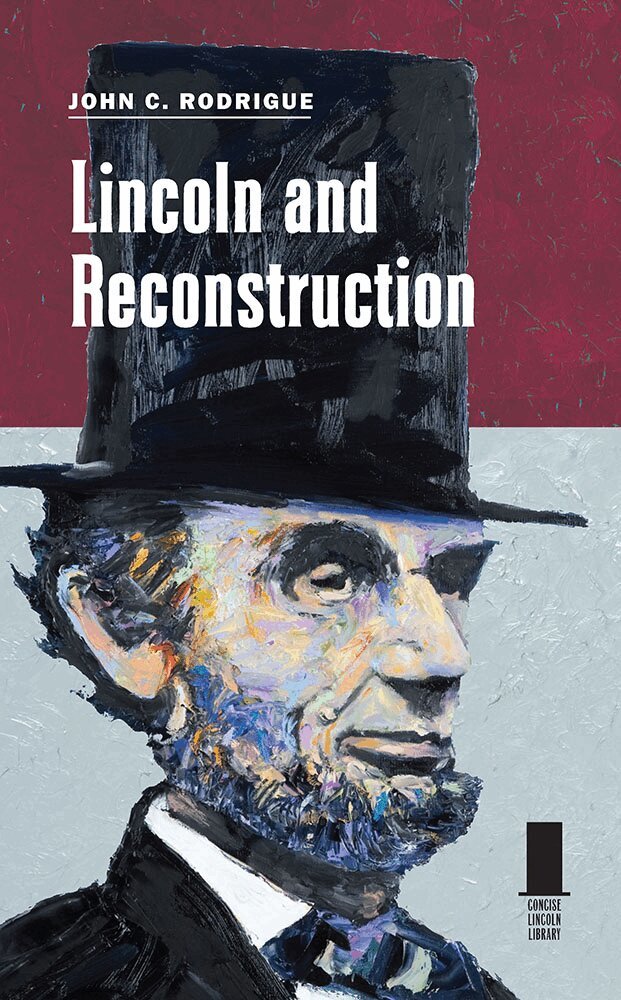
Although Abraham Lincoln dominates the literature on the American Civil War, he remains less commonly associated with reconstruction. Previous scholarly works touch on Lincoln and reconstruction, but they tend either to speculate on what Lincoln might have done after the war had he not been assassinated or to approach his reconstruction plans merely as a means of winning the war. In this thought-provoking study, John C. Rodrigue offers a succinct but significant survey of Lincoln’s wartime reconstruction initiatives while providing a fresh interpretation of the president’s plans for postwar America.Revealing that Lincoln concerned himself with reconstruction from the earliest days of his presidency, Rodrigue details how Lincoln’s initiatives unfolded, especially in the southern states where they were attempted. He explores Lincoln’s approach to various issues relevant to reconstruction, including slavery, race, citizenship, and democracy; his dealings with Congressional Republicans, especially the Radicals; his support for and eventual abandonment of colonization; his dealings with the border states; his handling of the calls for negotiations with the Confederacy as a way of reconstructing the Union; and his move toward emancipation and its implications for his approach to reconstruction. As the Civil War progressed, Rodrigue shows, Lincoln’s definition of reconstruction transformed from the mere restoration of the seceded states to a more fundamental social, economic, and political reordering of southern society and of the Union itself. Based on Lincoln’s own words and writings as well as an extensive array of secondary literature, Rodrigue traces the evolution of Lincoln’s thinking on reconstruction, providing new insight into a downplayed aspect of his presidency.
216 kr
Skickas inom 7-10 vardagar
216 kr
Skickas inom 7-10 vardagar
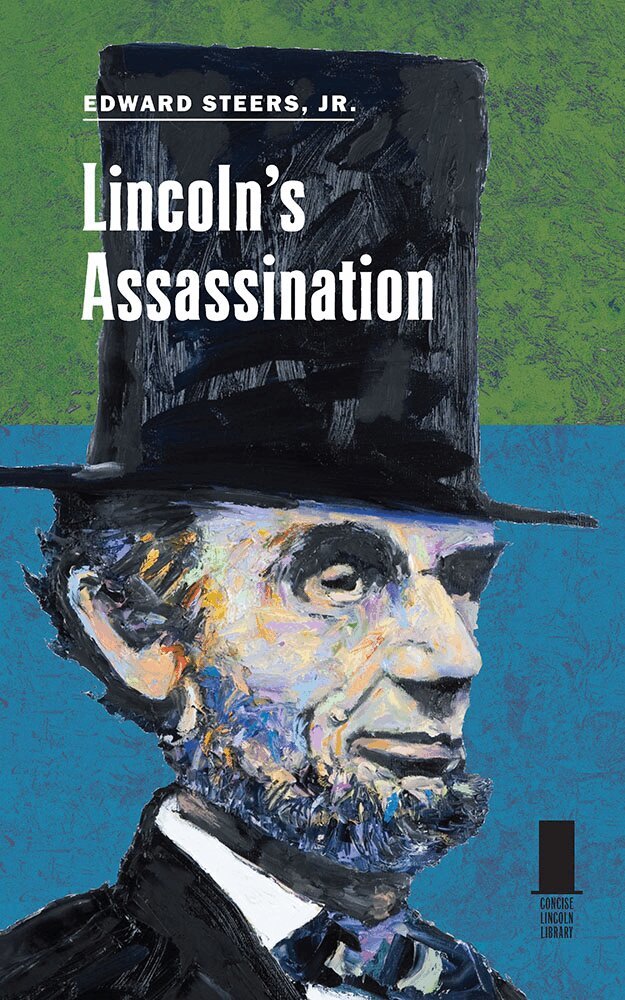
For 150 years, the assassination of Abraham Lincoln has fascinated the American people. Relatively few academic historians, however, have devoted study to it, viewing the murder as a side note tied to neither the Civil War nor Reconstruction. Over time, the traditional story of the assassination has become littered with myths, from the innocence of Mary Surratt and Samuel Mudd to John Wilkes Booth’s escape to Oklahoma or India, where he died by suicide several years later. In this succinct volume, Edward Steers, Jr. sets the record straight, expertly analyzing the historical evidence to explain Lincoln’s assassination. The decision to kill President Lincoln, Steers shows, was an afterthought. John Wilkes Booth’s original plan involved capturing Lincoln, delivering him to the Confederate leadership in Richmond, and using him as a bargaining chip to exchange for southern soldiers being held in Union prison camps. Only after Robert E. Lee surrendered the Army of Northern Virginia and Richmond fell to Union forces did Booth change his plan from capture to murder. As Steers explains, public perception about Lincoln’s death has been shaped by limited but popular histories that assert, alternately, that Secretary of War Edwin Stanton engineered the assassination or that John Wilkes Booth was a mad actor fueled by delusional revenge. In his detailed chronicle of the planning and execution of Booth’s plot, Steers demonstrates that neither Stanton nor anyone else in Lincoln’s sphere of political confidants participated in Lincoln’s death, and Booth remained a fully rational person whose original plan to capture Lincoln was both reasonable and capable of success. He also implicates both Mary Surratt and Samuel Mudd, as well as other conspirators, clarifying their parts in the scheme. At the heart of Lincoln’s assassination, Steers reveals, lies the institution of slavery. Lincoln’s move toward ending slavery and his unwillingness to compromise on emancipation spurred the white supremacist Booth and ultimately resulted in the president’s untimely death. With concise chapters and inviting prose, this brief volume will prove essential for anyone seeking a straightforward, authoritative analysis of one of the most dramatic events in American history.
202 kr
Kommande
In this persuasive work of intellectual history, Lucas E. Morel argues that the most important influence on Abraham Lincoln's political thought and practice was what he learned from the leading figures of and documents from the birth of the United States. In this systematic account of those principles, Morel compellingly demonstrates that to know Lincoln well is to understand thoroughly the founding of America. With each chapter describing a particular influence, Morel leads readers from the Founding Father, George Washington; to the founding documents, the Declaration of Independence and Constitution; to the founding compromise over slavery; and finally to a consideration of how the original intentions of the Founding Fathers should be respected in light of experience, progress, and improvements over time. Within these key discussions, Morel shows that without the ideals of the American Revolution, Lincoln's most famous speeches would be unrecognizable, and the character of the nation would have lost its foundation on the universal principles of human equality, individual liberty, and government by the consent of the governed.Lincoln thought that the principles of human equality and individual rights could provide common ground for a diverse people to live as one nation and that some old things, such as the political ideals of the American founding, were worth preserving. He urged Americans to be vigilant in maintaining the institutions of self-government and to exercise and safeguard the benefits of freedom for future generations. Morel posits that adopting the way of thinking and speaking Lincoln advocated, based on the country's founding, could help mend our current polarized discourse and direct the American people to employ their common government on behalf of a truly common good.
208 kr
Kommande
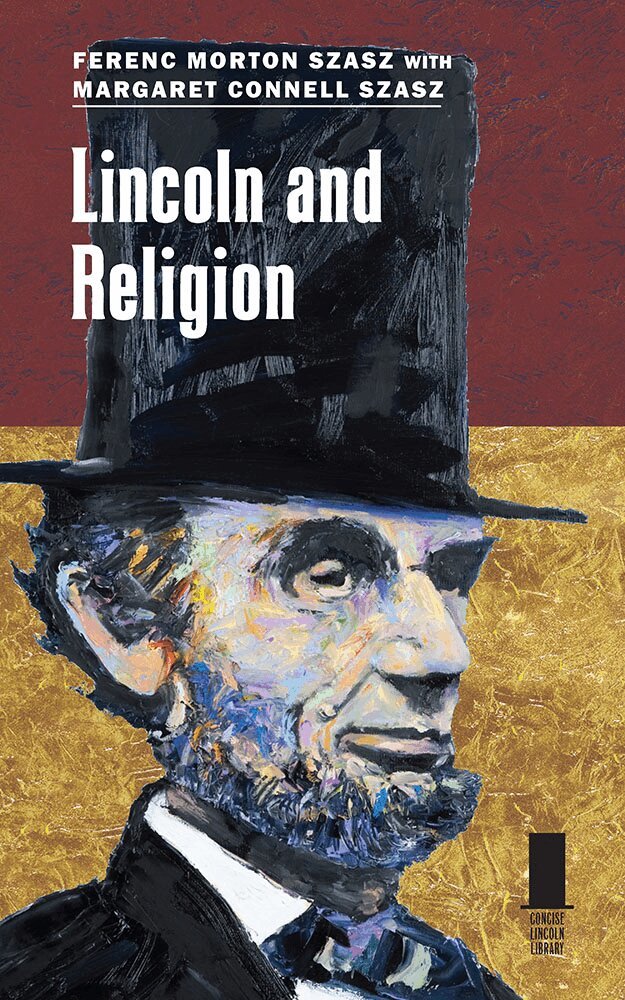
Abraham Lincoln’s faith has commanded more broad-based attention than that of any other American president. Although he never joined a denomination, Baptists, Presbyterians, Quakers, Episcopalians, Disciples of Christ, Spiritualists, Jews, and even atheists claim the sixteenth president as one of their own. In this concise volume, Ferenc Morton Szasz and Margaret Connell Szasz offer both an accessible survey of the development of Lincoln’s religious views and an informative launch pad for further academic inquiry.