Connecting the Greater West Series - Böcker
Visar alla böcker i serien Connecting the Greater West Series. Handla med fri frakt och snabb leverans.
5 produkter
5 produkter
251 kr
Skickas inom 7-10 vardagar
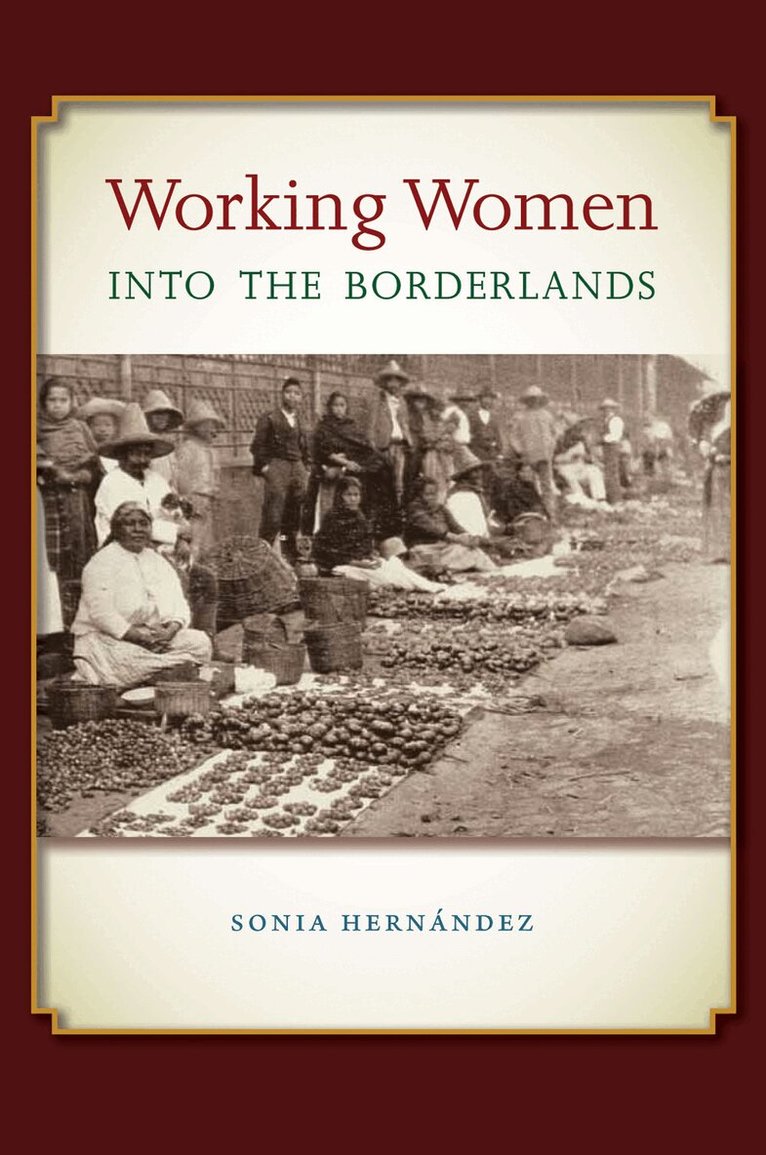
In Working Women into the Borderlands, author Sonia Hernández sheds light on how women’s labor was shaped by US capital in the northeast region of Mexico and how women’s labor activism simultaneously shaped the nature of foreign investment and relations between Mexicans and Americans. As capital investments fueled the growth of heavy industries in cities and ports such as Monterrey and Tampico, women’s work complemented and strengthened their male counterparts’ labor in industries which were historically male-dominated.As Hernández reveals, women laborers were expected to maintain their “proper” place in society, and work environments were in fact gendered and class-based. Yet, these prescribed notions of class and gender were frequently challenged as women sought to improve their livelihoods by using everyday forms of negotiation including collective organizing, labor arbitration boards, letter writing, creating unions, assuming positions of confianza (“trustworthiness”), and by migrating to urban centers and/or crossing into Texas. Drawing extensively on bi-national archival sources, newspapers, and published records, Working Women into the Borderlands demonstrates convincingly how women’s labor contributions shaped the development of one of the most dynamic and contentious borderlands in the globe.
Power and Control in the Imperial Valley
Nature, Agribusiness, and Workers on the California Borderland, 1900-1940
Inbunden, Engelska, 2014
510 kr
Skickas inom 11-20 vardagar
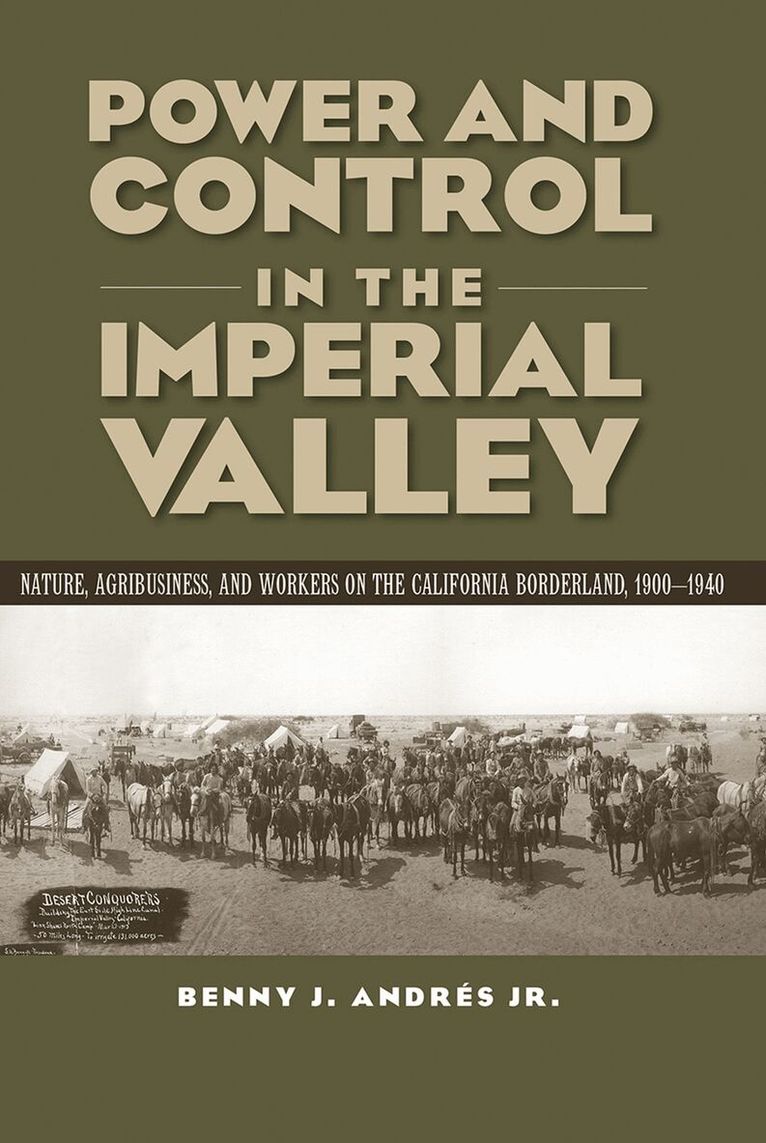
Power and Control in the Imperial Valley examines the evolution of irrigated farming in the Imperial-Mexicali Valley, an arid desert straddling the California–Baja California border, bisected by the international boundary line.Benny Andrés analyzes and traces the bi-national competition over the Colorado River, the capitalistic transformation of nature for industrial agriculture, the creation of a racialized, hierarchical agricultural labor force, and the repression of social and labor dissenters.
Power and Control in the Imperial Valley
Nature, Agribusiness, and Workers on the California Borderland, 1900-1940
Häftad, Engelska, 2016
269 kr
Skickas inom 10-15 vardagar
Power and Control in the Imperial Valley examines the evolution of irrigated farming in the Imperial-Mexicali Valley, an arid desert straddling the California-Baja California border. Bisected by the international boundary line, the valley drew American investors determined to harness the nearby Colorado River to irrigate a million acres on both sides of the border. The ""conquest"" of the environment was a central theme in the history of the valley.Colonization in the valley began with the construction of a sixty-mile aqueduct from the Colorado River in California through Mexico. Initially, Mexico held authority over water delivery until settlers persuaded Congress to construct the All-American Canal. Control over land and water formed the basis of commercial agriculture and in turn enabled growers to use the state to procure inexpensive, plentiful immigrant workers.
713 kr
Skickas inom 7-10 vardagar
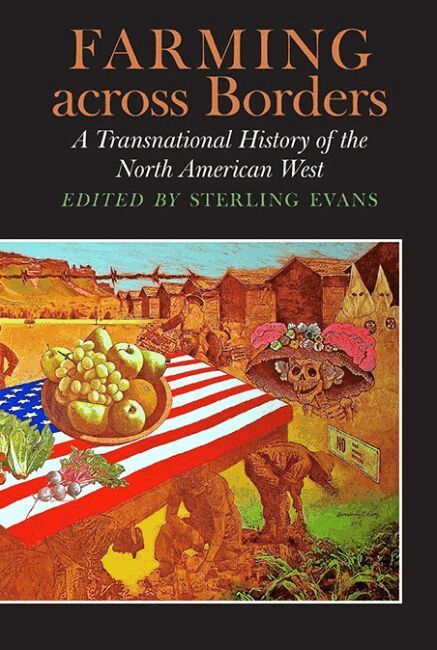
Farming across Borders uses agricultural history to connect the regional experiences of the American West, northern Mexico, western Canada, and the North American side of the Pacific Rim, now writ large into a broad history of the North American West. Case studies of commodity production and distribution, trans-border agricultural labor, and environmental change unite to reveal new perspectives on a historiography traditionally limited to a regional approach.Sterling Evans has curated nineteen essays to explore the contours of “big” agricultural history. Crops and commodities discussed include wheat, cattle, citrus, pecans, chiles, tomatoes, sugar beets, hops, henequen, and more. Toiling over such crops, of course, were the people of the North American West, and as such, the contributing authors investigate the role of agricultural labor, from braceros and Hutterites to women working in the sorghum fields and countless other groups in between.As Evans concludes, “society as a whole (no matter in what country) often ignores the role of agriculture in the past and the present.” Farming across Borders takes an important step toward cultivating awareness and understanding of the agricultural, economic, and environmental connections that loom over the North American West regardless of lines on a map. In the words of one essay, “we are tied together . . . in a hundred different ways.”
530 kr
Skickas inom 10-15 vardagar
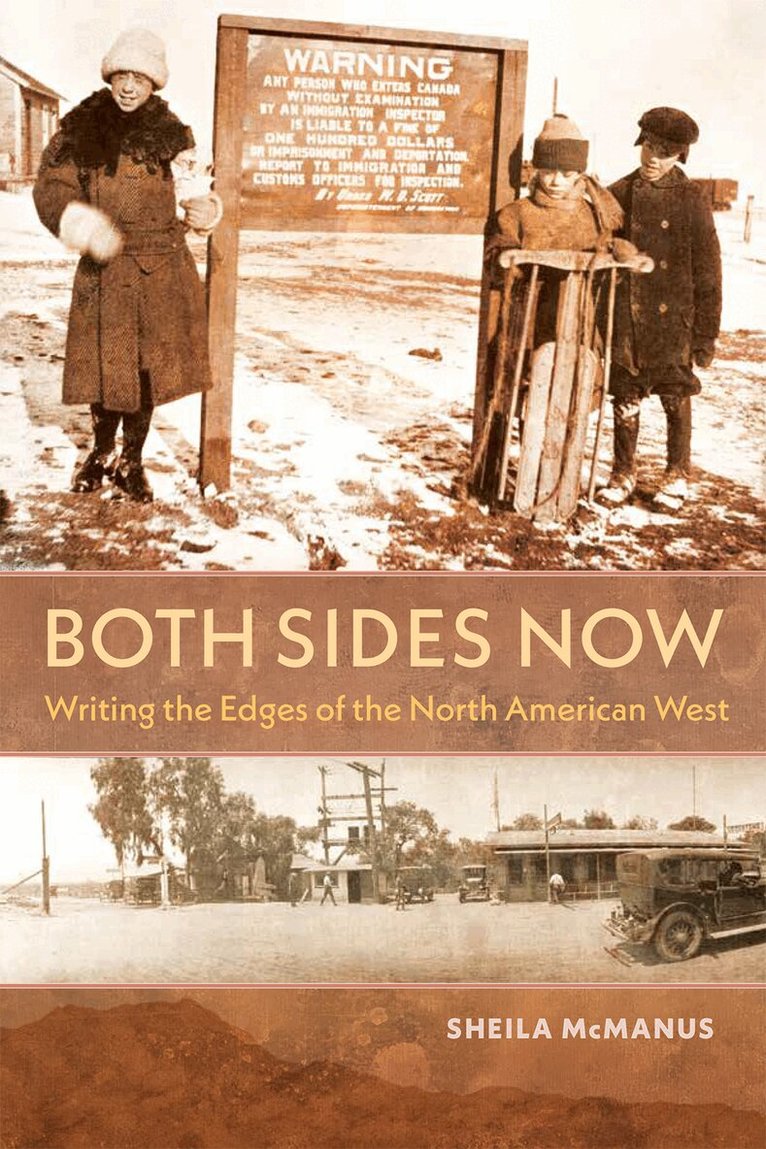
How do borderlands work? How do they maintain their distinctive features in the face of concerted efforts on the part of nation-states to make each of their borderlines into a harsh demarcation? According to most contemporary political discourse and popular perceptions, the two borders of the United States West have little in common but understanding their borderlands’ similarities can help us understand some of the most powerful forces shaping human history and the world around us; understanding their historiographies gives us insight into borderlands historians’ unique methodology.Both Sides Now: Writing the Edges of the North American West brings together leading scholarship in a focused, synthetic survey of five themes in the history of the northern and southern borderlands: the borderlands as aboriginal homelands and the persistence of Indigenous territories and ways of being; imperial and national efforts to create binary notions of territory and identity; regulatory efforts aimed at stopping or limiting the movement of certain people across their borders; the weakening of those efforts by cross-border movement of capital, goods, and people, usually aided by state power, and the complex, binary-refusing identities that persist in borderlands communities.Historian Sheila McManus uses these themes to highlight the commonalities between the two borderlands’ histories and provides an overview and a starting point for experts and newcomers in the field of North American borderlands history to address new questions. By conceptualizing both borders together and focusing particular attention on race and gender as well as empire and nation, Both Sides Now provides a unique methodology in North American scholarship that emphasizes the connections between these borderlands and others around the world.