Counter-geographies of the Refugee Balkan Route series – serie
Visar alla böcker i serien Counter-geographies of the Refugee Balkan Route series. Handla med fri frakt och snabb leverans.
2 produkter
2 produkter
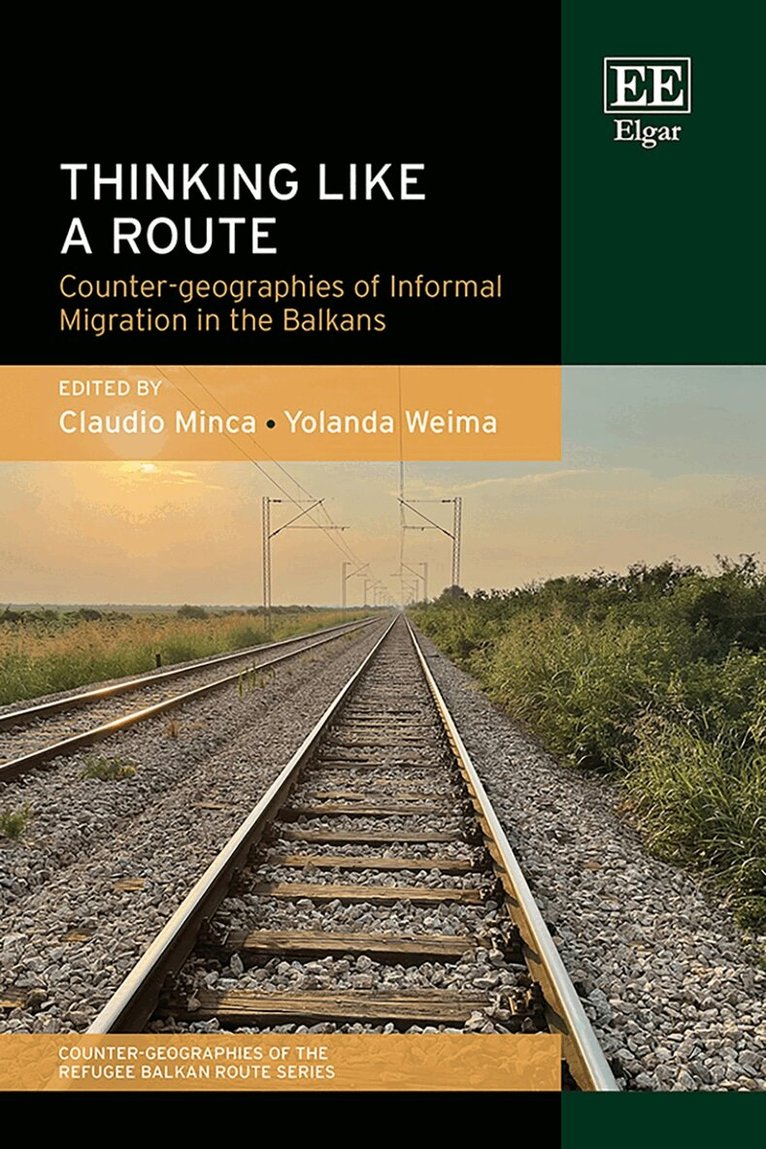
Thinking Like a Route
Counter-geographies of Informal Migration in the Balkans
Inbunden, Engelska, 2026
1 548 kr
Skickas inom 7-10 vardagar
This timely book posits the idea of a ‘route perspective’ as a multi-scalar methodology for studying informal migration. Claudio Minca, Yolanda Weima and their contributors draw on their rich multi-sited, multi-temporal ethnographic research along the Balkan Route, the most important informal overland migration route in Europe, to better understand how it is continuously formed through an ever-changing assemblage of spatialities, trajectories, materialities and actors.Presenting a novel approach to researching the complex spaces of the Balkan Route, chapters first trace the key elements of the route’s formal infrastructure from a state perspective, including camps, border walls, and asylum systems, which highlights, in-turn, what is made invisible by the official state gaze. The authors then use their empirical findings at key sites to underscore the tenacious counter-geographies of people-on-the-move.Thinking Like a Route is a vital read for students and researchers of human geography, especially political geography, interested in informal migration. It is also an important reference for academics in interdisciplinary migration, refugee and camp studies, as well as those with a focus on Balkan and Eastern European studies.
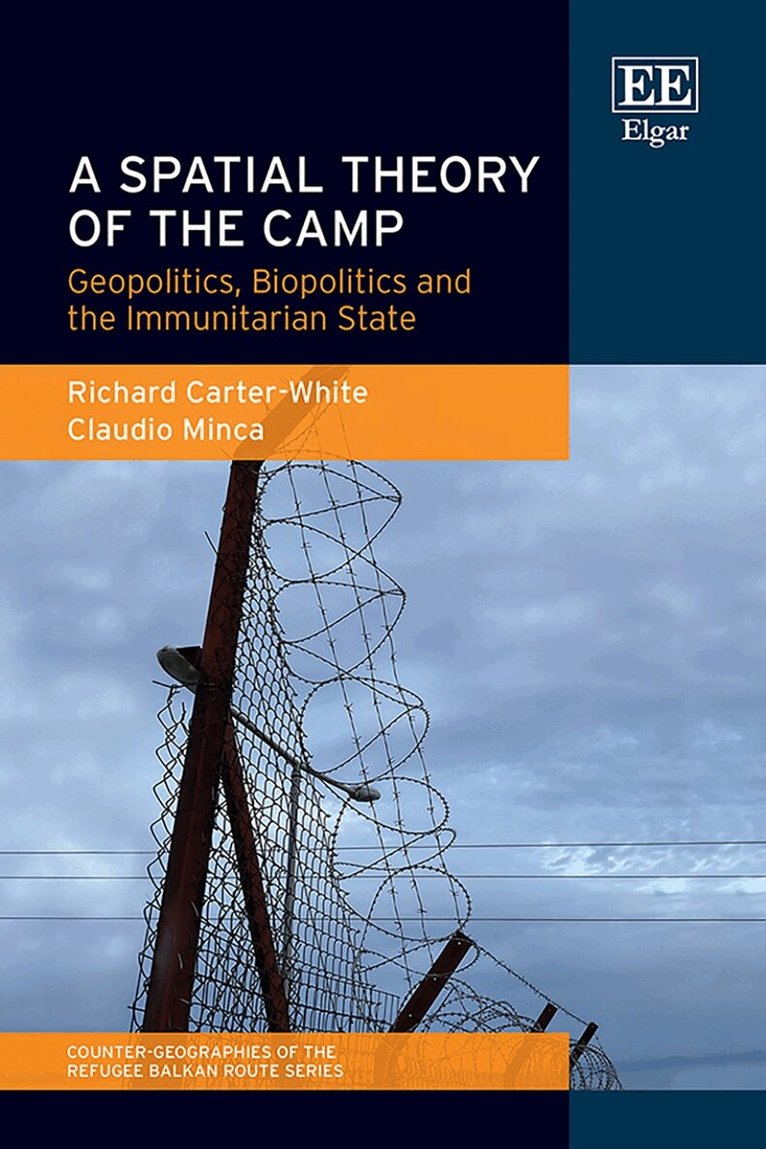
Spatial Theory of the Camp
Geopolitics, Biopolitics and the Immunitarian State
Inbunden, Engelska, 2025
1 873 kr
Skickas inom 7-10 vardagar
This is an open access work distributed under the Creative Commons Attribution-NonCommercial-NoDerivatives 4.0 International License (https://creativecommons.org/licenses/by-nc-nd/4.0/). Users can redistribute the work for non-commercial purposes, as long as it is passed along unchanged and in whole, as detailed in the License. The copyright holders must be clearly credited as the owner of the original work. Any translation or adaptation of the original content requires the written authorization of the copyright holders.From concentration camps to refugee settlements, there is little consensus about what exactly defines ‘the camp’. This timely and comprehensive book adopts a geographical perspective to develop a spatial theory of the camp, advancing the interdisciplinary field of camp studies. Richard Carter-White and Claudio Minca explore the spatial logics and practices that unite different camps, demonstrating why the camp has become such an integral tool of contemporary governance and what this reveals about the geopolitics and biopolitics of the modern nation-state.Through a thorough parallel analysis of historical concentration camps and contemporary refugee camps, this book conceptualizes ‘the camp’ as an institution through which selected groups and individuals are included in society through a set of exclusionary practices. Providing an innovative and multifaceted geographical analysis of camp contexts, chapters focus on the examples of Auschwitz concentration camp and refugee camps along the Balkan Route. Throughout the analysis, the book draws upon Roberto Esposito’s political philosophy to theorize that camps are an attempt at ‘immunizing’ the nation-state from its inherent state of crisis.A Spatial Theory of the Camp will be an indispensable reference for those interested in camp studies. It will also be beneficial to students and academics of human geography, political philosophy, Holocaust studies, and refugee and migration studies.