Critical Currents in Latin American Perspective Series - Böcker
Visar alla böcker i serien Critical Currents in Latin American Perspective Series. Handla med fri frakt och snabb leverans.
15 produkter
15 produkter
972 kr
Skickas inom 5-8 vardagar
People's Power is a theoretical, historical and analytical account of representative government that has emerged in Cuba since the 1970's. By combining original research and extensive interviews with citizens and officials, Peter Roman illustrates how the Cuban model was built on theoretical foundations derived from Rousseau, Marx, and Lenin, and the historical precedents of the 1871 Paris Commune, the 1905 and 1917 soviets, and the pre- and post-Stalin years of the Soviet Union. Cuba's contributions to this legacy—the Organs of People's Power—include unique approaches to the nomination and election of municipal assembly delegates and National Assembly deputies, to citizen input and participation, and to the role of the Communist Party. There is no other detailed study of the Cuban parliamentary system. Recorded eyewitness accounts the nominations sessions for municipal assembly delegates and the accountability sessions where citizens voice suggestions and complaints to their delegates, allow Cubans to speak for themselves. Reading this book is imperative for anyone interested in understanding the so often overlooked and misunderstood representative government that exists in Cuba today—as it has for decades.
589 kr
Skickas inom 5-8 vardagar
Offering a systematic, critical analysis of the presidency of Fernando Cardoso, this ambitious case study assesses government policies within the framework of the 'new economic model' of globalization and structural adjustment. Petras and Veltmeyer argue that Cardoso paved the way for what amounted to the takeover of a large and important part of Brazil's economy by foreign investors. The authors discuss the neoliberal model of capitalist development, the privatization of key sectors and enterprises, the human cost of structural adjustment, and the search for a community-based form of local development. The crisis in agriculture and the dynamic responses of the country's rural landless workers precipitated the rise of Brazil's populist new president, Lula, whom the authors charge has started down the same path as his predecessor.
Prophet and Power
Jean-Bertrand Aristide, the International Community, and Haiti
Häftad, Engelska, 2006
723 kr
Skickas inom 5-8 vardagar
This compelling book offers a comprehensive analysis of the struggle for democracy in Haiti, set in the context of the tumultuous rise and fall of Jean-Bertrand Aristide. Swept to power in 1991 as the champion of Haiti's impoverished majority and their demand for a more just, equal, and participatory democratic society, the charismatic priest-turned-president was overthrown by the military just seven months into his first term. Popular resistance to the junta compelled the United States to lead a multinational force to restore Aristide to power in 1994 to serve out the remainder of his presidency until 1996. When he was re-elected for a second and final term in 2000, Aristide had undergone a dramatic transformation. Expelled from the priesthood and no longer preaching liberation theology, his real objective was to consolidate his and his Lavalas party's power and preserve the predatory state structures he had vowed to dismantle just a decade earlier. To maintain power, Aristide relied on armed gangs, the police, and authoritarian practices. That strategy failed and his foreign-backed foes overthrew and exiled him once again in 2004. This time, however, the population did not rally in his defense. Written by one of the world's leading scholars of Haiti, The Prophet and Power explores the crisis of democratization in a poor, underdeveloped, peripheral society with a long history of dictatorial rule by a tiny ruling class opposed to changing the status quo and dependent on international economic and political support. Situating the country in its global context, Alex Dupuy considers the structures and relations of power between Haiti and the core capitalist countries and the forces struggling for and against social change.
1 409 kr
Skickas inom 5-8 vardagar
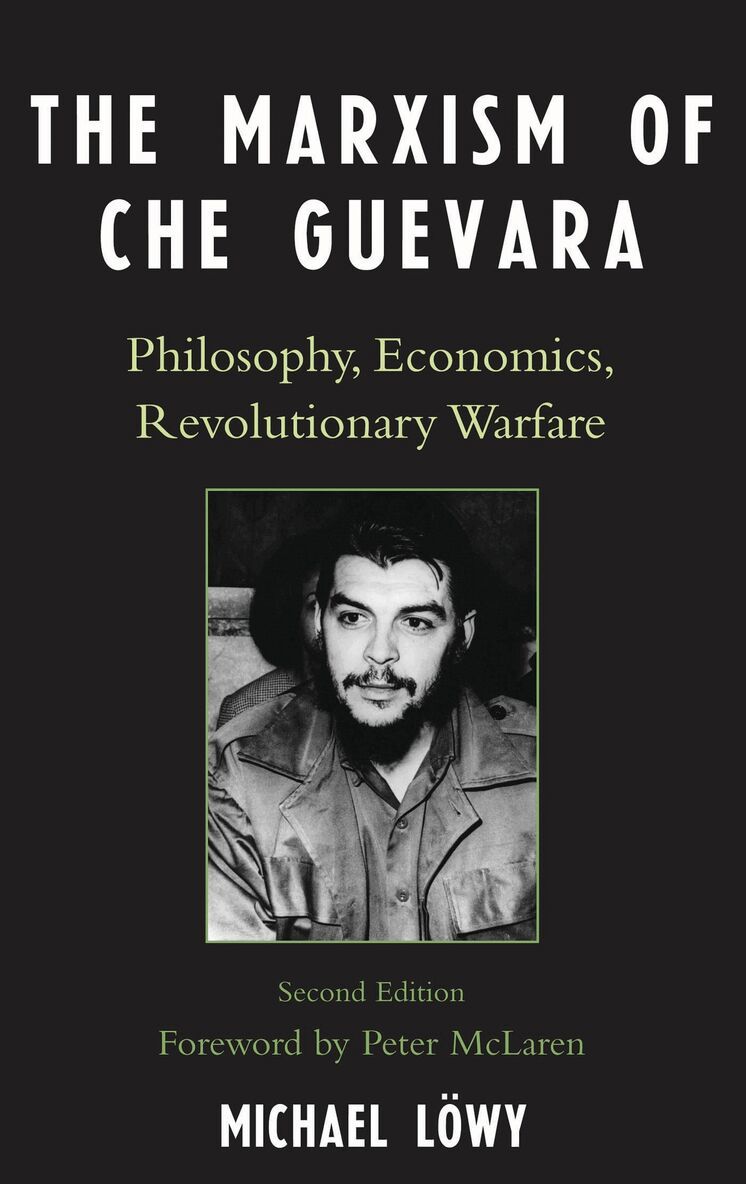
In this seminal exploration of Che Guevara's contributions to Marxist thinking, Michael Löwy traces Che's ideas about Marxism both as they related to Latin America and to more general philosophical, political, and economic issues. Now revised and updated, this edition includes a chapter on Guevara's search for a new paradigm of socialism and a substantive essay by Peter McLaren on Che's continued relevance today. Löwy portrays Guevara as a revolutionary humanist who considered all political questions from an internationalist viewpoint. For him, revolutionary movements in Latin America were part of a world process of emancipation. Löwy considers especially Che's views on the contradiction between socialist planning and the law of value in the Cuban economy and his search for an alternative road to the "actually existing socialism" of the Stalinist and post-Stalinist Soviet bloc. Che's varied occupations—doctor and economist, revolutionary and banker, agitator and ambassador, industrial organizer and guerrilla fighter—were expressions of a deep commitment to social change. This book eloquently captures his views on humanity, his contributions to the theory of revolutionary warfare, and his ideas about society's transition to socialism, offering a cohesive, nuanced introduction to the range of Guevara's thought.
510 kr
Skickas inom 5-8 vardagar
In this seminal exploration of Che Guevara's contributions to Marxist thinking, Michael Löwy traces Che's ideas about Marxism both as they related to Latin America and to more general philosophical, political, and economic issues. Now revised and updated, this edition includes a chapter on Guevara's search for a new paradigm of socialism and a substantive essay by Peter McLaren on Che's continued relevance today. Löwy portrays Guevara as a revolutionary humanist who considered all political questions from an internationalist viewpoint. For him, revolutionary movements in Latin America were part of a world process of emancipation. Löwy considers especially Che's views on the contradiction between socialist planning and the law of value in the Cuban economy and his search for an alternative road to the "actually existing socialism" of the Stalinist and post-Stalinist Soviet bloc. Che's varied occupations—doctor and economist, revolutionary and banker, agitator and ambassador, industrial organizer and guerrilla fighter—were expressions of a deep commitment to social change. This book eloquently captures his views on humanity, his contributions to the theory of revolutionary warfare, and his ideas about society's transition to socialism, offering a cohesive, nuanced introduction to the range of Guevara's thought.
Catholic Church and Power Politics in Latin America
The Dominican Case in Comparative Perspective
Inbunden, Engelska, 2007
1 572 kr
Skickas inom 10-15 vardagar
Click here to see a video interview with Emelio Betances.Click here to access the tables referenced in the book.Since the 1960s, the Catholic Church has acted as a mediator during social and political change in many Latin American countries, especially the Dominican Republic, Bolivia, Guatemala, Nicaragua, and El Salvador. Although the Catholic clergy was called in during political crises in all five countries, the situation in the Dominican Republic was especially notable because the Church's role as mediator was eventually institutionalized. Because the Dominican state was persistently weak, the Church was able to secure the support of the Balaguer regime (1966–1978) and ensure social and political cohesion and stability. Emelio Betances analyzes the particular circumstances that allowed the Church in the Dominican Republic to accommodate the political and social establishment; the Church offered non-partisan political mediation, rebuilt its ties with the lower echelons of society, and responded to the challenges of the evangelical movement. The author's historical examination of church-state relations in the Dominican Republic leads to important regional comparisons that broaden our understanding of the Catholic Church in the whole of Latin America.
Catholic Church and Power Politics in Latin America
The Dominican Case in Comparative Perspective
Häftad, Engelska, 2007
434 kr
Skickas inom 10-15 vardagar
Click here to see a video interview with Emelio Betances.Click here to access the tables referenced in the book.Since the 1960s, the Catholic Church has acted as a mediator during social and political change in many Latin American countries, especially the Dominican Republic, Bolivia, Guatemala, Nicaragua, and El Salvador. Although the Catholic clergy was called in during political crises in all five countries, the situation in the Dominican Republic was especially notable because the Church's role as mediator was eventually institutionalized. Because the Dominican state was persistently weak, the Church was able to secure the support of the Balaguer regime (1966–1978) and ensure social and political cohesion and stability. Emelio Betances analyzes the particular circumstances that allowed the Church in the Dominican Republic to accommodate the political and social establishment; the Church offered non-partisan political mediation, rebuilt its ties with the lower echelons of society, and responded to the challenges of the evangelical movement. The author's historical examination of church-state relations in the Dominican Republic leads to important regional comparisons that broaden our understanding of the Catholic Church in the whole of Latin America.
1 572 kr
Skickas inom 10-15 vardagar
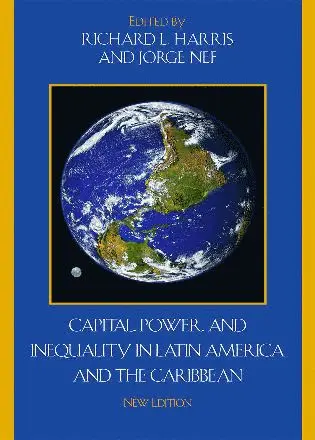
For an additional chapter on health and human security: Click Here.For suggested resources for each chapter in the book: Click Here.For additional resources on ecological and social issues: Click Here.For additional resources on indigenous peoples: Click Here.Comprehensive and interdisciplinary, this thoroughly updated and revised second edition is an engaging critical analysis of the major political, economic, social, and ecological conditions in Latin America and the Caribbean. Genuinely regional in scope, this textbook examines the hemispheric and global context of these conditions as well as the relations among Latin American and Caribbean states and their relations with the United States. Expert contributors describe and analyze the economies and trading relations, politics and state policies, social inequalities and social injustices, indigenous communities, gender relations, influence of religion, wide array of social movements, and social ecology of the societies in this important region of the world. Harris and Nef have assembled a valuable resource for undergraduate and graduate courses and all readers concerned with understanding the past, present, and future development of contemporary Latin America, the Caribbean, and the Americas as a whole.Contributions by: Guido Pascual Galafassi, Richard L. Harris, Judith Adler Hellman, Cristóbal Kay, Michael Kearney, Francesca Miller, Jorge Nef, Viviana Patroni, Wilder Robles, and Stefano Varese.
742 kr
Skickas inom 10-15 vardagar
For an additional chapter on health and human security: Click Here.For suggested resources for each chapter in the book: Click Here.For additional resources on ecological and social issues: Click Here.For additional resources on indigenous peoples: Click Here.Comprehensive and interdisciplinary, this thoroughly updated and revised second edition is an engaging critical analysis of the major political, economic, social, and ecological conditions in Latin America and the Caribbean. Genuinely regional in scope, this textbook examines the hemispheric and global context of these conditions as well as the relations among Latin American and Caribbean states and their relations with the United States. Expert contributors describe and analyze the economies and trading relations, politics and state policies, social inequalities and social injustices, indigenous communities, gender relations, influence of religion, wide array of social movements, and social ecology of the societies in this important region of the world. Harris and Nef have assembled a valuable resource for undergraduate and graduate courses and all readers concerned with understanding the past, present, and future development of contemporary Latin America, the Caribbean, and the Americas as a whole.Contributions by: Guido Pascual Galafassi, Richard L. Harris, Judith Adler Hellman, Cristóbal Kay, Michael Kearney, Francesca Miller, Jorge Nef, Viviana Patroni, Wilder Robles, and Stefano Varese.
1 476 kr
Skickas inom 10-15 vardagar
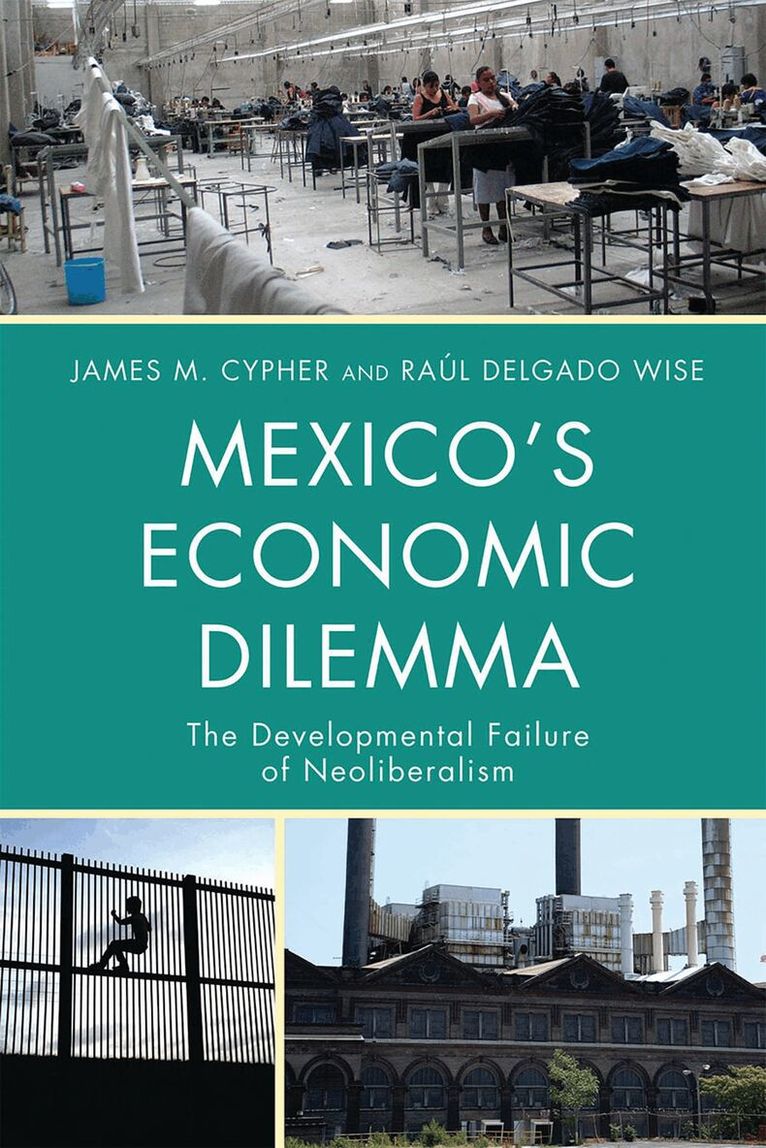
Written by two leading scholars, this book provides a detailed analysis of Mexico's political economy. James M. Cypher and Raúl Delgado Wise begin with an examination of Mexico's pivotal economic crisis of the 1980s and the consequent turn toward an export-led economy, later anchored by NAFTA. They show how Mexico, after abandoning frequently successful past practices of state-led development, disastrously tied its future to an unconditional reliance on foreign corporations to promote an export-led growth strategy.Focusing on Mexico's cheap labor export model, the authors use the maquiladora sector and the auto industry as case studies of the perils of globalization—the "race to the bottom" as capital becomes ever more international. The government's unconstrained free-market policies, they convincingly argue, have resulted in a fragmented economy marked by stagnation, falling wages, informal part-time employment, and massive migration, which define daily life for all but a tiny minority.
675 kr
Skickas inom 10-15 vardagar
Written by two leading scholars, this book provides a detailed analysis of Mexico's political economy. James M. Cypher and Raúl Delgado Wise begin with an examination of Mexico's pivotal economic crisis of the 1980s and the consequent turn toward an export-led economy, later anchored by NAFTA. They show how Mexico, after abandoning frequently successful past practices of state-led development, disastrously tied its future to an unconditional reliance on foreign corporations to promote an export-led growth strategy.Focusing on Mexico's cheap labor export model, the authors use the maquiladora sector and the auto industry as case studies of the perils of globalization—the "race to the bottom" as capital becomes ever more international. The government's unconstrained free-market policies, they convincingly argue, have resulted in a fragmented economy marked by stagnation, falling wages, informal part-time employment, and massive migration, which define daily life for all but a tiny minority.
1 703 kr
Skickas inom 10-15 vardagar
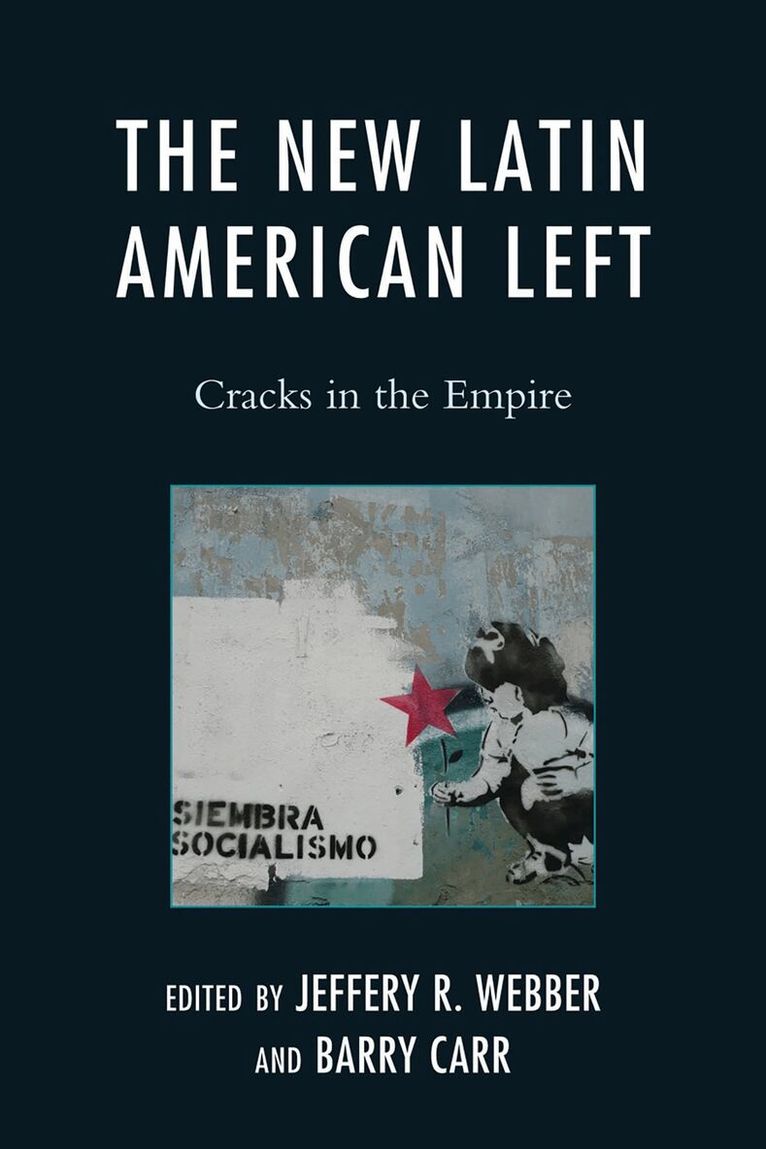
This provocative, multidisciplinary work explores the dramatic resurgence of the Left in Latin America since the late 1990s. Offering a comprehensive account of the complexities and nuances of the shifting political tides in the region, the book provides both a theoretical framework for assessing the state of the Left and a set of cases highlighting key movements, successes, and failures. Its theoretical scope covers socialist strategy, working-class formation, peasant social movements, the role of women in popular politics, and the response of outside powers. These themes provide the foundation for rich country studies of the new Left in Bolivia, Venezuela, Ecuador, Argentina, Brazil, Mexico, Chile, Nicaragua, El Salvador, Guatemala, and Honduras. Too often, the book argues, the rise of the new Left has been the subject of caricature, either through conservative defamation or populist romanticism. Working from a range of critical perspectives, the contributors consider the Left’s hopes, aims, and prospects, as well as its contradictions and fissures. As the first book to systematically consider the contemporary relevance of the Left, it will be central to any understanding of Latin American politics and society today.Contributions by: Ricardo Antunes, Marc Becker, Jared Bibler, Barry Carr, Emilia Castorina, Todd Gordon, Sujatha Fernandes, Claudio Katz, Fernando Leiva, Marco Mojica, Héctor Perla Jr., Richard Roman, Susan Spronk, Edur Velasco Arregui, Henry Veltmeyer, Leandro Vergara-Camus, Jeffery R. Webber, and Gregory Wilpert.
742 kr
Skickas inom 10-15 vardagar
This provocative, multidisciplinary work explores the dramatic resurgence of the Left in Latin America since the late 1990s. Offering a comprehensive account of the complexities and nuances of the shifting political tides in the region, the book provides both a theoretical framework for assessing the state of the Left and a set of cases highlighting key movements, successes, and failures. Its theoretical scope covers socialist strategy, working-class formation, peasant social movements, the role of women in popular politics, and the response of outside powers. These themes provide the foundation for rich country studies of the new Left in Bolivia, Venezuela, Ecuador, Argentina, Brazil, Mexico, Chile, Nicaragua, El Salvador, Guatemala, and Honduras. Too often, the book argues, the rise of the new Left has been the subject of caricature, either through conservative defamation or populist romanticism. Working from a range of critical perspectives, the contributors consider the Left’s hopes, aims, and prospects, as well as its contradictions and fissures. As the first book to systematically consider the contemporary relevance of the Left, it will be central to any understanding of Latin American politics and society today.Contributions by: Ricardo Antunes, Marc Becker, Jared Bibler, Barry Carr, Emilia Castorina, Todd Gordon, Sujatha Fernandes, Claudio Katz, Fernando Leiva, Marco Mojica, Héctor Perla Jr., Richard Roman, Susan Spronk, Edur Velasco Arregui, Henry Veltmeyer, Leandro Vergara-Camus, Jeffery R. Webber, and Gregory Wilpert.
1 476 kr
Skickas inom 10-15 vardagar
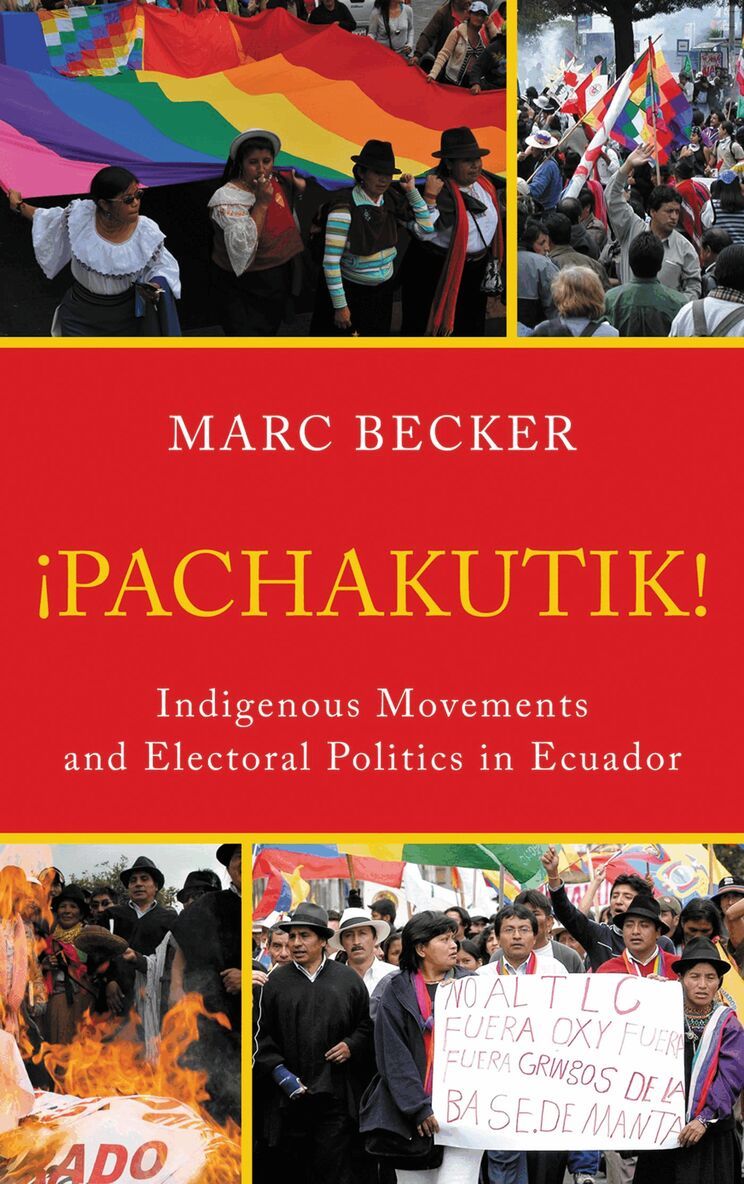
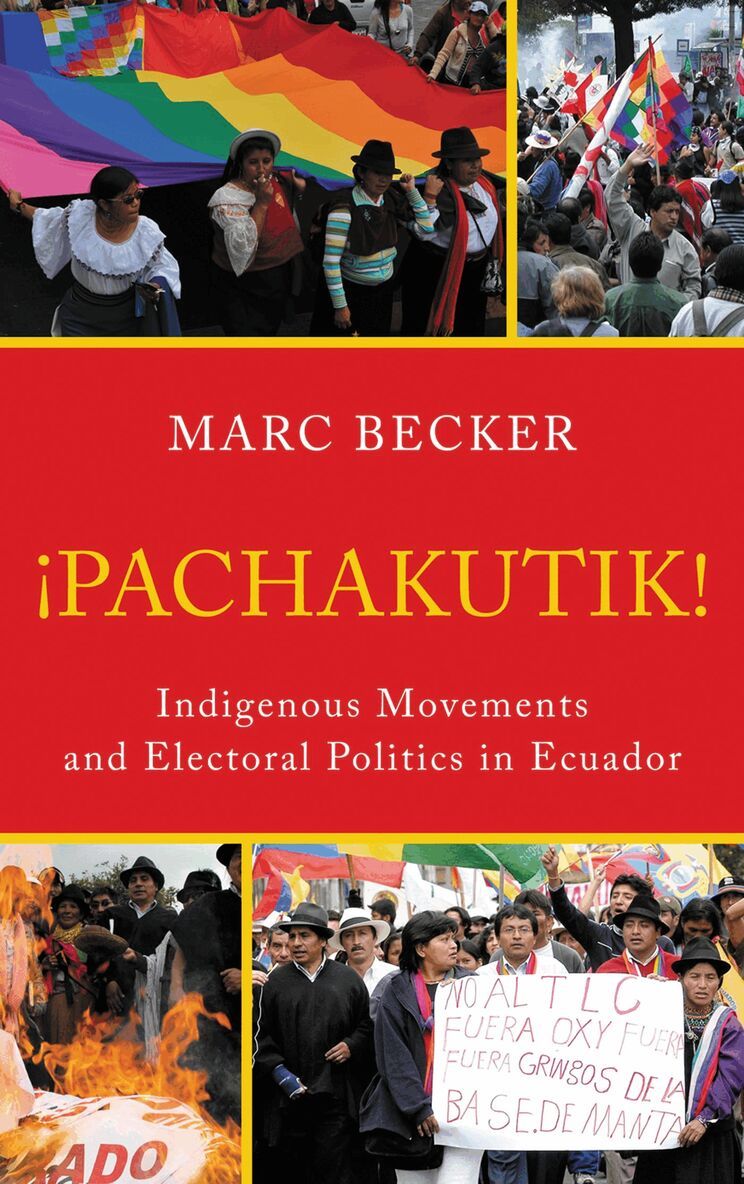
This authoritative book provides a deeply informed overview of one of the most dynamic social movements in Latin America. Focusing on contemporary Indigenous movements in Ecuador, leading scholar Marc Becker traces the growing influence of the Confederation of Indigenous Nationalities of Ecuador (CONAIE), which in 1990 led a powerful uprising that dramatically placed a struggle for Indigenous rights at the center of public consciousness. Activists began to refer to this uprising as a "pachakutik," a Kichwa word that means change, rebirth, and transformation, both in the sense of a return in time and the coming of a new era. Five years later, proponents launched a new political movement called Pachakutik to compete for elected office. In 2006, Ecuadorians elected Rafael Correa, who many saw as emblematic of the new Latin American left, to the presidency of the country. Even though CONAIE, Pachakutik, and Correa shared similar concerns for social justice, they soon came into conflict with each other. Becker examines the competing strategies and philosophies that emerge when social movements and political parties embrace comparable visions but follow different paths to realize their objectives. In exploring the multiple and conflictive strategies that Indigenous movements have followed over the past twenty years, he definitively documents the recent history and charts the trajectory of one of the Americas' most powerful and best organized social movements.
568 kr
Skickas inom 10-15 vardagar
This authoritative book provides a deeply informed overview of one of the most dynamic social movements in Latin America. Focusing on contemporary Indigenous movements in Ecuador, leading scholar Marc Becker traces the growing influence of the Confederation of Indigenous Nationalities of Ecuador (CONAIE), which in 1990 led a powerful uprising that dramatically placed a struggle for Indigenous rights at the center of public consciousness. Activists began to refer to this uprising as a "pachakutik," a Kichwa word that means change, rebirth, and transformation, both in the sense of a return in time and the coming of a new era. Five years later, proponents launched a new political movement called Pachakutik to compete for elected office. In 2006, Ecuadorians elected Rafael Correa, who many saw as emblematic of the new Latin American left, to the presidency of the country. Even though CONAIE, Pachakutik, and Correa shared similar concerns for social justice, they soon came into conflict with each other. Becker examines the competing strategies and philosophies that emerge when social movements and political parties embrace comparable visions but follow different paths to realize their objectives. In exploring the multiple and conflictive strategies that Indigenous movements have followed over the past twenty years, he definitively documents the recent history and charts the trajectory of one of the Americas' most powerful and best organized social movements.