Cultural Critique Books - Böcker
Visar alla böcker i serien Cultural Critique Books. Handla med fri frakt och snabb leverans.
9 produkter
9 produkter
367 kr
Skickas inom 11-20 vardagar
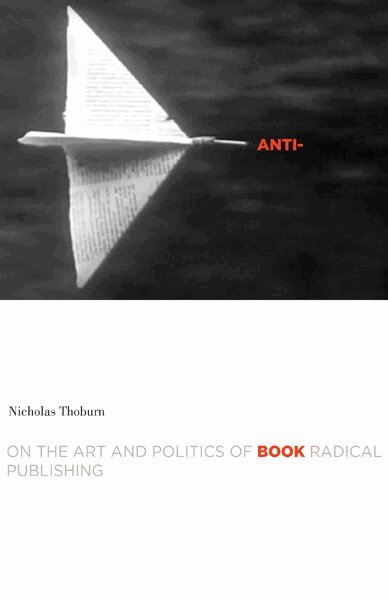
No, Anti-Book is not a book about books. Not exactly. And yet it is a must for anyone interested in the future of the book. Presenting what he terms a communism of textual matter,Nicholas Thoburn explores the encounter between political thought and experimental writing and publishing, shifting the politics of text from an exclusive concern with content and meaning to the media forms and social relations by which text is produced and consumed. Taking a post-digitalapproach in considering a wide array of textual media forms, Thoburn invites us to challenge the commodity form of books-to stop imagining books as transcendent intellectual, moral, and aesthetic goods unsullied by commerce. His critique is, instead, one immersed in the many materialities of text. Anti-Book engages with an array of writing and publishing projects, including Antonin Artauds paper gris-gris, Valerie Solanass SCUM Manifesto, Guy Debords sandpaper-bound Me9moires, the collective novelist Wu Ming, and the digital/print hybrid of Mute magazine. Empirically grounded, it is also a major achievement in expressing a political philosophy of writing and publishing, where the materiality of text is interlaced with conceptual production. Each chapter investigates a different form of textual media in concert with a particular concept: the small-press pamphlet as communist object,the magazine as diagrammatic publishing,political books in the modes of rootand rhizome,the multiple singleof anonymous authorship, and myth as unidentified narrative object. An absorbingly written contribution to contemporary media theory in all its manifestations, Anti-Book will enrich current debates about radical publishing, artists books and other new genre and media forms in alternative media, art publishing, media studies, cultural studies, critical theory, and social and political theory.
297 kr
Skickas inom 11-20 vardagar
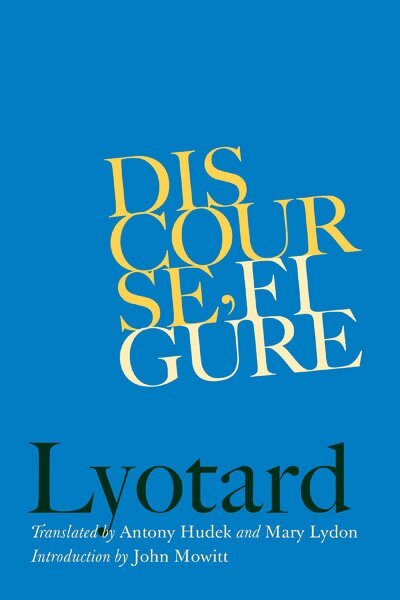
Lyotard’s earliest major work, available in English for the first timeChoice Outstanding Academic TitleJean-FranÇois Lyotard is recognized as one of the most significant French philosophers of the twentieth century. Although nearly all of his major writing has been translated into English, one important work has until now been unavailable. Discourse, Figure is Lyotard’s thesis. Provoked in part by Lacan’s influential seminars in Paris, Discourse, Figure distinguishes between the meaningfulness of linguistic signs and the meaningfulness of plastic arts such as painting and sculpture. Lyotard argues that because rational thought is discursive and works of art are inherently opaque signs, certain aspects of artistic meaning such as symbols and the pictorial richness of painting will always be beyond reason’s grasp. A wide-ranging and highly unusual work, Discourse, Figure proceeds from an attentive consideration of the phenomenology of experience to an ambitious meditation on the psychoanalytic account of the subject of experience, structured by the confrontation between phenomenology and psychoanalysis as contending frames within which to think the materialism of consciousness. In addition to prefiguring many of Lyotard’s later concerns, Discourse, Figure captures Lyotard’s passionate engagement with topics beyond phenomenology and psychoanalysis to structuralism, semiotics, poetry, art, and the philosophy of language.
288 kr
Skickas inom 10-15 vardagar
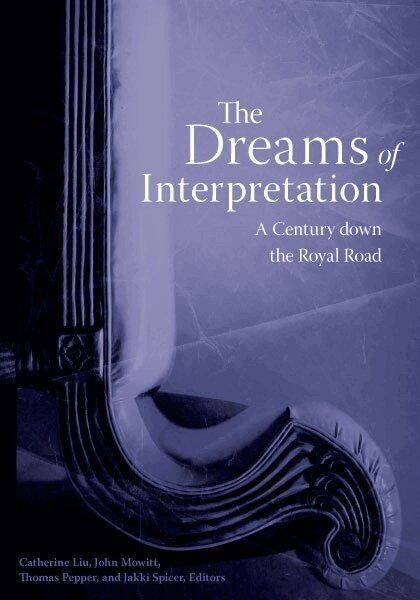
Rethinking the importance of Sigmund Freud’s landmark book The Interpretation of Dreams a century after its publication in 1900, this work brings together psychoanalysts, philosophers, cultural theorists, film and visual theorists, and literary critics from several continents in a compilation of the best clinical and theoretical work being done in psychoanalysis today. It is unique in convening both theory and practice in productive dialogue, reflecting on the encounter between psychoanalysis and the tradition of hermeneutics. Collectively the essays argue that Freud’s legacy has shaped the way we think about not only psychology and the nature of the self but also our understanding of politics, culture, and even thought itself. Contributors: Willy Apollon, Gifric; Karyn Ball, U of Alberta, Edmonton; Raymond Bellour, Centre National de la Recherche Scientifique; Patricia Gherovici, Philadelphia Lacan Study Group and Seminar; Judith Feher-Gurewich, New York U; Jonathan Kahana, New York U; A. Kiarina Kordela, Macalester College; Pablo Kovalovsky, Clinica de Borde; Jean Laplanche, U of Lausanne; Laura Marcus, U of Sussex; Andrew McNamara, Queensland U of Technology; Claire Nahon; Yun Peng, U of Minnesota; Gerard Pommier, Nantes U; Jean-Michel RabatÉ, Princeton U; Laurence A. Rickels, U of California, Santa Barbara; Avital Ronell, New York U; Elke Siegel, Yale U; Rei Terada, U of California, Irvine; Klaus Theweleit, U of Freiburg-im-Breisgau; Paul Verhaege, U of Ghent, Belgium; Silke-Maria Weineck, U of Michigan. Catherine Liu is associate professor of comparative literature and film and media studies at the University of California, Irvine. John Mowitt is professor and chair of cultural studies and comparative literature at the University of Minnesota. Thomas Pepper is associate professor of cultural studies and comparative literature at the University of Minnesota. Jakki Spicer received her Ph.D. in cultural studies and comparative literature from the University of Minnesota.
1 210 kr
Skickas inom 10-15 vardagar
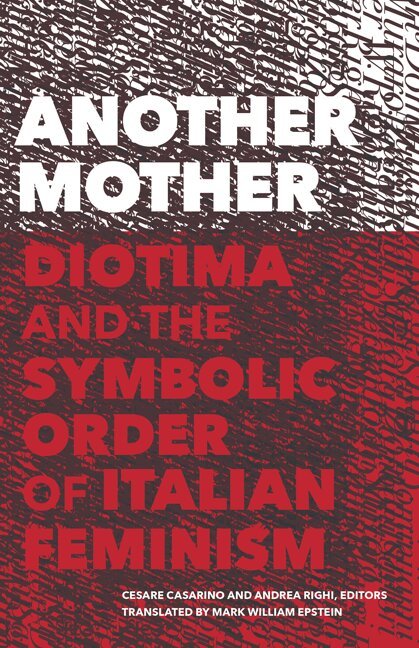
A groundbreaking volume introduces the unique feminist thought of the longstanding Italian group known as DiotimaIntroducing Anglophone readers to a potent strain of Italian feminism known to French, Spanish, and German audiences but as yet unavailable in English, Another Mother argues that the question of the mother is essential to comprehend the matrix of contemporary culture and society and to pursue feminist political projects. Focusing on Diotima, a community of women philosophers deeply involved in feminist politics since the 1960s, this volume provides a multifaceted panorama of its engagement with currents of thought including structuralism, psychoanalysis, linguistics, and Marxism. Starting from the simple insight that the mother is the one who gives us both life and language, these thinkers develop concepts of the mother and sexual difference in contemporary society that differ in crucial ways from both French and U.S. feminisms. Arguing that Diotima anticipates many of the themes in contemporary philosophical discourses of biopolitics-exemplified by thinkers such as Giorgio Agamben, Antonio Negri, and Roberto Esposito-Another Mother opens an important space for reflections on the past history of feminism and on feminism’s future. Contributors: Anne Emmanuelle Berger, Paris 8 U–Vincennes Saint-Denis; Ida Dominijanni; Luisa Muraro; Diana Sartori, U of Verona; Chiara Zamboni, U of Verona.
288 kr
Skickas inom 10-15 vardagar
A groundbreaking volume introduces the unique feminist thought of the longstanding Italian group known as DiotimaIntroducing Anglophone readers to a potent strain of Italian feminism known to French, Spanish, and German audiences but as yet unavailable in English, Another Mother argues that the question of the mother is essential to comprehend the matrix of contemporary culture and society and to pursue feminist political projects. Focusing on Diotima, a community of women philosophers deeply involved in feminist politics since the 1960s, this volume provides a multifaceted panorama of its engagement with currents of thought including structuralism, psychoanalysis, linguistics, and Marxism. Starting from the simple insight that the mother is the one who gives us both life and language, these thinkers develop concepts of the mother and sexual difference in contemporary society that differ in crucial ways from both French and U.S. feminisms. Arguing that Diotima anticipates many of the themes in contemporary philosophical discourses of biopolitics-exemplified by thinkers such as Giorgio Agamben, Antonio Negri, and Roberto Esposito-Another Mother opens an important space for reflections on the past history of feminism and on feminism’s future. Contributors: Anne Emmanuelle Berger, Paris 8 U–Vincennes Saint-Denis; Ida Dominijanni; Luisa Muraro; Diana Sartori, U of Verona; Chiara Zamboni, U of Verona.
1 077 kr
Skickas inom 10-15 vardagar
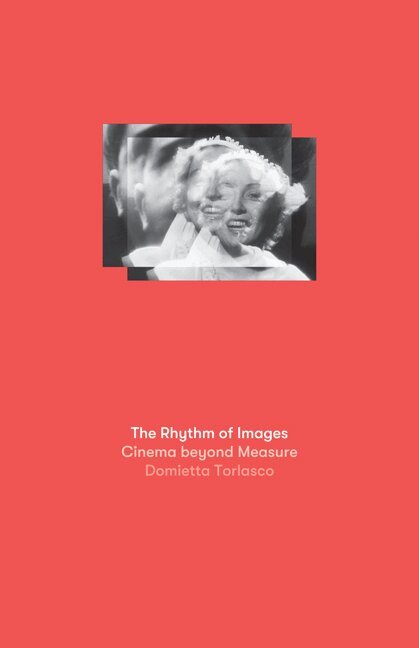
A rigorous and imaginative inquiry into rhythm’s vital importance for film and the moving imageFocusing attention on a concept much neglected in the study of film, The Rhythm of Images opens new possibilities for thinking about expanded perception and idiosyncratic modes of being. Author Domietta Torlasco engages with both philosophy and cinema to elaborate a notion of rhythm in its pre-Socratic sense as a “manner of flowing”-a fugitive mode that privileges contingency and calls up the forgotten fluidity of forms. In asking what it would mean to take this rhythm as an ontological force in its own right, she creatively draws on thinkers such as Giorgio Agamben, Roland Barthes, Gilles Deleuze, and Luce Irigaray. Rhythm emerges here as a form that eludes measure, a key to redefining the relation between the aesthetic and the political, and thus a pivotal means of resistance to power.Working with constellations of films and videos by international artists-from Michelangelo Antonioni, Jean-Luc Godard, and David Lynch to Harun Farocki and Victor Burgin, among others-Torlasco brings to bear on them her distinctive concept of rhythm with respect to four interrelated domains: life, labor, memory, and medium. With innovative readings of artworks and critical texts alike, The Rhythm of Images fashions a vibrant, provocative theory of rhythm as the excess or potential of perception. Ultimately, the book reconceives the relation between rhythm and the world-making power of images. The result is a vision of cinema as a hybrid medium endowed with the capacity not only to reinvent corporeal boundaries but also to find new ways of living together.
257 kr
Skickas inom 7-10 vardagar
A rigorous and imaginative inquiry into rhythm’s vital importance for film and the moving imageFocusing attention on a concept much neglected in the study of film, The Rhythm of Images opens new possibilities for thinking about expanded perception and idiosyncratic modes of being. Author Domietta Torlasco engages with both philosophy and cinema to elaborate a notion of rhythm in its pre-Socratic sense as a “manner of flowing”-a fugitive mode that privileges contingency and calls up the forgotten fluidity of forms. In asking what it would mean to take this rhythm as an ontological force in its own right, she creatively draws on thinkers such as Giorgio Agamben, Roland Barthes, Gilles Deleuze, and Luce Irigaray. Rhythm emerges here as a form that eludes measure, a key to redefining the relation between the aesthetic and the political, and thus a pivotal means of resistance to power.Working with constellations of films and videos by international artists-from Michelangelo Antonioni, Jean-Luc Godard, and David Lynch to Harun Farocki and Victor Burgin, among others-Torlasco brings to bear on them her distinctive concept of rhythm with respect to four interrelated domains: life, labor, memory, and medium. With innovative readings of artworks and critical texts alike, The Rhythm of Images fashions a vibrant, provocative theory of rhythm as the excess or potential of perception. Ultimately, the book reconceives the relation between rhythm and the world-making power of images. The result is a vision of cinema as a hybrid medium endowed with the capacity not only to reinvent corporeal boundaries but also to find new ways of living together.
1 233 kr
Skickas inom 7-10 vardagar
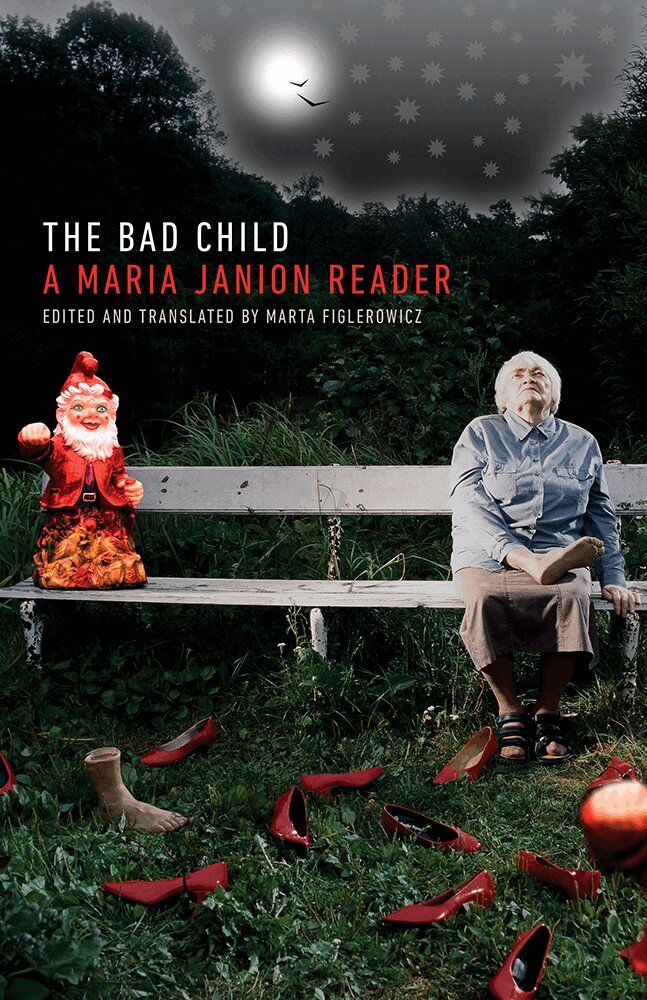
Collected writings from a visionary thinker about the perilous edge between patriotism and fascism How do nationalism and patriotism shape our understanding of identity, and when do they drift into dangerous territory? Marta Figlerowicz gathers a selection of writings from Maria Janion, one of Eastern Europe’s most profound and original intellectuals, to explore this fine line. Between her birth in Vilnius in 1926 and her death in Warsaw in 2020, Janion witnessed some of the most consequential events of the turbulent twentieth century: the rise of authoritarian nationalism in Poland, German occupation during World War II, Soviet control, and Poland’s uneasy integration into the West. As Western countries face their own nationalist resurgences, Janion’s writing holds tools to help move through this historical condition. The Bad Child offers sharp insights into how societies develop and assert their identities and histories-often at the cost of the people. Janion’s reflections on fascism, popular culture, and national self-fashioning presciently name and critique regional dynamics that have most recently resulted in the war between Russia and Ukraine, and they broadly expose the illusions that cultures can promote and the dangerous slide from national pride to exclusionary right-wing politics. A queer woman and survivor of World War II, a leftist who resisted Soviet orthodoxy, Janion lends a uniquely disruptive voice to contemporary discussions of fascism, and her insights resonate far beyond her Eastern European roots. Retail e-book files for this title are screen-reader friendly with images accompanied by short alt text and/or extended descriptions.
297 kr
Skickas inom 7-10 vardagar
Collected writings from a visionary thinker about the perilous edge between patriotism and fascism How do nationalism and patriotism shape our understanding of identity, and when do they drift into dangerous territory? Marta Figlerowicz gathers a selection of writings from Maria Janion, one of Eastern Europe’s most profound and original intellectuals, to explore this fine line. Between her birth in Vilnius in 1926 and her death in Warsaw in 2020, Janion witnessed some of the most consequential events of the turbulent twentieth century: the rise of authoritarian nationalism in Poland, German occupation during World War II, Soviet control, and Poland’s uneasy integration into the West. As Western countries face their own nationalist resurgences, Janion’s writing holds tools to help move through this historical condition. The Bad Child offers sharp insights into how societies develop and assert their identities and histories-often at the cost of the people. Janion’s reflections on fascism, popular culture, and national self-fashioning presciently name and critique regional dynamics that have most recently resulted in the war between Russia and Ukraine, and they broadly expose the illusions that cultures can promote and the dangerous slide from national pride to exclusionary right-wing politics. A queer woman and survivor of World War II, a leftist who resisted Soviet orthodoxy, Janion lends a uniquely disruptive voice to contemporary discussions of fascism, and her insights resonate far beyond her Eastern European roots. Retail e-book files for this title are screen-reader friendly with images accompanied by short alt text and/or extended descriptions.