Slavic Literature, Culture & Society – serie
Visar alla böcker i serien Slavic Literature, Culture & Society. Handla med fri frakt och snabb leverans.
7 produkter
7 produkter
2 249 kr
Skickas inom 3-6 vardagar
Notwithstanding the economic hardship Russian people are experiencing, their cultural life is as rich and alive as ever, as Gerald Janecek shows us in this collection of his articles on contemporary Russian poetry, which are especially written for this publication or so far only available in Russian. These articles focus on works in which sonic-musical, resp. visual-typographical features are used to produce interesting new effects and range from a musical analysis of the way Joseph Brodsky recited his poems to quasi-musical principles of organization (as in the works by Mnatsakanova and Nikonova) to layout designs that reflect the way a poem is recited (as in the case of Khudyakov, Volohovsky, Brodsky, Nekrasov, and Aigi) and perceived. As the first serious scholarly examination of the poets presented, this volume offers an important introduction to Russian avant-garde poetry.
1 956 kr
Skickas inom 3-6 vardagar
While historical and political aspects of the Russo-German relationship over the past three to four centuries have received due attention from scholars, the range of the far more diverse, important, and peculiar cultural relations still awaits full assessment. This volume shows how enriching these cultural influences were for both countries, affecting many spheres of intellectual and daily life such as philosophy and religion, education and ideology, sciences and their application, arts and letters, custom and language. The German-Russian relationship has always been particularly intense. Oscillating as it has between infatuation and contempt, it has always been marked by a singular paradox: a German cultural presence in Russia resulting either in a more or less complete fusion, as in the case of Russifield German, or in a pronounced mutual repulsion, accompanied by the denigration of each other's culture as inferior. It is this curious paradox that determines the perspectives of the articles that were specially written for this volume, providing it with a unifying focus.
2 968 kr
Skickas inom 3-6 vardagar
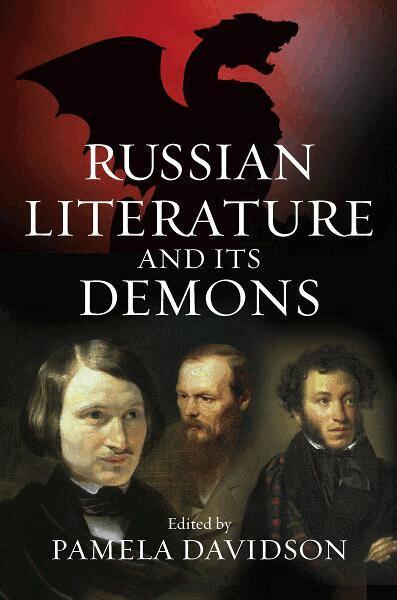
Merezhkovsky's bold claim that "all Russian literature is, to a certain degree, a struggle with the temptation of demonism" is undoubtedly justified. And yet, despite its evident centrality to Russian culture, the unique and fascinating phenomenon of Russian literary demonism has so far received little critical attention. This substantial collection fills the gap. A comprehensive analytical introduction by the editor is follwed by a series of fourteen essays, written by eminent scholars in their fields. The first part explores the main shaping contexts of literary demonism: the Russian Orthodox and folk tradition, the demonization of historical figures, and views of art as intrinsically demonic. The second part traces the development of a literary tradition of demonism in the works of authors ranging from Pushkin and Lermontov, Gogol and Dostoevsky, through to the poets and prose writers of modernism (including Blok, Akhmatova, Bely, Sologub, Rozanov, Zamiatin), and through to the end of the 20th century.
2 249 kr
Skickas inom 3-6 vardagar
Vladimir Odoevsky (1804-1869) was a fascinating and encyclopedic figurein nineteenth-century Russian culture, who in his day was mentioned in the same breath as Pushkin and Gogol. Thinker, pedagogue, musicologist, amateur scientist and public servant, he is now undergoing a revival as a virtually rediscovered writer of Romantic and Gothic fiction. The author, a leading specialist on Odoevsky, analyses the contribution of Odoevsky to Russian prose fiction and in particular his influential approach to Romanticism, his Gothic novellas and his proto-science fiction, as well as his critical reception.
1 956 kr
Skickas inom 3-6 vardagar
The image of women in Russian culture has undergone profound changes: from the origins of modern Russian literature in the eighteenth century until the Revolution of 1917, when women were a source of fascination for Russian writers, to the socialist realism period, during which public discussion of the representation of women in literature rapidly declined and the "woman question" was declared to have been "resolved," to a reappraisal of the position of women since the 1980s.This collection of essays by leading western and Russian specialists contains new insights and updates previous research into the role of women in Russian culture in the last two centuries and contributes to two exciting and growing research areas: the feminist critique of work by Russian male authors and the study of Russian women writers. Moreover, whereas most previous studies have concentrated on the aesthetic qualities of works by women writers, this collection includes both close textual analysis and the discussion of biographical, historical, and political questions relating both to the representation of women and women's culture. The aim is not to present aunified manifesto, but rather to bring together a spectrum of approaches and positions within their common focus on the relationship between women and culture in Russia.Contributors: R. Marsh, A. Barker, J. Andrew, D. Greene, I. Kazakova, C. Schuler, S. Graham, K. Hodgson, N. Kolchevska, N. Cornwell, J. Curtis, M. Katz, M. Ledkovsky, P.I. Barta, A. Darmodekhina, D. Gillespie, N. Zhuravkina, B. Lanin, S. Carsten, A. Tait
1 901 kr
Skickas inom 3-6 vardagar
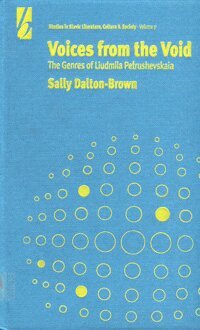
Liumilla Petrushevskaia is one of the best known writers in Russia today, recognized for her versatility as a dramatist, scriptwriter, and author of harrowing contemporary stories and even fairy tales. Acclaimed for her shocking portraits of the pain and loss that distinguish the life of women in Russia and the old Soviet Union, Petrushevskaia has also created texts notable for their scandalous humor and vibrant plasticity of form.This study analyses her use of genres within the context of an overall description of her ouevre. Her texts deal with stories struggling to be told even in today's Russia. Her characters are all storytellers, but the truths they attempt to express are often too terrible to be voiced aloud, and their tales are ultimately told from within a vast silence that threatens to engulf the narrative.
811 kr
Skickas inom 3-6 vardagar
Merezhkovsky's bold claim that "all Russian literature is, to a certain degree, a struggle with the temptation of demonism" is undoubtedly justified. And yet, despite its evident centrality to Russian culture, the unique and fascinating phenomenon of Russian literary demonism has so far received little critical attention. This substantial collection fills the gap. A comprehensive analytical introduction by the editor is follwed by a series of fourteen essays, written by eminent scholars in their fields. The first part explores the main shaping contexts of literary demonism: the Russian Orthodox and folk tradition, the demonization of historical figures, and views of art as intrinsically demonic. The second part traces the development of a literary tradition of demonism in the works of authors ranging from Pushkin and Lermontov, Gogol and Dostoevsky, through to the poets and prose writers of modernism (including Blok, Akhmatova, Bely, Sologub, Rozanov, Zamiatin), and through to the end of the 20th century.