Cultures of Childhood – Serie
Visar alla böcker i serien Cultures of Childhood. Handla med fri frakt och snabb leverans.
21 produkter
21 produkter
1 184 kr
Skickas inom 10-15 vardagar
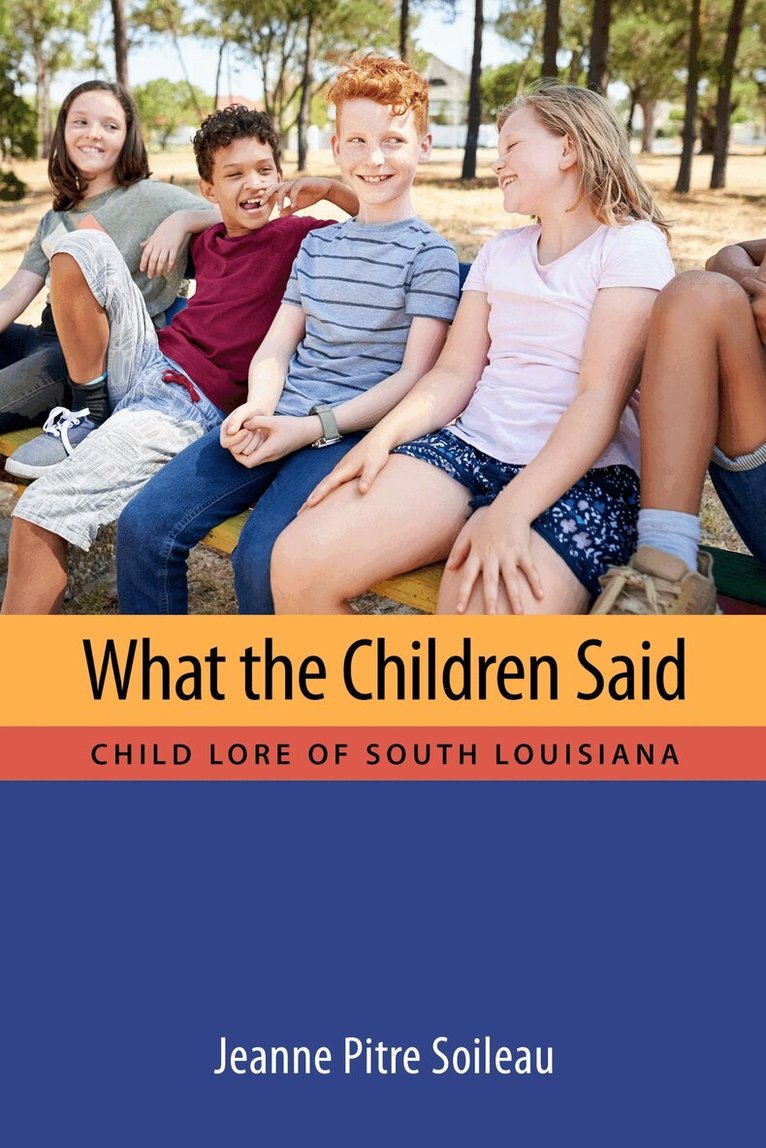
Jeanne Pitre Soileau, winner of the 2018 Chicago Folklore Prize and the 2018 Opie Prize for Yo’ Mama, Mary Mack, and Boudreaux and Thibodeaux: Louisiana Children’s Folklore and Play, vividly presents children’s voices in What the Children Said: Child Lore of South Louisiana. Including over six hundred handclaps, chants, jokes, jump-rope rhymes, cheers, taunts, and teases, this book takes the reader through a fifty-year history of child speech as it has influenced children’s lives.What the Children Said affirms that children's play in south Louisiana is acquired along a network of summer camps, schoolyards, church gatherings, and sleepovers with friends. When children travel, they obtain new games and rhymes, and bring them home. The volume also reveals, in the words of the children themselves, how young people deal with racism and sexism. The children argue and outshout one another, policing their own conversations, stating their own prejudices, and vying with one another for dominion. The first transcript in the book tracks a conversation among three related boys and shows that racism is part of the family interchange. Among second grade boys and girls at a Catholic school another transcript presents numerous examples in which boys use insults to dominate a conversation with girls, and girls use giggles and sly comebacks to counter this aggression.Though collected in the areas of New Orleans, Baton Rouge, and Lafayette, Louisiana, this volume shows how south Louisiana child lore is connected to other English-speaking places: England, Scotland, Ireland, Australia, and New Zealand, as well as the rest of the United States.
368 kr
Skickas inom 10-15 vardagar
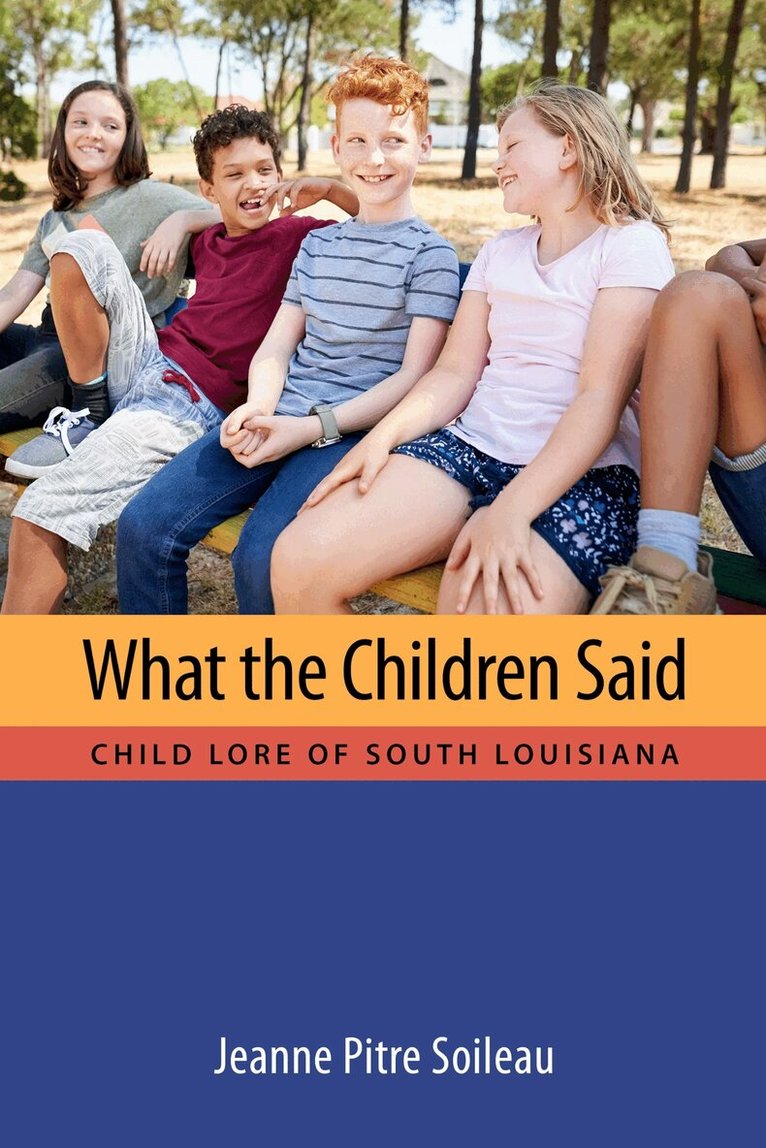
Jeanne Pitre Soileau, winner of the 2018 Chicago Folklore Prize and the 2018 Opie Prize for Yo’ Mama, Mary Mack, and Boudreaux and Thibodeaux: Louisiana Children’s Folklore and Play, vividly presents children’s voices in What the Children Said: Child Lore of South Louisiana. Including over six hundred handclaps, chants, jokes, jump-rope rhymes, cheers, taunts, and teases, this book takes the reader through a fifty-year history of child speech as it has influenced children’s lives.What the Children Said affirms that children's play in south Louisiana is acquired along a network of summer camps, schoolyards, church gatherings, and sleepovers with friends. When children travel, they obtain new games and rhymes, and bring them home. The volume also reveals, in the words of the children themselves, how young people deal with racism and sexism. The children argue and outshout one another, policing their own conversations, stating their own prejudices, and vying with one another for dominion. The first transcript in the book tracks a conversation among three related boys and shows that racism is part of the family interchange. Among second grade boys and girls at a Catholic school another transcript presents numerous examples in which boys use insults to dominate a conversation with girls, and girls use giggles and sly comebacks to counter this aggression.Though collected in the areas of New Orleans, Baton Rouge, and Lafayette, Louisiana, this volume shows how south Louisiana child lore is connected to other English-speaking places: England, Scotland, Ireland, Australia, and New Zealand, as well as the rest of the United States.
1 361 kr
Skickas inom 10-15 vardagar
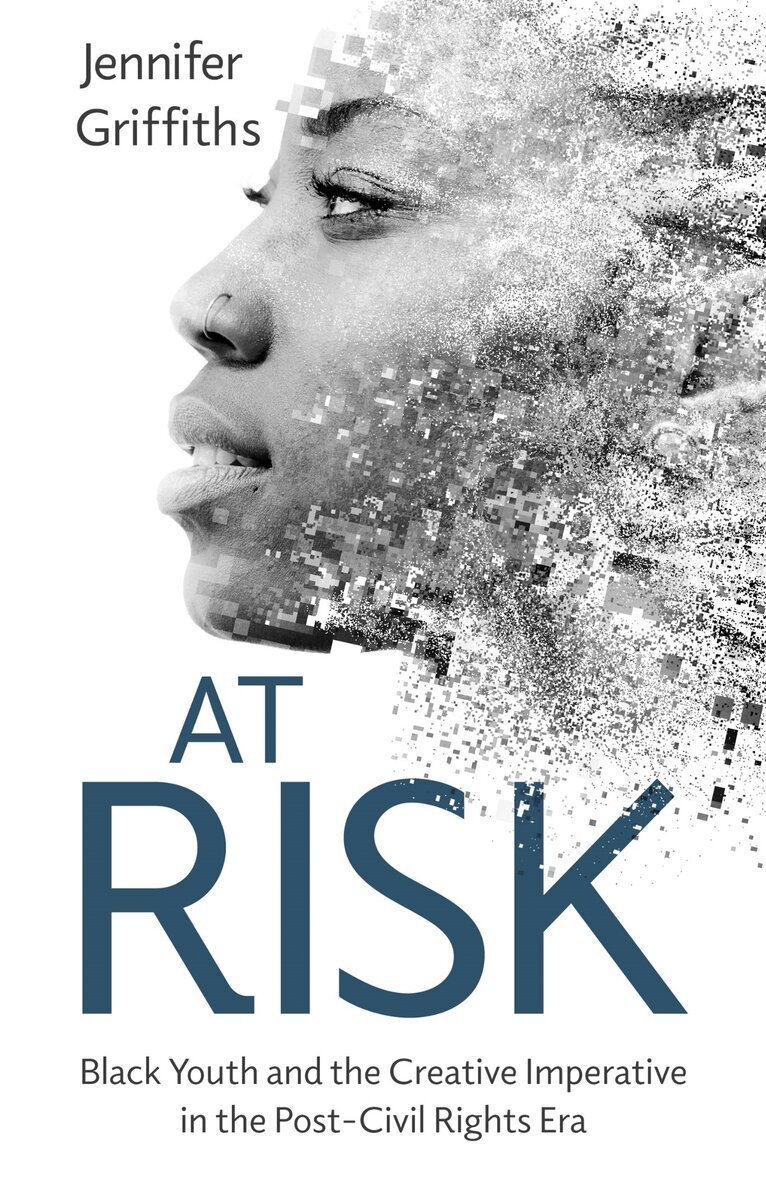
Jennifer Griffiths's At Risk: Black Youth and the Creative Imperative in the Post-Civil Rights Era focuses on literary representations of adolescent artists as they develop strategies to intervene against the stereotypes that threaten to limit their horizons. The authors of the analyzed works capture and convey the complex experience of the generation of young people growing up in the era after the civil rights movement. Through creative experiments, they carefully consider what it means to be narrowed within the scope of a sociological "problem," all while trying to expand the perspective of creative liberation. In short, they explore what it means to be deemed an "at risk" youth.This book looks at crucial works beginning in 1968, ranging from Sapphire’s Push and The Kid, Walter Dean Myers’s Monster, and Dael Orlandersmith’s The Gimmick, to Bill Gunn’s Johnnas. Each text offers unique representations of Black gifted children, whose creative processes help them to navigate simultaneous hypervisibility and invisibility as racialized subjects. The book addresses the ways that adolescents experience the perilous "at risk" label, which threatens to narrow adolescent existence at a developmental moment that requires an orientation toward possibility and a freedom to experiment.Ultimately, At Risk considers the distinct possibilities and challenges of the post–civil rights era, and how the period allows for a more honest, multilayered, and forthright depiction of Black youth subjectivity against the adultification that forecloses potential.
423 kr
Skickas inom 10-15 vardagar
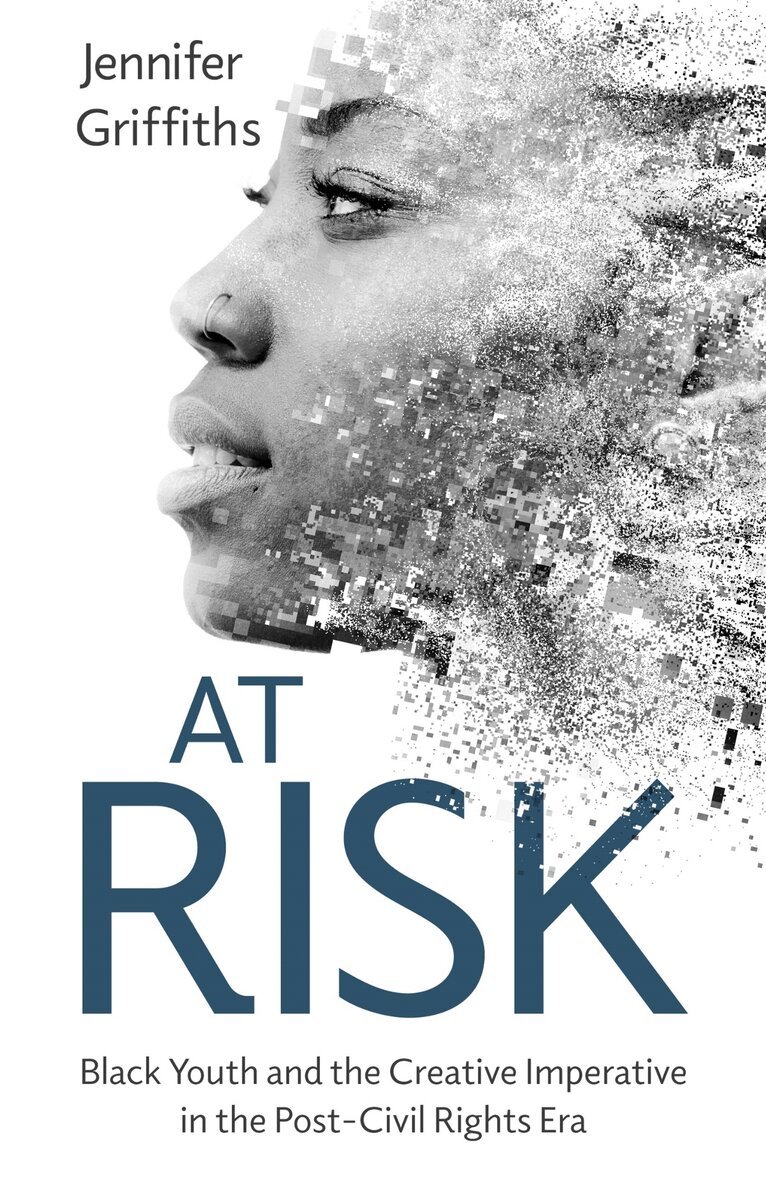
Jennifer Griffiths's At Risk: Black Youth and the Creative Imperative in the Post-Civil Rights Era focuses on literary representations of adolescent artists as they develop strategies to intervene against the stereotypes that threaten to limit their horizons. The authors of the analyzed works capture and convey the complex experience of the generation of young people growing up in the era after the civil rights movement. Through creative experiments, they carefully consider what it means to be narrowed within the scope of a sociological "problem," all while trying to expand the perspective of creative liberation. In short, they explore what it means to be deemed an "at risk" youth.This book looks at crucial works beginning in 1968, ranging from Sapphire’s Push and The Kid, Walter Dean Myers’s Monster, and Dael Orlandersmith’s The Gimmick, to Bill Gunn’s Johnnas. Each text offers unique representations of Black gifted children, whose creative processes help them to navigate simultaneous hypervisibility and invisibility as racialized subjects. The book addresses the ways that adolescents experience the perilous "at risk" label, which threatens to narrow adolescent existence at a developmental moment that requires an orientation toward possibility and a freedom to experiment.Ultimately, At Risk considers the distinct possibilities and challenges of the post–civil rights era, and how the period allows for a more honest, multilayered, and forthright depiction of Black youth subjectivity against the adultification that forecloses potential.
287 kr
Skickas inom 7-10 vardagar
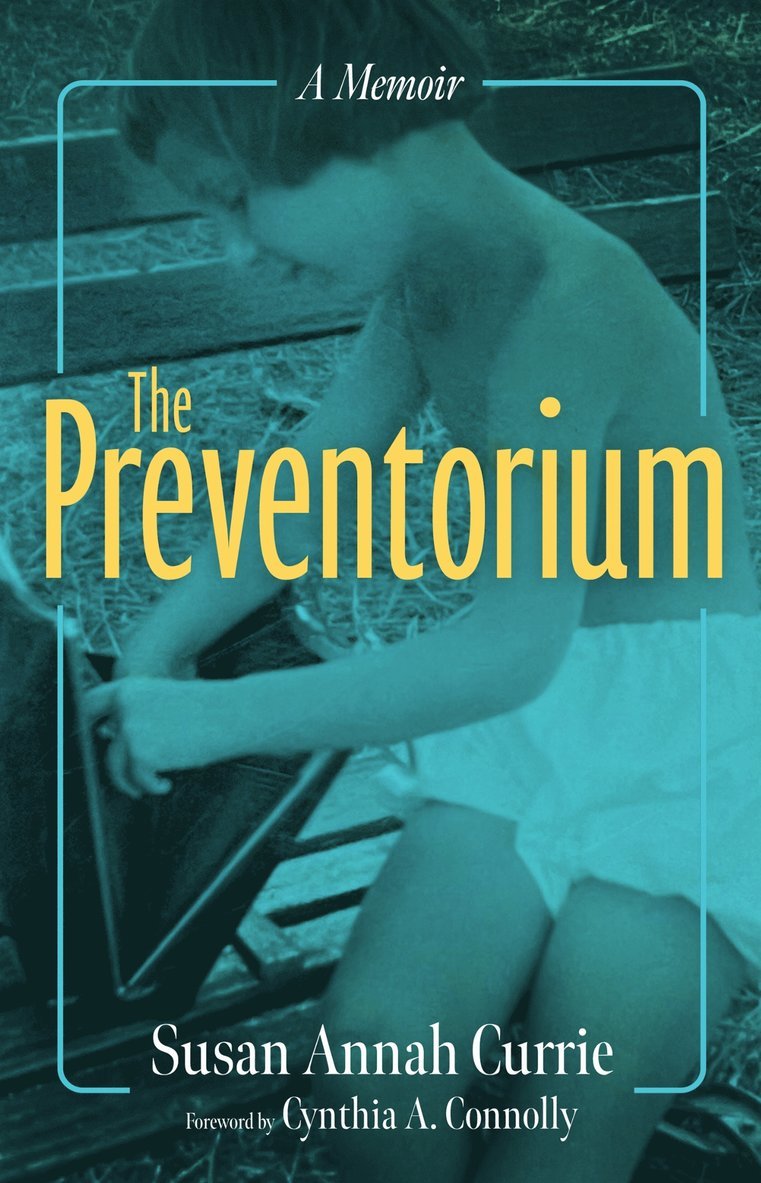
Opened on February 17, 1929, the Mississippi State Preventorium operated continuously until 1976. The Mississippi Preventorium, like similar hospitals throughout the country, was an institution for sickly, anemic, and underweight children. It was established on the grounds of the Mississippi State Tuberculosis Sanitorium in the early years of the twentieth century when tuberculosis was a dreaded disease worldwide. The TB Sanitorium hospital housed those with tuberculosis, offering refuge for patients of all ages afflicted with the pernicious and contagious disease. Although located on the same medical campus, the preventorium was a separate medical institution for children; no children with TB were admitted in the sixty-year run of the hospital. The name preventorium meant a place of preventing disease as there was a fear of sickly children contracting TB. The Mississippi Preventorium was one of the last, if not the very last, of these special hospitals for children.Now closed, the preventorium housed over three thousand children, including author Susan Annah Currie. In this intimate memoir, Currie details her fifteen-month stay at the preventorium. From her arrival in May 1959 at six years old, Currie vividly explores the unique and isolating world that she and children across the country experienced. Her exacting routine, dictated by the nurses and doctors who now acted as her parents, erased the distinction between patients and created both a sense of community among the children and a deep sense of loneliness. From walking silently single file through the cold, narrow halls of the hospital to nurses recording every detail of their bathroom habits to extremely limited visitation from family, Currie’s time at the preventorium changed her and those around her, leaving an indelible mark even after their return home.While many of the records from the preventorium have been lost, Currie’s memoir opens to readers a lost history largely forgotten. Told in evocative prose, The Preventorium explores Currie’s personal trials, both in the hospital and in the echoes of her experiences into adulthood.
1 219 kr
Skickas inom 10-15 vardagar
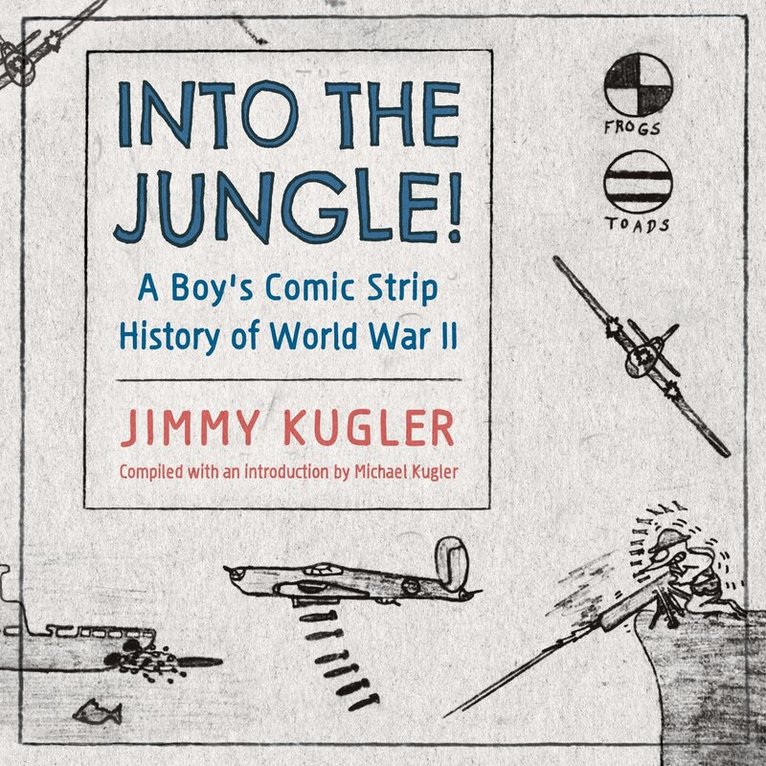
Near the end of World War II and after, a small-town Nebraska youth, Jimmy Kugler, drew more than a hundred double-sided sheets of comic strip stories. Over half of these six-panel tales retold the Pacific War as fought by "Frogs" and "Toads," humanoid creatures brutally committed to a kill-or-be-killed struggle. The history of American youth depends primarily on adult reminiscences of their own childhoods, adult testimony to the lives of youth around them, or surmises based on at best a few creative artifacts. The survival then of such a large collection of adolescent comic strips from America’s small-town Midwest is remarkable.Michael Kugler reproduces the never-before-published comics of his father’s adolescent imagination as a microhistory of American youth in that formative era. Also included in Into the Jungle! A Boy's Comic Strip History of World War II are the likely comic book models for these stories and inspiration from news coverage in newspapers, radio, movies, and newsreels. Kugler emphasizes how US propaganda intended to inspire patriotic support for the war gave this young artist a license for his imagined violence. In a context of progressive American educational reform, these violent comic stories, often in settings modeled on the artist’s small Nebraska town, suggests a form of adolescent rebellion against moral conventions consistent with comic art’s reputation for "outsider" or countercultural expressions. Kugler also argues that these comics provide evidence for the transition in American taste from war stories to the horror comics of the late 1940s and early 1950s. Kugler’s thorough analysis of his father’s adolescent art explains how a small-town boy from the plains distilled the popular culture of his day for an imagined war he could fight on his audacious, even shocking terms.
324 kr
Skickas inom 10-15 vardagar
Near the end of World War II and after, a small-town Nebraska youth, Jimmy Kugler, drew more than a hundred double-sided sheets of comic strip stories. Over half of these six-panel tales retold the Pacific War as fought by "Frogs" and "Toads," humanoid creatures brutally committed to a kill-or-be-killed struggle. The history of American youth depends primarily on adult reminiscences of their own childhoods, adult testimony to the lives of youth around them, or surmises based on at best a few creative artifacts. The survival then of such a large collection of adolescent comic strips from America’s small-town Midwest is remarkable.Michael Kugler reproduces the never-before-published comics of his father’s adolescent imagination as a microhistory of American youth in that formative era. Also included in Into the Jungle! A Boy's Comic Strip History of World War II are the likely comic book models for these stories and inspiration from news coverage in newspapers, radio, movies, and newsreels. Kugler emphasizes how US propaganda intended to inspire patriotic support for the war gave this young artist a license for his imagined violence. In a context of progressive American educational reform, these violent comic stories, often in settings modeled on the artist’s small Nebraska town, suggests a form of adolescent rebellion against moral conventions consistent with comic art’s reputation for "outsider" or countercultural expressions. Kugler also argues that these comics provide evidence for the transition in American taste from war stories to the horror comics of the late 1940s and early 1950s. Kugler’s thorough analysis of his father’s adolescent art explains how a small-town boy from the plains distilled the popular culture of his day for an imagined war he could fight on his audacious, even shocking terms.
1 342 kr
Skickas inom 7-10 vardagar
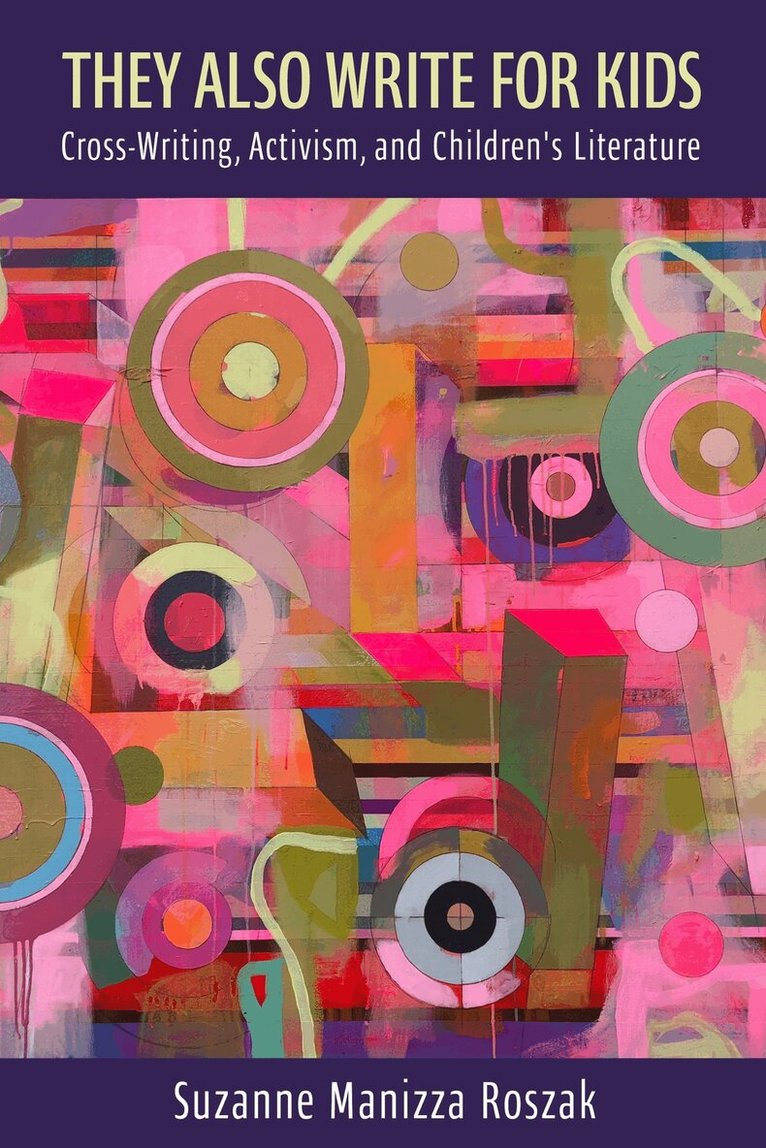
Outside the world of children’s literature studies, children’s books by authors of well-known texts "for adults" are often forgotten or marginalized. Although many adults today read contemporary children’s and young adult fiction for pleasure, others continue to see such texts as unsuitable for older audiences, and they are unlikely to cross-read children’s books that were themselves cross-written by authors like Chinua Achebe, Anita Desai, Joy Harjo, or Amy Tan. Meanwhile, these literary voices have produced politically vital works of children’s literature whose complex themes persist across boundaries of expected audience. These works form part of a larger body of activist writing "for children" that has long challenged preconceived notions about the seriousness of such books and ideas about who, in fact, should read them.They Also Write for Kids: Cross-Writing, Activism, and Children’s Literature seeks to draw these cross-writing projects together and bring them to the attention of readers. In doing so, this book invites readers to place children’s literature in conversation with works more typically understood as being for adult audiences, read multiethnic US literature alongside texts by global writers, consider children’s poetry and nonfiction as well as fiction, and read diachronically as well as cross-culturally. These ways of reading offer points of entry into a world of books that refuse to exclude young audiences in scrutinizing topics that range from US settler colonialism and linguistic prejudice to intersectional forms of gender inequality. The authors included here also employ an intricate array of writing strategies that challenge lingering stereotypes of children’s literature as artistically as well as intellectually simplistic. They subversively repurpose tropes and conventions from canonical children’s books; embrace an epistemology of children’s literature that emphasizes ambiguity and complexity; invite readers to participate in redefining concepts such as "civilization" and cultural belonging; engage in intricate acts of cross-cultural representation; and re-envision their own earlier works in new forms tailored explicitly to younger audiences. Too often disregarded by skeptical adults, these texts offer rich rewards to readers of all ages, and here they are brought to the fore.
417 kr
Skickas inom 7-10 vardagar
Outside the world of children’s literature studies, children’s books by authors of well-known texts "for adults" are often forgotten or marginalized. Although many adults today read contemporary children’s and young adult fiction for pleasure, others continue to see such texts as unsuitable for older audiences, and they are unlikely to cross-read children’s books that were themselves cross-written by authors like Chinua Achebe, Anita Desai, Joy Harjo, or Amy Tan. Meanwhile, these literary voices have produced politically vital works of children’s literature whose complex themes persist across boundaries of expected audience. These works form part of a larger body of activist writing "for children" that has long challenged preconceived notions about the seriousness of such books and ideas about who, in fact, should read them.They Also Write for Kids: Cross-Writing, Activism, and Children’s Literature seeks to draw these cross-writing projects together and bring them to the attention of readers. In doing so, this book invites readers to place children’s literature in conversation with works more typically understood as being for adult audiences, read multiethnic US literature alongside texts by global writers, consider children’s poetry and nonfiction as well as fiction, and read diachronically as well as cross-culturally. These ways of reading offer points of entry into a world of books that refuse to exclude young audiences in scrutinizing topics that range from US settler colonialism and linguistic prejudice to intersectional forms of gender inequality. The authors included here also employ an intricate array of writing strategies that challenge lingering stereotypes of children’s literature as artistically as well as intellectually simplistic. They subversively repurpose tropes and conventions from canonical children’s books; embrace an epistemology of children’s literature that emphasizes ambiguity and complexity; invite readers to participate in redefining concepts such as "civilization" and cultural belonging; engage in intricate acts of cross-cultural representation; and re-envision their own earlier works in new forms tailored explicitly to younger audiences. Too often disregarded by skeptical adults, these texts offer rich rewards to readers of all ages, and here they are brought to the fore.
1 219 kr
Skickas inom 10-15 vardagar
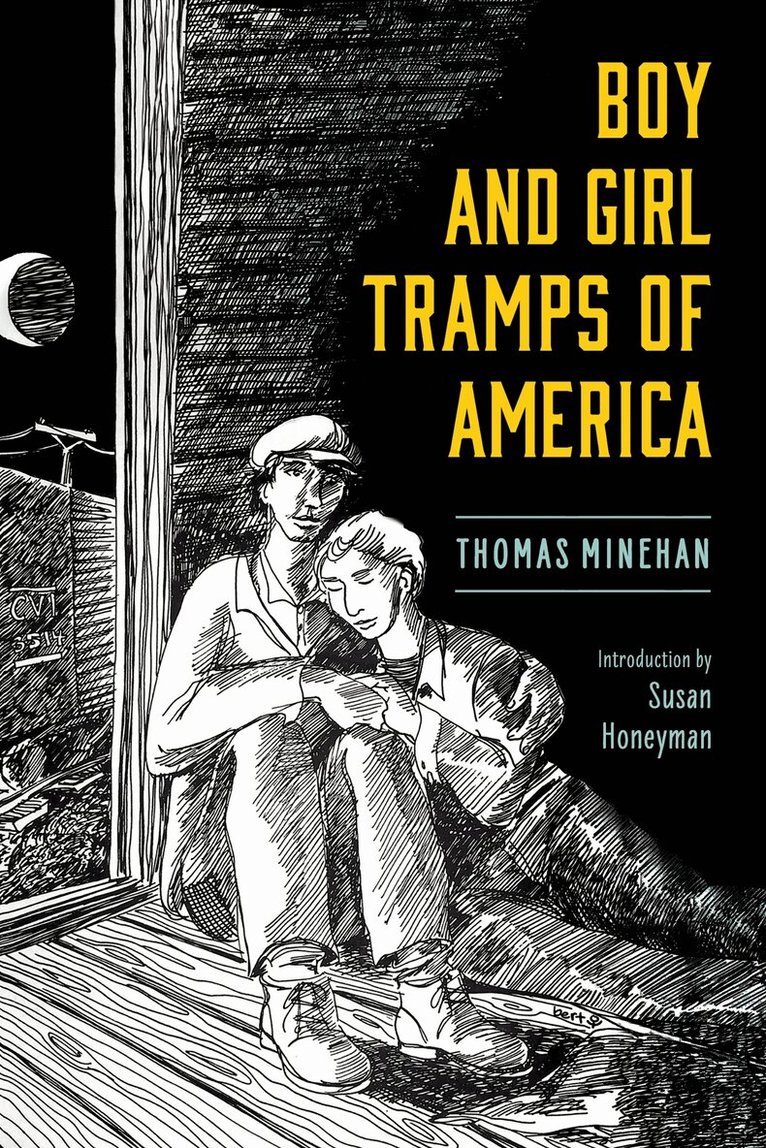
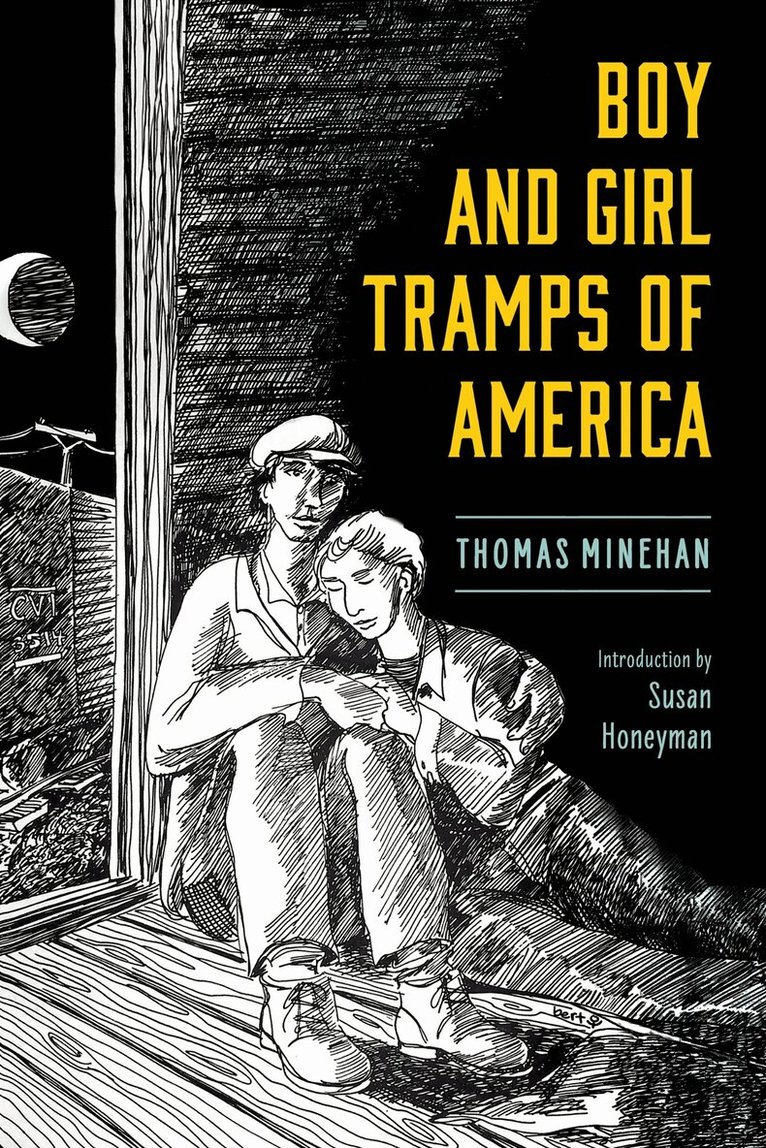
In 1933 and 1934, Thomas Minehan, a young sociologist at the University of Minnesota, joined the ranks of a roving army of 250,000 boys and girls torn from their homes during the Great Depression. Disguised in old clothes, he hopped freight trains crisscrossing six midwestern states. While undercover, Minehan associated on terms of social equality with several thousand transients, collecting five hundred life histories of the young migrants. The result was a vivid and intimate portrayal of a harrowing existence, one in which young people suffered some of the deadliest blows of the economic disaster.Boy and Girl Tramps of America reveals the poignant experiences of American youth who were sent out on the road by grinding poverty, shattered family relationships, and financially strapped schools that locked their doors. For these young people, danger was a constant companion that could turn deadly in an instant. The book documents the hunger and hardships these youth faced, capturing an appalling spectacle and social problem in America’s history before any effort was made to meet the problem on a nationwide basis by the federal government.Boy and Girl Tramps of America is a work unique in its ability to extend beyond statistical analyses to uncover the opinions, ideas, and attitudes of the boxcar boys and girls. Originally published in 1934, it remains highly relevant to the turbulent moments of the twenty-first century. This reprint features an introduction by scholar Susan Honeyman that puts the work into our current context.
374 kr
Skickas inom 7-10 vardagar
In 1933 and 1934, Thomas Minehan, a young sociologist at the University of Minnesota, joined the ranks of a roving army of 250,000 boys and girls torn from their homes during the Great Depression. Disguised in old clothes, he hopped freight trains crisscrossing six midwestern states. While undercover, Minehan associated on terms of social equality with several thousand transients, collecting five hundred life histories of the young migrants. The result was a vivid and intimate portrayal of a harrowing existence, one in which young people suffered some of the deadliest blows of the economic disaster.Boy and Girl Tramps of America reveals the poignant experiences of American youth who were sent out on the road by grinding poverty, shattered family relationships, and financially strapped schools that locked their doors. For these young people, danger was a constant companion that could turn deadly in an instant. The book documents the hunger and hardships these youth faced, capturing an appalling spectacle and social problem in America’s history before any effort was made to meet the problem on a nationwide basis by the federal government.Boy and Girl Tramps of America is a work unique in its ability to extend beyond statistical analyses to uncover the opinions, ideas, and attitudes of the boxcar boys and girls. Originally published in 1934, it remains highly relevant to the turbulent moments of the twenty-first century. This reprint features an introduction by scholar Susan Honeyman that puts the work into our current context.
1 342 kr
Skickas inom 7-10 vardagar
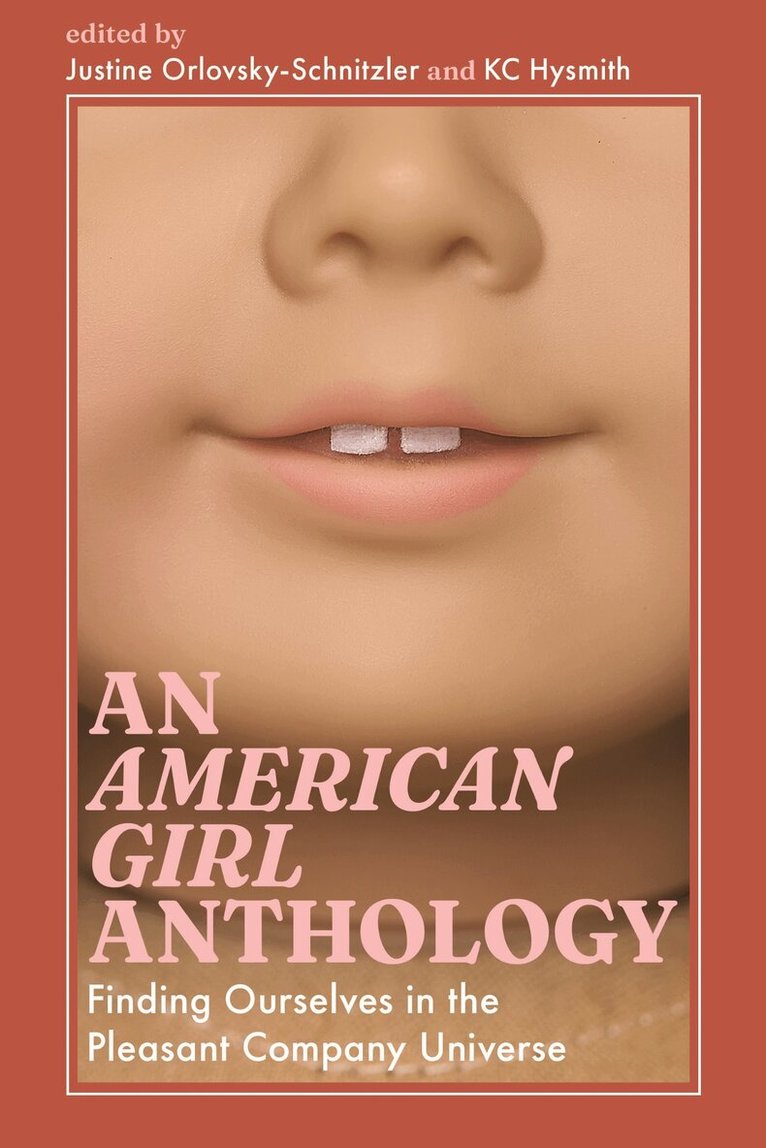
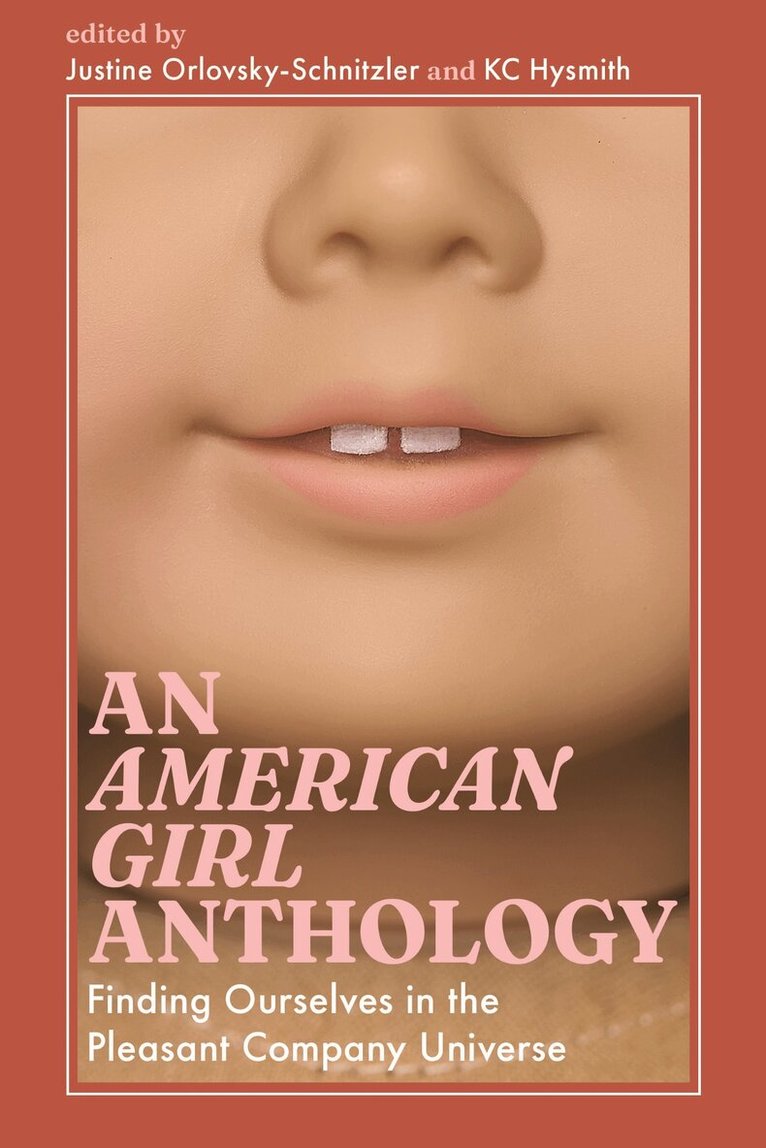
Contributions by Mary Berman, Mary Burke, Abigail C. Fine, KC Hysmith, Juliette Holder, Mackenzie Kwok, Esther Martin, Hannah Matthews, Janine Napierkowski, Justine Orlovsky-Schnitzler, Samantha Pickette, Sheena Roetman, Rebekkah Rubin, Marissa Spear, Tara Strauch, Cary Tide, and Laura TraisterAn American Girl Anthology: Finding Ourselves in the Pleasant Company Universe turns American Girl dolls—and the ever-growing ecosystem surrounding them—inside out. Editors Justine Orlovsky-Schnitzler and KC Hysmith, along with an expansive list of contributors across multiple disciplines and within different research areas, explore Pleasant Company (American Girl’s parent corporation) and the social and cultural impact the dolls and broader American Girl universe continue to have for generations of American consumers through thoughtful and fun essays.This collection serves as an ode to the democratizing power of the internet and the intoxicating power of nostalgia, while also looking toward the future as the eldest American Girl fans become parents themselves. It is also a critical account of the ways in which American Girl has shaped senses of self-worth and hopes for the future, securing a base of lifelong consumers, and also serves as a love letter to the kids we collectively used to be. Along the way, readers will take seriously American Girl’s influence and place within larger cultural conversations. They will find essays focusing on topics as diverse as food and historical recipes in American Girl publications, the advent of "tag yourself" memes, the struggle to find authentic and long-lasting Asian American representation within the pages of the American Girl catalog, and the enduring power of The Care and Keeping of You as a resource for finding joy in our bodies.
1 206 kr
Skickas inom 7-10 vardagar
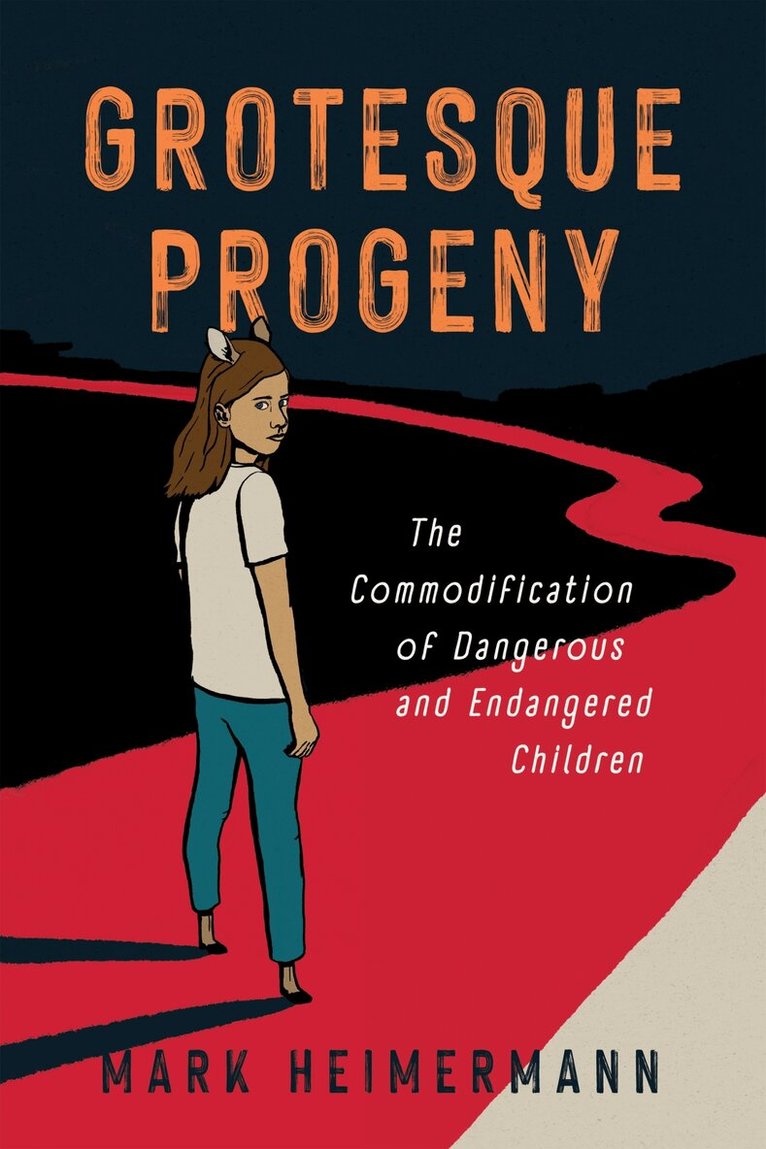
In contemporary Western society, childhood appears more protected than ever to the casual onlooker. Yet, we are increasingly fascinated by narratives in which children are depicted as unsettling beings, both dangerous and endangered, sometimes chaotic or even evil. In Grotesque Progeny: The Commodification of Dangerous and Endangered Children, author Mark Heimermann argues that these representations reflect cultural anxiety regarding a shifting conception of youths from emotional assets to economic ones.In the early to mid-twentieth century, children, who had previously been viewed in part as economic investments, were largely moved out of the work force. For decades, children were instead valued primarily as emotional assets. However, the rise of neoliberal capitalism in the 1970s and 1980s, and its eventual proliferation throughout our politics and our lives, has led to the widespread commodification of social arenas previously kept separate from the capitalist quest for profit. Not even children have escaped being objectified and dehumanized in this manner.Heimermann examines a variety of texts that center on children and adolescents who are marked as different from the adult characters and consequently viewed as grotesque. Chapters cover Jeff Lemire’s Sweet Tooth, M. R. Carey’s The Girl with All the Gifts, Katherine Dunn’s Geek Love, Richard Starkings’s Elephantmen, Kazuo Ishiguro’s Never Let Me Go, and more. Because the young characters are not viewed as equal members of society, they must either strike back at those who commodify them or risk facing a lifetime of dehumanization. Grotesque Progeny argues that these monstrous depictions reveal societal unease over shortsighted economic and political thinking, the exploitation of children, and the changing nature of childhood. The book addresses a growing concern over which spaces ought to be excluded or removed from the harsh valuations of neoliberalism.
357 kr
Skickas inom 7-10 vardagar
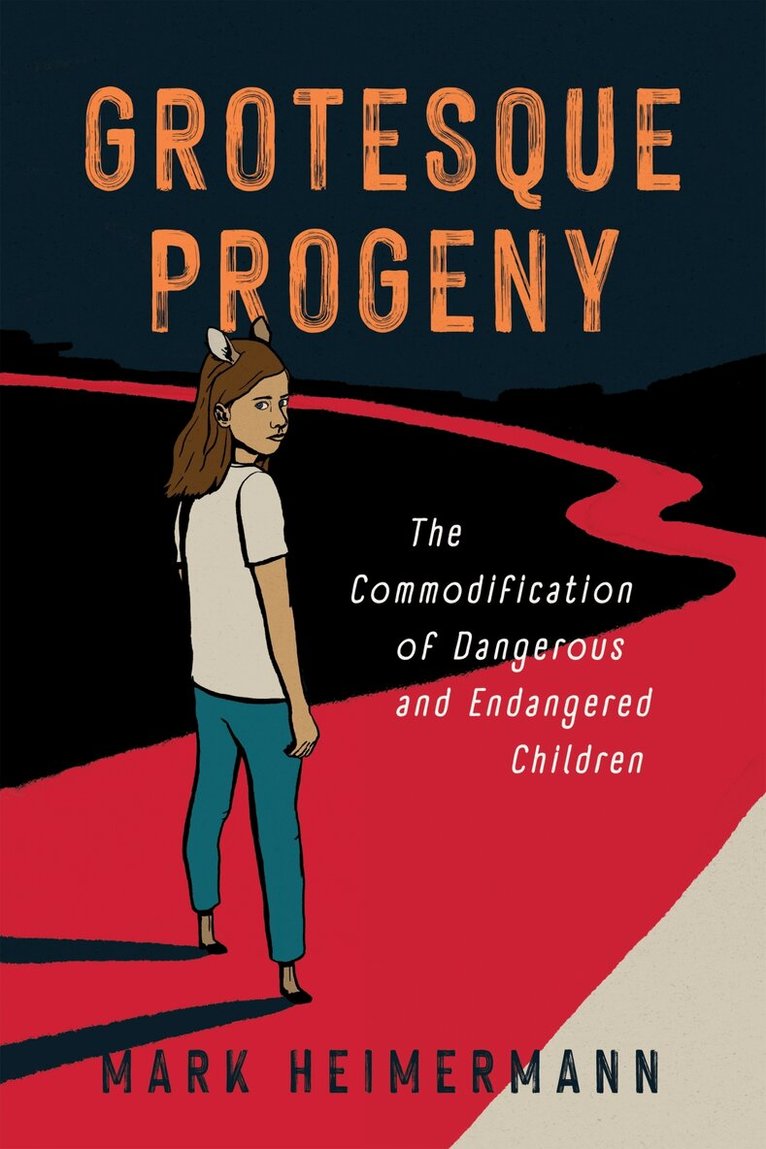
In contemporary Western society, childhood appears more protected than ever to the casual onlooker. Yet, we are increasingly fascinated by narratives in which children are depicted as unsettling beings, both dangerous and endangered, sometimes chaotic or even evil. In Grotesque Progeny: The Commodification of Dangerous and Endangered Children, author Mark Heimermann argues that these representations reflect cultural anxiety regarding a shifting conception of youths from emotional assets to economic ones.In the early to mid-twentieth century, children, who had previously been viewed in part as economic investments, were largely moved out of the work force. For decades, children were instead valued primarily as emotional assets. However, the rise of neoliberal capitalism in the 1970s and 1980s, and its eventual proliferation throughout our politics and our lives, has led to the widespread commodification of social arenas previously kept separate from the capitalist quest for profit. Not even children have escaped being objectified and dehumanized in this manner.Heimermann examines a variety of texts that center on children and adolescents who are marked as different from the adult characters and consequently viewed as grotesque. Chapters cover Jeff Lemire’s Sweet Tooth, M. R. Carey’s The Girl with All the Gifts, Katherine Dunn’s Geek Love, Richard Starkings’s Elephantmen, Kazuo Ishiguro’s Never Let Me Go, and more. Because the young characters are not viewed as equal members of society, they must either strike back at those who commodify them or risk facing a lifetime of dehumanization. Grotesque Progeny argues that these monstrous depictions reveal societal unease over shortsighted economic and political thinking, the exploitation of children, and the changing nature of childhood. The book addresses a growing concern over which spaces ought to be excluded or removed from the harsh valuations of neoliberalism.
1 206 kr
Skickas inom 7-10 vardagar
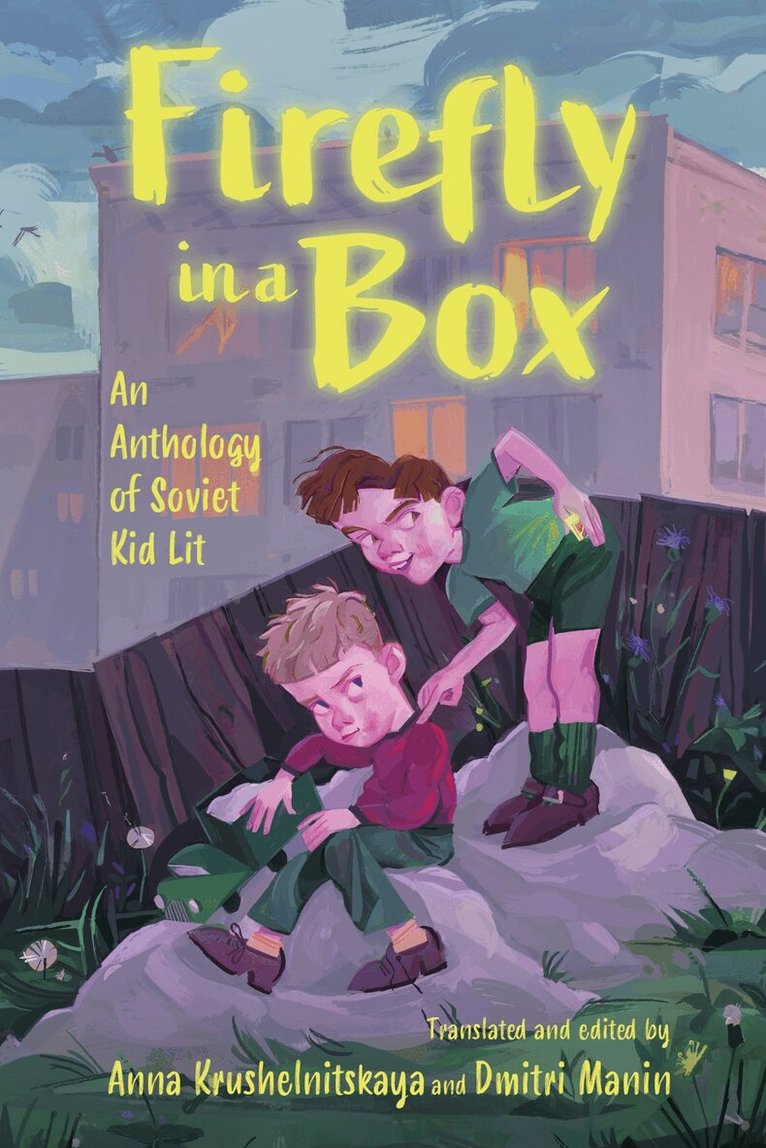
Contributions by Marina Balina, Sibelan Forrester, Anna Krushelnitskaya, Dmitri Manin, Svetlana Maslinskaya, Ainsley Morse, and Serguei Alex. OushakineIn Firefly in a Box: An Anthology of Soviet Kid Lit, translators Anna Krushelnitskaya and Dmitri Manin present a hybrid scholarly and literary volume of popular Russian-language Soviet children’s texts alongside essays that outline the significance and meanings behind these popular texts. The selection features both poetry and short prose, all of which are instantly recognizable to a Soviet native, and all of which hold cultural currency, potency, and valence similar to popular children’s literature in the United States, such as Green Eggs and Ham, Curious George, or Make Way for Ducklings. These texts have either never been translated into English before or appear in all-new translations, literary rather than literal; the featured original Soviet illustrations are reprinted for the English-reading market for the first time. Alongside the translations themselves is a scholarly component that guides Anglophone readers to experience mainstays of Soviet children’s writing. Essayists investigate literary material and perspectives using a broad range of approaches and methodologies applied to Soviet children’s literature. Topics include the Soviet literary canon, the beginning and evolution of Soviet children’s literature in the 1920s and 1930s, interactions between literary texts for children and folklore, and the interplay between Soviet and British children’s poetry.
357 kr
Skickas inom 7-10 vardagar
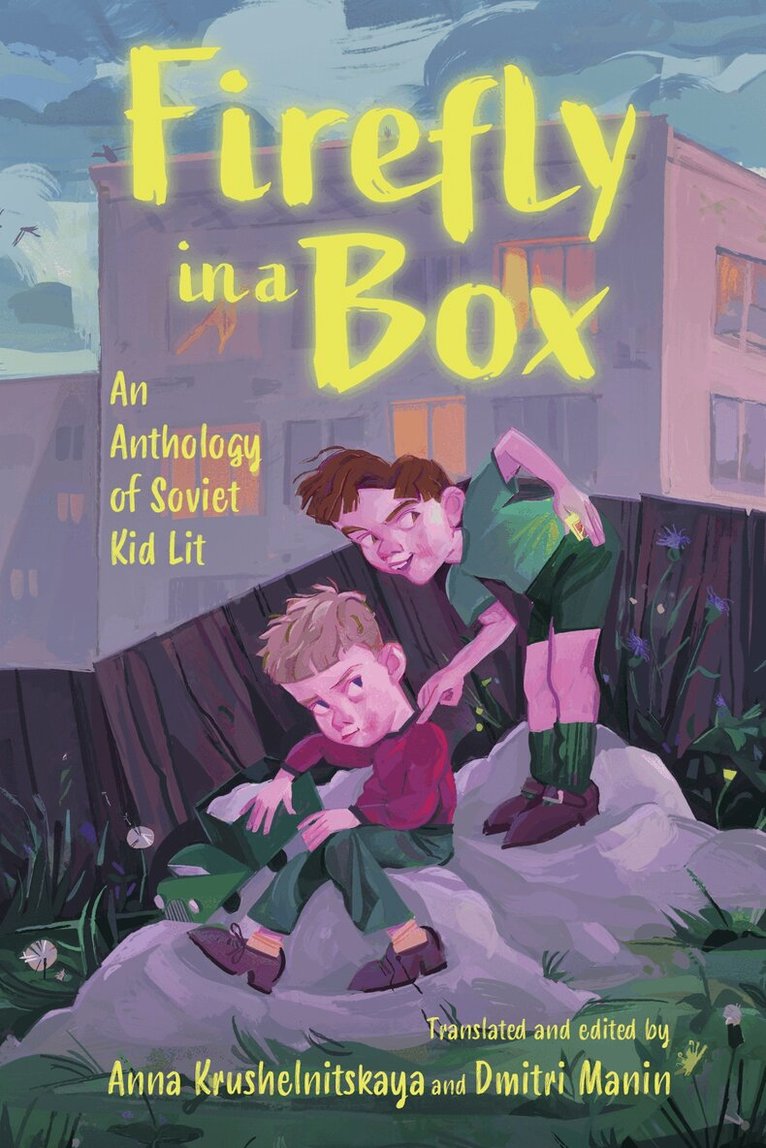
Contributions by Marina Balina, Sibelan Forrester, Anna Krushelnitskaya, Dmitri Manin, Svetlana Maslinskaya, Ainsley Morse, and Serguei Alex. OushakineIn Firefly in a Box: An Anthology of Soviet Kid Lit, translators Anna Krushelnitskaya and Dmitri Manin present a hybrid scholarly and literary volume of popular Russian-language Soviet children’s texts alongside essays that outline the significance and meanings behind these popular texts. The selection features both poetry and short prose, all of which are instantly recognizable to a Soviet native, and all of which hold cultural currency, potency, and valence similar to popular children’s literature in the United States, such as Green Eggs and Ham, Curious George, or Make Way for Ducklings. These texts have either never been translated into English before or appear in all-new translations, literary rather than literal; the featured original Soviet illustrations are reprinted for the English-reading market for the first time. Alongside the translations themselves is a scholarly component that guides Anglophone readers to experience mainstays of Soviet children’s writing. Essayists investigate literary material and perspectives using a broad range of approaches and methodologies applied to Soviet children’s literature. Topics include the Soviet literary canon, the beginning and evolution of Soviet children’s literature in the 1920s and 1930s, interactions between literary texts for children and folklore, and the interplay between Soviet and British children’s poetry.
296 kr
Skickas inom 7-10 vardagar
Contributions by Mary Berman, Mary Burke, Abigail C. Fine, KC Hysmith, Juliette Holder, Mackenzie Kwok, Esther Martin, Hannah Matthews, Janine Napierkowski, Justine Orlovsky-Schnitzler, Samantha Pickette, Sheena Roetman, Rebekkah Rubin, Marissa Spear, Tara Strauch, Cary Tide, and Laura TraisterAn American Girl Anthology: Finding Ourselves in the Pleasant Company Universe turns American Girl dolls—and the ever-growing ecosystem surrounding them—inside out. Editors Justine Orlovsky-Schnitzler and KC Hysmith, along with an expansive list of contributors across multiple disciplines and within different research areas, explore Pleasant Company (American Girl’s parent corporation) and the social and cultural impact the dolls and broader American Girl universe continue to have for generations of American consumers through thoughtful and fun essays.This collection serves as an ode to the democratizing power of the internet and the intoxicating power of nostalgia, while also looking toward the future as the eldest American Girl fans become parents themselves. It is also a critical account of the ways in which American Girl has shaped senses of self-worth and hopes for the future, securing a base of lifelong consumers, and also serves as a love letter to the kids we collectively used to be. Along the way, readers will take seriously American Girl’s influence and place within larger cultural conversations. They will find essays focusing on topics as diverse as food and historical recipes in American Girl publications, the advent of "tag yourself" memes, the struggle to find authentic and long-lasting Asian American representation within the pages of the American Girl catalog, and the enduring power of The Care and Keeping of You as a resource for finding joy in our bodies.
1 033 kr
Skickas inom 10-15 vardagar
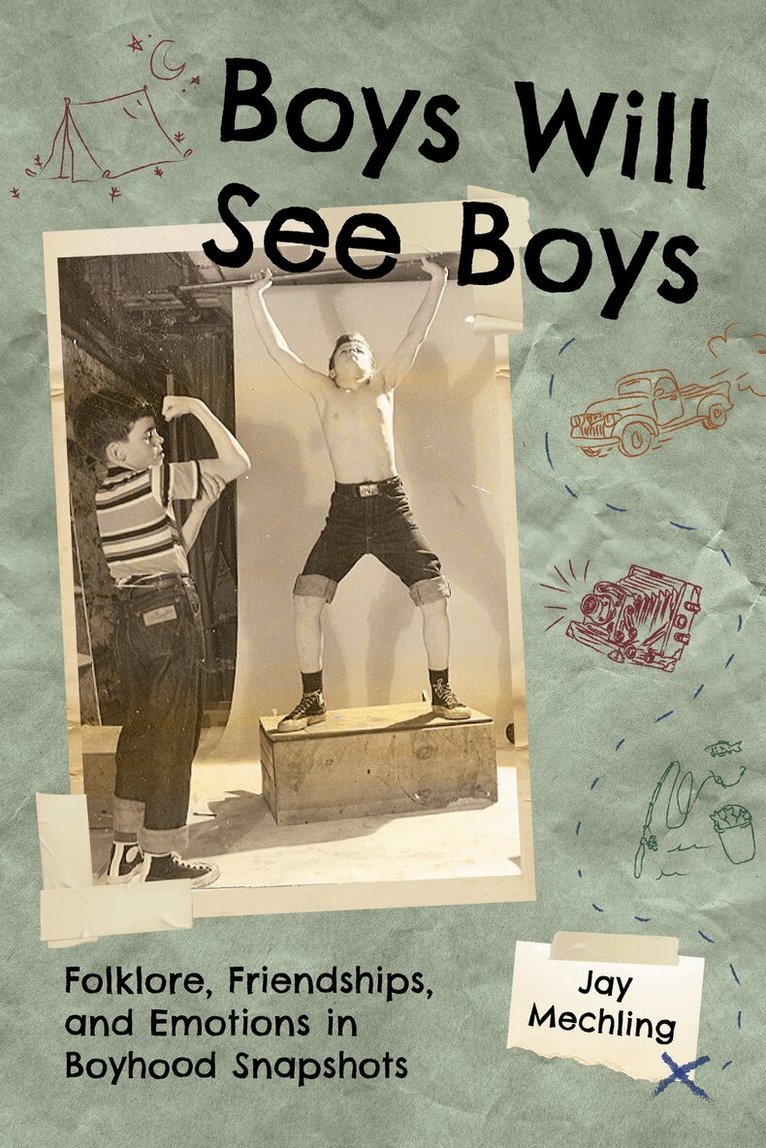
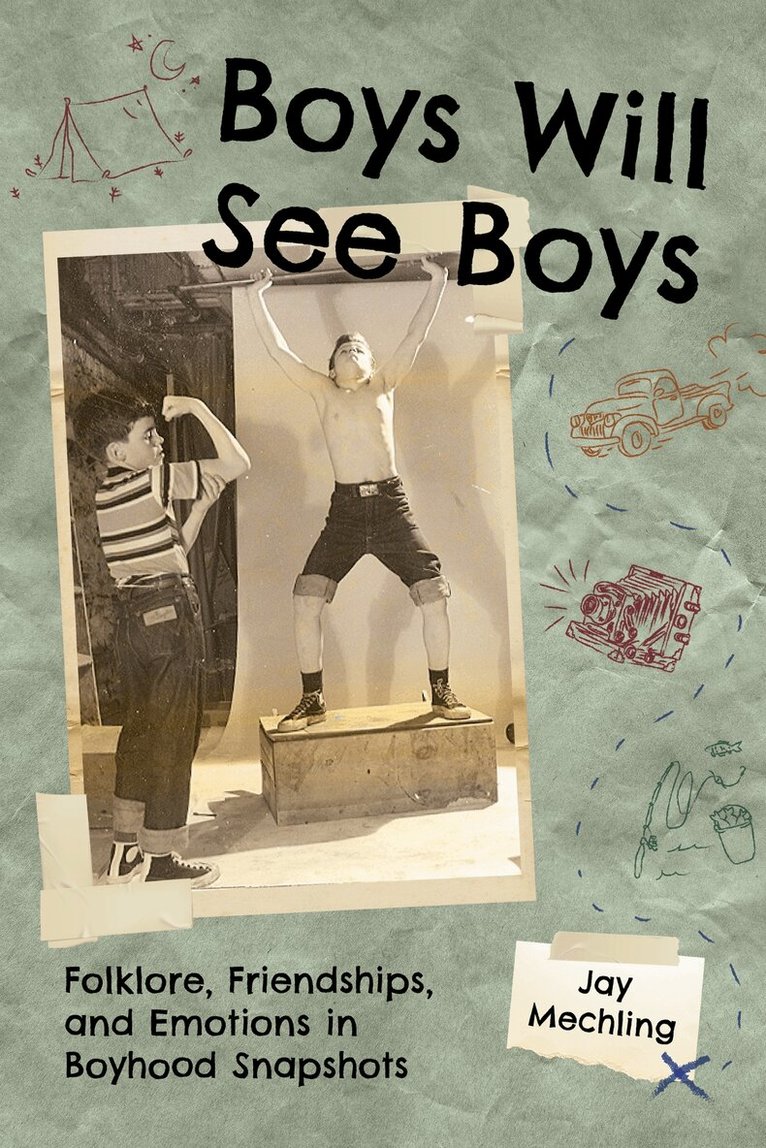
In Boys Will See Boys: Folklore, Friendships, and Emotions in Boyhood Snapshots, author Jay Mechling examines snapshots—photographs of boys taken by boys—to uncover the private, inner lives of American boys, away from adult surveillance. At the heart of the project is a collection of vintage snapshots collected over the years—all anonymous photographs acquired by the author through eBay. Mechling argues that, taken together, these snapshots serve as a history of white American boyhood. Since the boys are being photographed by and with their peers in a relaxed environment, the photographs resonate with authenticity. The project includes deeper looks at adolescent male friendship, as well as the links between boyhood and child culture, such as play, sexuality, adolescence, bonding, and violence, among others. Using the lens of American culture studies, Mechling expertly "reads" each photograph, outlining the social, cultural, intertextual, and historical context, to deepen our understanding of boyhood within our larger cultural system.
288 kr
Skickas
In Boys Will See Boys: Folklore, Friendships, and Emotions in Boyhood Snapshots, author Jay Mechling examines snapshots—photographs of boys taken by boys—to uncover the private, inner lives of American boys, away from adult surveillance. At the heart of the project is a collection of vintage snapshots collected over the years—all anonymous photographs acquired by the author through eBay. Mechling argues that, taken together, these snapshots serve as a history of white American boyhood. Since the boys are being photographed by and with their peers in a relaxed environment, the photographs resonate with authenticity. The project includes deeper looks at adolescent male friendship, as well as the links between boyhood and child culture, such as play, sexuality, adolescence, bonding, and violence, among others. Using the lens of American culture studies, Mechling expertly "reads" each photograph, outlining the social, cultural, intertextual, and historical context, to deepen our understanding of boyhood within our larger cultural system.
1 078 kr
Kommande
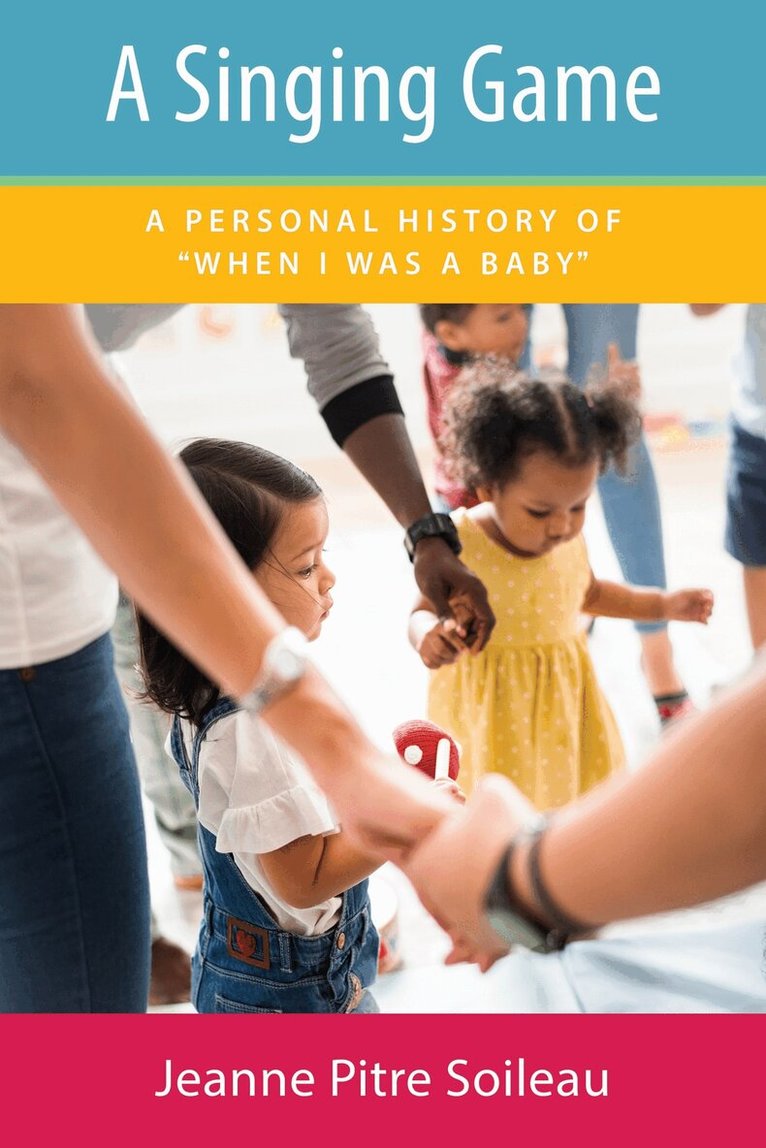
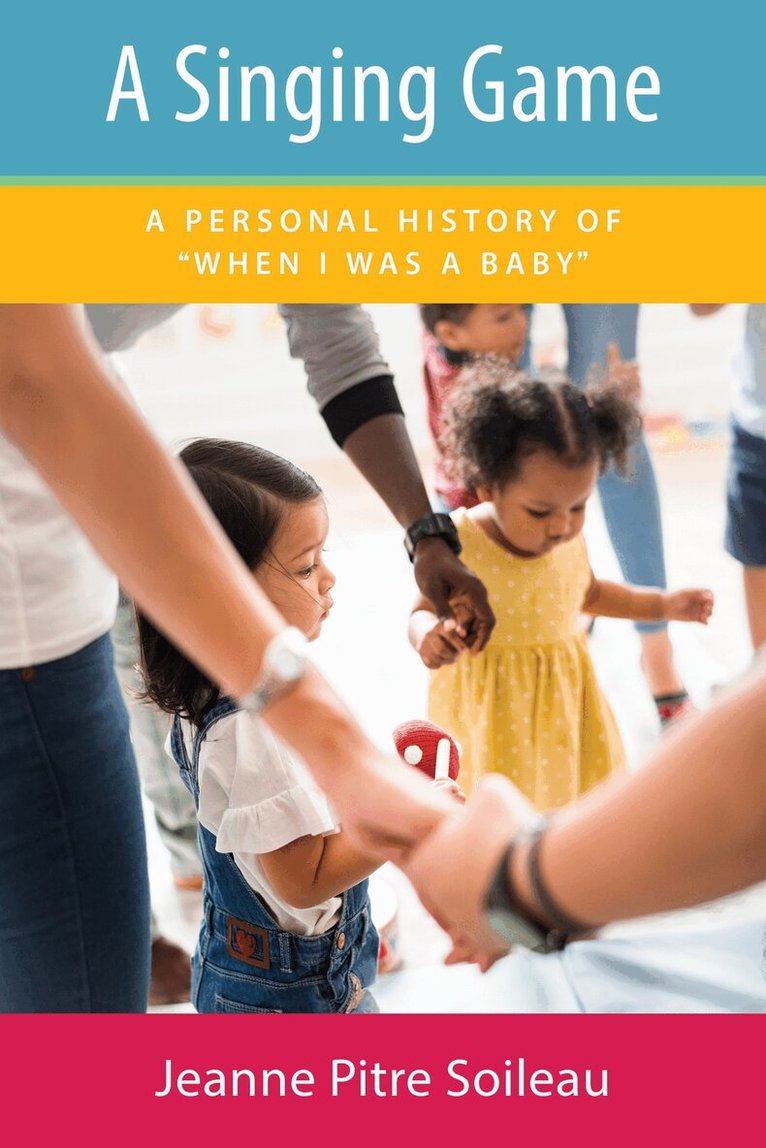
A Singing Game: A Personal History of "When I Was a Baby" examines a series of variants of the classic singing game. "When I Was a Baby," like other traditional singing games, is based around a verse or rhyme paired with a set of movements. This singing game was made up by children and passed down by classmates, siblings, and friends to other children over a period of at least one hundred and fifty years. Jeanne Pitre Soileau traces "When I Was a Baby" through its many permutations, from its earliest appearance in folklore to variations uploaded to YouTube and introduces the varied folklorists who collected it through its history. As the years go by, the anonymous child poets who keep it alive, keen observers of change, spice it up with new vocabulary, new pantomimes, and incorporate into it more piquant social commentary. Part folklore study, part memoir, A Singing Game also explores Soileau’s journey of becoming, through trial and error, a specialist in south Louisiana child lore. Altogether, A Singing Game is an important addition to the children’s folklore canon.
297 kr
Kommande
A Singing Game: A Personal History of "When I Was a Baby" examines a series of variants of the classic singing game. "When I Was a Baby," like other traditional singing games, is based around a verse or rhyme paired with a set of movements. This singing game was made up by children and passed down by classmates, siblings, and friends to other children over a period of at least one hundred and fifty years. Jeanne Pitre Soileau traces "When I Was a Baby" through its many permutations, from its earliest appearance in folklore to variations uploaded to YouTube and introduces the varied folklorists who collected it through its history. As the years go by, the anonymous child poets who keep it alive, keen observers of change, spice it up with new vocabulary, new pantomimes, and incorporate into it more piquant social commentary. Part folklore study, part memoir, A Singing Game also explores Soileau’s journey of becoming, through trial and error, a specialist in south Louisiana child lore. Altogether, A Singing Game is an important addition to the children’s folklore canon.