Design Science Collection - Böcker
Visar alla böcker i serien Design Science Collection. Handla med fri frakt och snabb leverans.
9 produkter
9 produkter
906 kr
Skickas inom 10-15 vardagar
In a broad sense Design Science is the grammar of a language of images rather than of words. Modern communication techniques enable us to transmit and reconstitute images without the need of knowing a specific verbal sequential language such as the Morse code or Hungarian. International traffic signs use international image symbols which are not specific to any particular verbal language. An image language differs from a verbal one in that the latter uses a linear string of symbols, whereas the former is multidimensional. Architectural renderings commonly show projections onto three mutually perpendicular planes, or consist of cross sections at differ ent altitudes representing a stack of floor plans. Such renderings make it difficult to imagine buildings containing ramps and other features which disguise the separation between floors; consequently, they limit the creativity of the architect. Analogously, we tend to analyze natural structures as if nature had used similar stacked renderings, rather than, for instance, a system of packed spheres, with the result that we fail to perceive the system of organization determining the form of such structures.
536 kr
Skickas inom 10-15 vardagar
1 064 kr
Skickas inom 10-15 vardagar
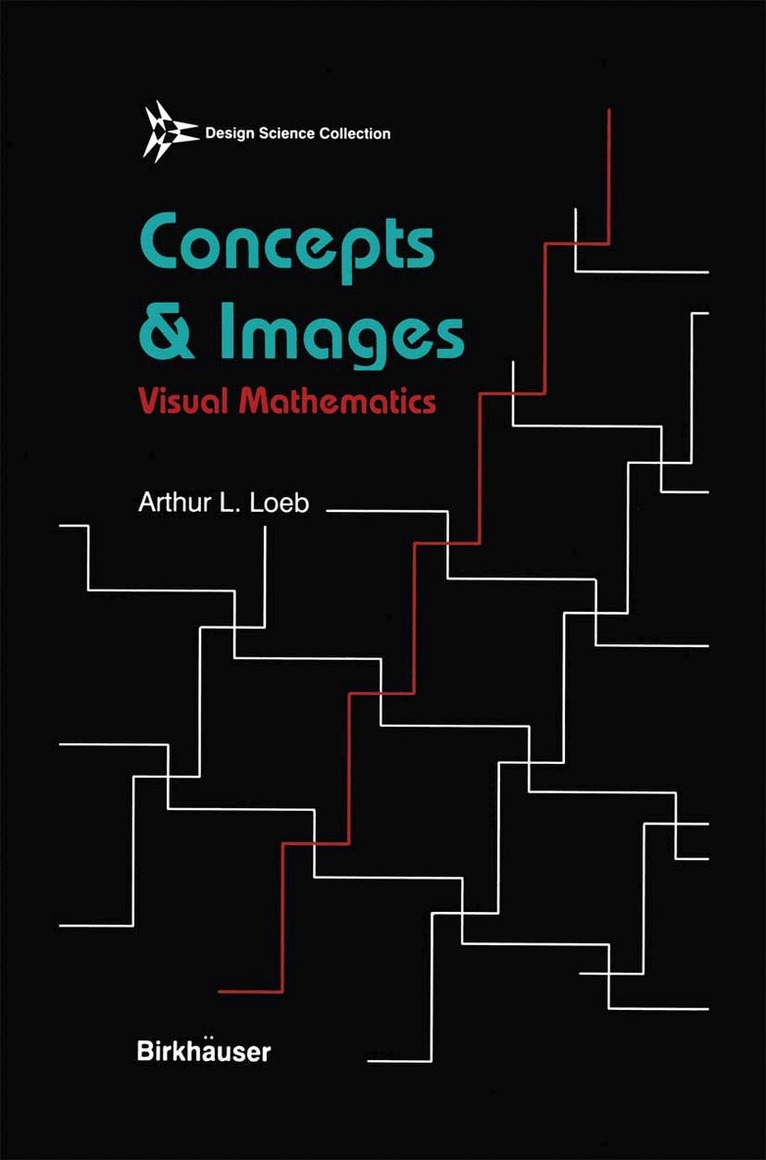
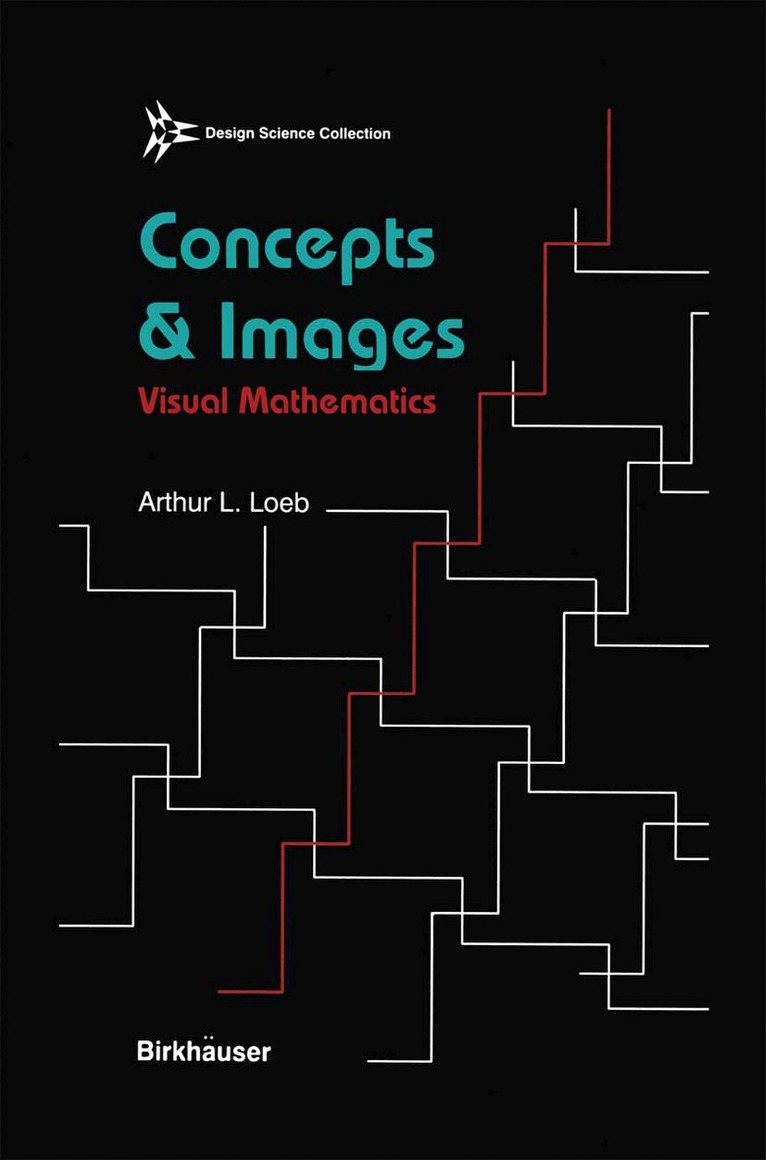
1. Introduction . 1 2. Areas and Angles . . 6 3. Tessellations and Symmetry 14 4. The Postulate of Closest Approach 28 5. The Coexistence of Rotocenters 36 6. A Diophantine Equation and its Solutions 46 7. Enantiomorphy. . . . . . . . 57 8. Symmetry Elements in the Plane 77 9. Pentagonal Tessellations . 89 10. Hexagonal Tessellations 101 11. Dirichlet Domain 106 12. Points and Regions 116 13. A Look at Infinity . 122 14. An Irrational Number 128 15. The Notation of Calculus 137 16. Integrals and Logarithms 142 17. Growth Functions . . . 149 18. Sigmoids and the Seventh-year Trifurcation, a Metaphor 159 19. Dynamic Symmetry and Fibonacci Numbers 167 20. The Golden Triangle 179 21. Quasi Symmetry 193 Appendix I: Exercise in Glide Symmetry . 205 Appendix II: Construction of Logarithmic Spiral . 207 Bibliography . 210 Index . . . . . . . . . . . . . . . . . . . . 225 Concepts and Images is the result of twenty years of teaching at Harvard's Department of Visual and Environmental Studies in the Carpenter Center for the Visual Arts, a department devoted to turning out students articulate in images much as a language department teaches reading and expressing one self in words. It is a response to our students' requests for a "handout" and to l our colleagues' inquiries about the courses : Visual and Environmental Studies 175 (Introduction to Design Science), YES 176 (Synergetics, the Structure of Ordered Space), Studio Arts 125a (Design Science Workshop, Two-Dimension al), Studio Arts 125b (Design Science Workshop, Three-Dimensional),2 as well as my freshman seminars on Structure in Science and Art.
1 064 kr
Skickas inom 10-15 vardagar
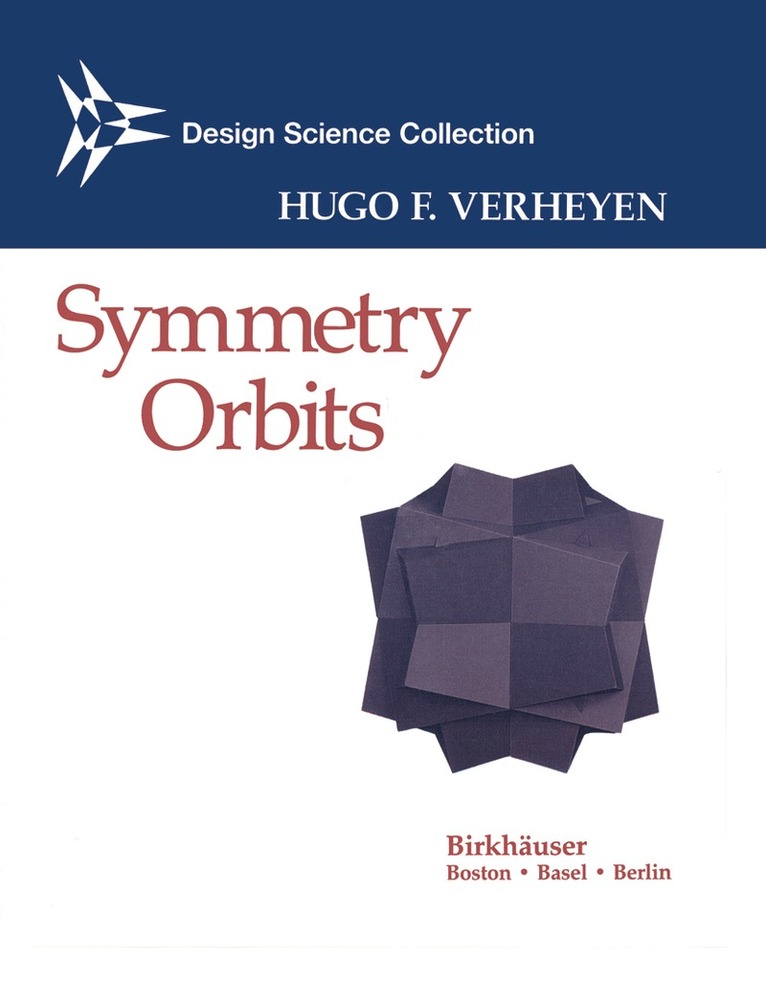
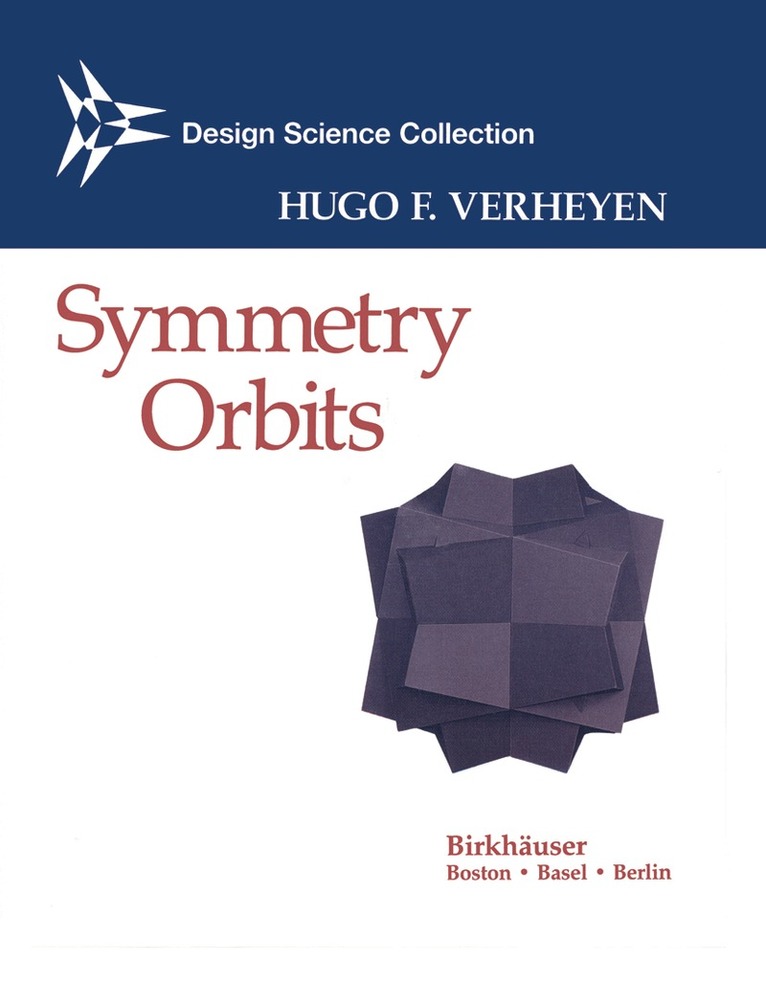
Symmetry groups are of intense interest to mathematicians, physicists, chemists, and designers, as well as to the "philomorphs" who are attracted to the ideas of Design Science. The author of this book has beautifully illustrated active symmetry through the observation of the orbit of a plain cube as it creates an arrangement of cube replicas with overall symmetry under such a specific group. For the general reader, the beauty and utility of the resulting pictures is evident. The mathematician, scientific investigator or student will further welcome a full description of all finite symmetry groups with relevant drawings, calculations, and data. In the detailed study of the cube's orbits, a complete enumeration of cube compounds is introduced and illustrated by photographs, patterns, and constructable models. This group theoretical approach demonstrates a step forward in the long attempt at full classification of polyhedral compounds, whose history is treated in a special chapter in the book. The method includes construction of single polyhedra and allows a logical creation of their compounds never before published. A more complete understanding of symmetry is thus granted.The book will appeal to a wide range of researchers and students, even at the undergraduate level, in geometry, crystallography, structural chemistry, engineering, architecture and the developing discipline of Design Science.
1 096 kr
Skickas inom 10-15 vardagar
na broad sense Design Science is the grammar of a language of images Irather than of words. Modern communication techniques enable us to transmit and reconstitute images without needing to know a specific verbal sequence language such as the Morse code or Hungarian. International traffic signs use international image symbols which are not specific to any particular verbal language. An image language differs from a verbal one in that the latter uses a linear string of symbols, whereas the former is multi dimensional. Architectural renderings commonly show projections onto three mutual ly perpendicular planes, or consist of cross sections at different altitudes capa ble of being stacked and representing different floor plans. Such renderings make it difficult to imagine buildings comprising ramps and other features which disguise the separation between floors, and consequently limit the cre ative process of the architect. Analogously, we tend to analyze natural struc tures as if nature had used similar stacked renderings, rather than, for instance, a system of packed spheres, with the result that we fail to perceive the system of organization determining the form of such structures. Perception is a complex process. Our senses record; they are analogous to audio or video devices. We cannot, however, claim that such devices perceive.
1 064 kr
Skickas inom 10-15 vardagar
1. Introduction . 1 2. Areas and Angles . . 6 3. Tessellations and Symmetry 14 4. The Postulate of Closest Approach 28 5. The Coexistence of Rotocenters 36 6. A Diophantine Equation and its Solutions 46 7. Enantiomorphy. . . . . . . . 57 8. Symmetry Elements in the Plane 77 9. Pentagonal Tessellations . 89 10. Hexagonal Tessellations 101 11. Dirichlet Domain 106 12. Points and Regions 116 13. A Look at Infinity . 122 14. An Irrational Number 128 15. The Notation of Calculus 137 16. Integrals and Logarithms 142 17. Growth Functions . . . 149 18. Sigmoids and the Seventh-year Trifurcation, a Metaphor 159 19. Dynamic Symmetry and Fibonacci Numbers 167 20. The Golden Triangle 179 21. Quasi Symmetry 193 Appendix I: Exercise in Glide Symmetry . 205 Appendix II: Construction of Logarithmic Spiral . 207 Bibliography . 210 Index . . . . . . . . . . . . . . . . . . . . 225 Concepts and Images is the result of twenty years of teaching at Harvard's Department of Visual and Environmental Studies in the Carpenter Center for the Visual Arts, a department devoted to turning out students articulate in images much as a language department teaches reading and expressing one self in words. It is a response to our students' requests for a "handout" and to l our colleagues' inquiries about the courses : Visual and Environmental Studies 175 (Introduction to Design Science), YES 176 (Synergetics, the Structure of Ordered Space), Studio Arts 125a (Design Science Workshop, Two-Dimension al), Studio Arts 125b (Design Science Workshop, Three-Dimensional),2 as well as my freshman seminars on Structure in Science and Art.
536 kr
Skickas inom 10-15 vardagar
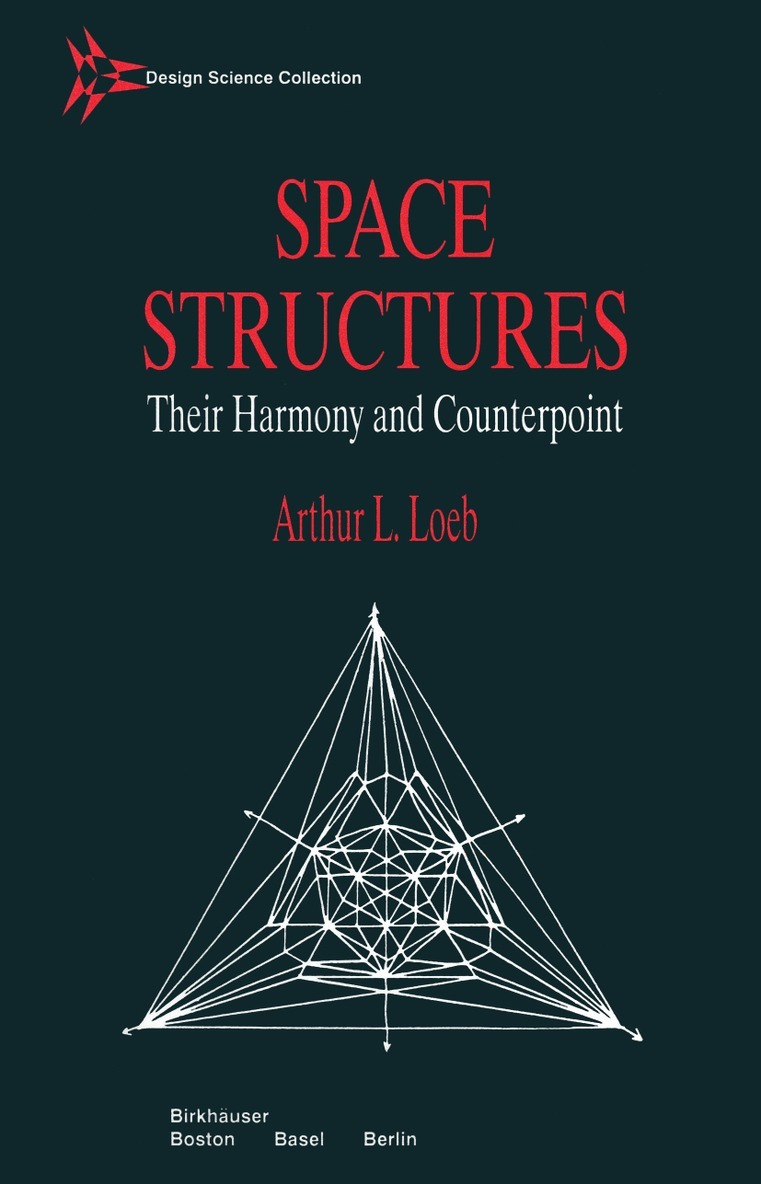
xiv aggregates: this touches on the very nature of things. The concept of statistical symmetry which Loeb develops is particularly important, it emphasizes the limitations in seemingly random aggregates and for permits general statements of which the crystallographer's sym metries are only special cases. The reductionist and holistic approaches to the world have been at war with each other since the times of the Greek philosophers and before. In nature, parts clearly do fit together into real structures, and the parts are affected by their environment. The problem is one of understanding. The mystery that remains lies largely in the nature of structural hierarchy, for the human mind can examine nature on many different scales sequentially but not simultaneously. Arthur Loeb's monograph is a fundamental one, but one can sense a devel opment from the relations between his zero-and three-dimensional cells to the far more complex world of organisms and concepts. It is structure that makes the difference between a cornfield and a cake, between an aggregate of cells and a human being, between a random group of human beings and a society. We can perceive anything only when we perceive its structure, and we think by structural analogy and comparison. Several books have been published showing the beauty of form in nature. This one has the beauty of a work of art, but it grows out of rigorous mathematics and from the simplest of bases-dimensional ity, extent and valency.
1 096 kr
Skickas inom 10-15 vardagar
na broad sense Design Science is the grammar of a language of images Irather than of words. Modern communication techniques enable us to transmit and reconstitute images without needing to know a specific verbal sequence language such as the Morse code or Hungarian. International traffic signs use international image symbols which are not specific to any particular verbal language. An image language differs from a verbal one in that the latter uses a linear string of symbols, whereas the former is multi dimensional. Architectural renderings commonly show projections onto three mutual ly perpendicular planes, or consist of cross sections at different altitudes capa ble of being stacked and representing different floor plans. Such renderings make it difficult to imagine buildings comprising ramps and other features which disguise the separation between floors, and consequently limit the cre ative process of the architect. Analogously, we tend to analyze natural struc tures as if nature had used similar stacked renderings, rather than, for instance, a system of packed spheres, with the result that we fail to perceive the system of organization determining the form of such structures. Perception is a complex process. Our senses record; they are analogous to audio or video devices. We cannot, however, claim that such devices perceive.
1 064 kr
Skickas inom 10-15 vardagar
In a broad sense design science is the grammar of a language of images rather than of words. Modem communication techniques enable us to transmit and reconstitute images without needing to know a specific verbal sequence language such as the Morse code or Hungarian. Inter national traffic signs use international image symbols which are not An image language differs specific to any particular verbal language. from a verbal one in that the latter uses a linear string of symbols, whereas the former is multidimensional. Architectural renderings commonly show projections onto three mutually perpendicular planes, or consist of cross sections at different altitudes capable of being stacked and representing different floor plans. Such renderings make it difficult to imagine buildings compris ing ramps and other features which disguise the separation between and consequently limit the creative process of the architect. floors, Analogously, we tend to analyze natural structures as if nature had used similar stacked renderings, rather than, for instance, a system of packed spheres, with the result that we fail to perceive the system of organization determining the form of such structures.