Developments in Medical Virology - Böcker
Visar alla böcker i serien Developments in Medical Virology. Handla med fri frakt och snabb leverans.
13 produkter
13 produkter
2 180 kr
Skickas inom 10-15 vardagar
In the summer of 1984, both of us were working with Professor Yechiel Becker in the Laboratory for Molecular Virology at the Hebrew University-Hadassah Medical center in Jerusalem. During a discussion about the increasing number of specialized journals and monographs, Dr. Becker pointed out that none covered both the clinical and molecular aspects of neurotropic virus infections, and he urged us to develop such a book with the help of colleagues who were conducting highly-regarded research in their individual areas related to neurotropic viruses. The responses to our request were gratifying, and each contribution provided both a comprehensive clinical description of the neurologic disease produced by a specific virus and an up-to-date review of the current research in the pathogenesis of the disease, with particular attention given to molecular mechanisms. Most, but not all chapters were written by clinical neurologists who applied basic science strategies and methodologies to the question of how neurotropic viruses produce disease. other chapters were written by virologists known for their longstanding commitment and expertise in the analysis of the pathogenesis of neurotropic virus infections. Thus, this unique monograph should be valuable to all clinicians caring for patients with CNS viral diseases and to "neurovirologists" needing an update of the clinical and molecular pathogenesis of neurotropic virus infections. While this monograph was being prepared, a rapidly expanding literature indicated that the human lenteviruses, human immunodeficiency viruses (HIV) and HTLV-1 were highly neurotropic.
2 180 kr
Skickas inom 10-15 vardagar
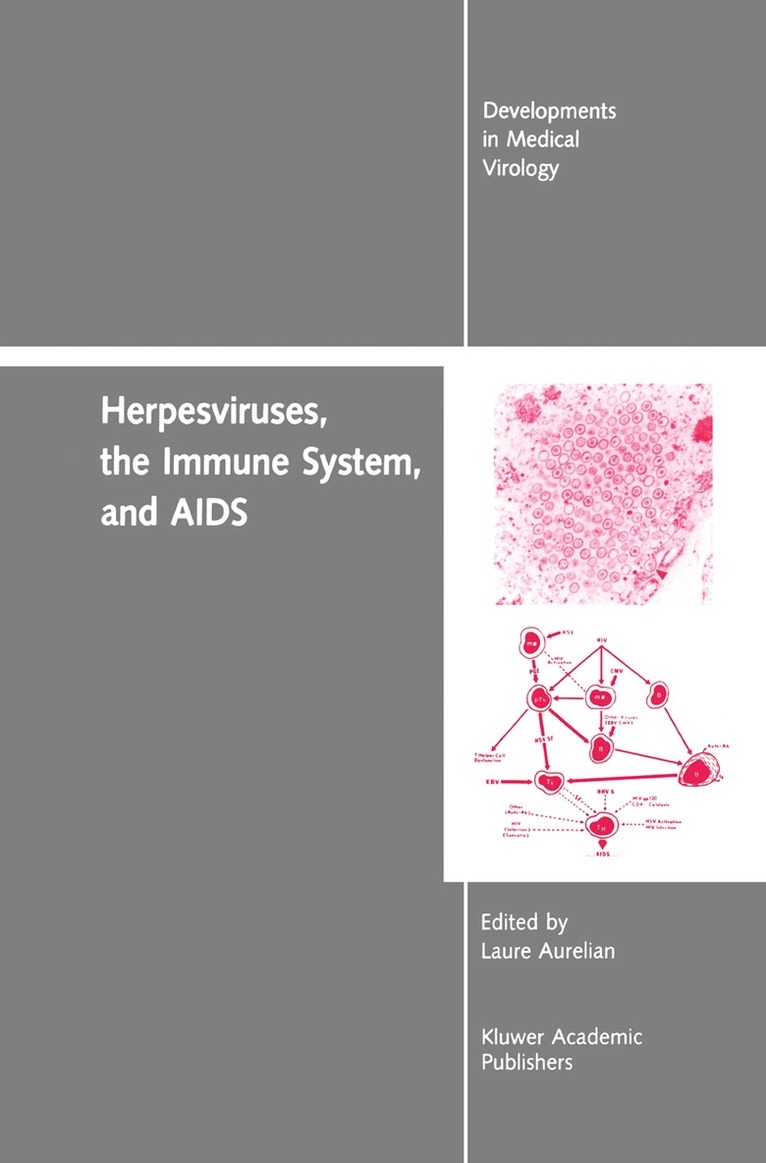
Shortly after the reeognition of the aequired immunodefieieney syndrome (AIDS) in 1981 (1-3), it was hypothesized that herpesviruses may play an important role in the etiology or pathogenesis of this newly identified syndrome (4,5). This theory was based on the faet that infeetion with herpesviruses was a prominent elinieal feature in nearly all patients with AIDS (3-5). Chronie mueocutaneous herpes simplex virus (HSV) infections were one of the first opportunistie infeetions deseribed in patients with AIDS (3), and both cytomegalovirus (CMV) and HSV infections were extremely common in individuals identified to be at highest risk for aequiring AIDS, such as homosexual men, intravenous drug users and hemophiliaes (4-8). CMVand Epstein-Barr virus (EBV) were also prominent infeetions whieh were suspected as possible etiologic agents of the prolonged fever, wasting, and Iymphadenopathy that often precedes AIDS, frequently referred to as the chronie Iymphadenopathy syndrome (9,10). Subsequent elinieal studies have indeed demonstrated that infeetions with HSV, CMV, EBV, and even varieella- zoster virus (VZV) are frequent opportunistic infeetions wh ich oeeur among AIDS patients (11-14).Several of the opportunistie infeetions caused by herpesviruses include encephalitis, chorioretinitis, hairy leukoplakia, esophagitis, enteritis, colitis, Burkitt's lymphoma, primary CNS lymphoma, zoster, and there has even been speculation about the role of CMV in the pathogenesis of Kaposi's sareoma (15,16). Furthermore, the herpesviruses, partieularly CMV and EBV have been known to be strongly associated with immunosuppression, partieularly of cell-mediated immune functions, which further supported the hypothesis that herpesviruses may contribute to the immune defects that eharacterize AIDS.
2 180 kr
Skickas inom 10-15 vardagar
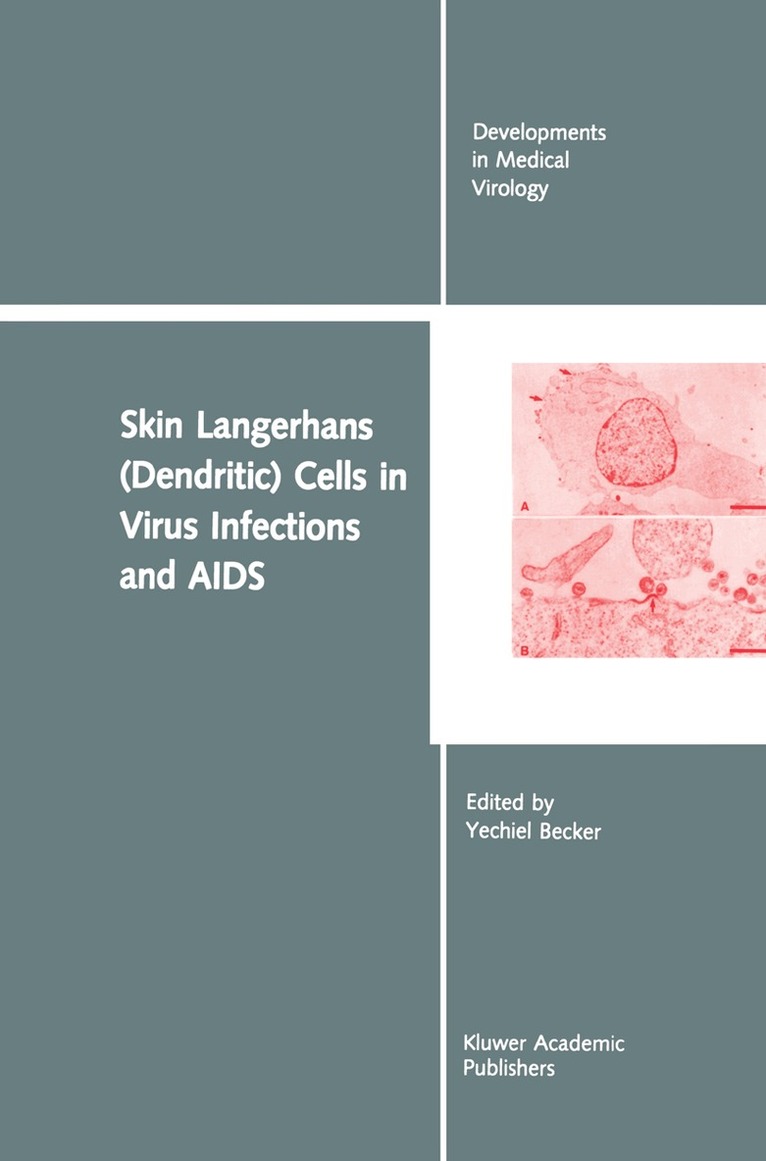
Over the generations the skin has been the site for immunization against smallpox. This method of immunization was described in a letter written by Lady Mary Montagu on April 1, 1717 in Adrianopole, Turkey: "The small-pox, so fatal, and so general amongst us, is here entirely harmless by the invention of ingrafting, which is the term they give it. . . The old woman comes with a nut-shell full of the matter of the best sort of small-pox . . . She immediately rips open (the skin) with a large needle . . . and puts into the vein as much venom as can lie upon the head of her needle, and after binds up the wound. There is no example of anyone that died of it; and you may believe that I am satisfied of the safety of this experiment since I intend to try it on my dear little son" (Letters from the right Honourable Lady Mary Montagu 1709-1762. Published by J. M. Dent and Co. London, 2nd edition, September, 1906, p. 124. ) The "variolation" method was, 80 years later, markedly improved by the use of cowpox virus, as reported by Edward Jenner in 1796. The successful method of intradermal immunization against smallpox and later against other virus diseases is in fact based on the presence of anitigen-presenting dendritic cells in the skin.
2 180 kr
Skickas inom 10-15 vardagar
Antiviral chemotherapy has come of age, and, after an initial slow pro gress, the development of new antiviral agents has proceeded at a more rapid pace and the perspectives for their clinical use have increased considerably. Now, 25 years after the first antiviral assay (idoxuridine) was introduced in the clinic, it is fitting to commemorate the beginning of the antivirals' era. In its introductory chapter B.E. Juel-Jensen touches on what may be con sidered as five of the most fundamental requirements of an antiviral drug : efficacy, relative non-toxicity, easy solubility, ready availability and rea sonable cost. Surely, the antiviral drugs that have so far been used in the clinic could still be improved upon as one or more of these five essential demands are concerned. How is all began is narrated by W.H. Prusoff. The first antiviral drugs to be used in humans were methisazone and idoxuridine, the former, which is now of archival interest, in the prevention of smallpox, the latter, which was approved for clinical use in the United States in 1962, for the topical treatment of herpetic keratitis. In terms of potency, also because of solubility reasons, idoxuridine has been superseded by trifluridine in the topical treatment of herpes simplex epithelial keratitis. H.E. Kaufman did not find trifluridine or acyclovir ef fective in the treatment of deep stromal keratitis or iritis and he reckons that other antiviral drugs (i.e. bromovinyldeoxyuridine) would not be effec tive either.
2 180 kr
Skickas inom 10-15 vardagar
1 094 kr
Skickas inom 10-15 vardagar
This volume in the series Developments in Medical Virology deals with viruses involved in diabetes mellitus, a syndrome with a strong genetic background that causes damage to the regulation of insulin synthesis and function. Viruses were found either to cause or to stimulate diabetes mellitus in man and in animal models. The nature of the role of viruses is described by many of the scientists who participated in the original studies. To complete the picture, chapters were included that deal with the insulin gene, the secondary structure of the proinsulin and insulin receptor polypeptides, pancreatic Langerhans islets, and clinical considerations of the disease. The aim of Developments in Medical Virology is to elucidate processes involving viruses as pathogens of cells and organisms, with special attention to human diseases. A number of volumes will be devoted to viruses affecting specific organs (e.g. brain, liver, etc.), while others will elaborate on the clinical experience in the use of antiviral drugs. The series is published in parallel with Developments in Molecular Virology, designed to present an analysis of molecular mechanisms implicated in virus infection and replicative processes. In addition, the series Developments in Veterinary Virology provides information on viruses causing diseases in animals, with special emphasis on aspects of interest to veterinarians.
2 180 kr
Skickas inom 10-15 vardagar
Shortly after the reeognition of the aequired immunodefieieney syndrome (AIDS) in 1981 (1-3), it was hypothesized that herpesviruses may play an important role in the etiology or pathogenesis of this newly identified syndrome (4,5). This theory was based on the faet that infeetion with herpesviruses was a prominent elinieal feature in nearly all patients with AIDS (3-5). Chronie mueocutaneous herpes simplex virus (HSV) infections were one of the first opportunistie infeetions deseribed in patients with AIDS (3), and both cytomegalovirus (CMV) and HSV infections were extremely common in individuals identified to be at highest risk for aequiring AIDS, such as homosexual men, intravenous drug users and hemophiliaes (4-8). CMVand Epstein-Barr virus (EBV) were also prominent infeetions whieh were suspected as possible etiologic agents of the prolonged fever, wasting, and Iymphadenopathy that often precedes AIDS, frequently referred to as the chronie Iymphadenopathy syndrome (9,10). Subsequent elinieal studies have indeed demonstrated that infeetions with HSV, CMV, EBV, and even varieella- zoster virus (VZV) are frequent opportunistic infeetions wh ich oeeur among AIDS patients (11-14).Several of the opportunistie infeetions caused by herpesviruses include encephalitis, chorioretinitis, hairy leukoplakia, esophagitis, enteritis, colitis, Burkitt's lymphoma, primary CNS lymphoma, zoster, and there has even been speculation about the role of CMV in the pathogenesis of Kaposi's sareoma (15,16). Furthermore, the herpesviruses, partieularly CMV and EBV have been known to be strongly associated with immunosuppression, partieularly of cell-mediated immune functions, which further supported the hypothesis that herpesviruses may contribute to the immune defects that eharacterize AIDS.
2 180 kr
Skickas inom 10-15 vardagar
In the summer of 1984, both of us were working with Professor Yechiel Becker in the Laboratory for Molecular Virology at the Hebrew University-Hadassah Medical center in Jerusalem. During a discussion about the increasing number of specialized journals and monographs, Dr. Becker pointed out that none covered both the clinical and molecular aspects of neurotropic virus infections, and he urged us to develop such a book with the help of colleagues who were conducting highly-regarded research in their individual areas related to neurotropic viruses. The responses to our request were gratifying, and each contribution provided both a comprehensive clinical description of the neurologic disease produced by a specific virus and an up-to-date review of the current research in the pathogenesis of the disease, with particular attention given to molecular mechanisms. Most, but not all chapters were written by clinical neurologists who applied basic science strategies and methodologies to the question of how neurotropic viruses produce disease. other chapters were written by virologists known for their longstanding commitment and expertise in the analysis of the pathogenesis of neurotropic virus infections. Thus, this unique monograph should be valuable to all clinicians caring for patients with CNS viral diseases and to "neurovirologists" needing an update of the clinical and molecular pathogenesis of neurotropic virus infections. While this monograph was being prepared, a rapidly expanding literature indicated that the human lenteviruses, human immunodeficiency viruses (HIV) and HTLV-1 were highly neurotropic.
2 117 kr
Skickas inom 10-15 vardagar
Antiviral chemotherapy has come of age, and, after an initial slow pro gress, the development of new antiviral agents has proceeded at a more rapid pace and the perspectives for their clinical use have increased considerably. Now, 25 years after the first antiviral assay (idoxuridine) was introduced in the clinic, it is fitting to commemorate the beginning of the antivirals' era. In its introductory chapter B.E. Juel-Jensen touches on what may be con sidered as five of the most fundamental requirements of an antiviral drug : efficacy, relative non-toxicity, easy solubility, ready availability and rea sonable cost. Surely, the antiviral drugs that have so far been used in the clinic could still be improved upon as one or more of these five essential demands are concerned. How is all began is narrated by W.H. Prusoff. The first antiviral drugs to be used in humans were methisazone and idoxuridine, the former, which is now of archival interest, in the prevention of smallpox, the latter, which was approved for clinical use in the United States in 1962, for the topical treatment of herpetic keratitis. In terms of potency, also because of solubility reasons, idoxuridine has been superseded by trifluridine in the topical treatment of herpes simplex epithelial keratitis. H.E. Kaufman did not find trifluridine or acyclovir ef fective in the treatment of deep stromal keratitis or iritis and he reckons that other antiviral drugs (i.e. bromovinyldeoxyuridine) would not be effec tive either.
2 180 kr
Skickas inom 10-15 vardagar
1 094 kr
Skickas inom 10-15 vardagar
This volume in the series Developments in Medical Virology deals with viruses involved in diabetes mellitus, a syndrome with a strong genetic background that causes damage to the regulation of insulin synthesis and function. Viruses were found either to cause or to stimulate diabetes mellitus in man and in animal models. The nature of the role of viruses is described by many of the scientists who participated in the original studies. To complete the picture, chapters were included that deal with the insulin gene, the secondary structure of the proinsulin and insulin receptor polypeptides, pancreatic Langerhans islets, and clinical considerations of the disease. The aim of Developments in Medical Virology is to elucidate processes involving viruses as pathogens of cells and organisms, with special attention to human diseases. A number of volumes will be devoted to viruses affecting specific organs (e.g. brain, liver, etc.), while others will elaborate on the clinical experience in the use of antiviral drugs. The series is published in parallel with Developments in Molecular Virology, designed to present an analysis of molecular mechanisms implicated in virus infection and replicative processes. In addition, the series Developments in Veterinary Virology provides information on viruses causing diseases in animals, with special emphasis on aspects of interest to veterinarians.
Epstein-Barr Virus and Associated Diseases
Proceedings of the First International Symposium on Epstein-Barr Virus-Associated Malignant Diseases (Loutraki, Greece—September 24–28, 1984)
Häftad, Engelska, 2011
534 kr
Skickas inom 10-15 vardagar
It has been slightly more than two decades since the Epstein-Barr virus (EBV) was discovered by Prof. M.A. Epstein and his colleagues at the University of Bristol in their search for the causative agent of Burkitt's lymphoma. For several years EBV was a "virus in search of a disease." The first documentation that EBV was pathogenic for humans was in 1969 when Drs. Gertrude and Werner Henle identified it as the causative agent for infectious mononucleosis. Seroepidemiologic and biochemical studies subsequently linked EBV to Burkitt's lymphoma (BL), nasopharyngeal carcinoma (NPC), and more recently to the X-linked lymphoproliferative syndrome. With its widespread pattern of infection and a predilection for producing clinical signs and symptoms in only certain individuals, EBV has provided a model for many other candidate oncogenic viruses, including papilloma viruses, herpes simplex, and HTLV/LAV. In 1975, an international workshop was sponsored by the National Cancer Institute to address the problem of EBV production, thus facilitating basic research on the virus. This proved to be the last international meeting on EBV for almost a decade. In the past, progress in both clinical and basic research on EBV has been presented in two types of international meetings, the international herpesvirus workshops devoted primarily to basic research on both human and animal herpesviruses, and the international symposia on NPC, in which EBV-related studies were interspersed with clinical, epidemiologic and other etiologic aspects of this important human neoplasm.
2 180 kr
Skickas inom 10-15 vardagar
Over the generations the skin has been the site for immunization against smallpox. This method of immunization was described in a letter written by Lady Mary Montagu on April 1, 1717 in Adrianopole, Turkey: "The small-pox, so fatal, and so general amongst us, is here entirely harmless by the invention of ingrafting, which is the term they give it. . . The old woman comes with a nut-shell full of the matter of the best sort of small-pox . . . She immediately rips open (the skin) with a large needle . . . and puts into the vein as much venom as can lie upon the head of her needle, and after binds up the wound. There is no example of anyone that died of it; and you may believe that I am satisfied of the safety of this experiment since I intend to try it on my dear little son" (Letters from the right Honourable Lady Mary Montagu 1709-1762. Published by J. M. Dent and Co. London, 2nd edition, September, 1906, p. 124. ) The "variolation" method was, 80 years later, markedly improved by the use of cowpox virus, as reported by Edward Jenner in 1796. The successful method of intradermal immunization against smallpox and later against other virus diseases is in fact based on the presence of anitigen-presenting dendritic cells in the skin.