Digital Humanities - Böcker
Visar alla böcker i serien Digital Humanities. Handla med fri frakt och snabb leverans.
12 produkter
12 produkter
350 kr
Skickas inom 7-10 vardagar
In the field of history, the Web and other technologies have become important tools in research and teaching of the past. Yet the use of these tools is limited—many historians and history educators have resisted adopting them because they fail to see how digital tools supplement and even improve upon conventional tools (such as books). In Pastplay, a collection of essays by leading history and humanities researchers and teachers, editor Kevin Kee works to address these concerns head-on. How should we use technology? Playfully, Kee contends. Why? Because doing so helps us think about the past in new ways; through the act of creating technologies, our understanding of the past is re-imagined and developed. From the insights of numerous scholars and teachers, Pastplay argues that we should play with technology in history because doing so enables us to see the past in new ways by helping us understand how history is created; honoring the roots of research, teaching, and technology development; requiring us to model our thoughts; and then allowing us to build our own understanding.
371 kr
Skickas inom 7-10 vardagar
Although many humanities scholars have been talking and writing about the transition to the digital age for more than a decade, only in the last few years have we seen a convergence of the factors that make this transition possible: the spread of sufficient infrastructure on campuses, the creation of truly massive databases of humanities content, and a generation of students that has never known a world without easy Internet access.Teaching History in the Digital Age serves as a guide for practitioners on how to fruitfully employ the transformative changes of digital media in the research, writing, and teaching of history. T. Mills Kelly synthesizes more than two decades of research in digital history, offering practical advice on how to make best use of the results of this synthesis in the classroom and new ways of thinking about pedagogy in the digital humanities.
313 kr
Skickas inom 7-10 vardagar
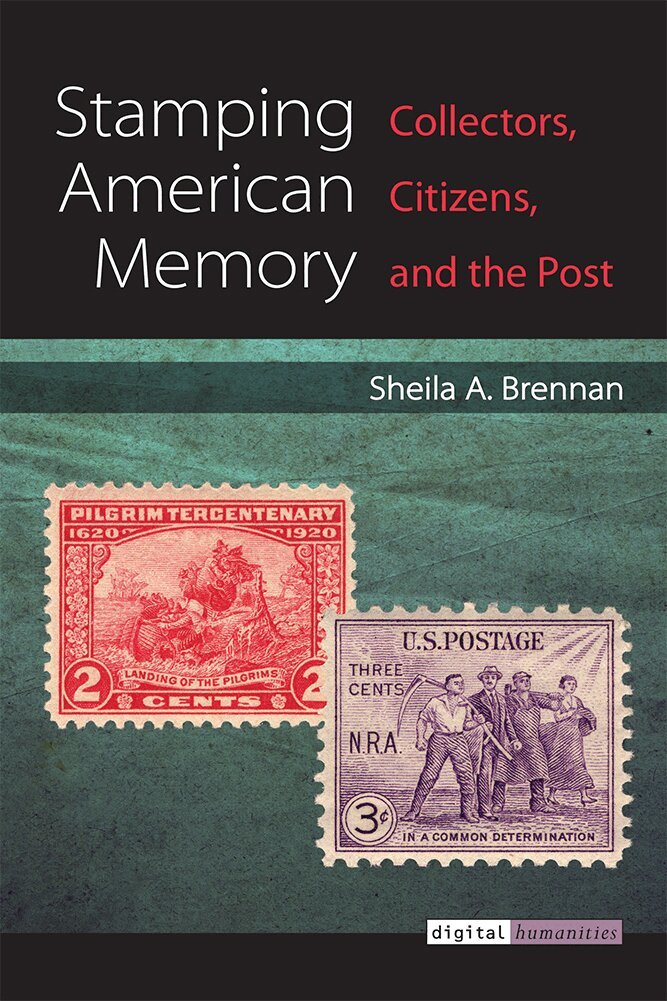
Winner of the University of Michigan Press / Humanities, Arts, Science, and Technology Alliance and Collaboratory (HASTAC) Prize for Notable Work in the Digital HumanitiesIn the age of digital communications, it can be difficult to imagine a time when the meaning and imagery of stamps was politically volatile. While millions of Americans collected stamps from the 1880s to the 1940s, Stamping American Memory is the first scholarly examination of stamp collecting culture and how stamps enabled citizens to engage their federal government in conversations about national life in early-twentieth-century America. By examining the civic conversations that emerged around stamp subjects and imagery, this work brings to light the role that these underexamined historical artifacts have played in carrying political messages.Sheila A. Brennan crafts a fresh synthesis that explores how the US postal service shaped Americans’ concepts of national belonging, citizenship, and race through its commemorative stamp program. Designed to be saved as souvenirs, commemoratives circulated widely and stood as miniature memorials to carefully selected snapshots from the American past that also served the political needs of small interest groups. Stamping American Memory brings together the histories of the US postal service and the federal government, collecting, and philately through the lenses of material culture and memory to make a significant contribution to our understanding of this period in American history.
Hacking the Academy
New Approaches to Scholarship and Teaching from Digital Humanities
Häftad, Engelska, 2013
405 kr
Skickas inom 7-10 vardagar
On May 21, 2010, Daniel J. Cohen and Tom Scheinfeldt posted the following provocative questions online:“Can an algorithm edit a journal? Can a library exist without books? Can students build and manage their own learning management platforms? Can a conference be held without a program? Can Twitter replace a scholarly society?”As recently as the mid-2000s, questions like these would have been unthinkable. But today serious scholars are asking whether the institutions of the academy as they have existed for decades, even centuries, aren’t becoming obsolete. Every aspect of scholarly infrastructure is being questioned, and even more importantly, being hacked. Sympathetic scholars of traditionally disparate disciplines are canceling their association memberships and building their own networks on Facebook and Twitter. Journals are being compiled automatically from self-published blog posts. Newly minted PhDs are forgoing the tenure track for alternative academic careers that blur the lines between research, teaching, and service. Graduate students are looking beyond the categories of the traditional CV and building expansive professional identities and popular followings through social media. Educational technologists are “punking” established technology vendors by rolling out their own open source infrastructure. Here, in Hacking the Academy, Daniel J. Cohen and Tom Scheinfeldt have gathered a sampling of the answers to their initial questions from scores of engaged academics who care deeply about higher education. These are the responses from a wide array of scholars, presenting their thoughts and approaches with a vibrant intensity, as they explore and contribute to ongoing efforts to rebuild scholarly infrastructure for a new millennium.
360 kr
Skickas inom 7-10 vardagar
Interdisciplining Digital Humanities sorts through definitions and patterns of practice over roughly sixty-five years of work, providing an overview for specialists and a general audience alike. It is the only book that tests the widespread claim that Digital Humanities is interdisciplinary. By examining the boundary work of constructing, expanding, and sustaining a new field, it depicts both the ways this new field is being situated within individual domains and dynamic cross-fertilizations that are fostering new relationships across academic boundaries. It also accounts for digital reinvigorations of “public humanities” in cultural heritage institutions of museums, archives, libraries, and community forums.
360 kr
Skickas inom 7-10 vardagar
What is “digital rhetoric”? This book aims to answer that question by looking at a number of interrelated histories, as well as evaluating a wide range of methods and practices from fields in the humanities, social sciences, and information sciences to determine what might constitute the work and the world of digital rhetoric. The advent of digital and networked communication technologies prompts renewed interest in basic questions such as What counts as a text? and Can traditional rhetoric operate in digital spheres or will it need to be revised? Or will we need to invent new rhetorical practices altogether?Through examples and consideration of digital rhetoric theories, methods for both researching and making in digital rhetoric fields, and examples of digital rhetoric pedagogy, scholarship, and public performance, this book delivers a broad overview of digital rhetoric. In addition, Douglas Eyman provides historical context by investigating the histories and boundaries that arise from mapping this emerging field and by focusing on the theories that have been taken up and revised by digital rhetoric scholars and practitioners. Both traditional and new methods are examined for the tools they provide that can be used to both study digital rhetoric and to potentially make new forms that draw on digital rhetoric for their persuasive power.
360 kr
Skickas inom 7-10 vardagar
Living in a networked world means never really getting to decide in any thoroughgoing way who or what enters your “space” (your laptop, your iPhone, your thermostat . . . your home). With this as a basic frame-of-reference, James J. Brown’s Ethical Programs examines and explores the rhetorical potential and problems of a hospitality ethos suited to a new era of hosts and guests. Brown reads a range of computational strategies and actors including the general principles underwriting the Transmission Control Protocol (TCP), which determines how packets of information can travel through the internet, to the Obama election campaign’s use of the power of protocols to reach voters, harvest their data, incentivize and, ultimately, shape their participation in the campaign. In demonstrating the kind of rhetorical spaces networked software establishes and the access it permits, prevents, and molds, Brown makes a major contribution to the emergent discourse of software studies as a major component of efforts in broad fields including media studies, rhetorical studies, and cultural studies.
336 kr
Skickas inom 7-10 vardagar
The essays in Web Writing respond to contemporary debates over the proper role of the Internet in higher education, steering a middle course between polarized attitudes that often dominate the conversation. The authors argue for the wise integration of web tools into what the liberal arts does best: writing across the curriculum. All academic disciplines value clear and compelling prose, whether that prose comes in the shape of a persuasive essay, scientific report, or creative expression. The act of writing visually demonstrates how we think in original and critical ways and in ways that are deeper than those that can be taught or assessed by a computer. Furthermore, learning to write well requires engaged readers who encourage and challenge us to revise our muddled first drafts and craft more distinctive and informed points of view. Indeed, a new generation of web-based tools for authoring, annotating, editing, and publishing can dramatically enrich the writing process, but doing so requires liberal arts educators to rethink why and how we teach this skill, and to question those who blindly call for embracing or rejecting technology.
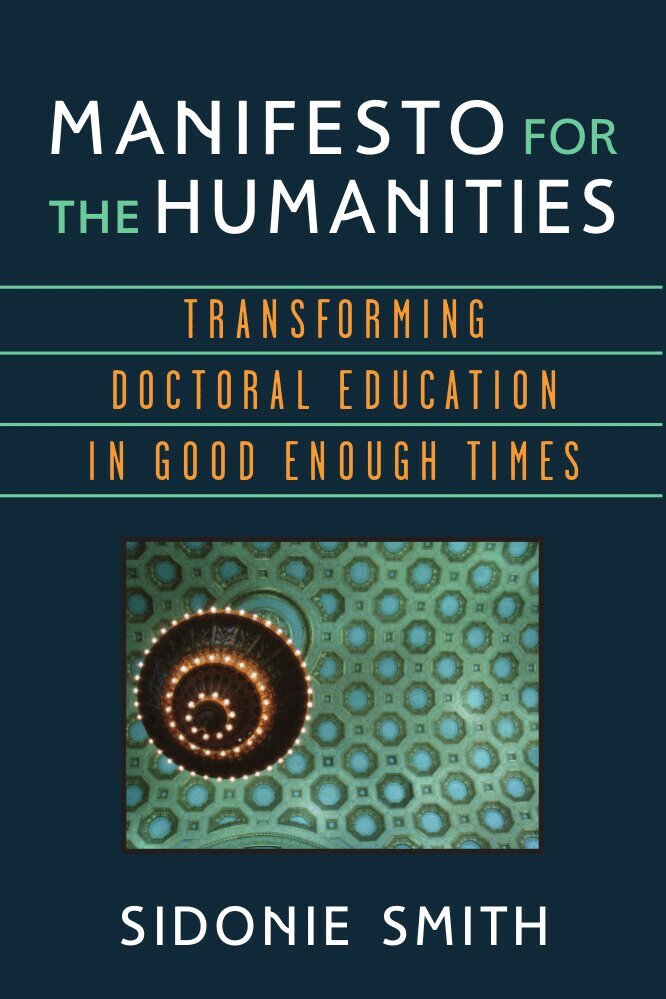
Manifesto for the Humanities
Transforming Doctoral Education in Good Enough Times
Häftad, Engelska, 2015
350 kr
Skickas inom 7-10 vardagar
After a remarkable career in higher education, Sidonie Smith offers Manifesto for the Humanities as a reflective contribution to the current academic conversation over the place of the Humanities in the 21st century. Her focus is on doctoral education and opportunities she sees for its reform.Grounding this manifesto in background factors contributing to current “crises” in the humanities, Smith advocates for a 21st century doctoral education responsive to the changing ecology of humanistic scholarship and teaching. She elaborates a more expansive conceptualization of coursework and dissertation, a more robust, engaged public humanities, and a more diverse, collaborative, and networked sociality.
919 kr
Skickas inom 7-10 vardagar
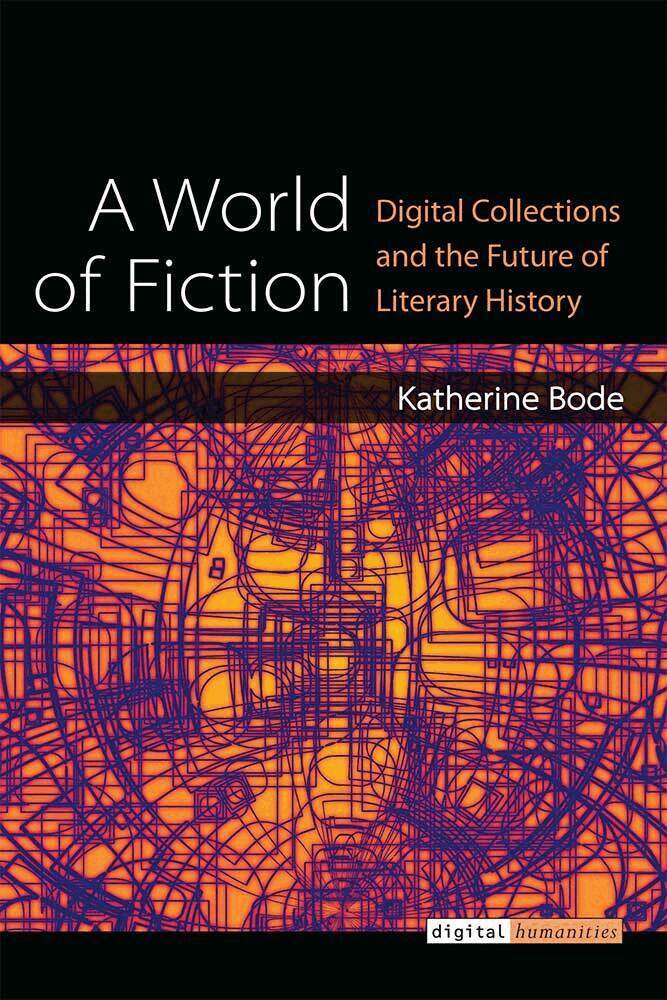
During the 19th century, throughout the Anglophone world, most fiction was first published in periodicals. In Australia, newspapers were not only the main source of periodical fiction, but the main source of fiction in general. Because of their importance as fiction publishers, and because they provided Australian readers with access to stories from around the world—from Britain, America and Australia, as well as Austria, Canada, France, Germany, New Zealand, Russia, South Africa, and beyond—Australian newspapers represent an important record of the transnational circulation and reception of fiction in this period.Investigating almost 10,000 works of fiction in the world’s largest collection of mass-digitized historical newspapers (the National Library of Australia’s Trove database), A World of Fiction reconceptualizes how fiction traveled globally, and was received and understood locally, in the 19th century. Katherine Bode’s innovative approach to the new digital collections that are transforming research in the humanities are a model of how digital tools can transform how we understand digital collections and interpret literatures in the past.
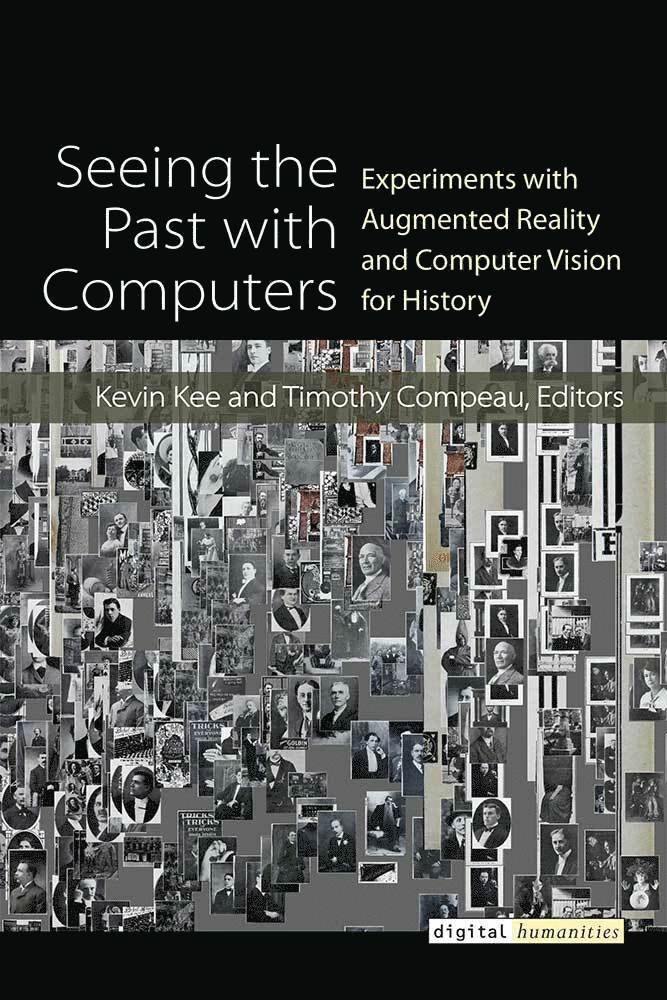
Seeing the Past with Computers
Experiments with Augmented Reality and Computer Vision for History
Inbunden, Engelska, 2019
823 kr
Skickas inom 7-10 vardagar
Recent developments in computer technology are providing historians with new ways to see—and seek to hear, touch, or smell—traces of the past. Place-based augmented reality applications are an increasingly common feature at heritage sites and museums, allowing historians to create immersive, multifaceted learning experiences. Now that computer vision can be directed at the past, research involving thousands of images can recreate lost or destroyed objects or environments, and discern patterns in vast datasets that could not be perceived by the naked eye.Seeing the Past with Computers is a collection of twelve thought-pieces on the current and potential uses of augmented reality and computer vision in historical research, teaching, and presentation. The experts gathered here reflect upon their experiences working with new technologies, share their ideas for best practices, and assess the implications of—and imagine future possibilities for—new methods of historical study. Among the experimental topics they explore are the use of augmented reality that empowers students to challenge the presentation of historical material in their textbooks; the application of seeing computers to unlock unusual cultural knowledge, such as the secrets of vaudevillian stage magic; hacking facial recognition technology to reveal victims of racism in a century-old Australian archive; and rebuilding the soundscape of an Iron Age village with aural augmented reality.This volume is a valuable resource for scholars and students of history and the digital humanities more broadly. It will inspire them to apply innovative methods to open new paths for conducting and sharing their own research.
836 kr
Skickas inom 3-6 vardagar
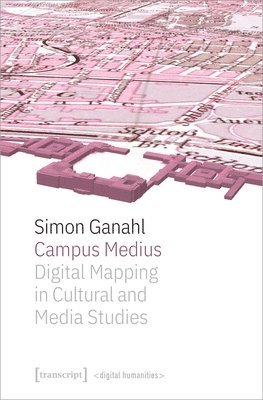
Campus Medius explores and expands the possibilities of digital cartography in cultural and media studies. Simon Ganahl documents the development of the project from a historical case study to a mapping platform. Based on the question of what a media experience is, the concepts of the apparatus (dispositif) and the actor-network are translated into a data model. A time-space of twenty-four hours in Vienna in May 1933, marked by a so-called »Turks Deliverance Celebration« (Türkenbefreiungsfeier), serves as an empirical laboratory. This Austrofascist rally is mapped from multiple perspectives and woven into media-historical networks, spanning from the seventeenth century up to the present day.