Julie Thompson Klein - Böcker
Visar alla böcker från författaren Julie Thompson Klein. Handla med fri frakt och snabb leverans.
11 produkter
11 produkter
1 130 kr
Skickas inom 5-8 vardagar
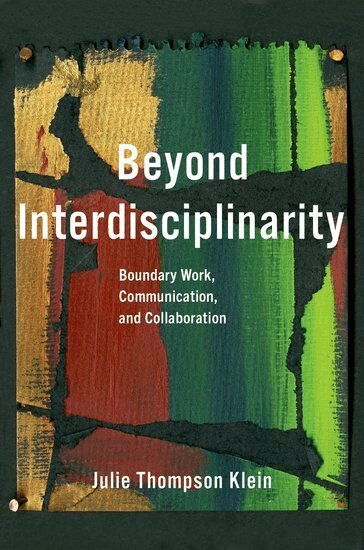
Beyond Interdisciplinarity examines the broadening meaning of core concept across academic disciplines and other forms of knowledge. In this book, Associate Editor of The Oxford Handbook of Interdisciplinarity and internationally recognized scholar Julie Thompson Klein depicts the heterogeneity and boundary work of inter- and trans-disciplinarity in a conceptual framework based on an ecology of spatializing practices in transaction spaces, including trading zones and communities of practice. The book includes both "crossdisciplinary" work (encompassing multi-, inter-, and trans-disciplinary forms) as well as "cross-sector" work (spanning disciplines, fields, professions, government and industry, and communities). The first section of the book defines and explains boundary work, discourses of interdisciplinarity, and the nature of interdisciplinary fields. In the second section, Klein examines dynamics of working across disciplines, including communication, collaboration, and learning with concrete examples and lessons from research projects and programs that transcend traditional fields. The closing chapter examines reasons for failure and success then presents gateways to literature and other resources. Throughout the book, Klein emphasizes the roles of contextualization and historical change while factoring in the shifting relationship of disciplinarity and interdisciplinarity, ascendancy of transdisciplinarity, and intersections with other constructs including Mode 2 knowledge production, convergence, team science, and postdisciplinarity. The conceptual framework she provides also includes the role of boundary objects, agents, and organizations in brokering differences and creating for platforms for change.Klein further explains why translation, interlanguage, and a communication boundary space are vital to achieving intersubjectivity and collective identity. They foster not only pragmatics of negotiation and integration but also reflexivity, transactivity, and co-production of knowledge with stakeholders beyond the academy. Rhetorics of holism and synthesis compete with instrumentalities of problem solving and transgressive critiques. However, typical warrants today include complexity, contextualization, collaboration, and socially-robust knowledge. Crossing boundaries remains complex, but this book guides readers through the density of pertinent literature while expanding understandings of crossdisciplinary and cross-sector work.
414 kr
Skickas inom 5-8 vardagar
Beyond Interdisciplinarity examines the broadening meaning of core concept across academic disciplines and other forms of knowledge. In this book, Associate Editor of The Oxford Handbook of Interdisciplinarity and internationally recognized scholar Julie Thompson Klein depicts the heterogeneity and boundary work of inter- and trans-disciplinarity in a conceptual framework based on an ecology of spatializing practices in transaction spaces, including trading zones and communities of practice. The book includes both "crossdisciplinary" work (encompassing multi-, inter-, and trans-disciplinary forms) as well as "cross-sector" work (spanning disciplines, fields, professions, government and industry, and communities). The first section of the book defines and explains boundary work, discourses of interdisciplinarity, and the nature of interdisciplinary fields. In the second section, Klein examines dynamics of working across disciplines, including communication, collaboration, and learning with concrete examples and lessons from research projects and programs that transcend traditional fields. The closing chapter examines reasons for failure and success then presents gateways to literature and other resources. Throughout the book, Klein emphasizes the roles of contextualization and historical change while factoring in the shifting relationship of disciplinarity and interdisciplinarity, ascendancy of transdisciplinarity, and intersections with other constructs including Mode 2 knowledge production, convergence, team science, and postdisciplinarity. The conceptual framework she provides also includes the role of boundary objects, agents, and organizations in brokering differences and creating for platforms for change.Klein further explains why translation, interlanguage, and a communication boundary space are vital to achieving intersubjectivity and collective identity. They foster not only pragmatics of negotiation and integration but also reflexivity, transactivity, and co-production of knowledge with stakeholders beyond the academy. Rhetorics of holism and synthesis compete with instrumentalities of problem solving and transgressive critiques. However, typical warrants today include complexity, contextualization, collaboration, and socially-robust knowledge. Crossing boundaries remains complex, but this book guides readers through the density of pertinent literature while expanding understandings of crossdisciplinary and cross-sector work.
2 106 kr
Skickas inom 5-8 vardagar
Interdisciplinarity has become as important outside academia as within. Academics, policy makers, and the general public seek insights to help organize the vast amounts of knowledge being produced, both within research and at all levels of education. The second edition of The Oxford Handbook of Interdisciplinarity offers a thorough update of this major reference work, summarizing the latest advances within the field of inter- and transdisciplinarity. The collection is distinguished by its breadth of coverage, with chapters written by leading experts from multiple networks and organizations. The volume is edited by respected interdisciplinary scholars and supported by a prestigious advisory board to ensure the highest quality and breadth of coverage.The Oxford Handbook of Interdisciplinarity provides a synoptic overview of the current state of interdisciplinary research, education, administration and management, and of problem solving-knowledge that spans the disciplines and interdisciplinary fields. The volume negotiates the space between the academic community and society at large. Offering the most broad-based account of inter- and transdisciplinarity to date, its 47 chapters provide a snapshot of the state of knowledge integration as interdisciplinarity approaches its century mark. This second edition expands its coverage to discuss the emergence of new fields, the increase of interdisciplinary approaches within traditional disciplines and professions, new integrative approaches to education and training, the widening international presence of interdisciplinarity, its increased support in funding agencies and science-policy bodies, and the formation of several new international associations associated with interdisciplinarity.This reference book will be a valuable addition to academic libraries worldwide, important reading for members of the sciences, social sciences, and humanities engaged in interdisciplinary research and education, and helpful for administrators and policy makers seeking to improve the use of knowledge in society.
712 kr
Skickas inom 5-8 vardagar
Interdisciplinarity has become as important outside academia as within. Academics, policy makers, and the general public seek insights to help organize the vast amounts of knowledge being produced, both within research and at all levels of education. The second edition of The Oxford Handbook of Interdisciplinarity offers a thorough update of this major reference work, summarizing the latest advances within the field of inter- and transdisciplinarity. The collection is distinguished by its breadth of coverage, with chapters written by leading experts from multiple networks and organizations. The volume is edited by respected interdisciplinary scholars and supported by a prestigious advisory board to ensure the highest quality and breadth of coverage. The Oxford Handbook of Interdisciplinarity provides a synoptic overview of the current state of interdisciplinary research, education, administration and management, and of problem solving-knowledge that spans the disciplines and interdisciplinary fields. The volume negotiates the space between the academic community and society at large. Offering the most broad-based account of inter- and transdisciplinarity to date, its 47 chapters provide a snapshot of the state of knowledge integration as interdisciplinarity approaches its century mark. This second edition expands its coverage to discuss the emergence of new fields, the increase of interdisciplinary approaches within traditional disciplines and professions, new integrative approaches to education and training, the widening international presence of interdisciplinarity, its increased support in funding agencies and science-policy bodies, and the formation of several new international associations associated with interdisciplinarity. This reference book will be a valuable addition to academic libraries worldwide, important reading for members of the sciences, social sciences, and humanities engaged in interdisciplinary research and education, and helpful for administrators and policy makers seeking to improve the use of knowledge in society.
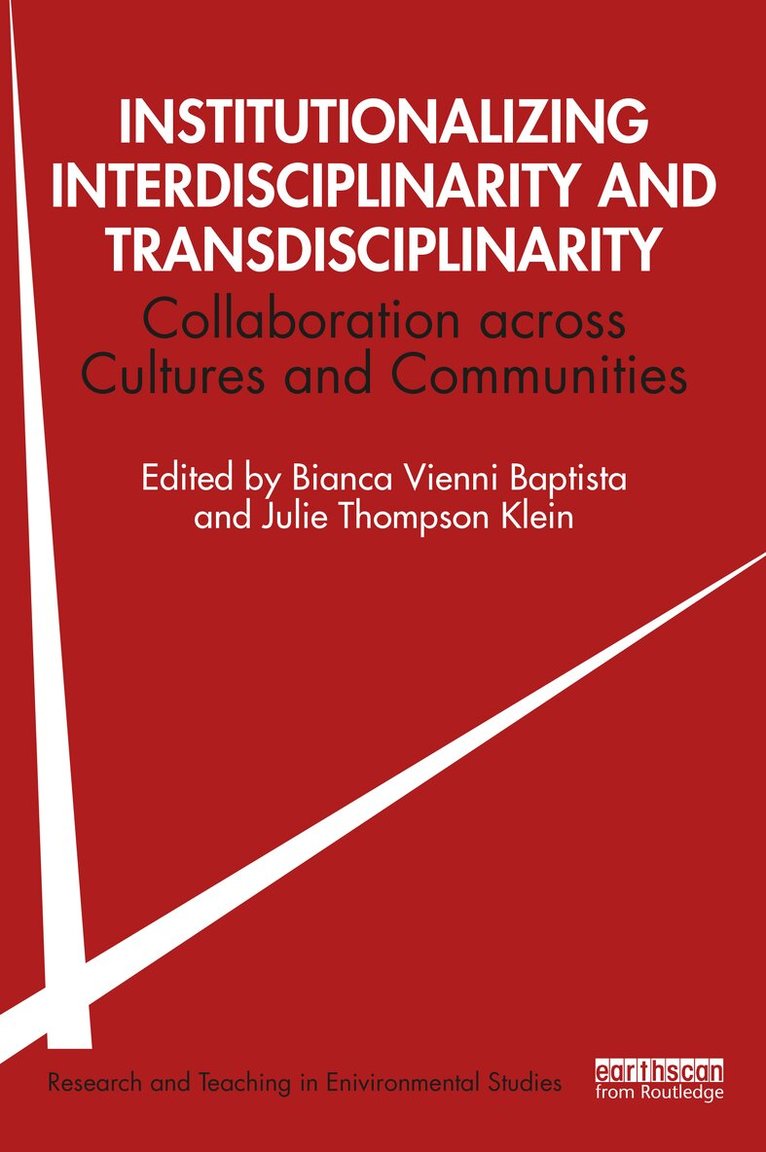
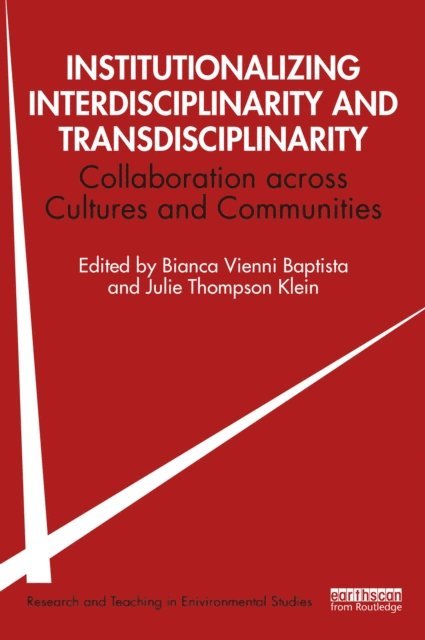
Institutionalizing Interdisciplinarity and Transdisciplinarity
Collaboration across Cultures and Communities
Häftad, Engelska, 2022
552 kr
Skickas inom 10-15 vardagar
Institutionalizing Interdisciplinarity and Transdisciplinarity fills a gap in the current literature by systematizing and comparing a wide international scope of case studies illustrating varied ways of institutionalizing theory and practice. This collection comprises three parts. After an introduction of overall themes, Part I presents case studies on institutionalizing. Part II focuses on transdisciplinary examples, while Part III includes cross-cutting themes, such as funding, evaluation, and intersections between epistemic cultures. With expert contributions from authors representing projects and programs in Asia, Africa, Australia, Europe, Russia and South Caucuses, Latin and North America, this book brings together comparative perspectives on theory and practice, while also describing strategies and models of change. Each chapter identifies dimensions inherent in fostering effective and sustainable practices. Together they advance both analysis and action-related challenges. The proposed conceptual framework that emerges supports innovative practices that are alternatives to dominant academic cultures and approaches in pertinent disciplines, fields, professionals, and members of government, industry, and communities.Applying a comparative perspective throughout, the contributors reflect on aspects of institutionalizing interdisciplinarity and transdisciplinarity as well as insights applicable to further contexts. This innovative volume will be of great interest to students, scholars, practitioners, and members of organizations promoting and facilitating interdisciplinary and transdisciplinary research.
Institutionalizing Interdisciplinarity and Transdisciplinarity
Collaboration across Cultures and Communities
Inbunden, Engelska, 2022
2 098 kr
Skickas inom 10-15 vardagar
Institutionalizing Interdisciplinarity and Transdisciplinarity fills a gap in the current literature by systematizing and comparing a wide international scope of case studies illustrating varied ways of institutionalizing theory and practice. This collection comprises three parts. After an introduction of overall themes, Part I presents case studies on institutionalizing. Part II focuses on transdisciplinary examples, while Part III includes cross-cutting themes, such as funding, evaluation, and intersections between epistemic cultures. With expert contributions from authors representing projects and programs in Asia, Africa, Australia, Europe, Russia and South Caucuses, Latin and North America, this book brings together comparative perspectives on theory and practice, while also describing strategies and models of change. Each chapter identifies dimensions inherent in fostering effective and sustainable practices. Together they advance both analysis and action-related challenges. The proposed conceptual framework that emerges supports innovative practices that are alternatives to dominant academic cultures and approaches in pertinent disciplines, fields, professionals, and members of government, industry, and communities.Applying a comparative perspective throughout, the contributors reflect on aspects of institutionalizing interdisciplinarity and transdisciplinarity as well as insights applicable to further contexts. This innovative volume will be of great interest to students, scholars, practitioners, and members of organizations promoting and facilitating interdisciplinary and transdisciplinary research.
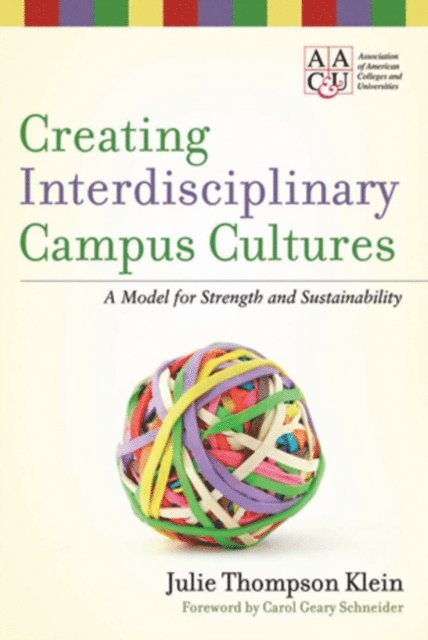
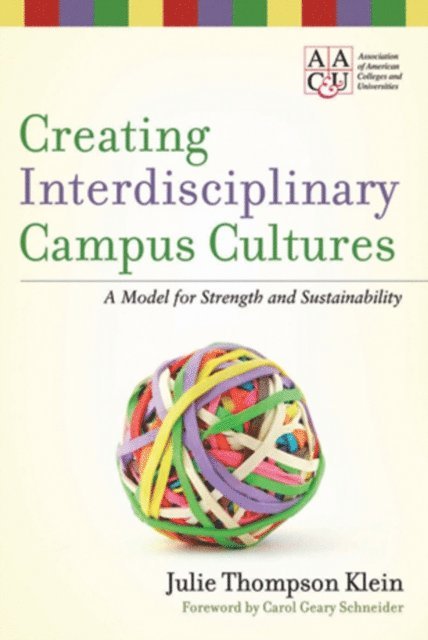
Creating Interdisciplinary Campus Cultures
A Model for Strength and Sustainability
Inbunden, Engelska, 2010
454 kr
Skickas inom 7-10 vardagar
Praise for Creating Interdisciplinary Campus Cultures"Klein's analysis shows convincingly that from research in the sciences to new graduate-level programs and departments, to new designs for general education, interdisciplinarity is now prevalent throughout American colleges and universities. . . . Klein documents trends, traces historical patterns and precedents, and provides practical advice. Going directly to the heart of our institutional realities, she focuses attention on some of the more challenging aspects of bringing together ambitious goals for interdisciplinary vitality with institutional, budgetary, and governance systems. A singular strength of this book, then, is the practical advice it provides about such nitty-gritty issues as program review, faculty development, tenure and promotion, hiring, and the political economy of interdisciplinarity. . . . We know that readers everywhere will find [this book] simultaneously richly illuminating and intensively useful."from the foreword by Carol Geary Schneider, president, Association of American Colleges and Universities"Klein reveals how universities can move beyond glib rhetoric about being interdisciplinary toward pervasive full interdisciplinarity. Institutions that heed her call for restructured intellectual environments are most likely to thrive in the new millennium."William H. Newell, professor, Interdisciplinary Studies, Miami University, and executive director, Association for Integrative Studies"In true interdisciplinary fashion, Julie Klein integrates a tremendous amount of material into this book to tell the story of interdisciplinarity across the sciences, social sciences, and humanities. And she does so both from the theoretical perspective of 'understanding' interdisciplinarity and from the practical vantage of 'doing' interdisciplinarity. This book is a must-read for faculty and administrators thinking about how to maximize the opportunities and minimize the challenges of interdisciplinary programming on their campuses."Diana Rhoten, director, Knowledge Institutions Program, and director, Digital Media and Learning Project, Social Science Research Counsel
362 kr
Skickas inom 7-10 vardagar
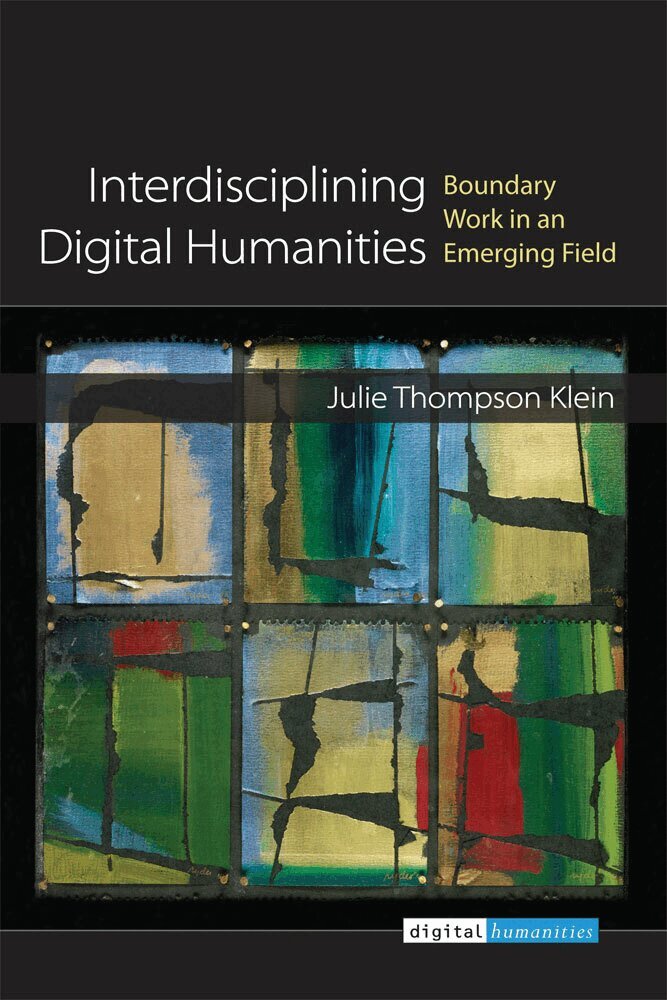
Interdisciplining Digital Humanities sorts through definitions and patterns of practice over roughly sixty-five years of work, providing an overview for specialists and a general audience alike. It is the only book that tests the widespread claim that Digital Humanities is interdisciplinary. By examining the boundary work of constructing, expanding, and sustaining a new field, it depicts both the ways this new field is being situated within individual domains and dynamic cross-fertilizations that are fostering new relationships across academic boundaries. It also accounts for digital reinvigorations of “public humanities” in cultural heritage institutions of museums, archives, libraries, and community forums.
1 027 kr
Tillfälligt slut
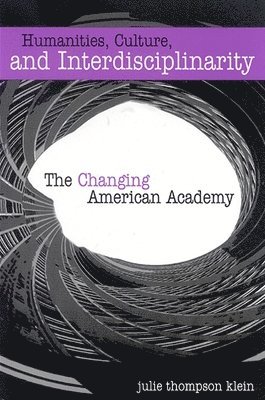
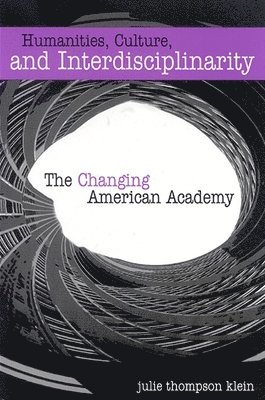
Investigates the changing relationship of humanities, culture, and interdisciplinarity and its impact on humanities disciplines, American culture studies, and undergraduate education.The study of culture in the American academy is not confined to a single field, but is a broad-based set of interests located within and across disciplines. This book investigates the relationship among three major ideas in the American academy-interdisciplinarity, humanities, and culture-and traces the convergence of these ideas from the colonial college to new scholarly developments in the latter half of the twentieth century. Its aim is twofold: to define the changing relationship of these three ideas and, in the course of doing so, to extend present thinking about the concept of "American cultural studies." The book includes two sets of case studies-the first on the implications of interdisciplinarity for literary studies, art history, and music; the second on the shifting trajectories of American studies, African American studies, and women's studies-and concludes by asking what impact new scholarly practices have had on humanities education, particularly on the undergraduate curriculum.
372 kr
Tillfälligt slut
Investigates the changing relationship of humanities, culture, and interdisciplinarity and its impact on humanities disciplines, American culture studies, and undergraduate education.The study of culture in the American academy is not confined to a single field, but is a broad-based set of interests located within and across disciplines. This book investigates the relationship among three major ideas in the American academy-interdisciplinarity, humanities, and culture-and traces the convergence of these ideas from the colonial college to new scholarly developments in the latter half of the twentieth century. Its aim is twofold: to define the changing relationship of these three ideas and, in the course of doing so, to extend present thinking about the concept of "American cultural studies." The book includes two sets of case studies-the first on the implications of interdisciplinarity for literary studies, art history, and music; the second on the shifting trajectories of American studies, African American studies, and women's studies-and concludes by asking what impact new scholarly practices have had on humanities education, particularly on the undergraduate curriculum.
288 kr
Skickas inom 10-15 vardagar
Boundary work studies examine how boundaries of knowledge are formed, maintained, broken down and reconfigured. This text investigates the claims, activities and institutional structures that define and legitimate interdisciplinary practices.