Disruptive Technology and International Security - Böcker
Visar alla böcker i serien Disruptive Technology and International Security. Handla med fri frakt och snabb leverans.
5 produkter
5 produkter
340 kr
Skickas inom 5-8 vardagar
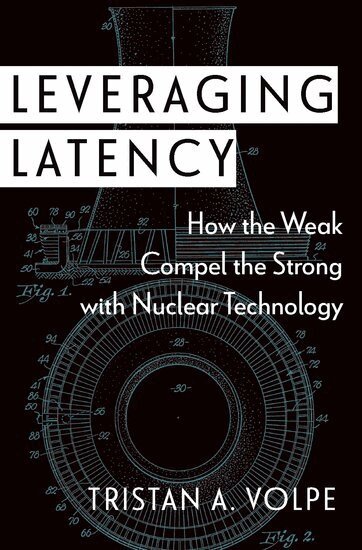
Over the last seven decades, some states successfully leveraged the threat of acquiring atomic weapons to compel concessions from superpowers. For many others, however, this coercive gambit failed to work. When does nuclear latency--the technical capacity to build the bomb--enable states to pursue effective coercion?In Leveraging Latency, Tristan A. Volpe argues that having greater capacity to build weaponry doesn't translate to greater coercive advantage. Volpe finds that there is a trade-off between threatening proliferation and promising nuclear restraint. States need just enough bomb-making capacity to threaten proliferation, but not so much that it becomes too difficult for them to offer nonproliferation assurances. The boundaries of this sweet spot align with the capacity to produce the fissile material at the heart of an atomic weapon.To test this argument, Volpe includes comparative case studies of four countries that leveraged latency against superpowers: Japan, West Germany, North Korea, and Iran. In doing so, Volpe identifies a generalizable mechanism--the threat-assurance trade-off--that explains why more power often makes compellence less likely to work. This framework illuminates how technology shapes broader bargaining dynamics and helps to refine policy options for inhibiting the spread of nuclear weapons. As nuclear technology continues to cast a shadow over the global landscape, Leveraging Latency provides a systematic assessment of its coercive utility.
Repression in the Digital Age
Surveillance, Censorship, and the Dynamics of State Violence
Inbunden, Engelska, 2024
1 024 kr
Skickas inom 7-10 vardagar
Global adoption of the Internet has exploded, yet we are only beginning to understand the Internet's profound political consequences. Authoritarian states are digitally catching up with their democratic counterparts, and both are showing a growing interest in the use of cyber controls--online censorship and surveillance technologies--that allow governments to exercise control over the Internet. Under what conditions does a digitally connected society actually help states target their enemies? Why do repressive governments sometimes shut down the Internet when faced with uprisings? And how have cyber controls become a dependable tool in the weapons arsenal that states use in civil conflict?In Repression in the Digital Age, Anita R. Gohdes addresses these questions, and provides an original and in-depth look into the relationship between digital technologies and state violence. Drawing on large-scale analyses of fine-grained data on the Syrian conflict, qualitative case evidence from Iran, and the first global comparative analysis on Internet outages and state repression, Gohdes makes the case that digital infrastructure supports security forces in their use of violent state repression. More specifically, she argues that mass access to the Internet presents governments who fear for their political survival with a set of response options. When faced with a political threat, they can either temporarily restrict or block online public access or they can expand mass access to online information and monitor it to their own advantage. Surveillance allows security forces to target opponents of the state more selectively, while extreme forms of censorship or shutdowns of the Internet occur in conjunction with larger and more indiscriminate repression. As digital communication has become a bedrock of modern opposition and protest movements, Repression in the Digital Age breaks new ground in examining state repression in the information age.
Repression in the Digital Age
Surveillance, Censorship, and the Dynamics of State Violence
Häftad, Engelska, 2024
278 kr
Skickas inom 5-8 vardagar
Global adoption of the Internet has exploded, yet we are only beginning to understand the Internet's profound political consequences. Authoritarian states are digitally catching up with their democratic counterparts, and both are showing a growing interest in the use of cyber controls--online censorship and surveillance technologies--that allow governments to exercise control over the Internet. Under what conditions does a digitally connected society actually help states target their enemies? Why do repressive governments sometimes shut down the Internet when faced with uprisings? And how have cyber controls become a dependable tool in the weapons arsenal that states use in civil conflict?In Repression in the Digital Age, Anita R. Gohdes addresses these questions, and provides an original and in-depth look into the relationship between digital technologies and state violence. Drawing on large-scale analyses of fine-grained data on the Syrian conflict, qualitative case evidence from Iran, and the first global comparative analysis on Internet outages and state repression, Gohdes makes the case that digital infrastructure supports security forces in their use of violent state repression. More specifically, she argues that mass access to the Internet presents governments who fear for their political survival with a set of response options. When faced with a political threat, they can either temporarily restrict or block online public access or they can expand mass access to online information and monitor it to their own advantage. Surveillance allows security forces to target opponents of the state more selectively, while extreme forms of censorship or shutdowns of the Internet occur in conjunction with larger and more indiscriminate repression. As digital communication has become a bedrock of modern opposition and protest movements, Repression in the Digital Age breaks new ground in examining state repression in the information age.
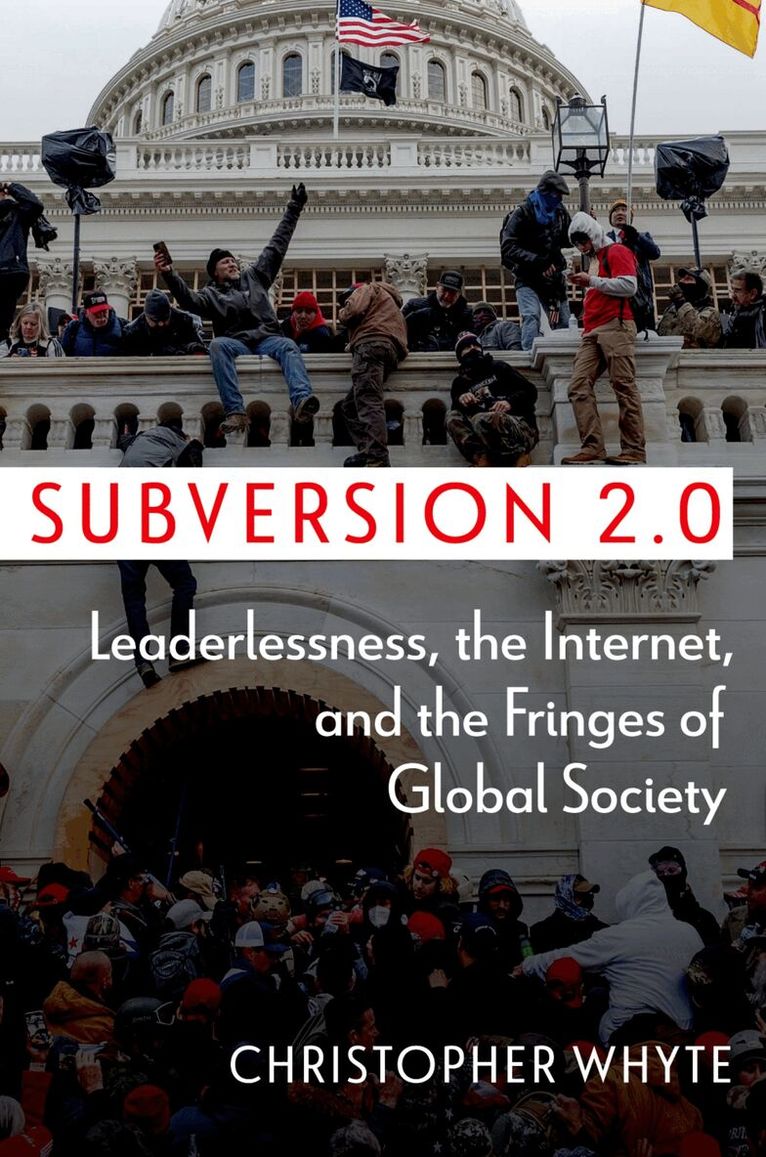
Subversion 2.0
Leaderlessness, the Internet, and the Fringes of Global Society
Inbunden, Engelska, 2024
1 252 kr
Skickas inom 5-8 vardagar
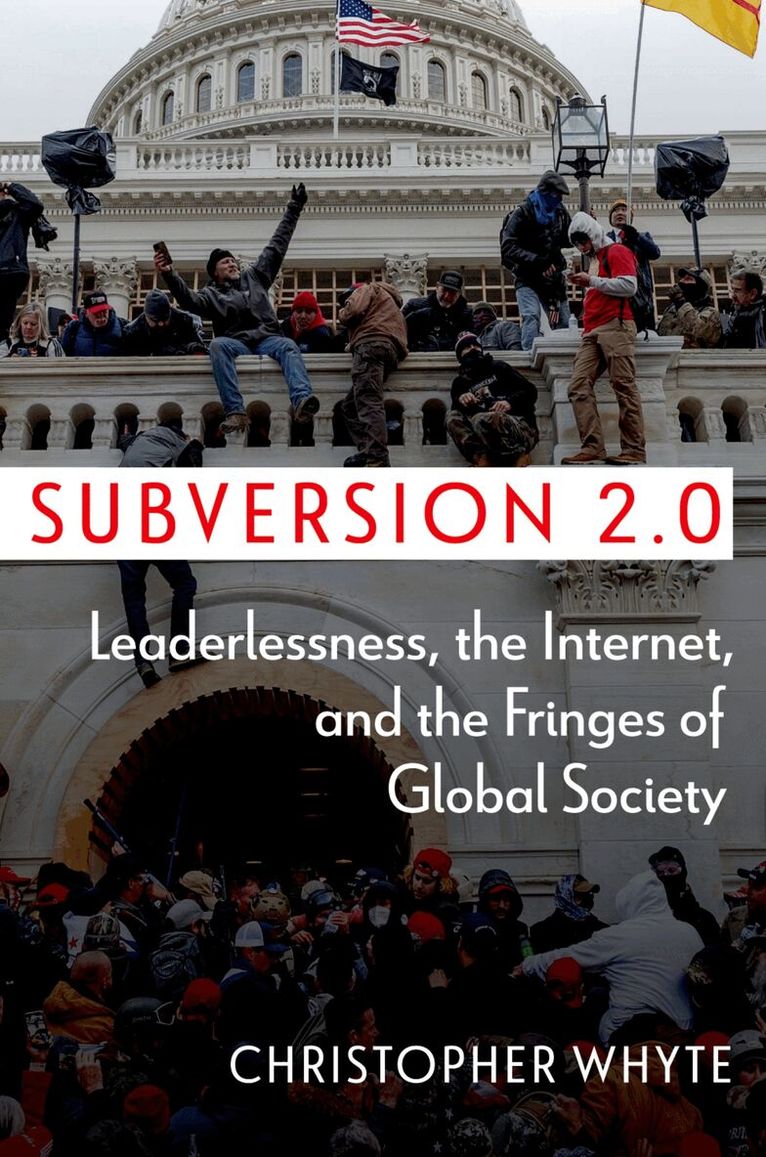
Why are conspiracy theories, extremist rhetoric, and acts of antagonism by fringe elements of society so much more visible today than in years past? The Capitol Insurrection of January 6, 2021, and the surge of medical skepticism during the global COVID-19 pandemic have highlighted the challenge of extreme rhetoric in global society, with increasing attention paid to the enabling role of the Internet. But beyond the ways in which the Internet allows for connection, how do fringe ideas travel into the mainstream to become more significant movements?In Subversion 2.0, Christopher Whyte describes the transformation of societal subversion in the digital age. Whyte makes the case that "leaderlessness"--characterized by an evolving and uneven feedback loop linking fringe spaces to mainstream elite rhetoric and popular discourse--has emerged in recent years as the default format of subversive activity. Through case explorations and novel data, Whyte shows how extreme narratives that originate in conspiratorial, restrictive virtual spaces are rapidly filtered into mainstream settings due to a series of socio-technological conditions present in the Web 2.0 era. As a result, fringe narratives and symbols often become the lens through which social and political elites interpret information that they then spread through public speech, which is projected back to subversive spaces and used to perpetuate fringe narratives. By examining the uneven feedback loop of leaderlessness, Whyte argues that social Internet platforms act as a vehicle for transmitting and amplifying extreme rhetoric but often fail to moderate extremism in turn. He ultimately shows how societal subversion, an activity that is about degrading existing power structures without directly attacking them, has taken on a new, dynamic form in the digital age.
469 kr
Skickas inom 3-6 vardagar
Why are conspiracy theories, extremist rhetoric, and acts of antagonism by fringe elements of society so much more visible today than in years past? The Capitol Insurrection of January 6, 2021, and the surge of medical skepticism during the global COVID-19 pandemic have highlighted the challenge of extreme rhetoric in global society, with increasing attention paid to the enabling role of the Internet. But beyond the ways in which the Internet allows for connection, how do fringe ideas travel into the mainstream to become more significant movements?In Subversion 2.0, Christopher Whyte describes the transformation of societal subversion in the digital age. Whyte makes the case that "leaderlessness"--characterized by an evolving and uneven feedback loop linking fringe spaces to mainstream elite rhetoric and popular discourse--has emerged in recent years as the default format of subversive activity. Through case explorations and novel data, Whyte shows how extreme narratives that originate in conspiratorial, restrictive virtual spaces are rapidly filtered into mainstream settings due to a series of socio-technological conditions present in the Web 2.0 era. As a result, fringe narratives and symbols often become the lens through which social and political elites interpret information that they then spread through public speech, which is projected back to subversive spaces and used to perpetuate fringe narratives. By examining the uneven feedback loop of leaderlessness, Whyte argues that social Internet platforms act as a vehicle for transmitting and amplifying extreme rhetoric but often fail to moderate extremism in turn. He ultimately shows how societal subversion, an activity that is about degrading existing power structures without directly attacking them, has taken on a new, dynamic form in the digital age.