Documents in American Social History – Serie
Visar alla böcker i serien Documents in American Social History. Handla med fri frakt och snabb leverans.
8 produkter
8 produkter
1 604 kr
Skickas inom 10-15 vardagar
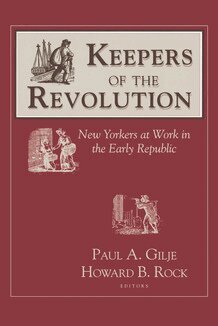
They recreate the rhythms of daily life, clarify the impact of political and social changes on working people, and help us appreciate how these women and men-not just the country's founding fathers—were truly "keepers of the revolution."Paul A. Gilje and Howard B. Rock provide a general introduction to New York after independence and then devote sections of the book to apprentices, journeymen, master craftsmen, waterfront workers, blacks, and women. Most sections are anchored by several first-person accounts—autobiographies and reminiscences and include advertisements, courtcase testimony, newspaper reports, broadsides, appeals to Congress—all the colorful detail that can be used to illuminate the immediate, personal, lived experience of individuals of that particular time and place. A stunning group of illustrations adds to the reader's sense of the flavor and appearance of the rapidly growing city.Keepers of the Revolution will find appreciative readers among labor, social, urban, and early American historians, as well as antique collectors and antiquarians interested in early New York.
History of My Own Times; or, the Life and Adventures of William Otter, Sen., Comprising a Series of Events, and Musical Incidents Altogether Original
Inbunden, Engelska, 1995
1 604 kr
Skickas inom 10-15 vardagar
Big Bill Otter was one member of the early American working class not preoccupied with republican principles or the heritage of the Revolution. Big Bill Otter—apprentice, journeyman, master plasterer—was a thug.Otter's autobiography, first published in 1835, provides a rare and fascinating counterpoint to romantic notions of virtuous, respectable craftsmen in the early republic. His Life and Adventures offer an inside account of the brawling racism common in the early nineteenth century and sharply detail the rowdy male subculture of the times.Born in England and conscripted into the British Navy during the Napoleonic wars, Otter jumped ship and came to New York City in 1801. He apprenticed as a plasterer and joined an urban gang; later he was a master plasterer, tavernkeeper, slavecatcher, "Jackson man," bigot, town bully, notorious practical joker, borderline psychopath, mayoral candidate, and all-round "jolly fellow."History of My Own Times is one of the few first-person accounts of a rural artisan in pre-genteel America. The book depicts the ambiguities of race relations in the early nineteenth century, sheds light on its definition of manhood, and conveys a sense of humor very different from today's. Richard B. Stott's introduction an,d commentary place Otter in the context of his times and explore the significance of his autobiography in understanding the social and cultural history of the early American republic.
1 654 kr
Skickas inom 10-15 vardagar
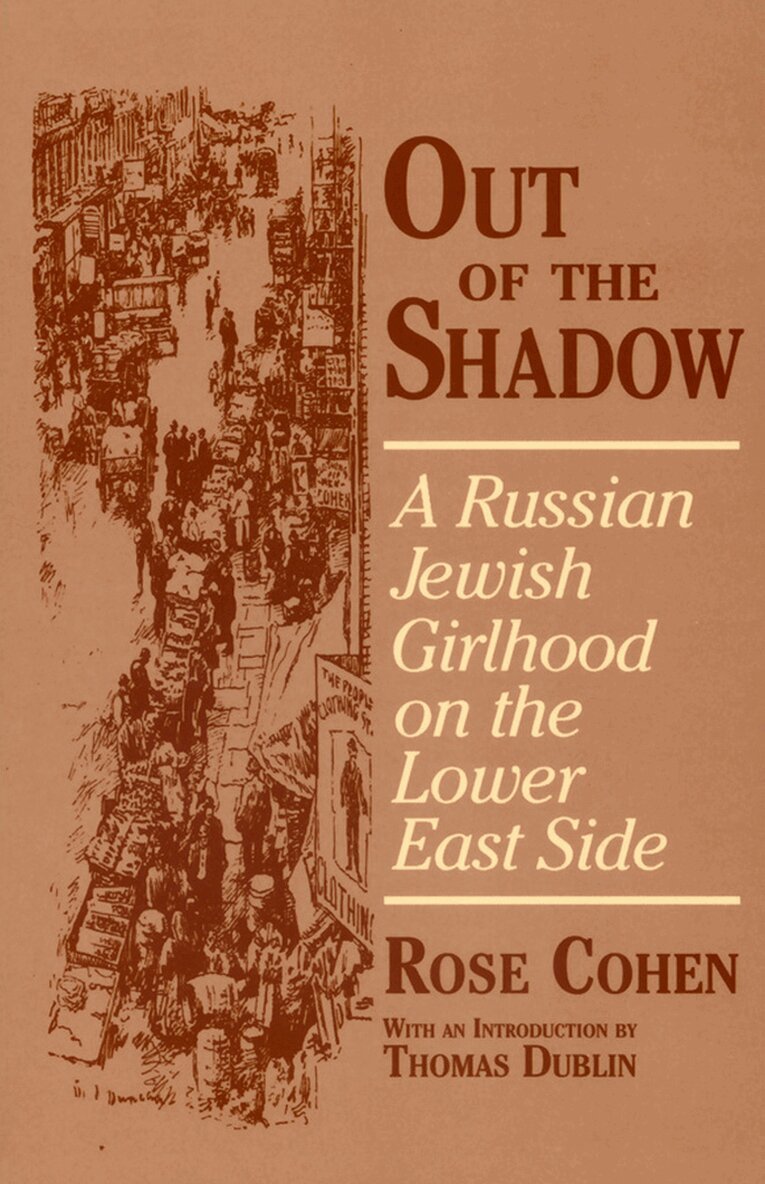
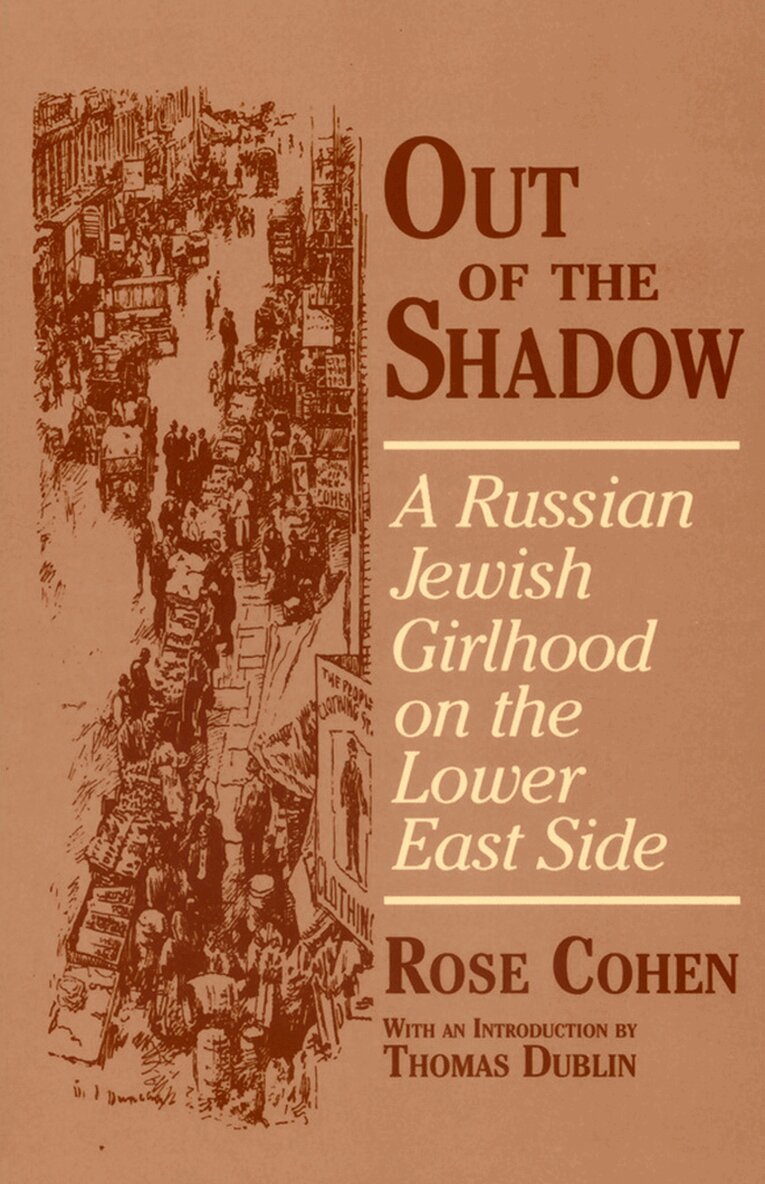
In this appealing autobiography, Rose Cohen looks back on her family's journey from Tsarist Russia to New York City's Lower East Side. Her account of their struggles and of her own coming of age in a complex new world vividly illustrates what was, for some, the American experience. First published in 1918, Cohen's narrative conveys a powerful sense of the aspirations and frustrations of an immigrant Jewish family in an alien culture.With uncommon frankness, Cohen reports her youthful impressions of daily life in the tenements and of working conditions in garment sweatshops and domestic service. She introduces a large cast, including her co-workers, employers, mentors, family members, and friends. In simple yet moving terms, she recalls how, while confronting setbacks caused by poor health and dilemmas posed by courtship, she finds opportunities to educate herself. She also records the gradual weakening of her family's commitment to religion as they find their way from the shadow of poverty toward the mainstream of American life.
1 604 kr
Skickas inom 10-15 vardagar
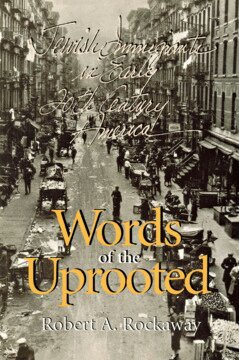
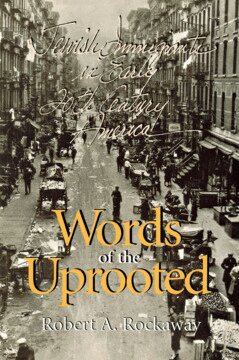
American Jewish leaders, many of German extraction, created the Industrial Removal Office (IRO) in 1901 in order to disperse unemployed Jewish immigrants from New York City to smaller Jewish communities throughout the United States. The IRO was designed to help refugees from persecution in the Pale of Russia find jobs and community support and, secondarily, to reduce the Manhattan ghettoes and minimize antisemitism. In twenty-one years, the IRO distributed seventy-nine thousand East European Jews to over fifteen hundred cities and towns, including Chino, California; Des Moines, Iowa; and Pensacola, Florida. Wherever they went, these twice-displaced immigrants wrote letters to the IRO's main office. Robert A. Rockaway has selected, and translated from Yiddish, letters that describe the immigrants' new surroundings, work conditions, and living situations, as well as letters that give voice to typical tensions between the immigrants and their benefactors. Rockaway introduces the letters with an essay on conditions in the Pale and on early American Jewish attempts to assist emigrants.
234 kr
Skickas inom 10-15 vardagar
In this appealing autobiography, Rose Cohen looks back on her family's journey from Tsarist Russia to New York City's Lower East Side. Her account of their struggles and of her own coming of age in a complex new world vividly illustrates what was, for some, the American experience. First published in 1918, Cohen's narrative conveys a powerful sense of the aspirations and frustrations of an immigrant Jewish family in an alien culture.With uncommon frankness, Cohen reports her youthful impressions of daily life in the tenements and of working conditions in garment sweatshops and domestic service. She introduces a large cast, including her co-workers, employers, mentors, family members, and friends. In simple yet moving terms, she recalls how, while confronting setbacks caused by poor health and dilemmas posed by courtship, she finds opportunities to educate herself. She also records the gradual weakening of her family's commitment to religion as they find their way from the shadow of poverty toward the mainstream of American life.
420 kr
Skickas inom 10-15 vardagar
American Jewish leaders, many of German extraction, created the Industrial Removal Office (IRO) in 1901 in order to disperse unemployed Jewish immigrants from New York City to smaller Jewish communities throughout the United States. The IRO was designed to help refugees from persecution in the Pale of Russia find jobs and community support and, secondarily, to reduce the Manhattan ghettoes and minimize antisemitism. In twenty-one years, the IRO distributed seventy-nine thousand East European Jews to over fifteen hundred cities and towns, including Chino, California; Des Moines, Iowa; and Pensacola, Florida. Wherever they went, these twice-displaced immigrants wrote letters to the IRO's main office. Robert A. Rockaway has selected, and translated from Yiddish, letters that describe the immigrants' new surroundings, work conditions, and living situations, as well as letters that give voice to typical tensions between the immigrants and their benefactors. Rockaway introduces the letters with an essay on conditions in the Pale and on early American Jewish attempts to assist emigrants.
338 kr
Skickas inom 10-15 vardagar
They recreate the rhythms of daily life, clarify the impact of political and social changes on working people, and help us appreciate how these women and men-not just the country's founding fathers—were truly "keepers of the revolution."Paul A. Gilje and Howard B. Rock provide a general introduction to New York after independence and then devote sections of the book to apprentices, journeymen, master craftsmen, waterfront workers, blacks, and women. Most sections are anchored by several first-person accounts—autobiographies and reminiscences and include advertisements, courtcase testimony, newspaper reports, broadsides, appeals to Congress—all the colorful detail that can be used to illuminate the immediate, personal, lived experience of individuals of that particular time and place. A stunning group of illustrations adds to the reader's sense of the flavor and appearance of the rapidly growing city.Keepers of the Revolution will find appreciative readers among labor, social, urban, and early American historians, as well as antique collectors and antiquarians interested in early New York.
History of My Own Times; or, the Life and Adventures of William Otter, Sen., Comprising a Series of Events, and Musical Incidents Altogether Original
Häftad, Engelska, 1995
320 kr
Skickas inom 10-15 vardagar
Big Bill Otter was one member of the early American working class not preoccupied with republican principles or the heritage of the Revolution. Big Bill Otter—apprentice, journeyman, master plasterer—was a thug.Otter's autobiography, first published in 1835, provides a rare and fascinating counterpoint to romantic notions of virtuous, respectable craftsmen in the early republic. His Life and Adventures offer an inside account of the brawling racism common in the early nineteenth century and sharply detail the rowdy male subculture of the times.Born in England and conscripted into the British Navy during the Napoleonic wars, Otter jumped ship and came to New York City in 1801. He apprenticed as a plasterer and joined an urban gang; later he was a master plasterer, tavernkeeper, slavecatcher, "Jackson man," bigot, town bully, notorious practical joker, borderline psychopath, mayoral candidate, and all-round "jolly fellow."History of My Own Times is one of the few first-person accounts of a rural artisan in pre-genteel America. The book depicts the ambiguities of race relations in the early nineteenth century, sheds light on its definition of manhood, and conveys a sense of humor very different from today's. Richard B. Stott's introduction an,d commentary place Otter in the context of his times and explore the significance of his autobiography in understanding the social and cultural history of the early American republic.