Pasold Studies in Textile, Dress and Fashion History – serie
Visar alla böcker i serien Pasold Studies in Textile, Dress and Fashion History. Handla med fri frakt och snabb leverans.
2 produkter
2 produkter
Del 1 - Pasold Studies in Textile, Dress and Fashion History
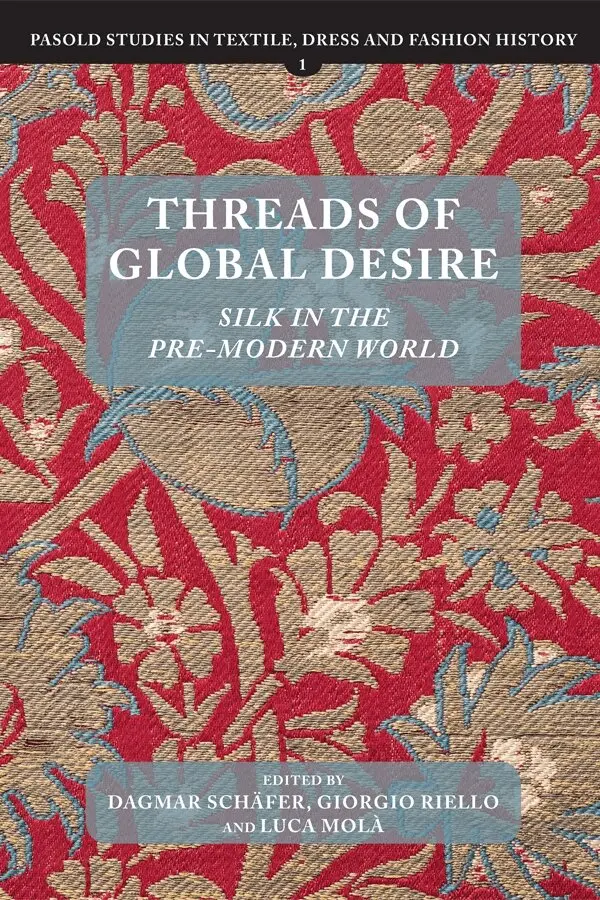
Threads of Global Desire
Silk in the Pre-Modern World
Inbunden, Engelska, 2018
759 kr
Skickas inom 7-10 vardagar
Considering silk as a major force of cross-cultural interaction, this book examines the integration of silk production and consumption into various cultures in the pre-modern world.Silk has long been a global commodity that, because of its exceptional qualities, high value and relative portability, came to be traded over very long distances. Similarly, the silk industry - from sericulture to the weaving of cloth - was one of the most important fields of production in the medieval and early modern world. The production and consumption of silks spread from China to Japan and Korea and travelled westward as far as India, Persia and theByzantine Empire, Europe, Africa and the Americas. As contributors to this book demonstrate, in this process of diffusion silk fostered technological innovation and allowed new forms of organization of labour to emerge. Its consumption constantly reshaped social hierarchies, gender roles, aesthetic and visual cultures,as well as rituals and representations of power.Threads of Global Desire is the first attempt at considering a global history of silk in the pre-modern era. The book examines the role of silk production and use in various cultures and its relation to everyday and regulatory practices. It considers silk as a major force of cross cultural interaction through technological exchange and trade in finished and semi-finished goods. Silks mediated design and a taste for luxuries and were part of gifting practices in diplomatic and private contexts. Silk manufacturing also fostered thecirculation of skilled craftsmen, connecting different centres and regions across continents and linking the countryside to urban production.DAGMAR SCHÄFER is Director of Department 3 'Artefacts, Action, and Knowledge'at the Max Planck Institute for the History of Science in Berlin and Professor h.c. of the History of Technology at the Technical University, Berlin.GIORGIO RIELLO is Professor of Global History and Culture at the University of Warwick. He has published extensively on the history of material culture and trade in early modern Europe and Asia and in particular on textiles and fashion.LUCA MOLA is Professor of Early Modern Europe: History of the Renaissance and the Mediterranean in a World Perspective at the European University Institute in Fiesole.Contributors: JOSÉ L. GASCH-TOMAS, SURAIYA FAROQHI, KAROLINA HUTKOVA, FUJITA KAYOKO, BEN MARSH, RUDOLPHMATTHEE, LESLEY ELLIS MILLER, DAVID MITCHELL, LUCA MOLA, LISA MONNAS, AMANDA PHILLIPS, GIORGIO RIELLO, DAGMAR SCHÄFER, ANGELA SHENG
Del 2 - Pasold Studies in Textile, Dress and Fashion History
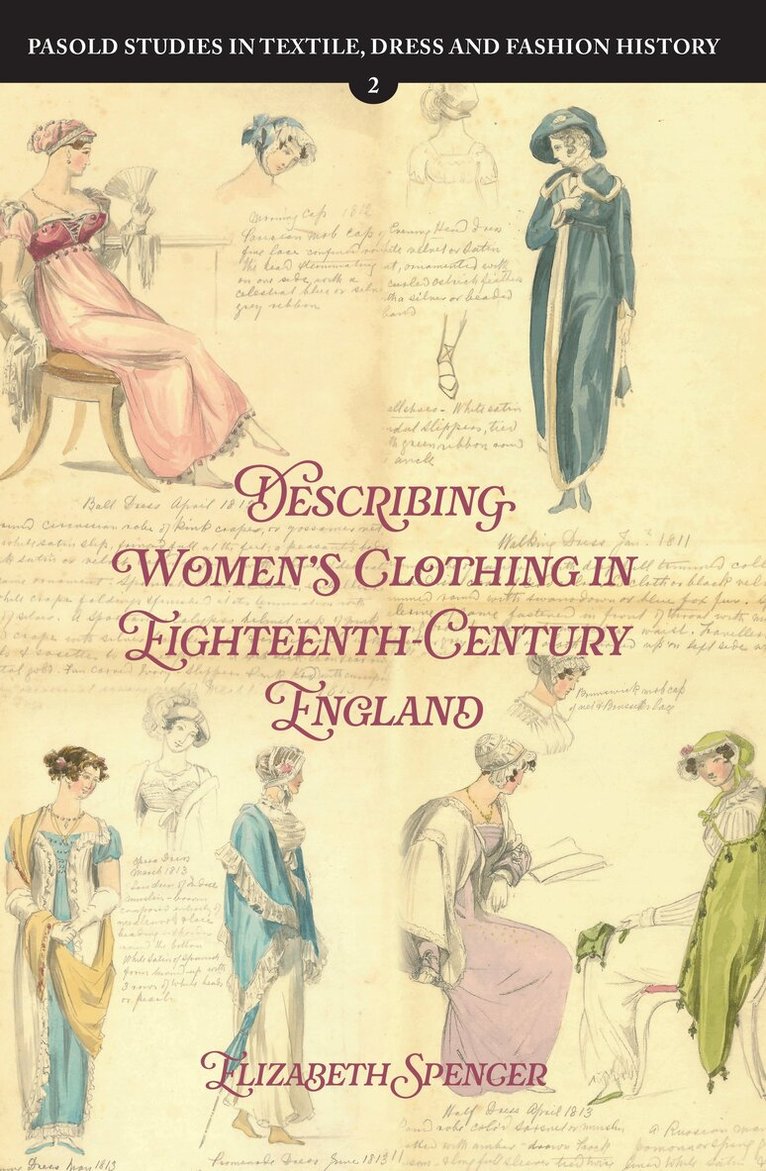
Describing Women’s Clothing in Eighteenth-Century England
Inbunden, Engelska, 2024
1 072 kr
Skickas inom 7-10 vardagar
Uncovers sources from the parish pauper to the gentlewoman to consider relationships with clothing across the social hierarchy in the long eighteenth century.Descriptions of women's clothing increasingly circulated across textual genres and beyond in eighteenth-century England. This book explores the significance of these descriptions across a range of sources including wills, newspapers, accounts, court records, and the records of the old poor law.Attention has rested on women literate and wealthy enough to leave behind textual or material traces, but this book ranges from the parish pauper to the gentlewoman to consider descriptive languages, rhetorical strategies, and relationships with clothing across the social hierarchy. It explores how women described their own clothing, but also looks at how it was described by overseers, family members, retailers, and even strangers. It shows that we must look beyond isolated descriptions to how, why, and who was describing clothing to understand its role. Chapters uncover themes of material obligation, expectation, and entitlement.This book also contributes to our understanding of the material literacy of eighteenth-century consumers. It traces the role of textual description in this dissemination of knowledge about clothing, but also alerts us to what was happening beyond the written word, drawing attention to the communication of multisensory information. Above all, it demonstrates that there remains much still to be unpicked from textual sources.