Duke Monographs in Medieval and Renaissance Studies - Böcker
Visar alla böcker i serien Duke Monographs in Medieval and Renaissance Studies. Handla med fri frakt och snabb leverans.
5 produkter
5 produkter
372 kr
Skickas inom 7-10 vardagar
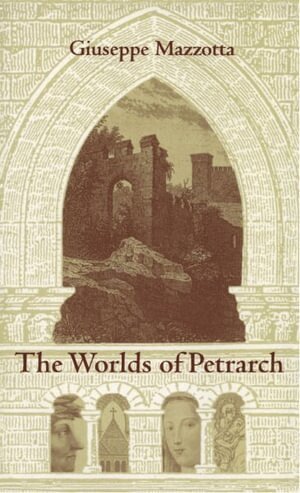
At the center of Petrarch's vision, announcing a new way of seeing the world, was the individual, a sense of the self that would one day become the center of modernity as well. This self, however, seemed to be fragmented in Petrarch's work, divided among the worlds of philosophy, faith, and love of the classics, politics, art, and religion, of Italy, France, Greece, and Rome. In recent decades scholars have explored each of these worlds in depth. In this work, Giuseppe Mazzotta shows for the first time how all these fragmentary explorations relate to each other, how these separate worlds are part of a common vision.Written in a clear and passionate style, The Worlds of Petrarch takes us into the politics of culture, the poetic imagination, into history and ethics, art and music, rhetoric and theology. With this encyclopedic strategy, Mazzotta is able to demonstrate that the self for Petrarch is not a unified whole but a unity of parts, and, at the same time, that culture emerges not from a consensus but from a conflict of ideas produced by opposition and dark passion. These conflicts, intrinsic to Petrarch's style of thought, lead Mazzotta to a powerful rethinking of the concepts of "fragments" and "unity" and, finally, to a new understanding of the relationship between them.
284 kr
Skickas inom 7-10 vardagar
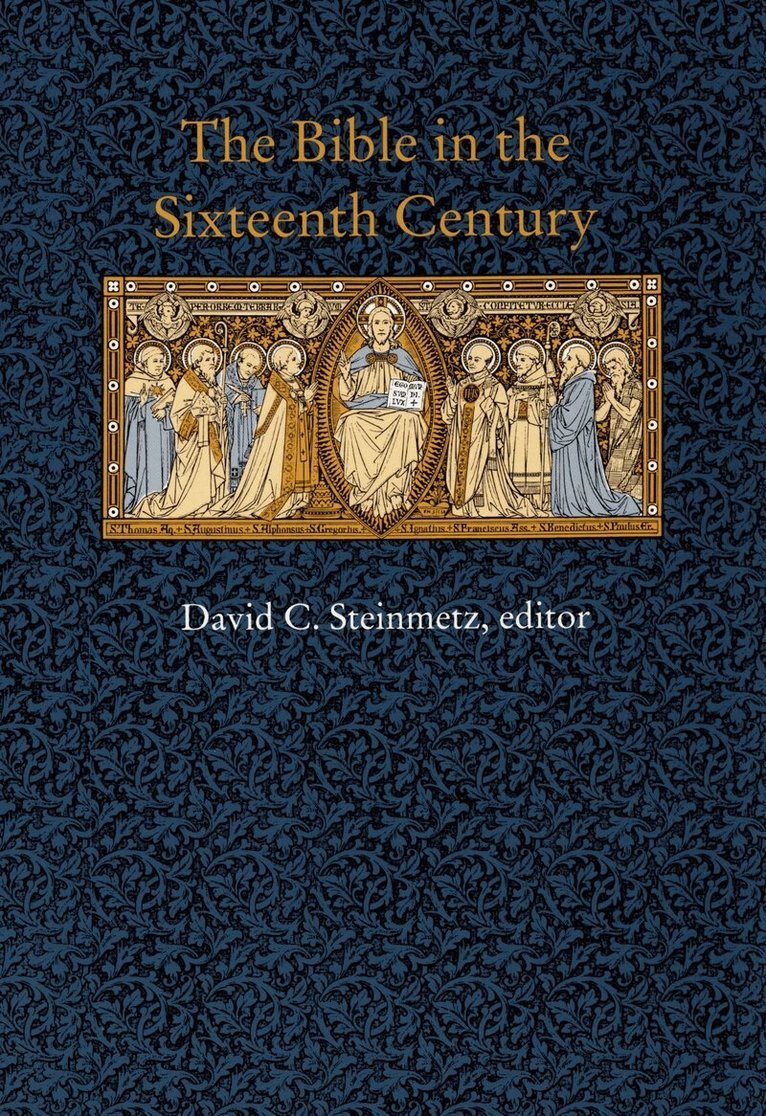
A distinguished group of authors here illuminate a broad spectrum of themes in the history of biblical interpretation. Originally published in 1990, these essays take as their common ground the thesis that the intellectual and religious life of the sixteenth century cannot be understood without attention to the preoccupation of sixteenth-century humanists and theologians with the interpretation of the Bible. Topics explored include Jewish exegesis and problems of Old Testament interpretation and the relationship between the Bible and social, political, and institutional history. Contributors. Irena Backus, Guy Bedouelle, Kalman P. Bland, Kenneth G. Hagen, Scott H. Hagen, Scott H. Hendrix, R. Gerald Hobbs, Jean-Claude Margolin, H. C. Erik Midelfort, Richard A. Muller, John B. Payne, David C. Steinmetz
847 kr
Skickas inom 7-10 vardagar
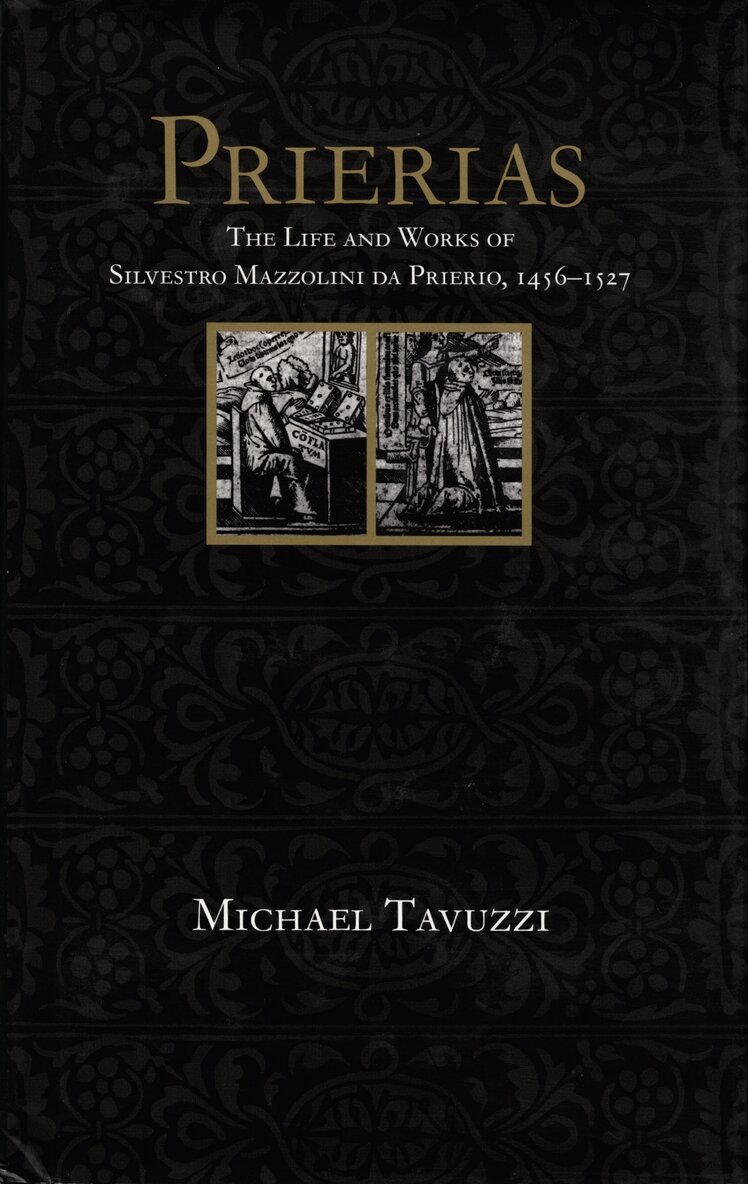
The Italian Dominican friar Silvestro Mazzolini da Prierio (1456–1527), known as Prierias, is chiefly remembered as the church official designated to respond to Luther’s 95 theses of December 1517-a response blamed for fanning the flames of the Reformation throughout Europe. In Prierias, Michael Tavuzzi presents the first full biography of this little-known, yet eminent, sixteenth-century ecclesiastic, as well as an account of his wide-ranging literary works. Tavuzzi shows that, aside from being Luther’s first opponent, Prierias played a key role in significant early-sixteenth-century controversies such as the cases of Reuchlin, Erasmus, and Pomponazzi. Drawing on previously untapped primary sources, Tavuzzi traces Prierias’s early career as preacher, professor, inquisitor, and administrator, and places him in the context of the struggles fought between unreformed and observant friars during the Renaissance. Prierias’s activities as Master of the Sacred Palace, his long-standing and bitter conflict with Cardinal Cajetan, and especially his forceful writings warning against the threat of witches and witchcraft are also described. Focusing closely on Prierias’s clash with Luther, Tavuzzi accounts for its development and illuminates the ecclesiological issues at stake. Prierias reveals the little-known world of the friars on the eve of the Reformation.
417 kr
Skickas inom 7-10 vardagar
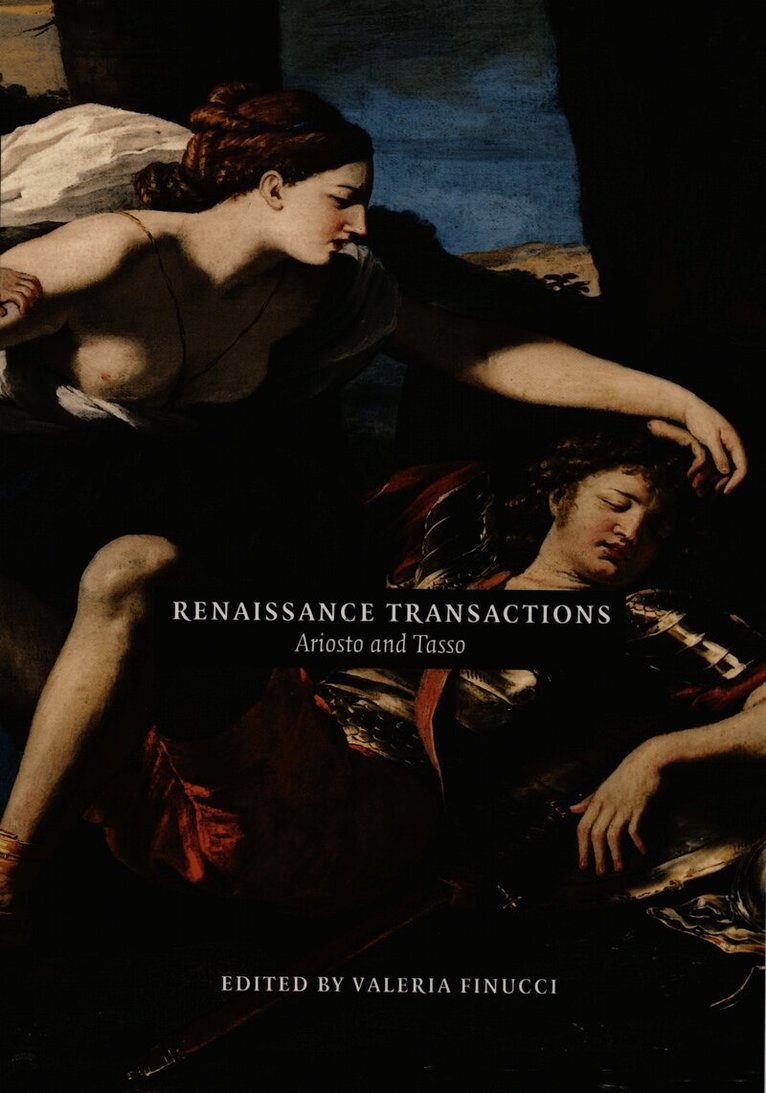
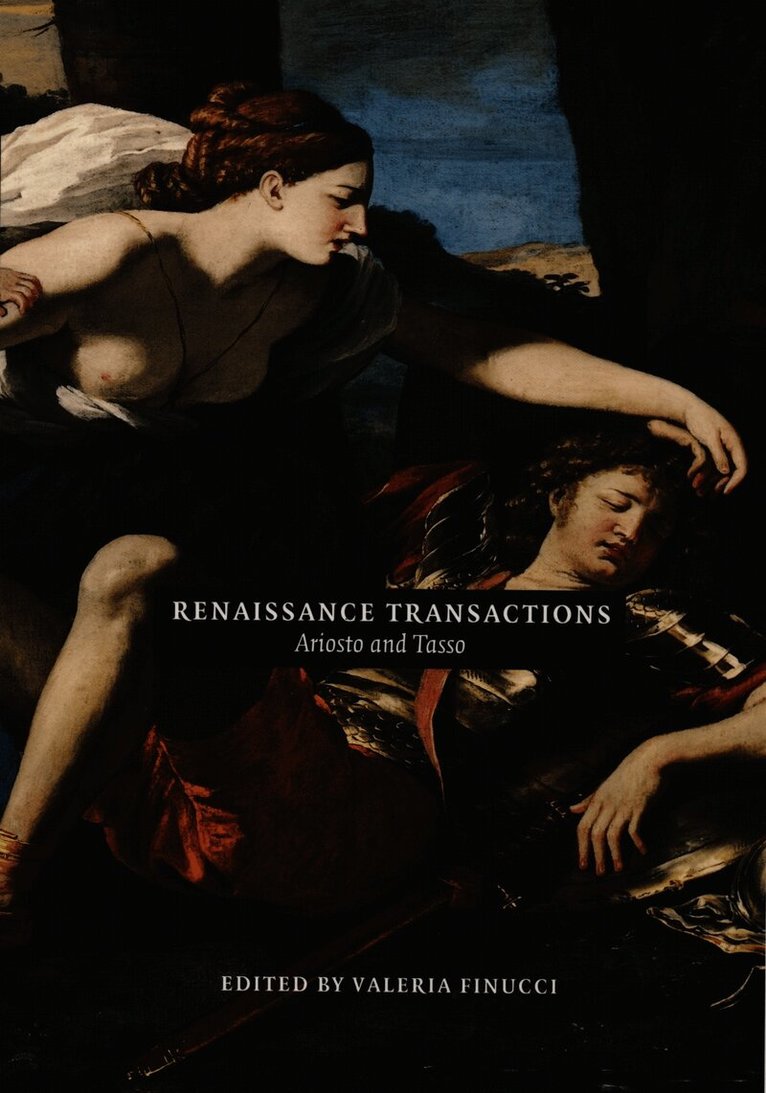
The controversy generated in Italy by the writings of Ludovico Ariosto and Torquato Tasso during the sixteenth century was the first historically important debate on what constitutes modern literature. Applying current critical theories and tools, the essays in Renaissance Transactions reexamine these two provocative poet-thinkers, the debate they inspired, and the reasons why that debate remains relevant today.Resituating these writers’ works in the context of the Renaissance while also offering appraisals of their uncanny “postmodernity,” the contributors to this volume focus primarily on Ariosto’s Orlando furioso and Tasso’s Gerusalemme liberata. Essays center on questions of national and religious identity, performative representation, and the theatricality of literature. They also address subjects regarding genre and gender, social and legal anthropology, and reactionary versus revolutionary writing. Finally, they advance the historically significant debate about what constitutes modern literature by revisiting with new perspective questions first asked centuries ago: Did Ariosto invent a truly national, and uniquely Italian, literary genre-the chivalric romance? Or did Tasso alone, by equaling the epic standards of Homer and Virgil, make it possible for a literature written in Italian to attain the status of its classical Greek and Latin antecedents? Arguing that Ariosto and Tasso are still central to the debate on what constitutes modern narrative, this collection will be invaluable to scholars of Italian literature, literary history, critical theory, and the Renaissance.Contributors. Jo Ann Cavallo, Valeria Finucci, Katherine Hoffman, Daniel Javitch, Constance Jordan, Ronald L. Martinez, Eric Nicholson, Walter Stephens, Naomi Yavneh, Sergio Zatti
1 114 kr
Skickas inom 7-10 vardagar
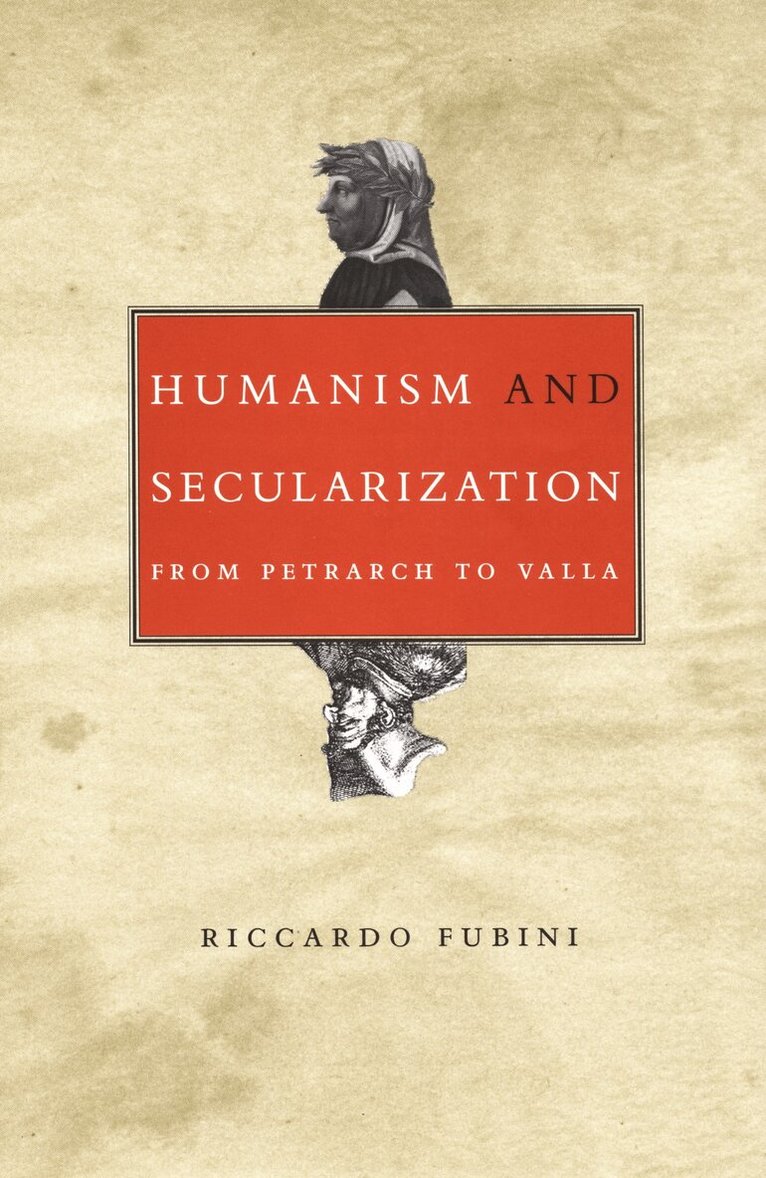
The Renaissance movement known as humanism eventually spread from Italy through all of western Europe, transforming early modern culture in ways that are still being felt and debated. Central to these debates-and to this book-is the question of whether (and how) the humanist movement contributed to the secularization of Western cultural traditions at the end of the Middle Ages. A preeminent scholar of Italian humanism, Riccardo Fubini approaches this question in a new way-by redefining the problem of secularization more carefully to show how humanists can at once be secularizers and religious thinkers. The result is a provocative vision of the humanist movement.Humanism and Secularization offers a nuanced account of humanists contesting medieval ideas about authority not in order to reject Christianity or even orthodoxy, but to claim for themselves the right to define what it meant to be a Christian. Fubini analyzes key texts by major humanists-isuch as Petrarch, Poggio, and Valla-from the first century of the movement. As he subtly works out these authors’ views on religion and the Church from both biographical and textual information, Fubini reveals in detail the new historical consciousness that animated the humanists in their reading of classical and patristic texts. His book as a whole shows convincingly just how radical the humanism of the first half of the fifteenth century was and how sharply it challenged well-entrenched ideas and institutions. Appearing here in English for the first time, his work provides a model set of readings of humanist texts and a critical perspective on Italian humanism that will alter and enrich discussion and understanding of the nature of the humanist movement.