Valeria Finucci – författare
Visar alla böcker från författaren Valeria Finucci. Handla med fri frakt och snabb leverans.
21 produkter
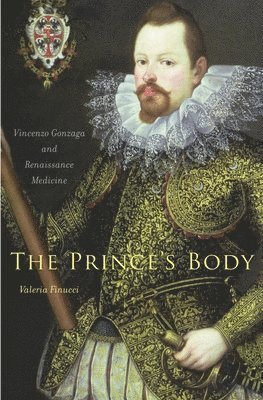
Prince’s Body
Vincenzo Gonzaga and Renaissance Medicine
Inbunden, 2015
422 kr
Lägg i varukorg
Defining the proper female body, seeking elective surgery for beauty, enjoying lavish spa treatments, and combating impotence might seem like today’s celebrity infatuations. However, these preoccupations were very much alive in the early modern period. Valeria Finucci recounts the story of a …
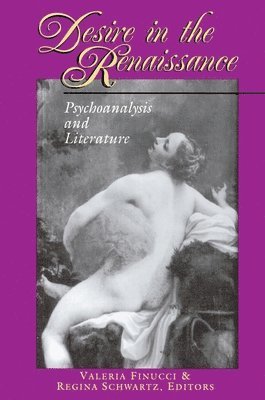
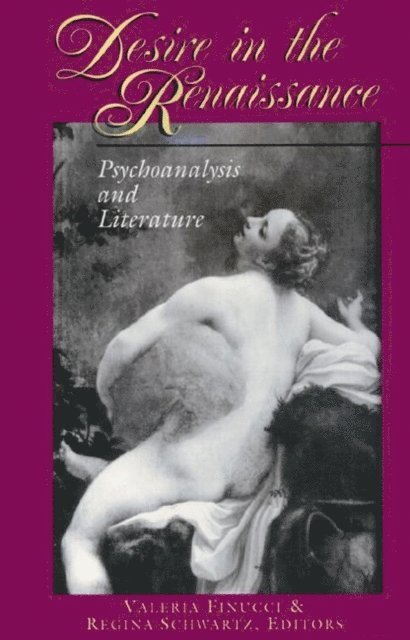
Desire in the Renaissance
Psychoanalysis and Literature
Av Valeria Finucci, Regina Schwartz
Häftad, 1994
786 kr
Lägg i varukorg
Drawing on a variety of psychoanalytic approaches, ten critics engage in exciting discussions of the ways the "inner life" is depicted in the Renaissance and the ways it is shown to interact with the "external" social and economic spheres. Spurred by the rise of capitalism and the nuclear family, …
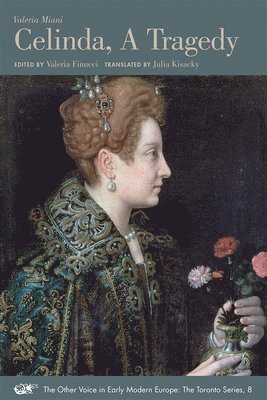
Celinda, A Tragedy – A Bilingual Edition
Av Valeria Miani, Valeria Finucci m. fl.
Häftad, 2010
462 kr
Lägg i varukorg
Valeria Miani’s Celinda (1611), the only female-authored secular tragedy of early modern Italy, is here made available for the first time in a modern edition. Miani’s tale of the doomed love of the Lydian princess Celinda for the cross-dressed Persian prince Autilio/ Lucinia offers a striking …
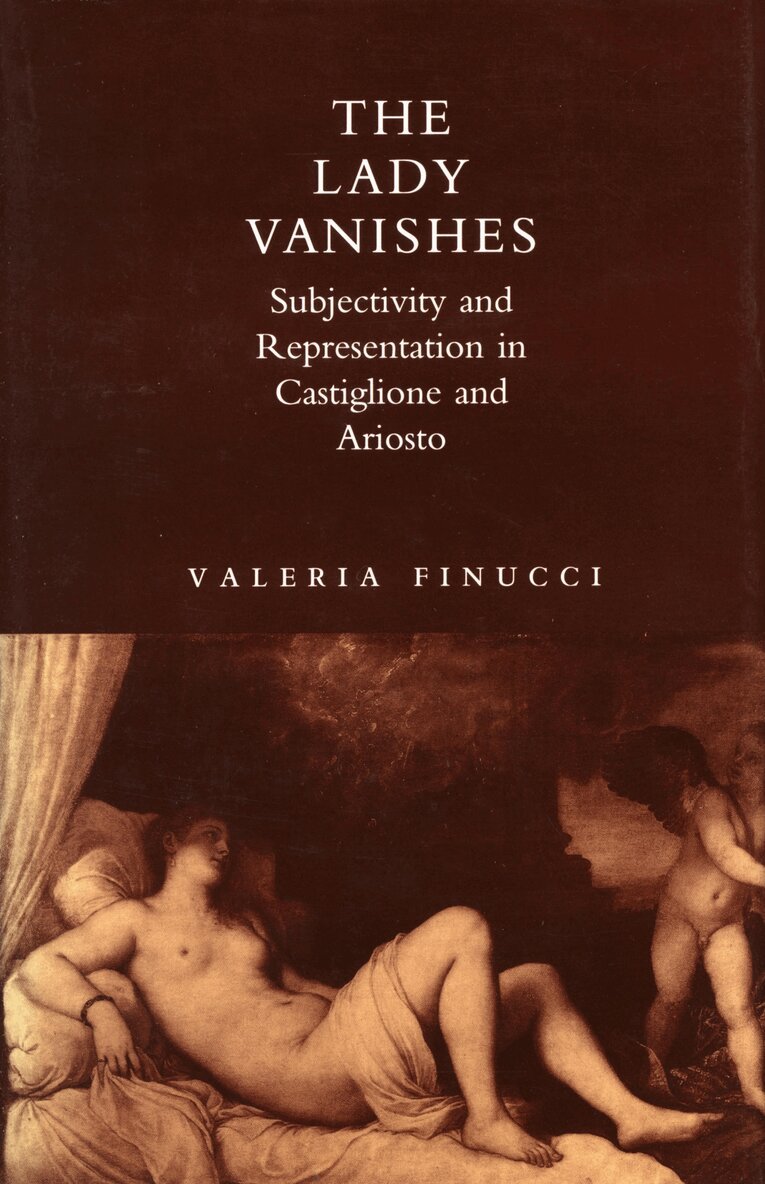
Lady Vanishes
Subjectivity and Representation in Castiglione and Ariosto
Inbunden, 1992
1116 kr
Lägg i varukorg
A Stanford University Press classic.
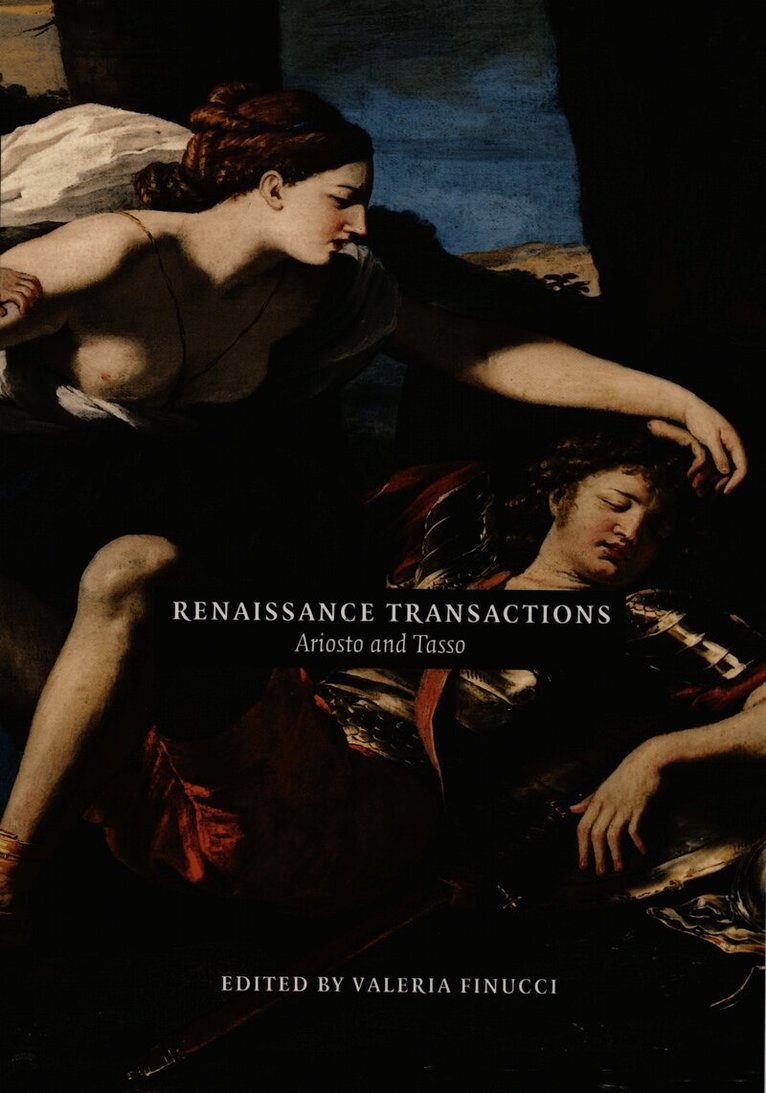
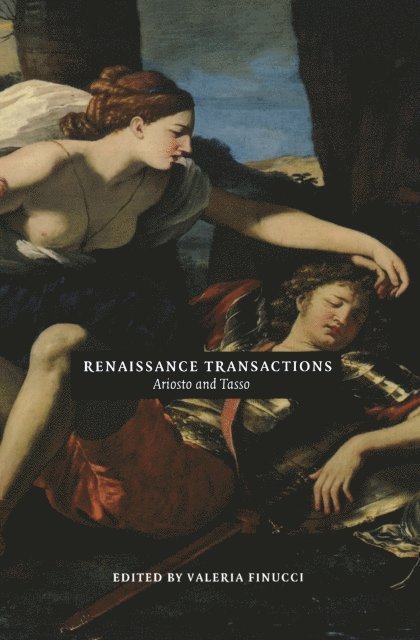
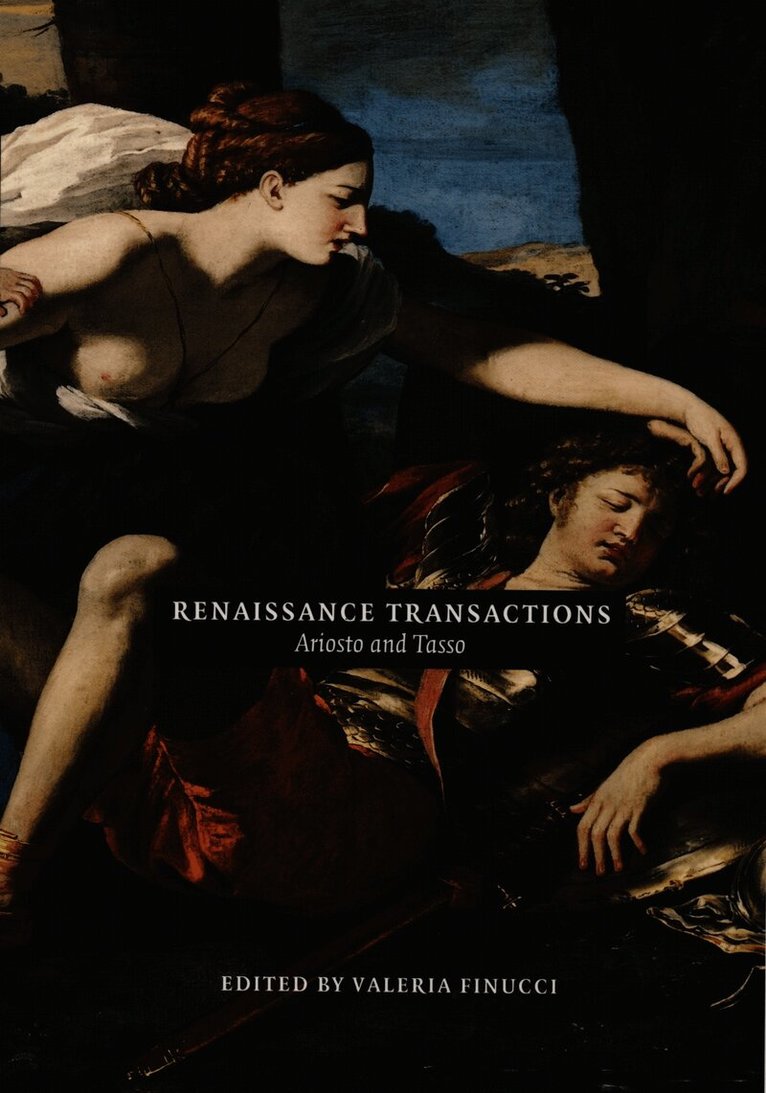
Renaissance Transactions
Ariosto and Tasso
Häftad, 1999
443 kr
Lägg i varukorg
The controversy generated in Italy by the writings of Ludovico Ariosto and Torquato Tasso during the sixteenth century was the first historically important debate on what constitutes modern literature. Applying current critical theories and tools, the essays in Renaissance Transactions reexamine …
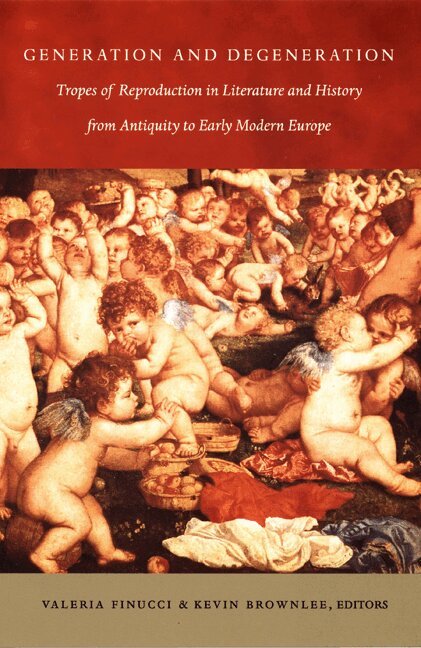
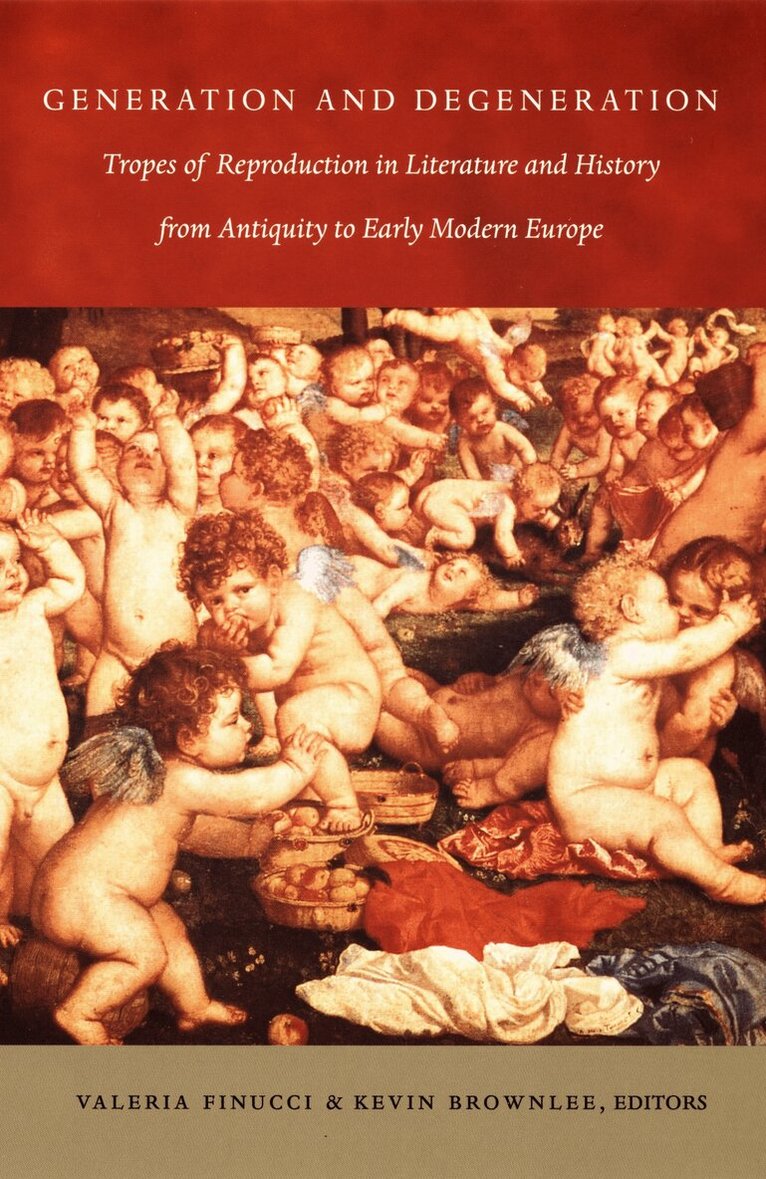
Generation and Degeneration
Tropes of Reproduction in Literature and History from Antiquity Through Early Modern Europe
Av Valeria Finucci, Kevin Brownlee
Häftad, 2001
647 kr
Lägg i varukorg
This distinctive collection explores the construction of genealogies-in both the biological sense of procreation and the metaphorical sense of heritage and cultural patrimony. Focusing specifically on the discourses that inform such genealogies, Generation and Degeneration moves from Greco-Roman …
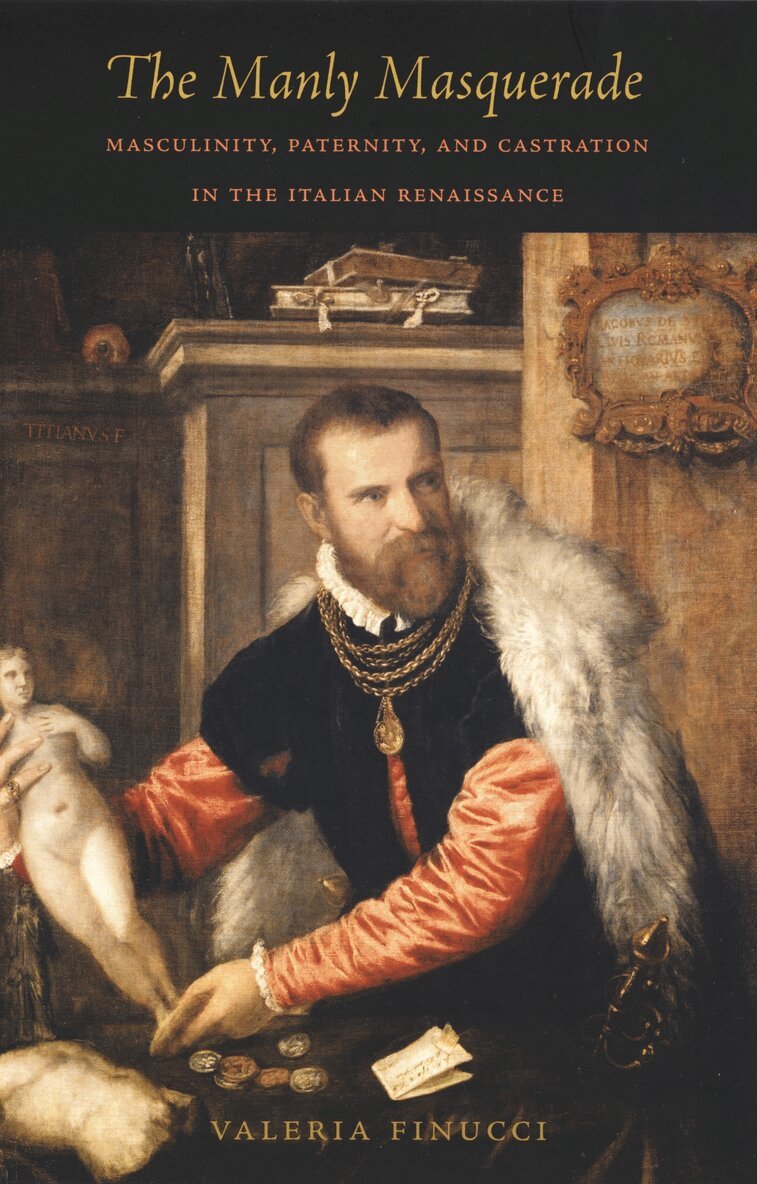
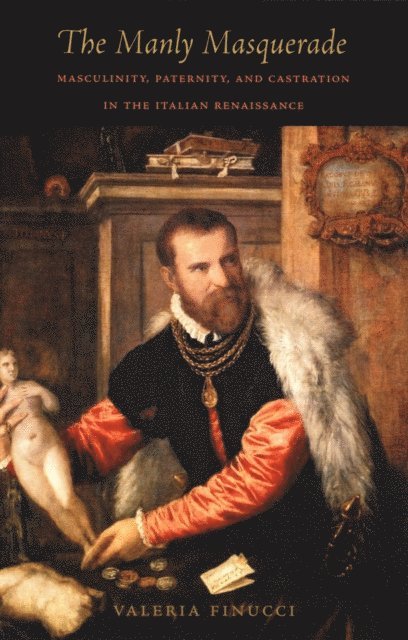
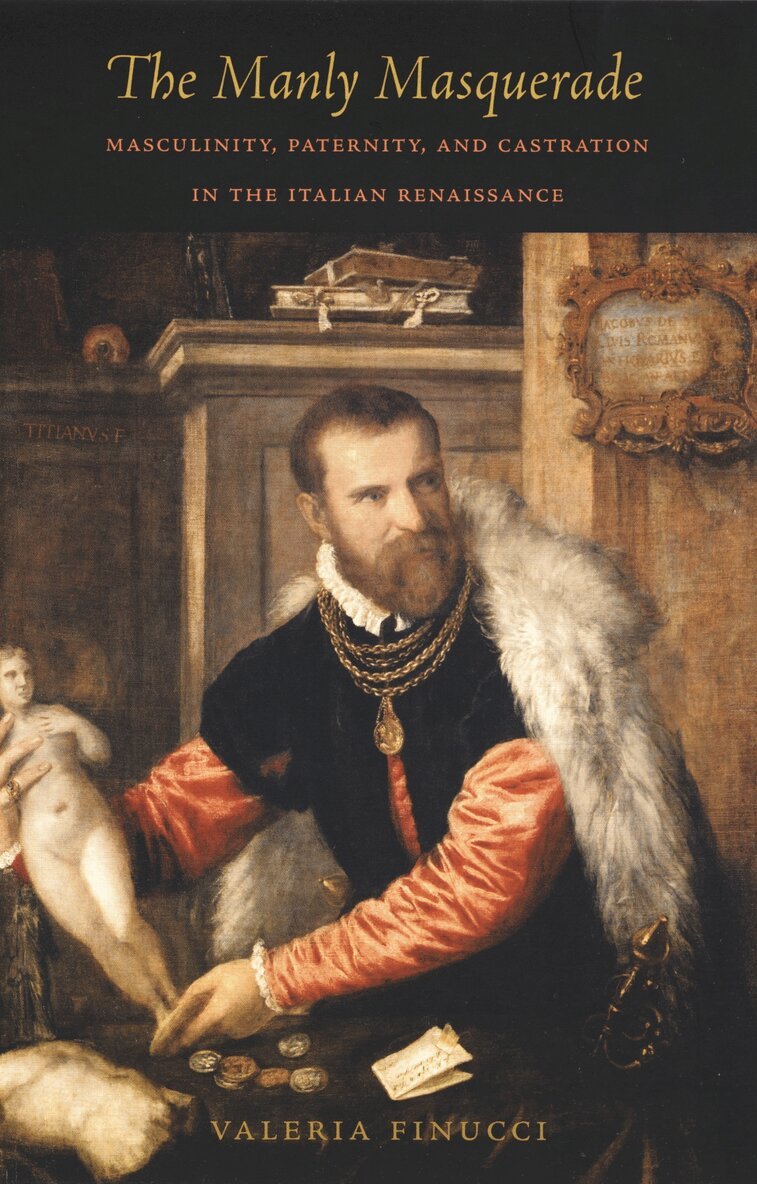
Manly Masquerade
Masculinity, Paternity, and Castration in the Italian Renaissance
Häftad, 2003
396 kr
Lägg i varukorg
The Manly Masquerade unravels the complex ways men were defined as men in Renaissance Italy through readings of a vast array of sixteenth- and seventeenth-century evidence: medical and travel literature; theology; law; myth; conduct books; and plays, chivalric romances, and novellas by authors …
Generation and Degeneration
Tropes of Reproduction in Literature and History from Antiquity through Early Modern Europe
Av Kevin Brownlee, Valeria Finucci
E-bok, 2001
655 kr
Lägg i varukorg
This distinctive collection explores the construction of genealogies—in both the biological sense of procreation and the metaphorical sense of heritage and cultural patrimony. Focusing specifically on the discourses that inform such genealogies, Generation and Degeneration moves from Greco-Roman …
Manly Masquerade
Masculinity, Paternity, and Castration in the Italian Renaissance
E-bok, 2003
587 kr
Lägg i varukorg
The Manly Masquerade unravels the complex ways men were defined as men in Renaissance Italy through readings of a vast array of sixteenth- and seventeenth-century evidence: medical and travel literature; theology; law; myth; conduct books; and plays, chivalric romances, and novellas by authors …
Renaissance Transactions
Ariosto and Tasso
E-bok, 1999
641 kr
Lägg i varukorg
The controversy generated in Italy by the writings of Ludovico Ariosto and Torquato Tasso during the sixteenth century was the first historically important debate on what constitutes modern literature. Applying current critical theories and tools, the essays in Renaissance Transactions reexamine …
Desire in the Renaissance
Psychoanalysis and Literature
Av Regina Schwartz, Valeria Finucci
E-bok, 1994
1066 kr
Lägg i varukorg
Drawing on a variety of psychoanalytic approaches, ten critics engage in exciting discussions of the ways the "inner life" is depicted in the Renaissance and the ways it is shown to interact with the "external" social and economic spheres. Spurred by the rise of capitalism and the nuclear family, …
Rethinking Medical Humanities
Perspectives from the Arts and the Social Sciences
Av Rinaldo F. Canalis, Massimo Ciavolella m. fl.
Inbunden, 2022
1702 kr
Lägg i varukorg
Medical Humanities may be broadly conceptualized as a discipline wherein medicine and its specialties intersect with those of the humanities and social sciences. As such it is a hybrid area of study where the impact of disease and healing science on culture is assessed and expressed in the …
Rethinking Medical Humanities
Perspectives from the Arts and the Social Sciences
Av Valeria Finucci, Massimo Ciavolella m. fl.
E-bok, 2022
1726 kr
Lägg i varukorg
Medical Humanities may be broadly conceptualized as a discipline wherein medicine and its specialties intersect with those of the humanities and social sciences. As such it is a hybrid area of study where the impact of disease and healing science on culture is assessed and expressed in the …
Rethinking Medical Humanities
Perspectives from the Arts and the Social Sciences
Av Valeria Finucci, Massimo Ciavolella m. fl.
E-bok, 2022
1726 kr
Lägg i varukorg
Medical Humanities may be broadly conceptualized as a discipline wherein medicine and its specialties intersect with those of the humanities and social sciences. As such it is a hybrid area of study where the impact of disease and healing science on culture is assessed and expressed in the …
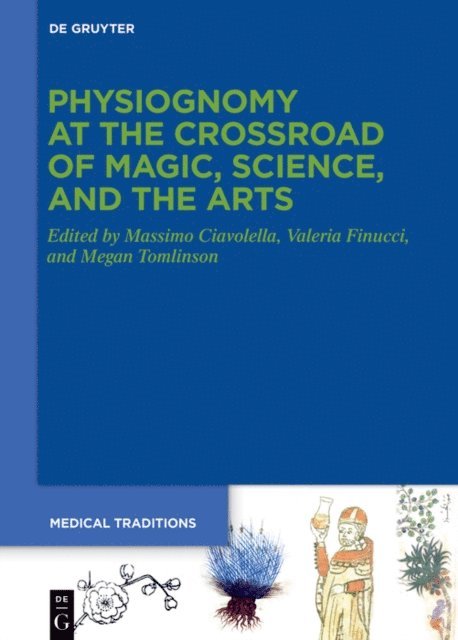
Physiognomy at the Crossroad of Magic, Science, and the Arts
Av Massimo Ciavolella, Valeria Finucci m. fl.
Inbunden, 2024
1733 kr
Lägg i varukorg
The essays examine how the study of facial features or expressions as indicative of character or ethnicity, has evolved from the crossroad of magic, religion and primitive medicine to present-day cultural concern for wellness and beauty. In this context, the discoveries of cranio-facial …
Physiognomy at the Crossroad of Magic, Science, and the Arts
Av Megan Tomlinson, Valeria Finucci m. fl.
E-bok, 2024
1337 kr
Lägg i varukorg
The essays examine how the study of facial features or expressions as indicative of character or ethnicity, has evolved from the crossroad of magic, religion and primitive medicine to present-day cultural concern for wellness and beauty. In this context, the discoveries of cranio-facial …
Physiognomy at the Crossroad of Magic, Science, and the Arts
Av Megan Tomlinson, Valeria Finucci m. fl.
E-bok, 2024
1308 kr
Lägg i varukorg
The essays examine how the study of facial features or expressions as indicative of character or ethnicity, has evolved from the crossroad of magic, religion and primitive medicine to present-day cultural concern for wellness and beauty. In this context, the discoveries of cranio-facial …
Renaissance Transactions
Ariosto and Tasso
Inbunden, 1999
1522 kr
Tillfälligt slut
The controversy generated in Italy by the writings of Ludovico Ariosto and Torquato Tasso during the sixteenth century was the first historically important debate on what constitutes modern literature. Applying current critical theories and tools, the essays in Renaissance Transactions reexamine …
Generation and Degeneration
Tropes of Reproduction in Literature and History from Antiquity Through Early Modern Europe
Av Valeria Finucci, Kevin Brownlee
Inbunden, 2001
1522 kr
Tillfälligt slut
This distinctive collection explores the construction of genealogies-in both the biological sense of procreation and the metaphorical sense of heritage and cultural patrimony. Focusing specifically on the discourses that inform such genealogies, Generation and Degeneration moves from Greco-Roman …
Manly Masquerade
Masculinity, Paternity, and Castration in the Italian Renaissance
Inbunden, 2003
1363 kr
Tillfälligt slut
The Manly Masquerade unravels the complex ways men were defined as men in Renaissance Italy through readings of a vast array of sixteenth- and seventeenth-century evidence: medical and travel literature; theology; law; myth; conduct books; and plays, chivalric romances, and novellas by authors …
Mirtilla, A Pastoral – A Bilingual Edition
Av Isabella Andreini, Julia Kisacky m. fl.
Häftad, 2018
500 kr
Tillfälligt slut
Isabella Andreini was the most famous actress of the Italian Renaissance, the darling of dukes and kings, as well as of less-moneyed theatergoers. As a founding member with her husband, Francesco, of the Compagnia dei Gelosi, she performed ceaselessly throughout Italy and France, and was prized for …