Economic Policy Institute - Böcker
Visar alla böcker i serien Economic Policy Institute. Handla med fri frakt och snabb leverans.
6 produkter
6 produkter
856 kr
Skickas inom 10-15 vardagar
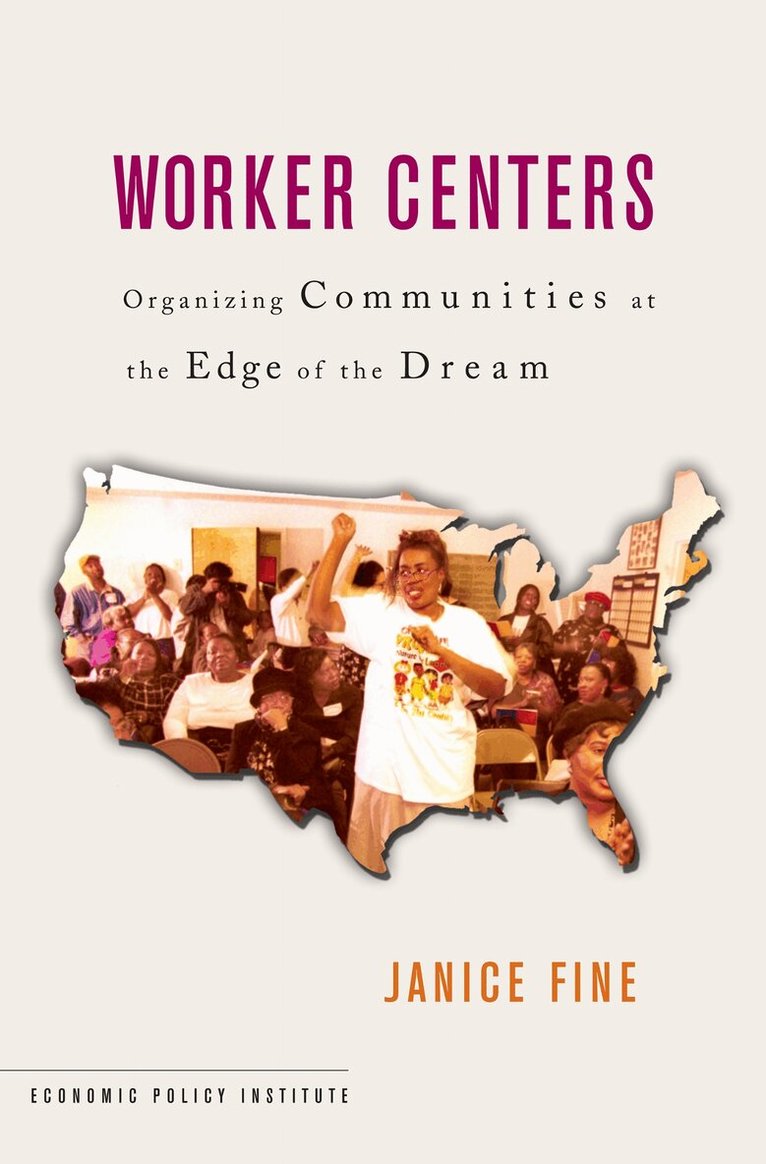
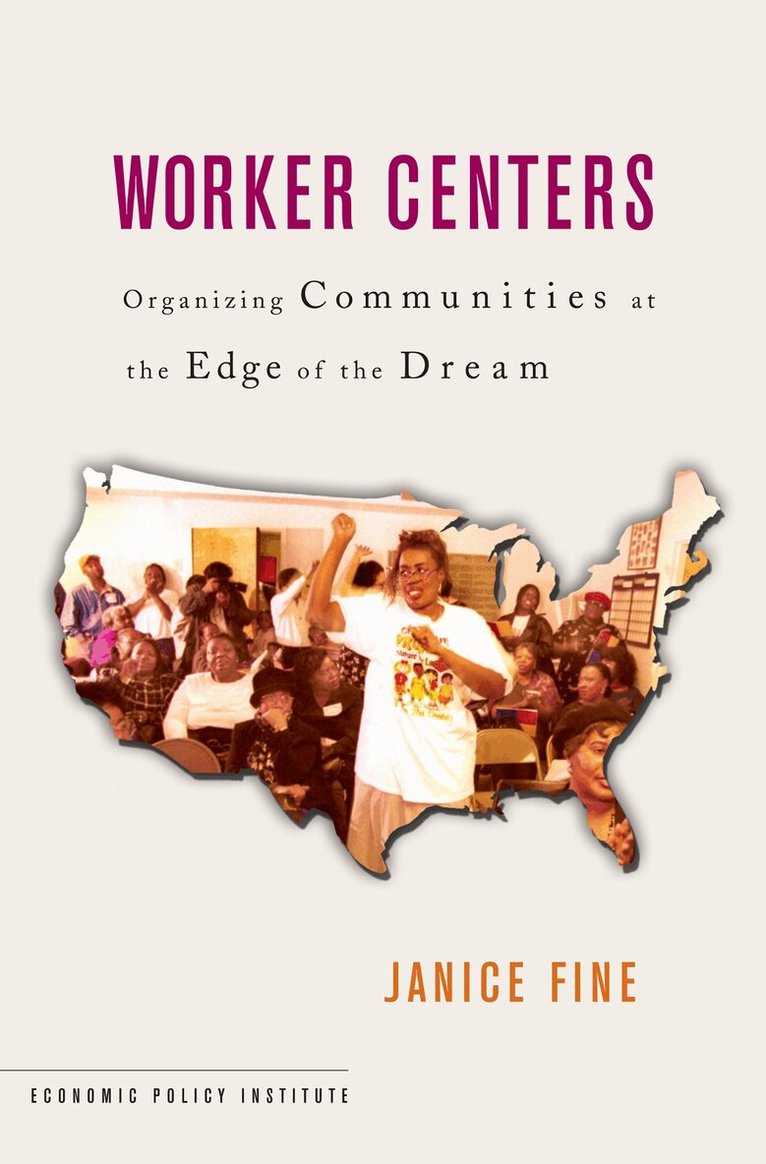
Low-wage workers in the United States face obstacles including racial and ethnic discrimination, a pervasive lack of wage enforcement, misclassification of their employment, and for some, their status as undocumented immigrants. In the past, political parties, unions, and fraternal and mutual-aid societies served as important vehicles for workers who hoped to achieve political and economic integration. As these traditional civic institutions have weakened, low-wage workers must seek new structures for mutual support. Worker centers are among the institutions to which workers turn as they strive to build vibrant communities and attain economic and political visibility. Community-based worker centers help low-wage workers gain access to social services; advocate for their own civil and human rights; and organize to improve wages, working conditions, neighborhoods, and public schools.In this pathbreaking book, Janice Fine identifies 137 worker centers in more than eighty cities, suburbs, and rural areas in thirty-one states. These centers, which attract workers in industries that are difficult to organize, have emerged as especially useful components of any program intended to assist immigrants and low-wage workers of color. Worker centers serve not only as organizing laboratories but also as places where immigrants and other low-wage workers can participate in civil society, tell their stories to the larger community, resist racism and anti-immigrant sentiment, and work to improve their political and economic standing.
922 kr
Skickas inom 10-15 vardagar
Praise for previous editions of The State of Working America: "The State of Working America remains unrivaled as the most-trusted source for a comprehensive understanding of how working Americans and their families are faring in today's economy."—Robert B. Reich"It is the inequality of wealth, argue the authors, rather than new technology (as some would have it), that is responsible for the failure of America's workplace to keep pace with the country's economic growth. The State of Working America is a well-written, soundly argued, and important reference book."—Library Journal "If you want to know what happened to the economic well-being of the average American in the past decade or so, this is the book for you. It should be required reading for Americans of all political persuasions."—Richard Freeman, Harvard University "A truly comprehensive and useful book that provides a reality check on loose statements about U.S. labor markets. It should be cheered by all Americans who earn their living from work."—William Wolman, former chief economist, CNBC's Business Week "The State of Working America provides very valuable factual and analytic material on the economic conditions of American workers. It is the very best source of information on this important subject."—Ray Marshall, University of Texas, former U.S. Secretary of Labor"An indispensable work... on family income, wages, taxes, employment, and the distribution of wealth."—Simon Head, The New York Review of Books "No matter what political camp you're in, this is the single most valuable book I know of about the state of America, period. It is the most referenced, most influential resource book of its kind."—Jeff Madrick, author of The End of Affluence "This book is the single best yardstick for measuring whether or not our economic policies are doing enough to ensure that our economy can, once again, grow for everybody."—Richard A. Gephardt "The best place to review the latest developments in changes in the distribution of income and wealth."—Lester ThurowThe State of Working America, prepared biennially since 1988 by the Economic Policy Institute, includes a wide variety of data on family incomes, wages, taxes, unemployment, wealth, and poverty-data that enable the authors to closely examine the effect of the economy on the living standards of the American people. This edition, like the previous ones, exposes and analyzes the most recent and critical trends in the country.
267 kr
Skickas inom 10-15 vardagar
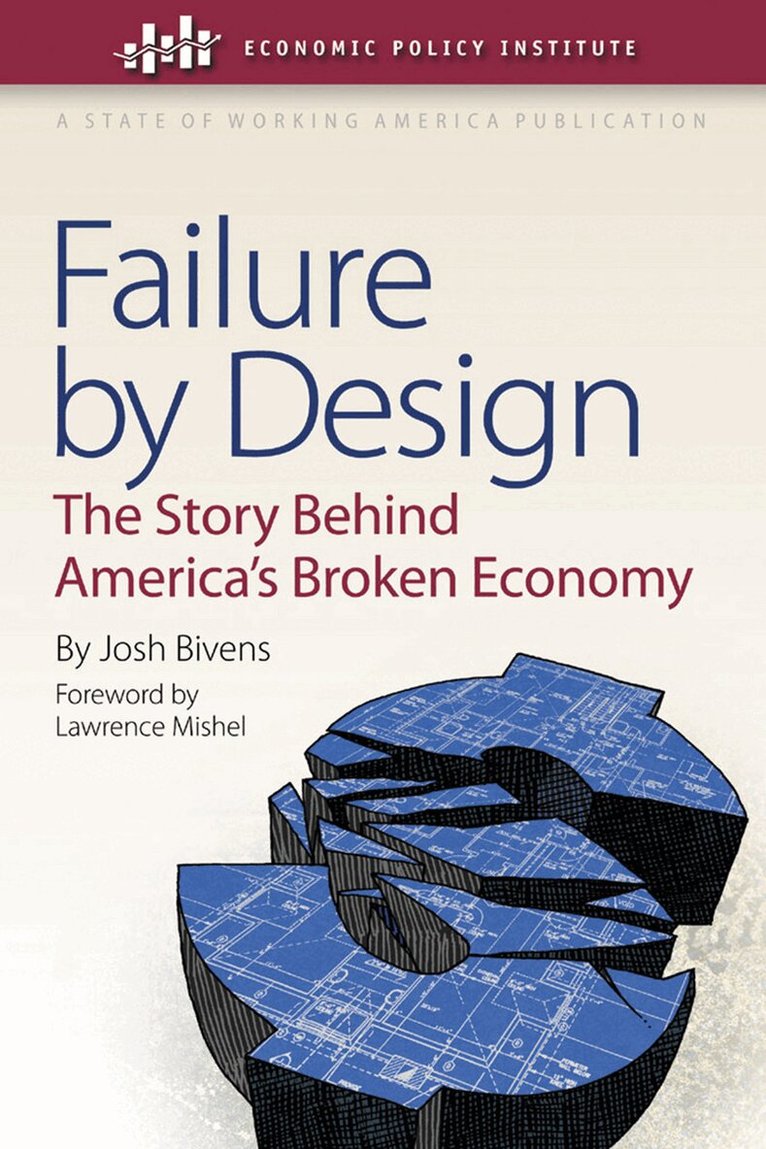
In Failure by Design, the Economic Policy Institute's Josh Bivens takes a step back from the acclaimed State of Working America series, building on its wealth of data to relate a compelling narrative of the U.S. economy's struggle to emerge from the Great Recession of 2008. Bivens explains the causes and impact on working Americans of the most catastrophic economic policy failure since the 1920s. As outlined clearly here, economic growth since the late 1970s has been slow and inequitably distributed, largely as a result of poor policy choices. These choices only got worse in the 2000s, leading to an anemic economic expansion. What growth we did see in the economy was fueled by staggering increases in private-sector debt and a housing bubble that artificially inflated wealth by trillions of dollars. As had been predicted, the bursting of the housing bubble had disastrous consequences for the broader economy, spurring a financial crisis and a rise in joblessness that dwarfed those resulting from any recession since the Great Depression. The fallout from the Great Recession makes it near certain that there will be yet another lost decade of income growth for typical families, whose incomes had not been boosted by the previous decade's sluggish and localized economic expansion.In its broad narrative of how the economy has failed to deliver for most Americans over much of the past three decades, Failure by Design also offers compelling graphic evidence on jobs, incomes, wages, and other measures of economic well-being most relevant to low- and middle-income workers. Josh Bivens tracks these trends carefully, giving a lesson in economic history that is readable yet rigorous in its analysis. Intended as both a stand-alone volume and a companion to the new State of Working America website that presents all of the data underlying this cogent analysis, Failure by Design will become required reading as a road map to the economic problems that confront working Americans.
950 kr
Skickas inom 10-15 vardagar
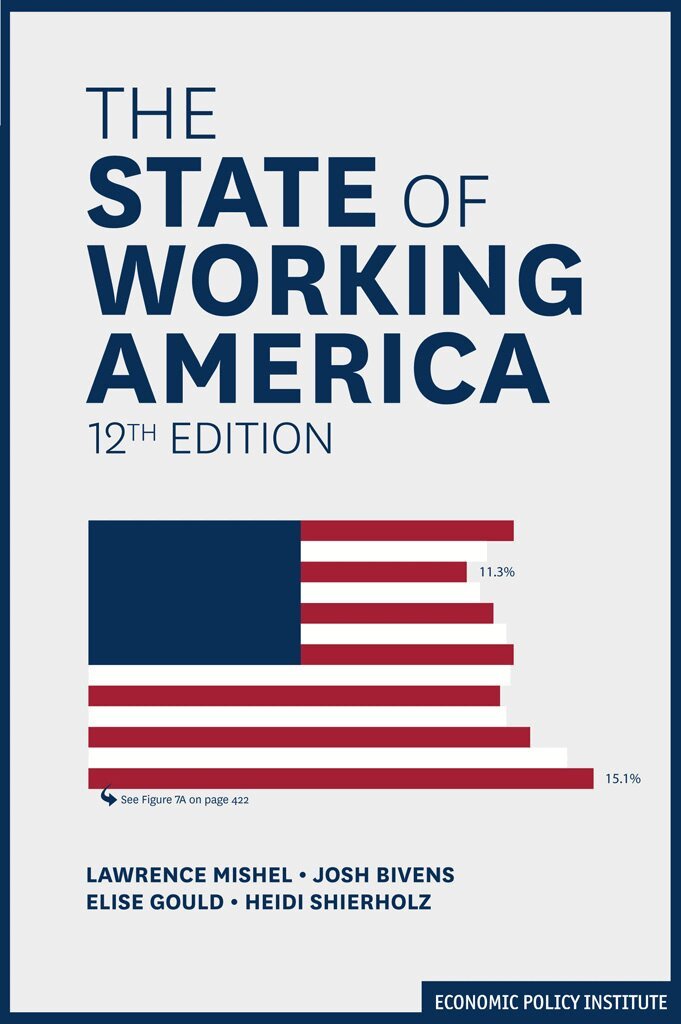
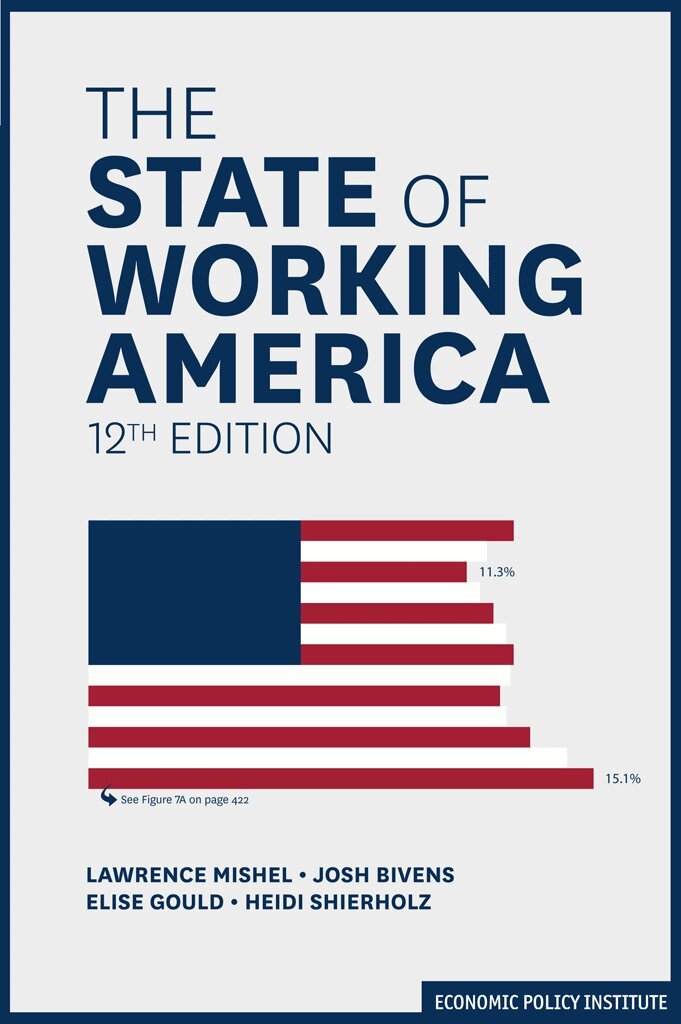
From Reviews of Previous Editions—"The State of Working America remains unrivaled as the most-trusted source for a comprehensive understanding of how working Americans and their families are faring in today's economy."—Robert B. Reich"It is the inequality of wealth, argue the authors, rather than new technology (as some would have it), that is responsible for the failure of America's workplace to keep pace with the country's economic growth. The State of Working America is a well-written, soundly argued, and important reference book."—Library Journal "An indispensable work on family income, wages, taxes, employment, and the distribution of wealth."—New York Review of Books Since 1988, The State of Working America has provided a comprehensive answer to a question newly in vogue in this age of Occupy Wall Street: To what extent has overall economic growth translated into rising living standards for the vast majority of American workers and their families? In the 12th edition, Lawrence Mishel, Josh Bivens, Elise Gould, and Heidi Shierholz analyze a trove of data on income, jobs, mobility, poverty, wages, and wealth to demonstrate that rising economic inequality over the past three decades has decoupled overall economic growth from growth in the living standards of the vast majority. The new edition of The State of Working America also expands on this analysis of American living standards, most notably by placing the Great Recession in historical context. The severe economic downturn that began in December 2007 came on the heels of a historically weak recovery following the 2001 recession, a recovery that saw many measures of living standards stagnate. The authors view the past decade as "lost" in terms of living standards growth, and warn that millions of American households face another decade of lost opportunity. Especially troubling, the authors stress, is that while overall economic performance in the decades before the Great Recession was more than sufficient to broadly raise living standards, broad-based growth was blocked by rising inequality driven largely by policy choices. A determinedly data-driven narrative, The State of Working America remains the most comprehensive resource about the economic experience of working Americans.
299 kr
Skickas inom 10-15 vardagar
Low-wage workers in the United States face obstacles including racial and ethnic discrimination, a pervasive lack of wage enforcement, misclassification of their employment, and for some, their status as undocumented immigrants. In the past, political parties, unions, and fraternal and mutual-aid societies served as important vehicles for workers who hoped to achieve political and economic integration. As these traditional civic institutions have weakened, low-wage workers must seek new structures for mutual support. Worker centers are among the institutions to which workers turn as they strive to build vibrant communities and attain economic and political visibility. Community-based worker centers help low-wage workers gain access to social services; advocate for their own civil and human rights; and organize to improve wages, working conditions, neighborhoods, and public schools.In this pathbreaking book, Janice Fine identifies 137 worker centers in more than eighty cities, suburbs, and rural areas in thirty-one states. These centers, which attract workers in industries that are difficult to organize, have emerged as especially useful components of any program intended to assist immigrants and low-wage workers of color. Worker centers serve not only as organizing laboratories but also as places where immigrants and other low-wage workers can participate in civil society, tell their stories to the larger community, resist racism and anti-immigrant sentiment, and work to improve their political and economic standing.
335 kr
Skickas inom 10-15 vardagar
Praise for previous editions of The State of Working America: "The State of Working America remains unrivaled as the most-trusted source for a comprehensive understanding of how working Americans and their families are faring in today's economy."—Robert B. Reich"It is the inequality of wealth, argue the authors, rather than new technology (as some would have it), that is responsible for the failure of America's workplace to keep pace with the country's economic growth. The State of Working America is a well-written, soundly argued, and important reference book."—Library Journal "If you want to know what happened to the economic well-being of the average American in the past decade or so, this is the book for you. It should be required reading for Americans of all political persuasions."—Richard Freeman, Harvard University "A truly comprehensive and useful book that provides a reality check on loose statements about U.S. labor markets. It should be cheered by all Americans who earn their living from work."—William Wolman, former chief economist, CNBC's Business Week "The State of Working America provides very valuable factual and analytic material on the economic conditions of American workers. It is the very best source of information on this important subject."—Ray Marshall, University of Texas, former U.S. Secretary of Labor"An indispensable work... on family income, wages, taxes, employment, and the distribution of wealth."—Simon Head, The New York Review of Books "No matter what political camp you're in, this is the single most valuable book I know of about the state of America, period. It is the most referenced, most influential resource book of its kind."—Jeff Madrick, author of The End of Affluence "This book is the single best yardstick for measuring whether or not our economic policies are doing enough to ensure that our economy can, once again, grow for everybody."—Richard A. Gephardt "The best place to review the latest developments in changes in the distribution of income and wealth."—Lester ThurowThe State of Working America, prepared biennially since 1988 by the Economic Policy Institute, includes a wide variety of data on family incomes, wages, taxes, unemployment, wealth, and poverty-data that enable the authors to closely examine the effect of the economy on the living standards of the American people. This edition, like the previous ones, exposes and analyzes the most recent and critical trends in the country.