Elements in Law, Economics and Politics - Böcker
Visar alla böcker i serien Elements in Law, Economics and Politics. Handla med fri frakt och snabb leverans.
12 produkter
12 produkter
241 kr
Skickas inom 7-10 vardagar
A vexing problem in contract law is modification. Two parties sign a contract but before they fully perform, they modify the contract. Should courts enforce the modified agreement? A private remedy is for the parties to write a contract that is robust to hold-up or that makes the facts relevant to modification verifiable. Provisions accomplishing these ends are renegotiation-design and revelation mechanisms. But implementing them requires commitment power. Conventional contract technologies to ensure commitment - liquidated damages - are disfavored by courts and themselves subject to renegotiation. Smart contracts written on blockchain ledgers offer a solution. We explain the basic economics and legal relevance of these technologies, and we argue that they can implement liquidated damages without courts. We address the hurdles courts may impose to use of smart contracts on blockchain and show that sophisticated parties' ex ante commitment to them may lead courts to allow their use as pre-commitment devices.
215 kr
Skickas inom 7-10 vardagar
The past decade has witnessed a worldwide explosion of work aimed at illuminating judicial-behavior: the choices judges make and the consequences of their choices. We focus on strategic accounts of judicial-behavior. As in other approaches to judging, preferences and institutions play a central role but strategic accounts are unique in one important respect: They draw attention to the interdependent - i.e., the strategic - nature of judicial decisions. On strategic accounts, judges do not make decisions in a vacuum, but rather attend to the preferences and likely actions of other actors, including their colleagues, superiors, politicians, and the public. We survey the major methodological approaches for conducting strategic analysis and consider how scholars have used them to provide insight into the effect of internal and external actors on the judges' choices. As far as these studies have traveled in illuminating judicial-behavior, many opportunities for forward movement remain. We flag four in the conclusion.
215 kr
Skickas inom 7-10 vardagar
Equity can be defined as the use of a more flexible, morally judgmental, and subjective mode of legal decision making that roughly corresponds with historical equity. This Element presents a simple contracting model that captures the role of equity as a safety valve, and shows how it can solve problems posed by opportunists-agents with unusual willingness and ability to take advantage of necessary imperfections in the law. In this model, a simple but imperfect formal legal regime is able to achieve first best in the absence of opportunists. But when opportunists are added, a more flexible regime (equity), can be preferred. However, equity is also vulnerable to being used opportunistically by the parties it intends to protect. Hence, the Element shows that it is often preferable to limit equity, reserving it for use only against those who appear sufficiently likely to be opportunists.
215 kr
Skickas inom 7-10 vardagar
Lobbying competition is viewed as a delegated common agency game under moral hazard. Several interest groups try to influence a policy-maker who exerts effort to increase the probability that a reform be implemented. With no restriction on the space of contribution schedules, all equilibria perfectly reflect the principals' preferences over alternatives. As a result, lobbying competition reaches efficiency. Unfortunately, such equilibria require that the policy-maker pays an interest group when the latter is hurt by the reform. When payments remain non-negative, inducing effort requires leaving a moral hazard rent to the decision maker. Contributions schedules no longer reflect the principals' preferences, and the unique equilibrium is inefficient. Free-riding across congruent groups arises and the set of groups active at equilibrium is endogenously derived. Allocative efficiency and redistribution of the aggregate surplus are linked altogether and both depend on the set of active principals, as well as on the group size.
234 kr
Skickas inom 7-10 vardagar
Do US Circuit Courts' decisions on criminal appeals influence sentence lengths imposed by US District Courts? This Element explores the use of high-dimensional instrumental variables to estimate this causal relationship. Using judge characteristics as instruments, this Element implements two-stage models on court sentencing data for the years 1991 through 2013. This Element finds that Democratic, Jewish judges tend to favor criminal defendants, while Catholic judges tend to rule against them. This Element also finds from experiments that prosecutors backlash to Circuit Court rulings while District Court judges comply. Methodologically, this Element demonstrates the applicability of deep instrumental variables to legal data.
215 kr
Skickas inom 7-10 vardagar
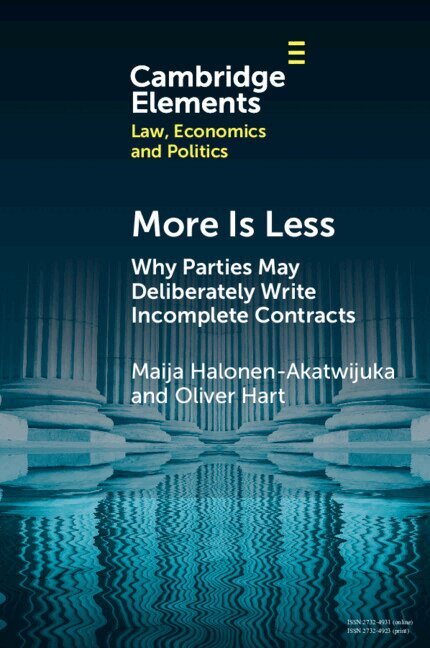
Why are contracts incomplete? Transaction costs and bounded rationality cannot be a total explanation since states of the world are often describable, foreseeable, and yet are not mentioned in a contract. Asymmetric information theories also have limitations. We offer an explanation based on 'contracts as reference points'. Including a contingency of the form, 'The buyer will require a good in event E', has a benefit and a cost. The benefit is that if E occurs there is less to argue about; the cost is that the additional reference point provided by the outcome in E can hinder (re)negotiation in states outside E. We show that if parties agree about a reasonable division of surplus, an incomplete contract is strictly superior to a contingent contract. If parties have different views about the division of surplus, an incomplete contract can be superior if including a contingency would lead to divergent reference points.
215 kr
Skickas inom 7-10 vardagar
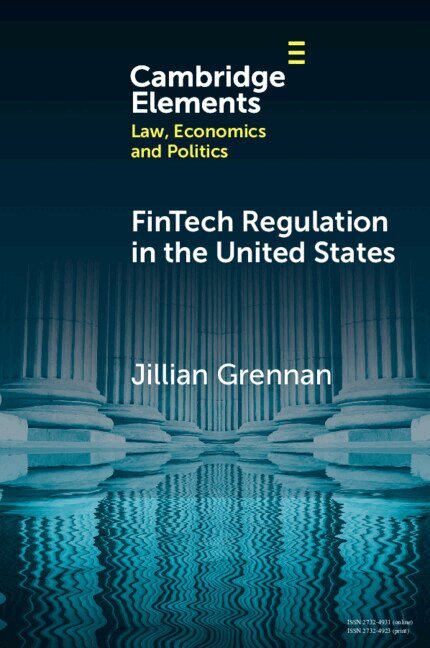
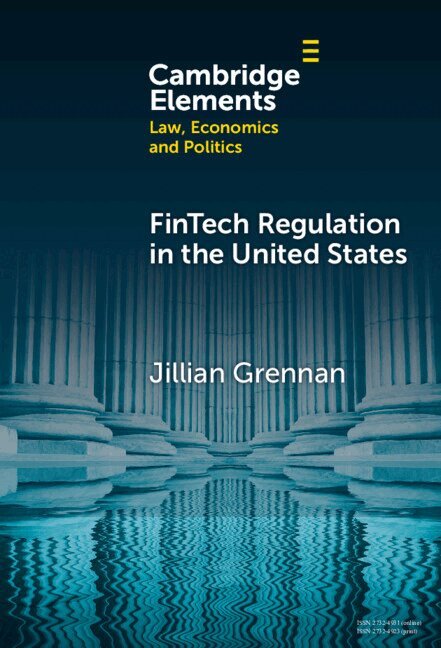
This Element provides an overview of FinTech branches and analyzes the associated institutional forces and economic incentives, offering new insights for optimal regulation. First, it establishes a fundamental tension between addressing existing financial inefficiencies and introducing new economic distortions. Second, it demonstrates that today's innovators have evolved from pursuing incremental change through conventional Fin-Tech applications to AI × crypto as the fastest-growing segment. The convergence of previously siloed areas is creating an open-source infrastructure that reduces entry costs and enables more radical innovation, further amplifying change. Yet this transformation introduces legal uncertainty and risks related to liability, cybercrime, taxation, and adjudication. Through case studies across domains, the Element shows that familiar economic tradeoffs persist, suggesting opportunities for boundary-spanning regulation. It offers regulatory solutions, including RegTech frameworks, compliance-incentivizing mechanisms, collaborative governance models, proactive enforcement of mischaracterizations, and alternative legal analogies for AI × crypto.
U.S. Innovation Inequality and Trumpism
The Political Economy of Technology Deserts in a Knowledge Economy
Häftad, Engelska, 2025
234 kr
Skickas inom 7-10 vardagar
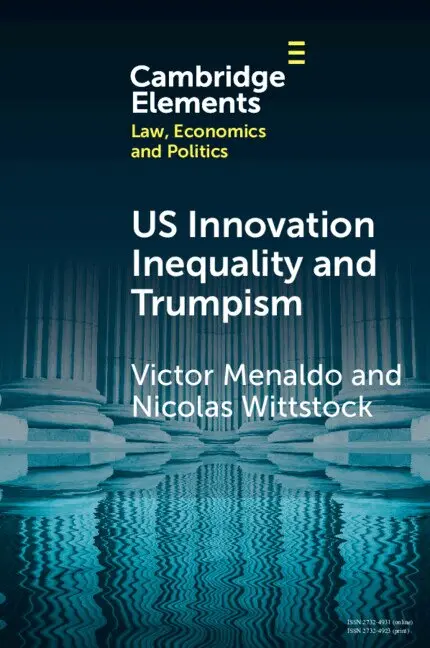
President Trump embraced economic populism centered on trade protectionism, restrictions on international capital and technology flows, and subsidies for American raw material providers and domestic manufacturers. More innovative US counties roundly rejected this economic paradigm: Voters in innovation clusters of all sizes and across the country repudiated Trumpism in both 2016 and 2020. Trump's tariffs and attacks on global supply chains, restrictions on visas for skilled foreign workers, and his overall hostility toward high-tech sectors threatened the innovative firms that motor these places' economies. Trump was different in degree but not kind from previous American populists such as Jennings Bryan and Perot: they too exploited innovation inequality, but were less successful because, before the digital revolution, the industrial organization of American technological progress was not rooted in vertically disintegrated global supply chains. Thus, populism may not only be about resentment toward elites and experts but threaten innovation.
U.S. Innovation Inequality and Trumpism
The Political Economy of Technology Deserts in a Knowledge Economy
Inbunden, Engelska, 2025
753 kr
Skickas inom 7-10 vardagar
President Trump embraced economic populism centered on trade protectionism, restrictions on international capital and technology flows, and subsidies for American raw material providers and domestic manufacturers. More innovative US counties roundly rejected this economic paradigm: Voters in innovation clusters of all sizes and across the country repudiated Trumpism in both 2016 and 2020. Trump's tariffs and attacks on global supply chains, restrictions on visas for skilled foreign workers, and his overall hostility toward high-tech sectors threatened the innovative firms that motor these places' economies. Trump was different in degree but not kind from previous American populists such as Jennings Bryan and Perot: they too exploited innovation inequality, but were less successful because, before the digital revolution, the industrial organization of American technological progress was not rooted in vertically disintegrated global supply chains. Thus, populism may not only be about resentment toward elites and experts but threaten innovation.
692 kr
Skickas inom 7-10 vardagar
This Element provides an overview of FinTech branches and analyzes the associated institutional forces and economic incentives, offering new insights for optimal regulation. First, it establishes a fundamental tension between addressing existing financial inefficiencies and introducing new economic distortions. Second, it demonstrates that today's innovators have evolved from pursuing incremental change through conventional Fin-Tech applications to AI × crypto as the fastest-growing segment. The convergence of previously siloed areas is creating an open-source infrastructure that reduces entry costs and enables more radical innovation, further amplifying change. Yet this transformation introduces legal uncertainty and risks related to liability, cybercrime, taxation, and adjudication. Through case studies across domains, the Element shows that familiar economic tradeoffs persist, suggesting opportunities for boundary-spanning regulation. It offers regulatory solutions, including RegTech frameworks, compliance-incentivizing mechanisms, collaborative governance models, proactive enforcement of mischaracterizations, and alternative legal analogies for AI × crypto.
692 kr
Skickas inom 7-10 vardagar
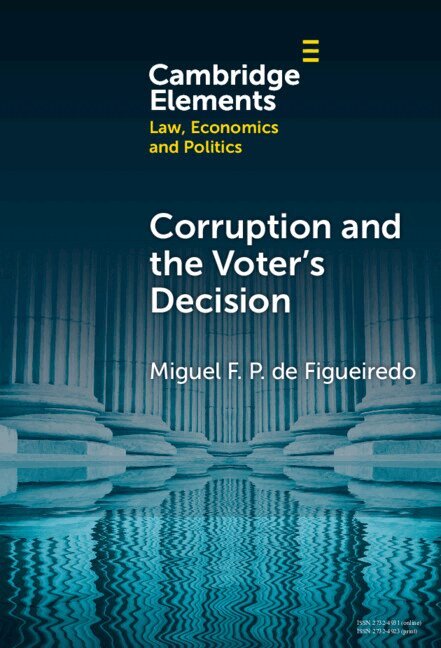
Despite voters' distaste for corruption, corrupt politicians frequently get reelected. This Element provides a framework for understanding when corrupt politicians are reelected. One unexplored source of electoral accountability is court rulings on candidate malfeasance, which are increasingly determining politicians' electoral prospects. The findings suggest that (1) low-income voters - in contrast to higher-income voters - are responsive to such rulings. Unlike earlier studies, we explore multiple trade-offs voters weigh when confronting corrupt candidates, including the candidate's party, policy positions, and personal attributes. The results also surprisingly show (2) low-income voters, like higher-income voters, weigh corruption allegations and policy positions similarly, and are slightly more responsive to candidate attributes. Moreover, irrespective of voter income, (3) party labels insulate candidates from corruption, and (4) candidate attributes like gender have little effect. The results have implications for when voters punish corrupt politicians, the success of anti-corruption campaigns, and the design and legitimacy of electoral institutions.
215 kr
Skickas inom 7-10 vardagar
Despite voters' distaste for corruption, corrupt politicians frequently get reelected. This Element provides a framework for understanding when corrupt politicians are reelected. One unexplored source of electoral accountability is court rulings on candidate malfeasance, which are increasingly determining politicians' electoral prospects. The findings suggest that (1) low-income voters - in contrast to higher-income voters - are responsive to such rulings. Unlike earlier studies, we explore multiple trade-offs voters weigh when confronting corrupt candidates, including the candidate's party, policy positions, and personal attributes. The results also surprisingly show (2) low-income voters, like higher-income voters, weigh corruption allegations and policy positions similarly, and are slightly more responsive to candidate attributes. Moreover, irrespective of voter income, (3) party labels insulate candidates from corruption, and (4) candidate attributes like gender have little effect. The results have implications for when voters punish corrupt politicians, the success of anti-corruption campaigns, and the design and legitimacy of electoral institutions.