Ed Rachal Foundation Nautical Archaeology Series – serie
Visar alla böcker i serien Ed Rachal Foundation Nautical Archaeology Series. Handla med fri frakt och snabb leverans.
18 produkter
18 produkter
Inbunden, Engelska, 2004
1 380 kr
Skickas inom 5-8 vardagar
For almost a millennium, a modest wooden ship lay underwater off the coast of Serce Limani, Turkey, filled with evidence of trade and objects of daily life. The ship, now excavated by the Institute of Nautical Archaeology at Texas A&M University, trafficked in both the Byzantine and Islamic worlds of its time. The ship is known as ""the Glass Wreck"" because its cargo included three metric tons of glass cullet, including broken Islamic vessels, and eighty pieces of intact glassware. In addition, it held glazed Islamic bowls, red-ware cooking vessels, copper cauldrons and buckets, wine amphoras, weapons, tools, jewelry, fishing gear, remnants of meals, coins, scales and weights, and more. This first volume of the complete site report introduces the discovery, the methods of its excavation, and the conservation of its artifacts. Chapters cover the details of the ship, its contents, the probable personal possessions of the crew, and the picture of daily shipboard life that can be drawn from the discoveries.
Inbunden, Engelska, 2006
502 kr
Skickas inom 5-8 vardagar
In July 1882, the steamboat Red Cloud hit a snag near Fort Peck, Montana, and settled into the bed of the Missouri River with a full cargo. The flagship of I. G. Baker and Company, it had served as an agent of change in the West through which it traveled. The Red Cloud was a symbol - and a source - of the trading company's success. This stern-wheeled, wooden-hulled packet boat carried both cargo and passengers on a ""floating palace."" When it sank five years later, though, the transcontinental railroad was already displacing the steamboat as the preferred way to transport both people and cargo. The first book to view the development of the Canadian Rockies from a maritime perspective, ""The Life and Times of the Steamboat Red Cloud"" ties the Missouri River's commercial development with the opening of the Canadian West and with the formation of the Canadian North-West Mounted Police. Readers interested in western history, maritime history, and nautical archaeology will find this book an invaluable addition to their libraries.
Häftad, Engelska, 2009
530 kr
Skickas inom 5-8 vardagar
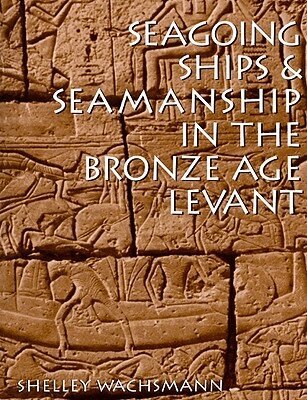
In ""Seagoing Ships and Seamanship in the Bronze Age"" Levant Shelley Wachsmann presents a one-of-a-kind comprehensive examination of how the early eastern Mediterranean cultures took to the sea - and how they evolved as a result. The author surveys the blue-water ships of the Egyptians, Syro-Canaanites, Cypriots, Early Bronze Age Aegeans, Minoans, Mycenaeans, and Sea Peoples, and also discusses known Bronze Age shipwrecks. Relying on archaeological, ethnological, iconographic, and textual evidence, Wachsmann delivers a fascinating and intricate rendering of virtually every aspect of early sea travel - from ship construction and propulsion to war on the open water, piracy, and laws pertaining to conduct at sea.This book brings together for the first time the entire corpus of evidence pertaining to Bronze Age seafaring. It will be of special value to archaeologists, maritime historians, philologists, and Bronze Age textual scholars. Offering an abundance of line drawings and photographs and written in a style that makes the material easily accessible to the layperson, Wachsmann's study is certain to become a standard reference for anyone interested in the dawn of sea travel.
Häftad, Engelska, 2009
241 kr
Skickas inom 5-8 vardagar
On a cold, cloudy day in early February 1985, Shelley Wachsmann, then resident nautical archaeologist for the Israel Department of Antiquities and Museums, drove to Kibbutz Ginosar, an agricultural settlement near the shores of the Sea of Galilee. Two brothers, avid amateur archaeologists, had found a boat buried in the lake, its outlines revealed by receding lake waters. The boat was "possibly ancient," according to the handwritten note placed on Wachsmann's desk a day or two before. So begins the fascinating story of The Sea of Galilee Boat, as Wachsmann narrates the intriguing discovery and painstaking excavation of the very first biblical-era boat ever found in the Sea of Galilee.
Inbunden, Engelska, 2012
1 327 kr
Skickas inom 5-8 vardagar
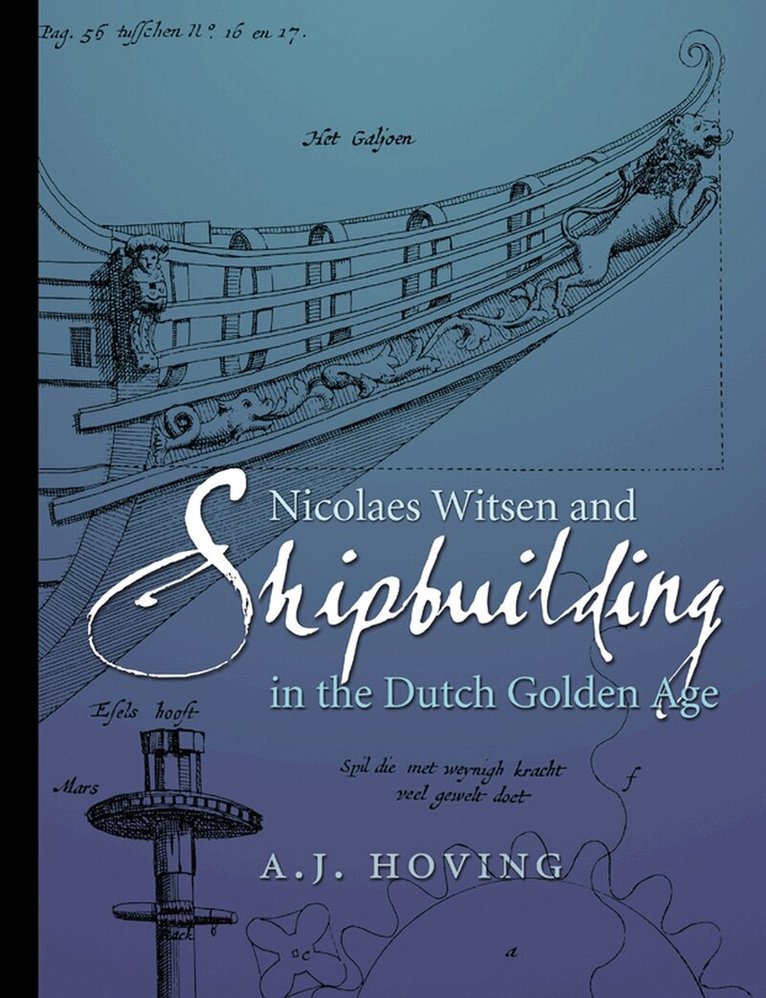
In Nicolaes Witsen and Shipbuilding in the Dutch Golden Age, Hoving, master model builder for the Rijksmuseum in Amsterdam, sorts out the steps in Witsen’s method for building a seventeenth-century pinas by following them and building a model of the vessel.
Inbunden, Engelska, 2014
667 kr
Skickas inom 5-8 vardagar
In Coffins of the Brave: Lake Shipwrecks of the War of 1812, archaeologist Kevin J. Crisman and his fellow contributors examine sixteen different examples of 1812-era naval and commercial shipbuilding. They range from four small prewar vessels to four 16- or 20-gun brigs, three warships of much greater size, a steamboat hull converted into an armed schooner, two gunboats, and two postwar schooners. Despite their differing degrees of preservation and archaeological study, each vessel reveals something about how its creators sought the best balance of strength, durability, capacity, stability, speed, weatherliness, and seaworthiness for the anticipated naval struggle on the lakes along the US-Canadian border.The underwater archaeology reported here has guided a new approach to understanding the events of 1812–15, one that blends the evidence in contemporary documents and images with a wealth of details derived from objects lost, discarded, and otherwise left behind.This heavily illustrated volume balances scholarly findings with lively writing, interjecting the adventure of working on shipwrecks and archaeological finds into the investigation and interpretation of a war that continues to attract interest two centuries after it was fought.
Inbunden, Engelska, 2015
557 kr
Skickas inom 5-8 vardagar
In The Origins of the Lost Fleet of the Mongol Empire, Randall Sasaki provides a starting point for understanding the technology of the failed Mongol invasion of Japan in 1281 CE, as well as the history of shipbuilding in East Asia. He has created a timber category database, analyzed methods of joinery, and studied contemporary approaches to shipbuilding in order to ascertain the origins and types of vessels that composed the Mongol fleet.Although no conclusive statements can be made regarding the origins of the vessels, it appears that historical documents and archaeological evidence correspond well to each other, and that many of the remains analyzed were from smaller vessels built in China's Yangtze River Valley. Large, V-shaped cargo ships and the Korean vessels probably represent a small portion of the timbers raised at the Takashima shipwreck site.
Inbunden, Engelska, 2015
392 kr
Skickas inom 5-8 vardagar
Facing an insurmountable deficit in resources compared to the Union navy, the Confederacy resorted to unorthodox forms of warfare to combat enemy forces.Perhaps the most energetic and effective torpedo corps and secret service company organized during the American Civil War, the Singer Secret Service Corps, led by Texan inventor and entrepreneur Edgar Collins Singer, developed and deployed submarines, underwater weaponry, and explosive devices.The group’s main government-financed activity, which eventually led to other destructive inventions such as the Hunley submarine and behind-enemy-line railroad sabotage, was the manufacture and deployment of an underwater contact mine. During the two years the Singer group operated, several Union gunboats, troop transports, supply trains, and even the famous ironclad monitor Tecumseh fell prey to its inventions.In Confederate Saboteurs: Building the Hunley and Other Secret Weapons of the Civil War, submarine expert and nautical historian Mark K. Ragan presents the untold story of the Singer corps. Poring through previously unpublished archival documents, Ragan also examines the complex personalities and relationships behind the Confederacy’s use of torpedoes and submarines.
Inbunden, Engelska, 2016
502 kr
Skickas inom 5-8 vardagar
“One of the last remaining and persistent mysteries of the Pearl Harbor attack is that of the Japanese Midget Submarines. It is a fascinating story of innovation, courage, secrets, and failed expectations. And it is not only a story of the morning hours of December 7, but of the years before to develop these weapons and the years after, where they were deployed in the great Pacific War and how they fared as weapons of war.”These words by Daniel J. Basta, Director of the Office of National Marine Sanctuaries, from the foreword of this manuscript, capture both the essence and the impact of this work, assembled by James P. Delgado and his coauthors. Th e authors have combed the records of the Imperial Japanese Navy and the recollections of its veterans as well as US Department of Defense archives. They have logged hours of direct observation and research on the mini-subs in their final resting places, in some cases more than 1,000 feet below the surface of the Pacific. And in the end, they have woven a tapestry of scholarship, historical sleuthing, scientific insight, and good storytelling that will enthrall specialists and history buff s alike.
Inbunden, Engelska, 2018
832 kr
Skickas inom 5-8 vardagar
With humans moving easily from water to land, the archaeology of the shore should likewise be seamless. This principle of the “seamlessness” of human interaction with the maritime environment undergirds author Ben Ford’s sweeping survey. In The Shore Is a Bridge: The Maritime Cultural Landscape of Lake Ontario, Ford explores human interaction with the waters of the lake, spanning the international border, from 5,000 years ago to the early twentieth century. He interprets written and archaeological sources using a maritime cultural landscape approach to investigate how the perception of place influences the interaction between humans and the physical environment. Ford focuses on the lake shore, which served as a link between the maritime and terrestrial worlds of the people who lived around it.Lake Ontario was the first of the Great Lakes to be developed by Europeans, and it was part of the home ranges of the Haudenosaunee (Iroquois), the Huron-Wendat, and the Mississauga, as well as other Native American groups known only from their archaeological remains. Consequently, Lake Ontario was at the heart of early Great Lakes maritime culture. Using terrestrial and submerged archaeological methods, history, and ethnography, the author meticulously weaves together previously disparate data to construct a cohesive and holistic understanding of this important region from ancient to modern times. The Shore Is a Bridge presents a new way to interpret the maritime archaeological record and maritime culture by synthesizing archaeological data, historical documents, and oral histories into an all-inclusive view of the lakeshore.
Inbunden, Engelska, 2019
667 kr
Skickas inom 5-8 vardagar
Ghost Galleon tells the story of archaeologists' twenty-year search on a desolate beach in Baja California for the enigmatic remains of a Spanish galleon that disappeared without a trace more than four centuries ago. Carrying a cargo of Asian riches to the New World, Manila galleons forged the final link in the unification of the world through commerce by their annual voyages across the Pacific Ocean. Here, author Edward Von der Porten relates how a chance viewing of Chinese porcelain sherds in a museum catalog led him, his wife Saryl, and a team of researchers to the beachcombers who discovered the sherds. To Von der Porten, these sherds represented the possibility of something much more significant: one of the earliest known Manila galleon shipwrecks on the West Coast.In collaboration with the National Institute of Anthropology and History of Mexico (INAH), Von der Porten and his colleagues undertook the first of many archaeological expeditions to investigate the site in 1999. Over twenty years, a team of American and Mexican archaeologists recovered thousands of artifacts and concluded that they had located the remains of the cargo from a Spanish galleon-most likely the San Juanillo of 1578.This copiously illustrated, highly accessible work offers an inside view of how archaeologists carefully assemble the evidence that allows scientific reconstruction of past events. Despite the grudging resistance of time, Von der Porten and his colleagues have resurrected the tale of the ill-fated San Juanillo to enrich our understanding and appreciation of the past.
Inbunden, Engelska, 2022
831 kr
Skickas inom 5-8 vardagar
Without effective and durable hull fastenings, boats and ships—from the earliest days of seafaring through the twentieth century—could not have plied the seas.In this second edition of Ships’ Fastenings: From Sewn Boat to Steamship, author Michael McCarthy amplifies and extends his thorough treatment of the parts that hold the boat together, offering fascinating descriptions of a range of techniques that span from sewn-plank boats of the ancient world and Micronesia to Viking ships, Mediterranean caravels, nineteenth-century ocean clippers, and even steamships.To further contextualize this comprehensive account, McCarthy provides a history of many of the discoveries and innovations that accompanied changes in the kinds of fastenings used and the ways they were secured. He discusses copper sheathing, metallurgy, the advent of Muntz metal, rivets of all types, welding in the ancient and modern sense, and the types of non-magnetic fastenings needed on World War II minesweepers. He even takes a glance at the development of underwriting and insurance, because the registries kept by Lloyd’s and others provided not only guides to the suitability of a particular ship but also dictated the form and method of fastening.A boon to shipbuilders, historians, and archaeologists, Ships’ Fastenings is also a valuable guide for the enthusiast and amateur boat builder.
Inbunden, Engelska, 2023
584 kr
Skickas inom 5-8 vardagar
In January 1982, archaeologists conducting a pre-construction excavation at 175 Water Street in Lower Manhattan found the remains of an eighteenth-century ship. Uncertain what they had found or what its significance might be, they called in nautical archaeologist Warren C. Riess to direct the excavation and analysis of the ship’s remains. As it turned out, the mystery ship’s age and type meant that its careful study helped answer some important questions about commerce and transportation of its day.Given only one winter month for fieldwork, the large crew excavated and recorded the site, which became known as the “Ronson ship site,” named for the site’s developer, Howard Ronson. At the end of their time in the field, the crew was able to save the first eighteen feet of the bow for preservation. For Riess, the analysis and conservation of the artifacts would begin.In this book, the follow-up to his 2014 publication The Ship That Held Up Wall Street, Riess presents the technical analysis of the vessel, which he believes to be the Princess Carolina, a merchant ship likely constructed by shipwright Benjamin Austin in Charleston, South Carolina, in the early 1700s. In doing so, he fills significant gaps in contemporary knowledge of eighteenth-century shipbuilding techniques. Though meticulous in scientific detail, Riess’s style is eminently readable for interested general readers.
Inbunden, Engelska, 2023
913 kr
Skickas inom 5-8 vardagar
Captain Henry Gillespie (1857–1937), of Portland, Maine, went to sea as a young man of 17, serving as “able-bodied seaman” on a New Bedford whaler. Over the next 47 years he would advance to deck officer, then master of sailing and steam ships. He was commissioned as an officer in the US Navy during World War I, commanding vessels operating in the war zone. Following the war, he returned to merchant marine service until his retirement in 1921.Maritime historian Michael Jay Mjelde has chronicled the colorful life and career of this “down-east” man of the sea, mining available first-person accounts, interviews with family members, government records, and maritime archives on both coasts. The result is a narrative in clear, highly engaging prose that puts readers on the tilting decks and noisy wharfs frequented by Gillespie. Through Mjelde’s retelling of a remarkable life, the age of clipper ships, the Cape Horn trade, and oceangoing steamers comes into vivid relief, affording a richly embossed assessment of Captain Gillespie’s life and times.From Whaler to Clipper Ship adds a layer of full-bodied context to our understanding of this pivotal era in American maritime history. The wealth of detail will appeal to scholars, students, and maritime history enthusiasts.
Inbunden, Engelska, 2023
721 kr
Skickas inom 5-8 vardagar
The saga of Caligula’s barges sunk in Lake Nemi south of Rome—how the huge vessels came to be there in the first place; why they became a cause cÉlÈbre for Mussolini’s Fascist regime; how they were, after multiple attempts, recovered from the lake bed; and why they were shortly thereafter destroyed—is, in the words of author John McManamon, a good story that is worth telling: “It has memorable characters, twists and turns in the plot, no lack of conflict and tension, and a dramatic ending where something clearly went wrong.”In From Caligula to the Nazis: The Nemi Ships in Diana’s Sanctuary, McManamon takes readers on an excursion through history to the fiery ending of the tale, a journey propelled by narrative energy and enhanced by the fruits of careful research. Related topics include Roman mythology and state religion, the erratic reign of the infamous Caligula, underwater archaeology as practiced during the Renaissance, the ideological exploitation of archaeology by Il Duce and his fascist followers, and a historical whodunit to ascertain the choices that led to the arson of the ship remains. McManamon covers every chapter in the 2,000-year history of the ships and does not ignore the mistaken interpretations that at times led subsequent researchers into blind alleys. In the end, From Caligula to the Nazis provides for both academic specialists and informed general readers the careful unwinding of a centuries-long mystery, replete with heroes, villains, gods, kings, and numerous ordinary folk swept up into the maelstrom.
Inbunden, Engelska, 2024
721 kr
Skickas inom 5-8 vardagar
Originally published as L’archéologie navale by Editions Errance/Actes Sud (Arles, France) in 2005, this new revised and expanded edition is in a condensed and accessible form that highlights many of the principles currently guiding research in nautical archaeology around the world. Well suited for classrooms and providing a handy reference for more advanced scholars and researchers, Pomey and Rieth’s Nautical Archaeology offers, most notably, emphasis on theoretical and conceptual aspects of the evolution of shipbuilding that are largely unfamiliar in the English-speaking academy. The International Journal of Nautical Archaeology characterized the original publication as “packed with information” and “a stimulating and attractive introduction to the subject.” Now available for the first time in English, the work of Pomey and Rieth provides a concise outline of the conceptual framework and theoretical basis for nautical archaeology. The authors begin with a chapter on basic definitions and statements of the principal issues involved in the discipline before proceeding with a discussion of available sources of information, from ancient iconography to modern excavation, embracing shipbuilding treatises of the Middle Ages and Renaissance along the way. Next, they document the various methods and procedures available to researchers as they observe, document, and study the remains of vessels. Finally, they draw conclusions about directions for future research, along with perspectives on the field of study.
Inbunden, Engelska, 2024
776 kr
Skickas inom 5-8 vardagar
During an inspection dive in 1980 along Israel’s Mediterranean coast off of Kibbutz Hahotrim, Shelley Wachsmann, then Inspector of Antiquities for the Israel Department of Antiquities and Museums (now the Israel Antiquities Authority), discovered artifacts on a section of seabed swept clear of sand by a storm. Scattered around two large stone anchors, the finds consisted primarily of small, broken, or damaged pieces of metal artifacts and ingots. Late Bronze-Age Metal Artifacts off Hahotrim, Israel comprises the careful analysis of the materials by Wachsmann and ten collaborators. Examination of the artifacts, along with the context in which they were found, suggests that—rather than being all that remains of an undiscovered ancient wreck—the artifacts may have found their way to the seabed as jetsam dumped overboard by a crew hoping to extricate their vessel from a sand bar or other obstruction. As Wachsmann notes, the discovery and study of this humble group of artifacts provides evidence of a vibrant culture of maritime commerce that existed in the Late Bronze-Age Mediterranean world prior to its collapse. Positing the existence of a “dynamic international period when a system of land and sea trade routes stretched from Sardinia in the west to Iran in the east, spanning roughly a tenth of the earth’s circumference,” this careful analysis adds important context to our evolving understanding of the interconnectedness of the Mediterranean world at a pivotal moment in history.
Inbunden, Engelska, 2026
523 kr
Kommande
From 1877 to 1889, as Captain John H. Drew plied the world's oceans aboard the full-rigged ship Sea Witch of Boston, he wrote lengthy dispatches to the Boston Journal. He was a man of action and intellect who crafted closely observed, empathic prose, well-salted with dry wit. Drew described his current and past voyaging in various trades, including the Boston "Straits" trade, the cotton and emigrant trade, the Cape Horn grain trade, the East India ice trade, the Far East case oil trade, the Australian packet trade, and the sugar trade from sleepy ports of the Spanish and Dutch empires that today are teeming megacities. He font of knowledge included the proper stowage of cargoes of pepper, sugar, and firecrackers.An expert navigator and seaman, Drew also loved music; dabbled in art; studied history, literature, and geography; and was a world-class collector of seashells. He was outspoken against the virulent anti-Chinese bias of the late 1800s. A superlative chronicler of life at sea, Drew was a keen observer of foreign lands and cultures. Drew's later letters reflect a melancholy, the loneliness of a captain's life, the drowning of three of his brothers, and the decline of the once-preeminent American deepwater fleet. As a member of a shipbuilding family with deep maritime roots in Maine's Kennebec River valley, Drew wrote to preserve the record of the passing of an age and his place in it.Maritime historian and editor W. H. Bunting has compiled Drew's writings and gathered them here with enlightening annotation. Captain Drew's World: Dispatches from the Age of Global Sail provides readers a vivid window onto the great age of sail from both coasts of the United States to the Caribbean, Europe, Southeast Asia, Australia, and beyond.