Benjamin Ford - Böcker
Visar alla böcker från författaren Benjamin Ford. Handla med fri frakt och snabb leverans.
2 produkter
2 produkter
384 kr
Skickas inom 7-10 vardagar
From the University of Virginia’s very inception, slavery was deeply woven into its fabric. Enslaved people first helped to construct and then later lived in the Academical Village; they raised and prepared food, washed clothes, cleaned privies, and chopped wood. They maintained the buildings, cleaned classrooms, and served as personal servants to faculty and students. At any given time, there were typically more than one hundred enslaved people residing alongside the students, faculty, and their families. The central paradox at the heart of UVA is also that of the nation: What does it mean to have a public university established to preserve democratic rights that is likewise founded and maintained on the stolen labor of others?In Educated in Tyranny, Maurie McInnis, Louis Nelson, and a group of contributing authors tell the largely unknown story of slavery at the University of Virginia. While UVA has long been celebrated as fulfilling Jefferson’s desire to educate citizens to lead and govern, McInnis and Nelson document the burgeoning political rift over slavery as Jefferson tried to protect southern men from anti-slavery ideas in northern institutions. In uncovering this history, Educated in Tyranny changes how we see the university during its first fifty years and understand its history hereafter.

815 kr
Skickas inom 7-10 vardagar
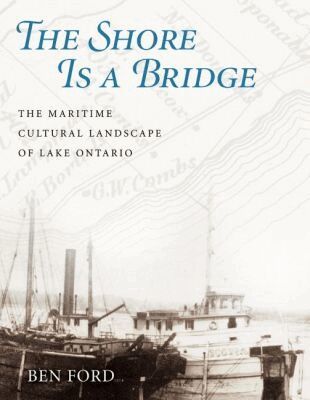
With humans moving easily from water to land, the archaeology of the shore should likewise be seamless. This principle of the “seamlessness” of human interaction with the maritime environment undergirds author Ben Ford’s sweeping survey. In The Shore Is a Bridge: The Maritime Cultural Landscape of Lake Ontario, Ford explores human interaction with the waters of the lake, spanning the international border, from 5,000 years ago to the early twentieth century. He interprets written and archaeological sources using a maritime cultural landscape approach to investigate how the perception of place influences the interaction between humans and the physical environment. Ford focuses on the lake shore, which served as a link between the maritime and terrestrial worlds of the people who lived around it.Lake Ontario was the first of the Great Lakes to be developed by Europeans, and it was part of the home ranges of the Haudenosaunee (Iroquois), the Huron-Wendat, and the Mississauga, as well as other Native American groups known only from their archaeological remains. Consequently, Lake Ontario was at the heart of early Great Lakes maritime culture. Using terrestrial and submerged archaeological methods, history, and ethnography, the author meticulously weaves together previously disparate data to construct a cohesive and holistic understanding of this important region from ancient to modern times. The Shore Is a Bridge presents a new way to interpret the maritime archaeological record and maritime culture by synthesizing archaeological data, historical documents, and oral histories into an all-inclusive view of the lakeshore.