Edinburgh Critical Studies in Early Modern Literature and Disability – serie
Visar alla böcker i serien Edinburgh Critical Studies in Early Modern Literature and Disability. Handla med fri frakt och snabb leverans.
7 produkter
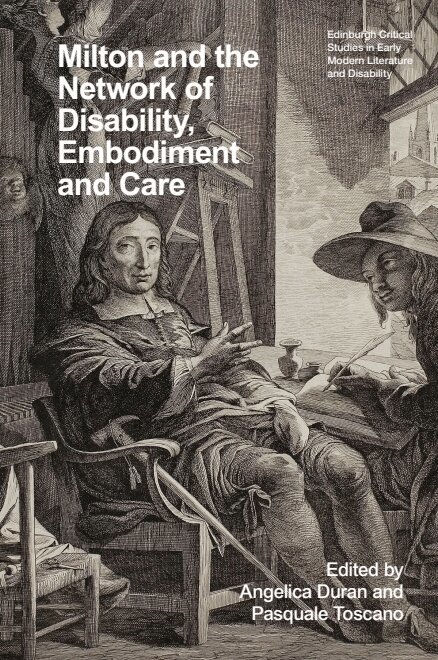
Milton and the Network of Disability, Embodiment and Care
Av Angelica Duran, Pasquale Toscano
Inbunden, 2025
1455 kr
Lägg i varukorg
The governing questions of Milton and the Network of Disability, Embodiment and Care are threefold: What does reading Milton's texts and literature generally through the theoretical lens of disability, embodiment and care studies (DEC) reveal that was illegible before? How have Milton's visual and …
Milton and the Network of Disability, Embodiment and Care
Av Angelica Duran, Pasquale Toscano
E-bok, 2025
469 kr
Lägg i varukorg
The governing questions of Milton and the Network of Disability, Embodiment and Care are threefold: What does reading Milton’s texts – and literature generally – through the theoretical lens of disability, embodiment and care studies (DEC) reveal that was illegible before? How have Milton’s visual …
Milton and the Network of Disability, Embodiment and Care
Av Angelica Duran, Pasquale Toscano
E-bok, 2025
469 kr
Lägg i varukorg
The governing questions of Milton and the Network of Disability, Embodiment and Care are threefold: What does reading Milton’s texts – and literature generally – through the theoretical lens of disability, embodiment and care studies (DEC) reveal that was illegible before? How have Milton’s visual …
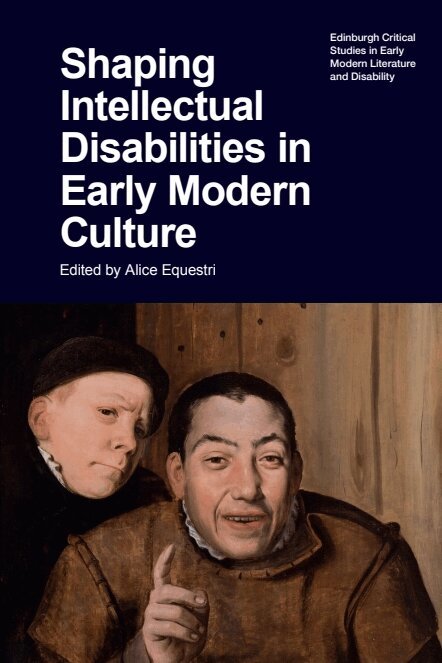
Shaping Intellectual Disabilities in Early Modern Culture
Inbunden, 2025
1455 kr
Lägg i varukorg
Shaping Intellectual Disabilities in Early Modern Culture is the first edited collection focusing completely on intellectual disability in the early modern period. It offers in-depth analyses of texts from Shakespeare, Ben Jonson, Rabelais, and others, alongside medical and legal treatises, court …
Shaping Intellectual Disabilities in Early Modern Culture
Häftad, 2026
359 kr
Kommande
Shaping Intellectual Disabilities in Early Modern Culture is the first edited collection focusing completely on intellectual disability in the early modern period. It offers in-depth analyses of texts from Shakespeare, Ben Jonson, Rabelais, and others, alongside medical and legal treatises, court …
Neurodiversity in Early Modern English Literature
Av Bridger M. Bartlett, Bradley J. Irish m. fl.
Inbunden, 2027
1314 kr
Kommande
In the last two decades, researchers in a variety of fields have begun to pay increasing attention to neurodiversity – that is, the fact that human minds are not neurologically uniform. This collection is intended to galvanise the recent interest in Renaissance literary neurodiversity in particular …
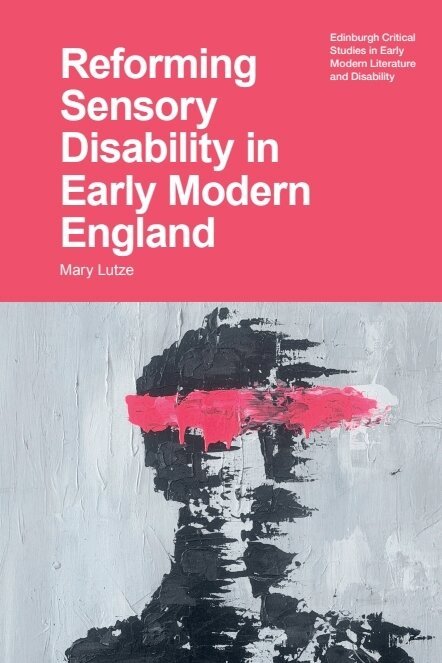
Reforming Sensory Disability in Early Modern England
Av Mary Lutze
Inbunden, 2026
1273 kr
Kommande
Chronicling England’s infamous rejection of an established faith tradition – the Protestant Reformation – and its reverberating effects on societal interpretations of sensory disability, Mary Lutze offers a new epistemology for understanding early modern perspectives of the disabled. In addition to …