• Fri frakt över 249 kr
  • •
  • Snabba leveranser
  • •
  • Billiga böcker
Kundservice

Du är på sajten för privatpersoner.

Företag, bibliotek eller offentlig verksamhet?

Du handlar på classic.bokus.com, där alla dina funktioner finns intakta.
Till classic.bokus.com
Bokus logotyp. Gå till startsidan.
  • Erbjudanden
  • Nyheter
  • Student
  • Topplistor
  • Barn & ungdom
  • Bokus Play
  • E-böcker
  • Pocketböcker
  • Spel & pussel

10% rabatt på allt med kod: NYSTART10 →

Sidfot

Mina sidor

    Hjälp

    • Kundservice
    • Vanliga frågor och svar
    • Frakt och leverans
    • Retur vid ångerrätt
    • Reklamera vara
    • Betalning
    • Köpvillkor
    • Allmänna villkor
    • Information om webbplatsens tillgänglighet

    Om Bokus

    • Om oss
    • Pressrum
    • För studenter
    • För företag
    • För bibliotek och offentlig verksamhet
    • För leverantörer
    • Hållbarhet

    Populärt

    • Aktuella erbjudanden
    • Presentkort
    • Studentlitteratur
    • Nya böcker
    • Topplistor
    • Signerade böcker
    • Engelska böcker

    Inspiration

    • Boktips
    • BookTok
    • Populära bokserier
    • Barnbokskaraktärer
    • Populära författare
    Logotyp för Bokus
    Följ oss på Facebook (extern länk)Följ oss på Instagram (extern länk)Följ oss på YouTube (extern länk)Följ oss på TikTok (extern länk)
    bokus @ CookiesAnpassa cookiesIntegritetspolicyKöpvillkor
    Till Citymail hemsida (extern länk)Till Budbee hemsida (extern länk)Till Postnord hemsida (extern länk)Till Schenker hemsida (extern länk)Till Early Bird hemsida (extern länk)Till Walleys hemsida (extern länk)
    1. Skönlitteratur
    2. Litteraturvetenskap
    3. Litteraturvetenskap

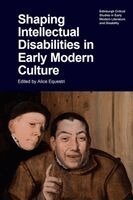
    Shaping Intellectual Disabilities in Early Modern Culture

    AvAlice Equestri

    Häftad, Engelska, 2026

    Del i serien Edinburgh Critical Studies in Early Modern Literature and Disability

    348 kr

    Kommande

    Beskrivning

    Shaping Intellectual Disabilities in Early Modern Culture is the first edited collection focusing completely on intellectual disability in the early modern period. It offers in-depth analyses of texts from Shakespeare, Ben Jonson, Rabelais, and others, alongside medical and legal treatises, court cases, and political pamphlets. Through social, political or religious bias, intellectual disability could be mapped onto a wider/different range of individuals than it is today. The range of essays included in this book gives a representation of the multifacetedness of the concept by analysing the recurrence of intellectual disability (in the form of characters or tropes) in literary and non-literary genres across various countries. Bringing new case studies to the fore, or reevaluating classic ones (such as Shakespeare’s wise fools) through the tools of critical disability studies, this collection showcases intellectual disability histories as products of the interaction between the individual and different contexts or communities sharing political, religious, or colonial interests and ideologies. The book therefore probes the social, cultural and environmental aspects of disability and disablement, also inviting connections between disability and other minority statuses, particularly race.

    Produktinformation

    • Utgivningsdatum:2026-12-31
    • Mått:156 x 234 x undefined mm
    • Format:Häftad
    • Språk:Engelska
    • Serie:Edinburgh Critical Studies in Early Modern Literature and Disability
    • Antal sidor:312
    • Förlag:Edinburgh University Press
    • ISBN:9781399546355

    Utforska kategorier

    • Litteraturvetenskap inom Skönlitteratur
    • Sociala och etiska frågor inom Samhälle och politik

    Mer om författaren

    Alice Equestri is a Lecturer in English Literature at the University of Padua, Italy and former Marie Sklodowska-Curie researcher at the University of Sussex. She has published two monographs: Literature and Intellectual Disability in Early Modern England: Folly, Law, and Medicine 1500-1640 (2021; winner of the AIA Junior Book Prize 2023) and The Fools of Shakespeare's Romances (2016). Her essays have appeared in venues including Studies in Philology, the Oxford Research Encyclopedia of Literature, Renaissance Studies, Notes and Queries, Disability Studies Quarterly and Cahiers Élisabéthains. Her research interests include folly and intellectual disability in Early Modern English Literature, Shakespeare, Robert Armin, English translations or adaptations of Italian novellas, and law and literature.

    Recensioner i media

    This is an excellent book, written responsibly and with care, that makes a compelling case for bringing experiences of disability from the past into conversation with experiences in the present. I learned much from reading it.

    Innehållsförteckning

    • List of figuresAcknowledgmentsNotes on contributorsIntroduction: meanings, relations and ecologies of intellectual disabilityAlice EquestriPART I. COURT AND POWER1. Humour and disability: French sixteenth-century literary portrayals of the jester TribouletMargaret Harp2. 'Let antimasques not be long; they have been commonly of fools': intellectual disability and neurodiversity in Ben Jonson’s masquesOlivia Henderson3. Invested in motley: intellectual disability and the fool's licence in ShakespeareWes FolkerthPART II. COMMUNITY, POLITICS AND SOCIETY4. What was so funny about Jack Adams? The intellectually disabled individual as a public figure of mirth in early modern LondonPeter K. Andersson5.“VVhether the mind wants eyes, or eyes want minde”. Parasitic twins and intellectual disability in early modern Europe: the case of Lazzaro and Giovanni Battista ColloredoLuca Baratta6. Conceiving brainlessness: The anencephalous child, the human person, and the headless mobArnaud Zimmern7. 'The forld’s fond idiot': Robert Armin, Blue John and the performance of idiocyPatrick McDonaghPART III. SOUL AND AFTERWORLD8. Gil Vicente: Auto da Barca do Inferno and the representation of the 'fool' in early modern Portuguese dramaRicardo Rato Rodrigues9. Developmental disability as material, metaphor and essential difference in an Elizabethan morality playBridget Bartlett10. 'This Silly Deluded Woman': rhapsodic experiences and intellectual disability in Humphrey Ellis’s Pseudochristus (1650)Laura SeymourPART IV. GLOBAL ENCOUNTERS11. Race and negotiations of intellectual inferiority in early modern travel writing and ethnography, 1550-1660Alice Equestri12. Whiteness as knowingness: race and intellectual disability in Shakespeare’s OthelloPenelope Geng and Andrew BozioAfterword: the intellect, its disabilities and their historical productionChristopher GoodeyIndex