• Fri frakt över 249 kr
  • •
  • Snabba leveranser
  • •
  • Billiga böcker
Kundservice

Du är på sajten för privatpersoner.

Företag, bibliotek eller offentlig verksamhet?

Du handlar på classic.bokus.com, där alla dina funktioner finns intakta.
Till classic.bokus.com
Bokus logotyp. Gå till startsidan.
  • Erbjudanden
  • Nyheter
  • Student
  • Topplistor
  • Barn & ungdom
  • Bokus Play
  • E-böcker
  • Pocketböcker
  • Spel & pussel

10% rabatt på allt med kod: NYSTART10 →

Sidfot

Mina sidor

    Hjälp

    • Kundservice
    • Vanliga frågor och svar
    • Frakt och leverans
    • Retur vid ångerrätt
    • Reklamera vara
    • Betalning
    • Köpvillkor
    • Allmänna villkor
    • Information om webbplatsens tillgänglighet

    Om Bokus

    • Om oss
    • Pressrum
    • För studenter
    • För företag
    • För bibliotek och offentlig verksamhet
    • För leverantörer
    • Hållbarhet

    Populärt

    • Aktuella erbjudanden
    • Presentkort
    • Studentlitteratur
    • Nya böcker
    • Topplistor
    • Signerade böcker
    • Engelska böcker

    Inspiration

    • Boktips
    • BookTok
    • Populära bokserier
    • Barnbokskaraktärer
    • Populära författare
    Logotyp för Bokus
    Följ oss på Facebook (extern länk)Följ oss på Instagram (extern länk)Följ oss på YouTube (extern länk)Följ oss på TikTok (extern länk)
    bokus @ CookiesAnpassa cookiesIntegritetspolicyKöpvillkor
    Till Citymail hemsida (extern länk)Till Budbee hemsida (extern länk)Till Postnord hemsida (extern länk)Till Schenker hemsida (extern länk)Till Early Bird hemsida (extern länk)Till Walleys hemsida (extern länk)
    1. Skönlitteratur
    2. Litteraturvetenskap
    3. Litteraturvetenskap

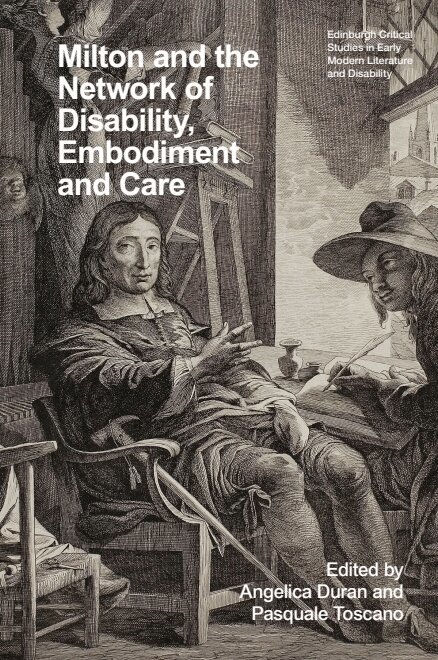
    Milton and the Network of Disability, Embodiment and Care

    AvAngelica Duran,Pasquale Toscano

    Inbunden, Engelska, 2025

    Del i serien Edinburgh Critical Studies in Early Modern Literature and Disability

    1 409 kr

    Beställningsvara. Skickas inom 7-10 vardagar. Fri frakt över 249 kr.

    Beskrivning

    The governing questions of Milton and the Network of Disability, Embodiment and Care are threefold: What does reading Milton's texts and literature generally through the theoretical lens of disability, embodiment and care studies (DEC) reveal that was illegible before? How have Milton's visual and mobility impairments, as well as his artistic representations of human biodiversity, factored into his status as a canonical author? And what insights does bringing a DEC lens to Milton's body of work and its reception give us into literature and longstanding stereotypes about humans and their cultural and physical environments? The thirteen chapters, Foreword and Afterword of this collection, composed by established and emerging scholars, provide cogent answers by drawing on the contributors' expertise in various fields. The volume advances what Milton's texts from sonnet to epic and political tract to tragedy can tell us about not only literary representations of human variation, physical and mental, but also cultural responses to disability, embodiment and care that affect all readers and all people today.

    Produktinformation

    • Utgivningsdatum:2025-12-31
    • Mått:156 x 234 x 18 mm
    • Vikt:590 g
    • Format:Inbunden
    • Språk:Engelska
    • Serie:Edinburgh Critical Studies in Early Modern Literature and Disability
    • Antal sidor:296
    • Förlag:Edinburgh University Press
    • ISBN:9781399541459

    Utforska kategorier

    • Litteraturvetenskap inom Skönlitteratur

    Mer om författaren

    Angelica Duran is Professor of English, Comparative Literature and Religious Studies at Purdue University, where she has also served as Purdue’s Director of Religious Studies (2009–2013), Interim Director of Creative Writing (2022–24) and affiliate faculty of Critical Disability Studies. She is the author, editor and co-editor of ten books, including Milton among Spaniards (2020), Global Milton and Visual Art (2021) and Milton Across Borders and Media (2023). She has served on the Executive Committee (2012–21) of the Milton Society of America, on the editorial board of Milton Quarterly (2005–) and as Conference Chair of the Renaissance Society of America (2022–27). Pasquale Toscano is Assistant Professor of English at Vassar College, after earning a master’s degree in Classics from the University of Oxford as a Rhodes Scholar and a PhD in English from Princeton University. He is a co-winner of the Sixteenth Century Society’s Harold J. Grimm Prize for scholarship on the Reformation and was named a 2023–24 Peter Ogden Jacobus Fellow, Princeton’s highest honour for graduate students. His scholarship appears in Studies in English Literature, 1550–1900 (SEL), Classical Receptions Journal, Disability Studies Quarterly, The Oxford Handbook of George Herbert and Shakespeare and Early Modern Madness. His public-facing and creative writing focus primarily on disability-related issues and appear in The New York Times, The Atlantic and other venues.

    Recensioner i media

    This timely collection breaks important new ground by addressing the divide between Milton scholarship and Critical Disability Studies. Contributors offer fresh and innovative insights on Milton’s self-representations and literary imaginings of blindness, as well as on his lived experience of embodied disability and access to the world of care.

    Innehållsförteckning

    • List of figuresNotes on contributorsAcknowledgementsForeword by Rosemarie Garland-ThomsonPart I. 'A Darksome House of Mortal Clay'1. 'With wand’ring steps and slow'Angelica Duran and Pasquale Toscano2. Milton and disabilityThomas N. CornsAppendix 1: Milton’s Letter to Philaras about his blindness (Epistolae familiares 15), Latin transcription and English translationSarah KnightPart II. 'Spirited with Various Forms'3. Milton’s stammerJoe Moshenska4. Incapacity and human life in Paradise Lost, Artis logicae, and De doctrina ChristianaTimothy M. Harrison5. Milton and the human conditionElizabeth Sauer6. The matter of blindness in the Second Defence and Samson AgonistesSusannah B. Mintz7. Disability and the drama of Folly in Samson AgonistesMaura BradyPart III. 'Gathering Up Limb by Limb'8. Blind self-governance in Milton’s 'Cyriack, This Three Years’ Days These Eyes'Teri Fickling9. Paradise Regained, prophetic practice, and the Quaker communities of care Joan Curbet Soler10. Access, ableism, and accommodation in Samson Agonistes and its Restoration successorsPasquale ToscanoPart IV. 'Written to Aftertimes'11. The blind Milton as caretaker, Englishman, and husband on the Spanish stageAngelica Duran12. When Tyehimba Jess (re)considers Milton’s Sonnet 'When I Consider How My Light Is Spent'Reginald A. Wilburn13. Picturing Satan’s body in Paradise LostJohn LeonardAfterwordGeorgina KleegeIndex