Edinburgh Studies in Global Ethics - Böcker
Visar alla böcker i serien Edinburgh Studies in Global Ethics. Handla med fri frakt och snabb leverans.
10 produkter
10 produkter
705 kr
Skickas inom 3-6 vardagar
A self-contained introduction to the field of ethics and development for students, practitioners and the general reader.The Ethics of Development asks what is good ‘development’, of societies and for people. It looks at how equating development with economic growth has been challenged, examining whom that growth benefits or harms and which aspects of life it values or excludes and can favour or damage. It goes on to explore an alternative conception – that of ‘human development’, meaning achievement with respect to a wider range of values and the advancement of people’s freedom to achieve well-reasoned values. The book synthesises ideas from philosophy, economics and social theory, building in particular on the work of Len Doyal, Ian Gough, Martha Nussbaum and Amartya Sen. Dealing carefully and sympathetically with a range of viewpoints, it elucidates complex issues with the help of historical and contemporary examples. It caters especially to students in development studies, anthropology, economics, philosophy, political science and social policy.Key Features:*Provides case studies on famine, health and drugs supply, colonialism, land alienation and land reform, international debt, structural adjustment and civil war*Places emphasis on probing and clarifying the meanings and uses of key concepts including ‘development’, ‘efficiency’, ‘effectiveness’, ‘equity’, ‘violence’, ‘needs’, ‘freedom’, ‘choices’, ‘culture’ and ‘community’*Includes easy-to-grasp tables and figures, discussion questions and suggestions for further reading
435 kr
Skickas inom 7-10 vardagar
The ethics of peace and war is one of the central ethical issues in International Relations today.This book looks at three key theories which have implications for the role of ethics in war and armed conflict: cosmopolitanism; internationalism; and political realism. It argues for the appropriateness of cosmopolitanism above the other two general theories, with its emphasis on the equal worth of all human beings as the basis for a global moral community. This ethical theory is shown to have a vital role to play in international politics in light of changing conceptions of peace and security, the prevalence of internal over international wars, and the increasing emphasis on international humanitarian intervention as a justification for the use of military force.The book is divided into three parts - after a general introduction to peace and war in world ethics there follow sections on International Politics and the Morality of Peace and War; Ethical Approaches to Armed Conflict; and Cosmopolitan Strategies. A conclusion sums up the arguments.This is a topical book suitable for a range of courses in Philosophy, Politics, Peace Studies and International Relations.Key Features*Evaluates the relevance of the theory of cosmopolitanism to the specific problems of war and armed conflict*Examines two contrasting positions on the ethics of war and armed conflict: pacifism and just war theory*Analyses contemporary issues and debates including postmodern and asymmetrical war, and peace-building and conflict prevention*A central theme is the ambiguous role of the state in controlling and justifying the use of military force and in constructing a new cosmopolitan world order
1 329 kr
Skickas inom 7-10 vardagar
The ethics of peace and war is one of the central ethical issues in International Relations today.This book looks at three key theories which have implications for the role of ethics in war and armed conflict: cosmopolitanism; internationalism; and political realism. It argues for the appropriateness of cosmopolitanism above the other two general theories, with its emphasis on the equal worth of all human beings as the basis for a global moral community. This ethical theory is shown to have a vital role to play in international politics in light of changing conceptions of peace and security, the prevalence of internal over international wars, and the increasing emphasis on international humanitarian intervention as a justification for the use of military force.The book is divided into three parts - after a general introduction to peace and war in world ethics there follow sections on International Politics and the Morality of Peace and War; Ethical Approaches to Armed Conflict; and Cosmopolitan Strategies. A conclusion sums up the arguments.This is a topical book suitable for a range of courses in Philosophy, Politics, Peace Studies and International Relations.Key Features*Evaluates the relevance of the theory of cosmopolitanism to the specific problems of war and armed conflict*Examines two contrasting positions on the ethics of war and armed conflict: pacifism and just war theory*Analyses contemporary issues and debates including postmodern and asymmetrical war, and peace-building and conflict prevention*A central theme is the ambiguous role of the state in controlling and justifying the use of military force and in constructing a new cosmopolitan world order
635 kr
Skickas inom 3-6 vardagar
This book explores the ethical dimension of peacebuilding. In the aftermath of the Cold War the hope for a more stable and just international order was rapidly dissolved by the internecine conflicts that plagued all continents. The Rwanda and Srebrenica genocides demonstrated the challenge of promoting peace in a world increasingly defined by intra-state conflict and sub-national groups confronting nation-states. Murithi interrogates the role that ethics plays in promoting and consolidating peacebuilding and presents a synthesis of moral philosophy and international relations and an analysis of the ethics of negotiation, mediation, forgiveness and reconciliation. In its attempt to explore the extent to which ethical concerns influence and inform peacebuilding this book contributes to a growing body of literature on ethics and international relations which will enable students, scholars and practitioners to ground their understanding of a principled peacebuilding.Key Features:*Author has first-hand knowledge of peacebuilding through his work with the UN and NGOs*Analyses the ethics of peacebuilding inherent in the actions of the inter-governmental and non-governmental organisations*Examines the ethics of negotiation, mediation, forgiveness and reconciliation*Draws on a wide range of historical and contemporary case studies including the League of Nations, the United Nations, the Quakers in the Biafran War, the South African and Sierra Leonean Truth Commissions
1 580 kr
Skickas inom 7-10 vardagar
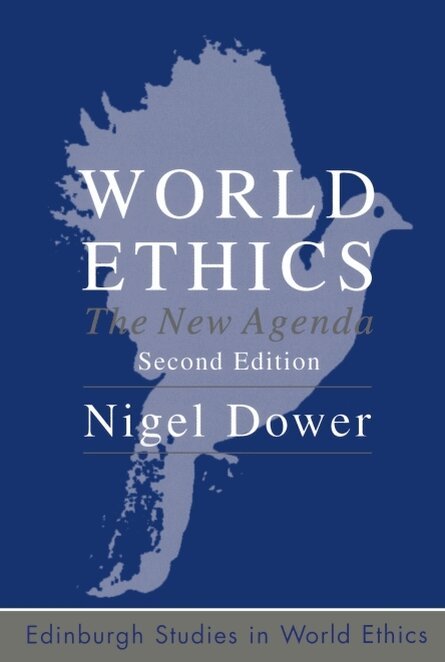
World Ethics: The New Agenda identifies different ways of thinking about ethics, and of thinking ethically about international and global relations. It also considers several theories of world ethics in the context of issues such as war and peace, world poverty, the environment and the United Nations.Key Features:* Rejects the idea of international scepticism and the 'morality of states'* Demonstrates the distinction between a global ethic as a theory and as social reality* Defends the claim that we are world citizens with global duties The second edition has been substantially revised to take account of recent global developments. The discussion is grounded in an awareness of the post-9/11 world in which we live and offers a more detailed exploration of the idea of global citizenship and a global or cosmopolitan ethic. There are new sections on terrorism and security and on global justice, and additional material on issues such as climate change, internationalist ethics, the ethics of war, sustainability, development, globalisation, global civil society and global governance. Each chapter now has a summary box at the beginning and a set of questions for discussion at the end.
435 kr
Skickas inom 7-10 vardagar
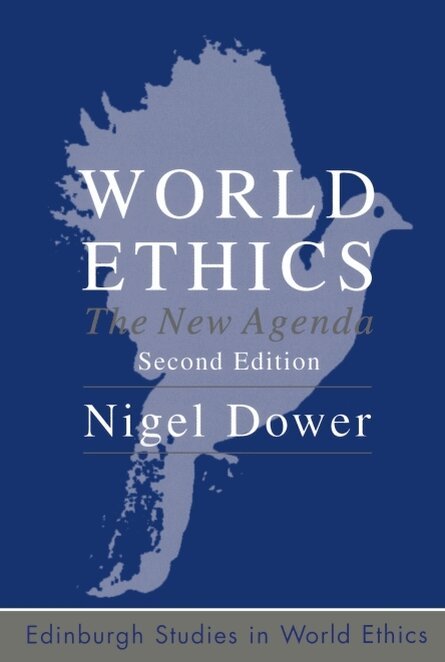
World Ethics: The New Agenda identifies different ways of thinking about ethics, and of thinking ethically about international and global relations. It also considers several theories of world ethics in the context of issues such as war and peace, world poverty, the environment and the United Nations.Key Features:* Rejects the idea of international scepticism and the 'morality of states'* Demonstrates the distinction between a global ethic as a theory and as social reality* Defends the claim that we are world citizens with global duties The second edition has been substantially revised to take account of recent global developments. The discussion is grounded in an awareness of the post-9/11 world in which we live and offers a more detailed exploration of the idea of global citizenship and a global or cosmopolitan ethic. There are new sections on terrorism and security and on global justice, and additional material on issues such as climate change, internationalist ethics, the ethics of war, sustainability, development, globalisation, global civil society and global governance. Each chapter now has a summary box at the beginning and a set of questions for discussion at the end.
435 kr
Skickas inom 7-10 vardagar
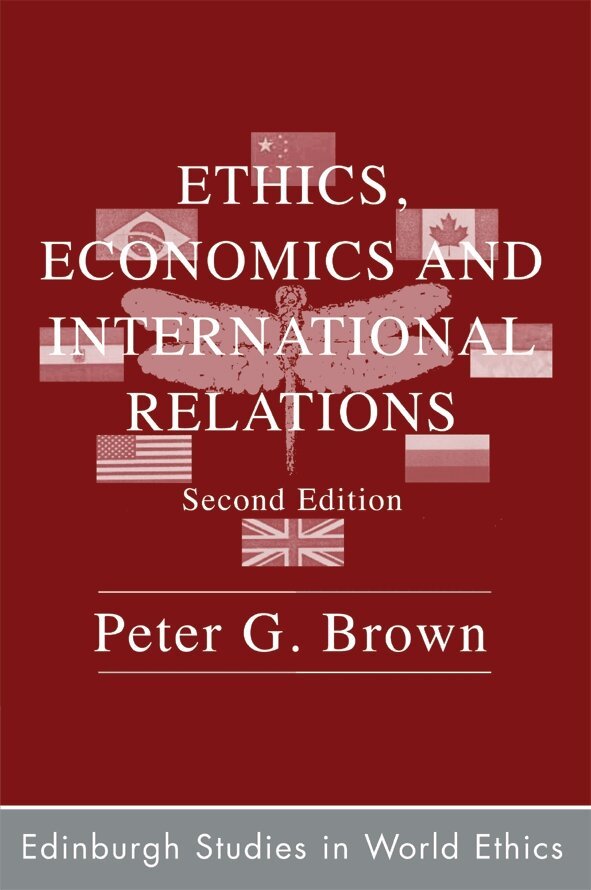
A pioneering work in ethics and economics for the new global era raising all the hard questions that we need to think about in the coming decades, and proposing a radically new way of thinking about how the global community should function.'Peter Singer, IRA W. De Camp Professor of Bioethics, Princeton University'One of those rare books whose every chapter is a source of both exhilaration and despair.'William E. Rees, University of British ColumbiaIn the first edition of this remarkable book Peter G. Brown identified three challenges that lay ahead of us:* to come up with an adequate account of our minimal obligations to each other, and to the rest of the natural order;* to redefine and reshape the institutions of economics, government, and civil society to reflect those obligations;* and to re-conceptualize and redirect relations between nations so as to foster those institutions and discharge those obligations.In this second edition he revisits and expands on those original ideas and draws some new, and innovative, conclusions that will redirect what we do and give substance and direction to the institutions that must be adopted if life is to flourish. Finding our historical attitude of 'full-human- use' toward the environment unsatisfactory, Brown offers an alternative: an 'all-species- use'. What he calls 'the commonwealth of life' and the acceptance of this reasoning has vital implications for all life that share this planet.
1 454 kr
Skickas inom 7-10 vardagar
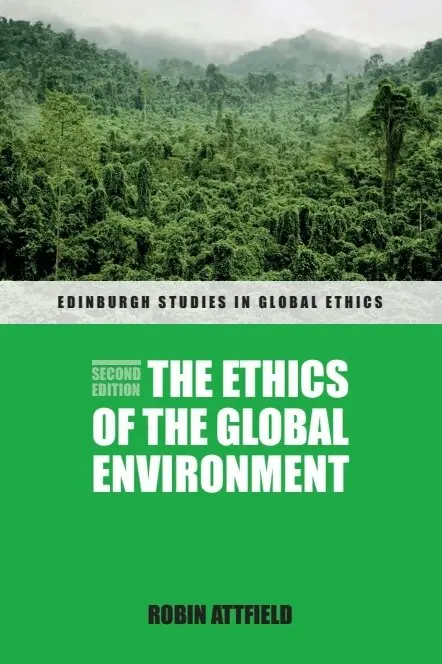
This fully updated and expanded textbook gives you new reflections on global environmental issues. It looks at issues including climate change, sustainable development and biodiversity preservation, and sensitively addresses global developments such as the Summits at Durban on climate and at Nagoya on biodiversity. Robin Attfield gives an ethical critique of current international environmental problems and negotiations, and explains how international regimes will need to change to be able to cope with global environmental problems.
397 kr
Skickas inom 7-10 vardagar
This fully updated and expanded textbook gives you new reflections on global environmental issues. It looks at issues including climate change, sustainable development and biodiversity preservation, and sensitively addresses global developments such as the Summits at Durban on climate and at Nagoya on biodiversity. Robin Attfield gives an ethical critique of current international environmental problems and negotiations, and explains how international regimes will need to change to be able to cope with global environmental problems.
334 kr
Skickas inom 7-10 vardagar
Global Ethics and Climate Change combines the science of climate change with ethical critique to expose its impact, the increasing intensity of dangerous trends – particularly growing global affluence, material consumption and pollution – and the intensifying moral dimensions of changes to the environment. It shows you that global justice is vital to mitigating climate change.