Edinburgh Studies in Religion in Antiquity – Serie
Visar alla böcker i serien Edinburgh Studies in Religion in Antiquity. Handla med fri frakt och snabb leverans.
13 produkter
13 produkter
Contested Cures
Identity and Ritual Healing in Roman and Late Antique Palestine
Inbunden, Engelska, 2022
1 871 kr
Skickas inom 3-6 vardagar
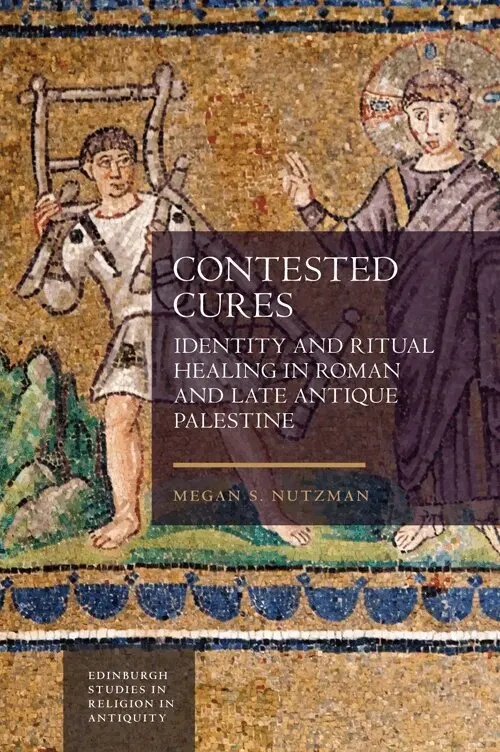
In the ancient Mediterranean world, individuals routinely looked for divine aid to cure physical afflictions. Contested Cures argues that the inevitability of sickness and injury made people willing to experiment with seemingly beneficial techniques, even if they originated in a foreign cultural or religious tradition. With circumstances of close cultural contacts, such as prevailed in Palestine, the setting was ripe for neighbouring Jews, Samaritans, Christians, Greeks and Romans to borrow rituals perceived to be efficacious and to alter them to fit their own religious framework. As a result, they employed related means of seeking miraculous cures. The similarities of these rituals, despite changes in the identity of the divine healers that they invoked, made them the subject of polemical discourse among elite authors trying to police collective borders. Contested Cures investigates the resulting intersection of ritual healing and communal identity.This innovative study synthesises evidence for the full range of healing rituals that were practised in the ancient Mediterranean world. Examining both literary and archaeological evidence, it considers ritual healing as a component of identity formation and deconstructs the artificial boundary between ‘magic’ and ‘religion’ in relation to ritual cures.
Contested Cures
Identity and Ritual Healing in Roman and Late Antique Palestine
Häftad, Engelska, 2024
669 kr
Skickas inom 3-6 vardagar
In the ancient Mediterranean world, individuals routinely looked for divine aid to cure physical afflictions. Contested Cures argues that the inevitability of sickness and injury made people willing to experiment with seemingly beneficial techniques, even if they originated in a foreign cultural or religious tradition. With circumstances of close cultural contacts, such as prevailed in Palestine, the setting was ripe for neighbouring Jews, Samaritans, Christians, Greeks and Romans to borrow rituals perceived to be efficacious and to alter them to fit their own religious framework. As a result, they employed related means of seeking miraculous cures. The similarities of these rituals, despite changes in the identity of the divine healers that they invoked, made them the subject of polemical discourse among elite authors trying to police collective borders. Contested Cures investigates the resulting intersection of ritual healing and communal identity.This innovative study synthesises evidence for the full range of healing rituals that were practised in the ancient Mediterranean world. Examining both literary and archaeological evidence, it considers ritual healing as a component of identity formation and deconstructs the artificial boundary between 'magic' and 'religion' in relation to ritual cures.
1 183 kr
Skickas inom 3-6 vardagar
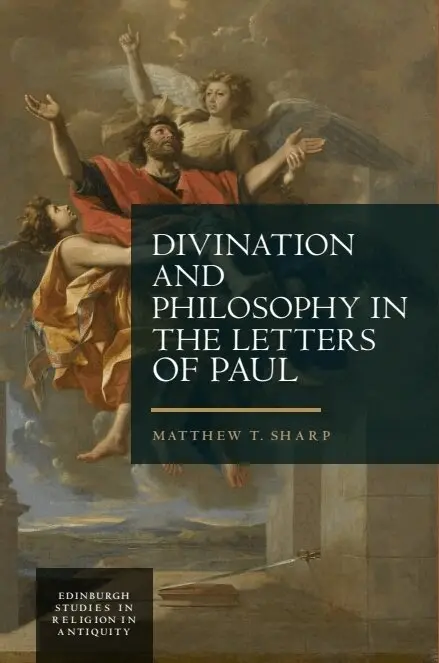
Winner of the Manfred Lautenschl ger Award for Theological PromiseStudies the topic of divine communication in Paul's letters in the context of Graeco-Roman divinationProvides rigorous historical comparison of Paul with a range of Greek, Roman and Jewish sourcesCritiques conventional theological categories and prejudices that inhibit comparison between Paul and his historical contextCritiques one-sided treatments of divination that view it solely in terms of power relationsBrings together diverse topics such as prophecy, revelation, scriptural interpretation, anthropology and cosmology into a coherent whole through the lens of divinationThis book analyses the apostle Paul's claims to receive and interpret knowledge from divine sources within the context of divination in the Graeco-Roman world. Each chapter studies a particular aspect of divination in Paul's letters in comparison with similar phenomena in the Graeco-Roman world, dealing in turn with the underlying logic of divination (in the context of ancient philosophical conversations), visionary experience, prophecy and divine speech, the divinatory use of texts and the interpretation of signs. As such, the book forms an in-depth study of divine communication in Paul's letters, integrating this theme with the broader topics of cosmology, anthropology, eschatology and theology.While New Testament texts and early Christian figures have traditionally been studied from the vantage point of theological categories (such as 'revelation') that isolate early Christianity from its historical context in the Graeco-Roman world, this book re-reads Paul's thought and practice concerning divine communication within, not against, the Graeco-Roman thought and practice of divination. In doing so it illuminates the coherence and connections both between Paul and his historical context and between diverse topics of Paul's letters that have usually been studied in isolation from each other.
334 kr
Skickas inom 7-10 vardagar
This book analyses the apostle Paul's claims to receive and interpret knowledge from divine sources within the context of divination in the Graeco-Roman world. Each chapter studies a particular aspect of divination in Paul's letters in comparison with similar phenomena in the Graeco-Roman world, dealing in turn with the underlying logic of divination (in the context of ancient philosophical conversations), visionary experience, prophecy and divine speech, the divinatory use of texts and the interpretation of signs. As such, the book forms an in-depth study of divine communication in Paul's letters, integrating this theme with the broader topics of cosmology, anthropology, eschatology and theology.While New Testament texts and early Christian figures have traditionally been studied from the vantage point of theological categories (such as 'revelation') that isolate early Christianity from its historical context in the Graeco-Roman world, this book re-reads Paul's thought and practice concerning divine communication within, not against, the Graeco-Roman thought and practice of divination. In doing so it illuminates the coherence and connections both between Paul and his historical context and between diverse topics of Paul's letters that have usually been studied in isolation from each other.
1 169 kr
Skickas
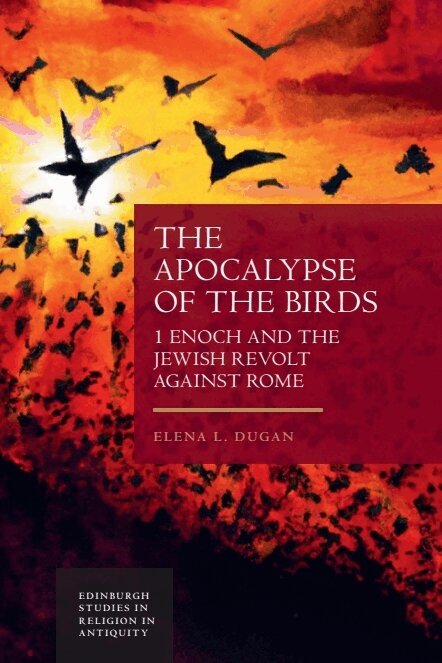
Identifies and contextualises a new work within the Animal Apocalypse, dated to the dawn of the First Jewish RevoltIdentifies a new source for the study of the Jewish Revolt, establishing the high hopes of the revolutionaries before the ultimate collapse of the movementPursues a unified and cross-disciplinary study of the apocalyptic and historiographic literature of Jews and Christians (or Jesus-followers) in the first-century CEAdvances a methodology for the study of ancient fragments, such as the Dead Sea Scrolls, that privileges our extant material evidence in the construction of literary wholesReimagines the Animal Apocalypse of Enoch as a lively literary tradition with multiple identifiable sites of growth: including the Vision of the Beasts, and the Apocalypse of the BirdsExplores the potential and pitfalls of historical-apocalyptic texts in guiding methodological discussions of datingThis book identifies a new apocalyptic work the Apocalypse of the Birds contained in the Animal Apocalypse (1 Enoch 85-90), and argues that it is born of the chaotic Jewish-Christian world of the first-century CE. Through close analysis of texts and manuscripts in Ge'ez, Greek, Aramaic, and Hebrew, alongside historical and numismatic evidence, the book situates the Apocalypse of the Birds alongside literature and historiography of the first-century CE. It argues that the Apocalypse of the Birds belongs to the heady early days of the First Jewish Revolt, and represents crucial evidence for the early optimism of the revolutionaries, the dynamic and progressive evolution of the Animal Apocalyptic tradition, and the blurred and porous boundaries between Jew and Jesus-follower in the first-century CE.
297 kr
Skickas
This book identifies a new apocalyptic work the Apocalypse of the Birds contained in the Animal Apocalypse (1 Enoch 85-90), and argues that it is born of the chaotic Jewish-Christian world of the first-century CE. Through close analysis of texts and manuscripts in Ge'ez, Greek, Aramaic, and Hebrew, alongside historical and numismatic evidence, the book situates the Apocalypse of the Birds alongside literature and historiography of the first-century CE. It argues that the Apocalypse of the Birds belongs to the heady early days of the First Jewish Revolt, and represents crucial evidence for the early optimism of the revolutionaries, the dynamic and progressive evolution of the Animal Apocalyptic tradition, and the blurred and porous boundaries between Jew and Jesus-follower in the first-century CE.
1 886 kr
Skickas inom 3-6 vardagar
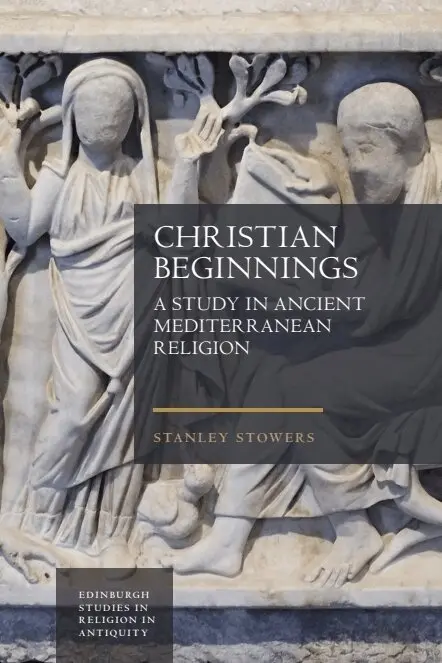
Instead of treating Christianity as continuing a utterly unique Judaism alien to Mediterranean religion, the book argues for a pervasive religious dynamic based on three modes; the religion of everyday social exchange, civic religion and the religion of freelance literate experts. These modes that cut across ethnically defined cultures such as Judean, Greek and Roman open a window onto a new way of reading the earliest Christian literature and of explaining its religiosity. The chapters lay out the theory and then illustrate it in various ways with essays on the letters of Paul, the Gospel of Matthew and issues surrounding the study of Christian beginnings. This approach provides a different way to understand Judaism and Christianity within Mediterranean religion and its intellectual cultures by drawing on powerful new tools for theorizing religion more broadly.
297 kr
Skickas
Instead of treating Christianity as continuing a utterly unique Judaism alien to Mediterranean religion, the book argues for a pervasive religious dynamic based on three modes; the religion of everyday social exchange, civic religion and the religion of freelance literate experts. These modes that cut across ethnically defined cultures such as Judean, Greek and Roman open a window onto a new way of reading the earliest Christian literature and of explaining its religiosity. The chapters lay out the theory and then illustrate it in various ways with essays on the letters of Paul, the Gospel of Matthew and issues surrounding the study of Christian beginnings. This approach provides a different way to understand Judaism and Christianity within Mediterranean religion and its intellectual cultures by drawing on powerful new tools for theorizing religion more broadly.
1 383 kr
Skickas inom 7-10 vardagar
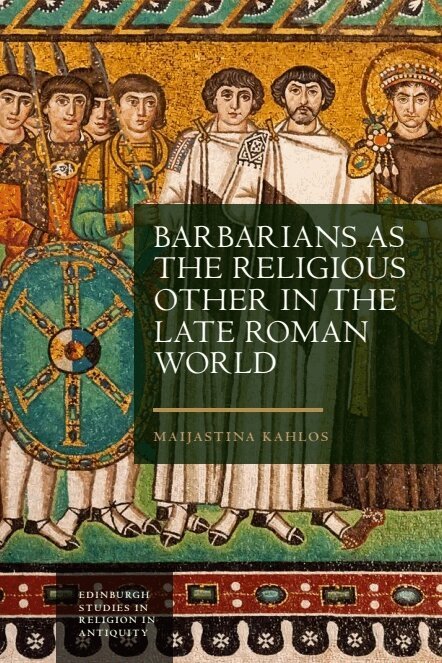
Two major transformations of Late Antiquity redefined what it meant to be Roman: the Christianisation of imperial power and the collapse of the Western Roman state. This book examines how Prudentius, Athanasius, Augustine and other Roman and post-Roman writers used the figure of the ‘barbarian’ to articulate these shifting religious, political, and cultural boundaries. Religious identity — especially the divide between Nicene orthodoxy and so-called ‘heretical’ forms such as Homoian Christianity — became a key marker of Romanness. Barbarians such as Goths and Vandals were not only portrayed as ethnic outsiders but also as ‘pagans’ or ‘heretics’, threatening both the Church and Roman civilisation itself. While heresy was often equated with barbarism, Roman elites also downplayed these differences when politically convenient, using religious language to both legitimise and delegitimise power. Through thematic and regional case studies, Kahlos shows how religion, ethnicity and imperial traditions were entangled in the construction of Roman identity – and how ‘barbarians’ were used to define, defend or reshape it.
1 648 kr
Skickas inom 7-10 vardagar
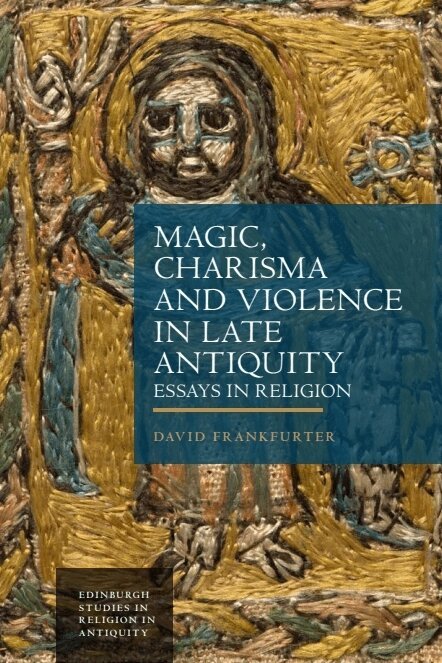
This collection of 21 essays, published together for the first time, offers three new models for thinking about religion and magic in late antiquity. Using a range of sources, David Frankfurter models a shift from thinking about magic to looking at the material powers of peculiar things activated in specific life contexts. Frankfurter then brings together various forms of charisma in the late antique world to demonstrate how charisma was both a source of authority and a power that someone could transmit through objects. The collection also considers the relationship of violence to religion, from religious instigations to collective violence to violence in collective fantasy: of martyrs' torments and of the rites of the monstrous Other.
1 266 kr
Skickas inom 7-10 vardagar
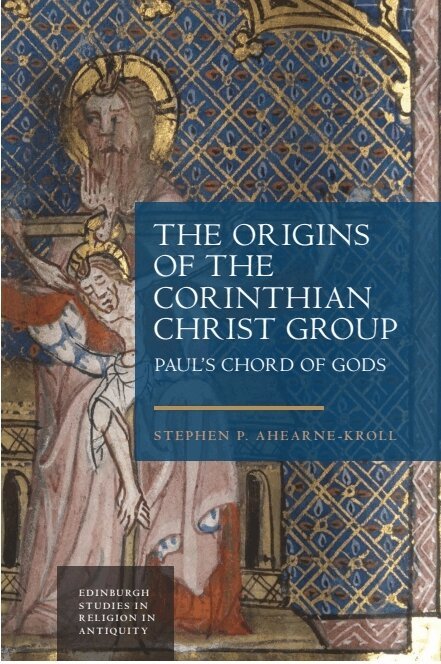
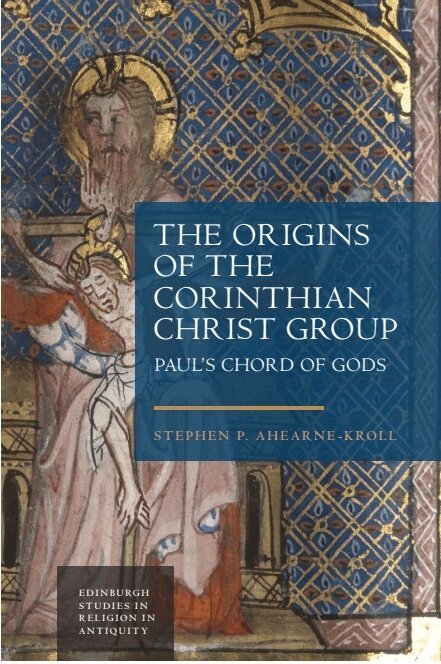
The Origins of the Christ Movement in Corinth: Paul's Chord of Gods argues that Paul's language about his god (father, lord Jesus Christ and pneuma) would have been familiar to Corinthian gentiles as a small group of gods a chord of gods. Worship of Paul's chord of gods matches the common religious practice (in Theodore Schatzki's sense) around the ancient Mediterranean and in Corinth and would have been familiar to the Corinthians. This religious practice could have formed the basis of attraction for the Corinthians to join Paul's Christ group, served as a social engine for its growth among gentiles in Corinth and been a source of conflict with Paul that he tries to address in his letters to the Corinthians.
496 kr
Skickas
The Origins of the Christ Movement in Corinth: Paul's Chord of Gods argues that Paul's language about his god (father, lord Jesus Christ and pneuma) would have been familiar to Corinthian gentiles as a small group of gods a chord of gods. Worship of Paul's chord of gods matches the common religious practice (in Theodore Schatzki's sense) around the ancient Mediterranean and in Corinth and would have been familiar to the Corinthians. This religious practice could have formed the basis of attraction for the Corinthians to join Paul's Christ group, served as a social engine for its growth among gentiles in Corinth and been a source of conflict with Paul that he tries to address in his letters to the Corinthians.
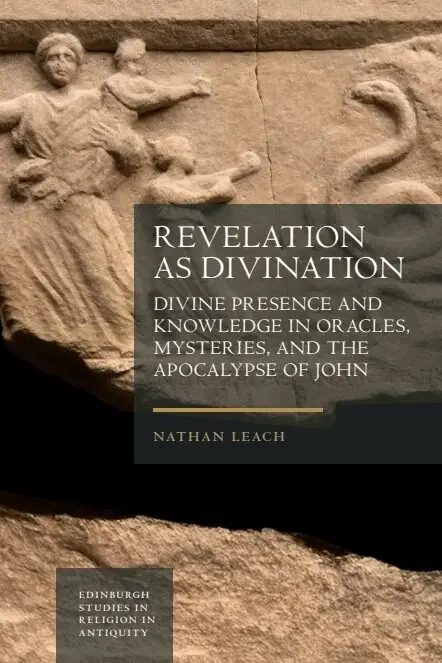
Revelation as Divination
Divine Presence and Knowledge in Oracles, Mysteries, and the Apocalypse of John
Inbunden, Engelska, 2026
1 169 kr
Kommande
The Book of Revelation has been read as a literary prophecy, an allegorical divination narrative, or a piece of persuasive rhetoric. In this new approach to the apocalyptic text, Nathan Leach argues that Revelation’s oral performance to Christ-following assemblies in the ritual settings of the late 1st century CE formed an experience that resonated deeply with wider divinatory practices in Roman Asia.Revelation as Divination uses an interdisciplinary theoretical repertoire including performance criticism, ritual studies, material culture and affect theory to show how Revelation created meaning through oral performance to its ancient participatory audience. Despite Revelation’s extreme social separatist polemic, it is through the performance’s experiential resonance with broader ancient Mediterranean divinatory practices that its production of divine presence and access to divine knowledge were socially readable, gained authenticity, and affected its participants.