Elements in Archaeological Perspectives on Materials and Technologies – serie
Visar alla böcker i serien Elements in Archaeological Perspectives on Materials and Technologies. Handla med fri frakt och snabb leverans.
5 produkter
5 produkter
241 kr
Skickas inom 7-10 vardagar
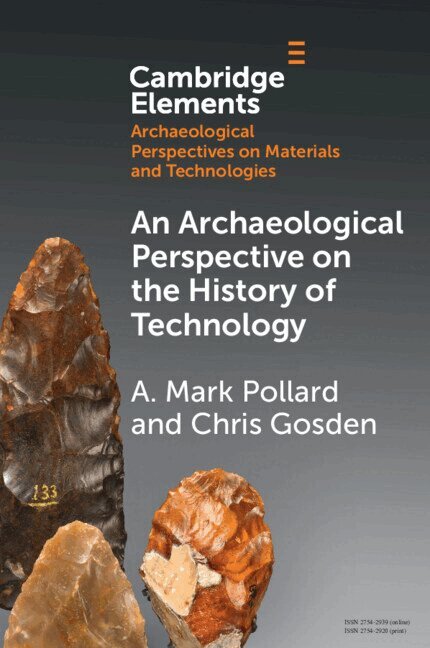
This volume represents an introduction to a new world-wide attempt to review the history of technology, which is one of few since the pioneering publications of the 1960s. It takes an explicit archaeological focus to the study of the history of technology and adopts a more explicit socially-embedded view of technology than has commonly been the case in mainstream histories of technology. In doing so, it attempts to introduce a more radical element to explanations of technological change, involving magic, alchemy, animism - in other words, attempting to consider technological change in terms of the 'world view' of those involved in such change rather than from an exclusively western scientific perspective.
753 kr
Kommande
Before the latter half of the 2nd millennium BCE, smelted iron was virtually unknown in the Near East. Yet by the turn of the millennium iron had already begun to displace copper alloys across the region. This Element will explore the extent to which this phenomenon may have arisen as a consequence of technological developments within preceding traditions for the extraction of copper from its ores. It presents a new approach incorporating a reappraisal of current knowledge with a series of integrated experiments to reveal the frequency of iron extraction during the copper smelting practices of the Late Bronze Age Near East. Armed with these insights the author seeks to address how iron metallurgy may have developed from existing extractive traditions and the implications this has for our wider understanding of technological change within past cultures.
234 kr
Kommande
Before the latter half of the 2nd millennium BCE, smelted iron was virtually unknown in the Near East. Yet by the turn of the millennium iron had already begun to displace copper alloys across the region. This Element will explore the extent to which this phenomenon may have arisen as a consequence of technological developments within preceding traditions for the extraction of copper from its ores. It presents a new approach incorporating a reappraisal of current knowledge with a series of integrated experiments to reveal the frequency of iron extraction during the copper smelting practices of the Late Bronze Age Near East. Armed with these insights the author seeks to address how iron metallurgy may have developed from existing extractive traditions and the implications this has for our wider understanding of technological change within past cultures.
228 kr
Skickas inom 7-10 vardagar
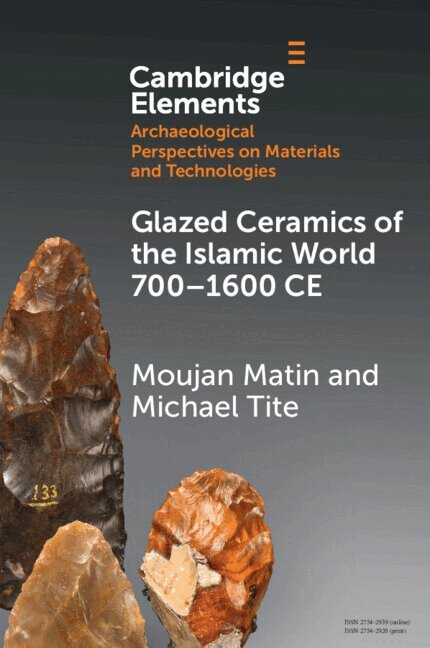
Of all the material culture of the Islamic World prior to the sixteenth century, only ceramics survive in a way which forms a continuous representative visual history. As such, ceramics provide a unique collection of material from which to study the history of technology. The main technological developments associated with glazed Islamic ceramics were the introduction of tin-opacified glazes, stonepaste bodies, and an extended range of colorants. For each of these developments, consideration is given to the reasons why new technologies were introduced, from where the ideas for the new technologies originated, and why particular technological choices were made. In addition, brief consideration is given both to the very different glaze technologies employed in contemporary China, and to the subsequent spread of the glazed Islamic technology into Western Europe.
705 kr
Skickas inom 7-10 vardagar
Of all the material culture of the Islamic World prior to the sixteenth century, only ceramics survive in a way which forms a continuous representative visual history. As such, ceramics provide a unique collection of material from which to study the history of technology. The main technological developments associated with glazed Islamic ceramics were the introduction of tin-opacified glazes, stonepaste bodies, and an extended range of colorants. For each of these developments, consideration is given to the reasons why new technologies were introduced, from where the ideas for the new technologies originated, and why particular technological choices were made. In addition, brief consideration is given both to the very different glaze technologies employed in contemporary China, and to the subsequent spread of the glazed Islamic technology into Western Europe.