Elements in Rethinking Byzantium - Böcker
Visar alla böcker i serien Elements in Rethinking Byzantium. Handla med fri frakt och snabb leverans.
5 produkter
5 produkter
775 kr
Skickas inom 7-10 vardagar
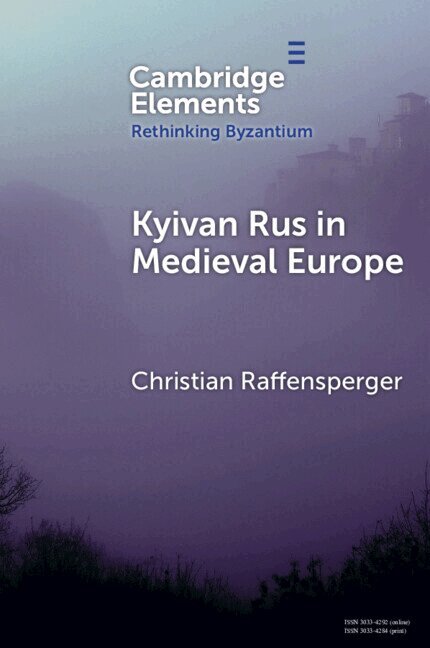
While there has been a great deal (comparatively) written about Rus as part of medieval Europe in the last twenty years, the popular perception of it remains a part of the so-called 'Byzantine Commonwealth.' This traditional framing discounts Rusian ties to the west and exaggerates those to 'Byzantium,' elevating the rhetoric used by Russian nationalists to separate Russia from Europe. This Element provides an accurate historical account of medieval Rus that corrects the modern misuse of medieval history: a resource for academics interested in the results of current research on the place of the Kingdom of Rus in the medieval world. It brings together and synthesizes existing scholarship on Rus to present a complete picture of the kingdom of Rus, and its orientation within the wider medieval world, with a particular focus on the eleventh and twelfth centuries.
241 kr
Skickas inom 7-10 vardagar
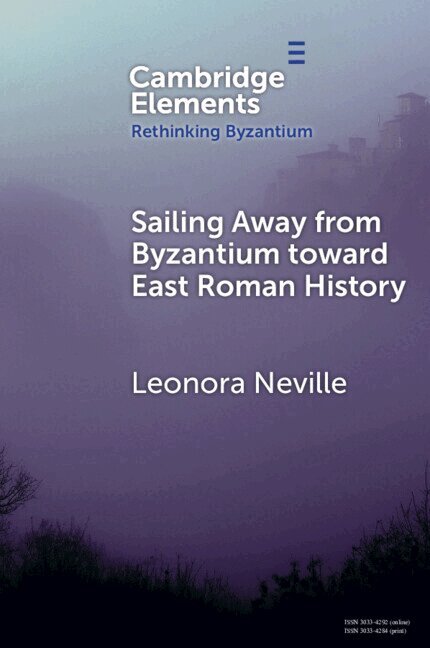
Although the first thing one learns about the 'Byzantine Empire' is that it was really the eastern Roman empire, scholars have preferred to call it 'Byzantine' in a repudiation of the self-conception and emic vocabulary of the inhabitants of that polity. The terminology of 'Byzantium' artificially severs the 'medieval' eastern Roman empire from its 'classical' roots allowing for the fundamentally Eurocentric schematization of history into 'ancient,' 'medieval,' and 'Renaissance' periods. 'Byzantine' is not a benign term of art but has served a variety of political and historiographical agendas including maintaining nationalist visions of ethnic continuity, creating precedents for communism, enabling politics of nostalgia for Orthodox dominion, and constructing visions of western European superiority and masculinity that justify colonialism. By exploring these intellectual legacies of 'Byzantium,' and the benefits of conceptualizing Roman history as an unsevered whole, this Element exhorts scholars to let go of the 'Byzantine' misnomer.
775 kr
Skickas inom 7-10 vardagar
Although the first thing one learns about the 'Byzantine Empire' is that it was really the eastern Roman empire, scholars have preferred to call it 'Byzantine' in a repudiation of the self-conception and emic vocabulary of the inhabitants of that polity. The terminology of 'Byzantium' artificially severs the 'medieval' eastern Roman empire from its 'classical' roots allowing for the fundamentally Eurocentric schematization of history into 'ancient,' 'medieval,' and 'Renaissance' periods. 'Byzantine' is not a benign term of art but has served a variety of political and historiographical agendas including maintaining nationalist visions of ethnic continuity, creating precedents for communism, enabling politics of nostalgia for Orthodox dominion, and constructing visions of western European superiority and masculinity that justify colonialism. By exploring these intellectual legacies of 'Byzantium,' and the benefits of conceptualizing Roman history as an unsevered whole, this Element exhorts scholars to let go of the 'Byzantine' misnomer.
775 kr
Skickas inom 7-10 vardagar
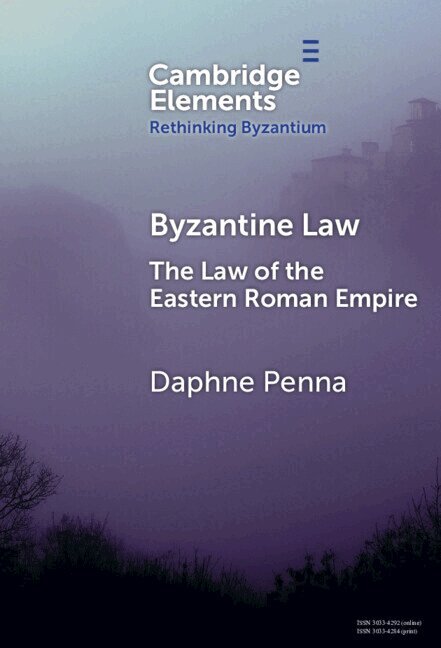
The purpose of this Element is to introduce the study of later Roman law (Byzantine law) to a wider academic audience. Currently a great deal of specialized knowledge is necessary to approach the field of Byzantine law. This Element works to break down the barriers to this fascinating subject by providing a brief, clear introduction to the topic. It makes a scholarly contribution by placing Byzantine law in a broader perspective and by reconsidering some of the aspects of the study of Byzantine law. The Element places Byzantine law outside of the box by comparing, for example, Byzantine law to the European legal tradition and highlighting the role that Byzantine law can have in unravelling the common legal past of Europe. It gives also information on the status of Byzantine legal studies and makes suggestions on how to study Byzantine law and why.
241 kr
Skickas inom 7-10 vardagar
The purpose of this Element is to introduce the study of later Roman law (Byzantine law) to a wider academic audience. Currently a great deal of specialized knowledge is necessary to approach the field of Byzantine law. This Element works to break down the barriers to this fascinating subject by providing a brief, clear introduction to the topic. It makes a scholarly contribution by placing Byzantine law in a broader perspective and by reconsidering some of the aspects of the study of Byzantine law. The Element places Byzantine law outside of the box by comparing, for example, Byzantine law to the European legal tradition and highlighting the role that Byzantine law can have in unravelling the common legal past of Europe. It gives also information on the status of Byzantine legal studies and makes suggestions on how to study Byzantine law and why.