Elements in the Philosophy of S?ren Kierkegaard – serie
Visar alla böcker i serien Elements in the Philosophy of S?ren Kierkegaard. Handla med fri frakt och snabb leverans.
22 produkter
Kierkegaard's Two Ages
A Literary Review
Inbunden, 2025
911 kr
Lägg i varukorg
This Element explores Kierkegaard's Two Ages, his literary review of a contemporary novella, situating it in the context of his other writings from the same period of his life and his cultural/political context. It investigates his review's analysis of the vices and virtues of romance and political …
Kierkegaard's Two Ages
A Literary Review
Häftad, 2025
282 kr
Lägg i varukorg
This Element explores Kierkegaard's Two Ages, his literary review of a contemporary novella, situating it in the context of his other writings from the same period of his life and his cultural/political context. It investigates his review's analysis of the vices and virtues of romance and political …
The Ethical and the Religious
Häftad, 2026
308 kr
Lägg i varukorg
This Element discusses the relation between the ethical and religious as key concepts in Kierkegaard's works. Instead of viewing the ethical and religious mainly as different stages on life's way, it identifies different connections between ethical and religious considerations, reasons, and values. …
The Ethical and the Religious
Inbunden, 2026
911 kr
Lägg i varukorg
This Element discusses the relation between the ethical and religious as key concepts in Kierkegaard's works. Instead of viewing the ethical and religious mainly as different stages on life's way, it identifies different connections between ethical and religious considerations, reasons, and values. …
Kierkegaard's Philosophical Fragments
Inbunden, 2026
911 kr
Lägg i varukorg
This Element is a critical analysis of Kierkegaard's Philosophical Fragments, attributed to the pseudonymous author Johannes Climacus. The philosophical content of Kierkegaard's work is developed in the form of an ironical, humorous jest in which Climacus pretends to invent a philosophical view …
Kierkegaard's Philosophical Fragments
Häftad, 2026
276 kr
Lägg i varukorg
This Element is a critical analysis of Kierkegaard's Philosophical Fragments, attributed to the pseudonymous author Johannes Climacus. The philosophical content of Kierkegaard's work is developed in the form of an ironical, humorous jest in which Climacus pretends to invent a philosophical view …
The Diarist in Stages on Life's Way
Häftad, 2026
324 kr
Lägg i varukorg
Kierkegaard's Stages on Life's Way belongs to what by 1845 can be understood as the romantic tradition, itself containing members related by both blood and adoption to those in the Christian tradition. By far the greatest portion of this Element is devoted to the portrait of an ethically enervated, …
The Diarist in Stages on Life's Way
Inbunden, 2026
1039 kr
Lägg i varukorg
Kierkegaard's Stages on Life's Way belongs to what by 1845 can be understood as the romantic tradition, itself containing members related by both blood and adoption to those in the Christian tradition. By far the greatest portion of this Element is devoted to the portrait of an ethically enervated, …
Kierkegaard's View of Love
Inbunden, 2026
911 kr
Lägg i varukorg
The themes of love and loving are often, albeit not always explicitly, present in Kierkegaard's works. It is only his 1847 Works of Love, however, in which the topic serves as a central focus of inquiry. And while at first glance, this text may seem alien to Kierkegaard's poetic existentialism, …
Kierkegaard's View of Love
Häftad, 2026
308 kr
Lägg i varukorg
The themes of love and loving are often, albeit not always explicitly, present in Kierkegaard's works. It is only his 1847 Works of Love, however, in which the topic serves as a central focus of inquiry. And while at first glance, this text may seem alien to Kierkegaard's poetic existentialism, …
Kierkegaard and the Affects
Inbunden, 2026
910 kr
Kommande
'Is reason then alone baptized, are the passions pagans?' By placing Edward Young's question on the frontispiece of Either/Or, Søren Kierkegaard announces a problem that runs throughout his authorship: what role do the affects play in human existence? His answer helps explain his enduring …
Kierkegaard and the Affects
Häftad, 2026
282 kr
Kommande
'Is reason then alone baptized, are the passions pagans?' By placing Edward Young's question on the frontispiece of Either/Or, Søren Kierkegaard announces a problem that runs throughout his authorship: what role do the affects play in human existence? His answer helps explain his enduring …
Kierkegaard's Concept of Anxiety
Häftad, 2026
282 kr
Lägg i varukorg
With reference to Kierkegaard's religious writings and other pseudonymous works, Kierkegaard's concept of anxiety is explored with a primary focus on the book The Concept of Anxiety. Anxiety itself is shown to be the eminent term for a moment in the human being's psychological development that …
Kierkegaard's Concept of Anxiety
Inbunden, 2026
903 kr
Lägg i varukorg
With reference to Kierkegaard's religious writings and other pseudonymous works, Kierkegaard's concept of anxiety is explored with a primary focus on the book The Concept of Anxiety. Anxiety itself is shown to be the eminent term for a moment in the human being's psychological development that …
Kierkegaard and Phenomenology
Av Kevin Hart
Häftad, 2025
282 kr
Lägg i varukorg
Is Kierkegaard a phenomenologist? Much depends on what we take 'phenomenology' to mean, since the word has been stretched in all possible directions since Edmund Husserl wrote his major works. What have phenomenologists made of his writings? This question is easier to answer: he has been a constant …
Kierkegaard and Phenomenology
Av Kevin Hart
Inbunden, 2025
911 kr
Lägg i varukorg
Is Kierkegaard a phenomenologist? Much depends on what we take 'phenomenology' to mean, since the word has been stretched in all possible directions since Edmund Husserl wrote his major works. What have phenomenologists made of his writings? This question is easier to answer: he has been a constant …
Kierkegaard, Socrates, and the Meaning of Life
Inbunden, 2025
954 kr
Lägg i varukorg
Kierkegaard's lifelong fascination with the figure of Socrates has many aspects, but prominent among them is his admiration for the way Socrates was devoted to his divinely ordained mission as a philosopher. To have such a destiny, revealed through what one loves and is passionate about as well as …
Kierkegaard, Socrates, and the Meaning of Life
Häftad, 2025
329 kr
Lägg i varukorg
Kierkegaard's lifelong fascination with the figure of Socrates has many aspects, but prominent among them is his admiration for the way Socrates was devoted to his divinely ordained mission as a philosopher. To have such a destiny, revealed through what one loves and is passionate about as well as …
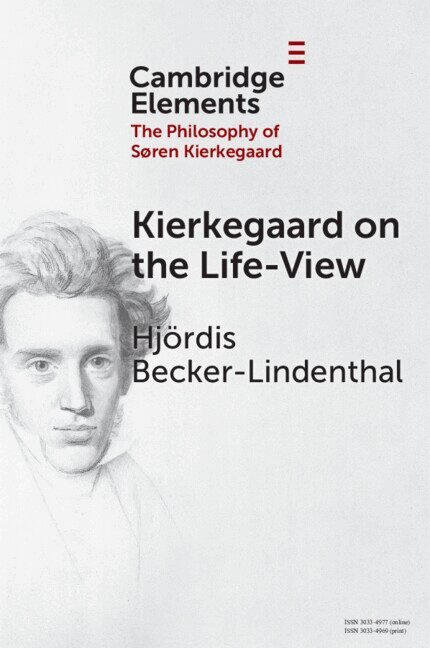
Kierkegaard on the Life-View
Av Hjördis Becker-Lindenthal
Häftad, 2026
324 kr
Kommande
This Element traces the emergence, development, and eventual sublation of the concept of life-view in Kierkegaard's authorship. It begins with Kierkegaard's review of Hans Christian Andersen, From the Papers of One Still Living (1838), examining the influence of Heibergian-Hegelian aesthetics, the …
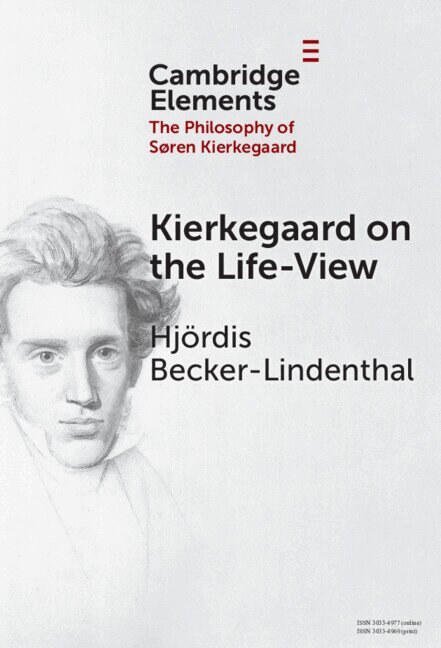
Kierkegaard on the Life-View
Av Hjördis Becker-Lindenthal
Inbunden, 2026
1039 kr
Lägg i varukorg
This Element traces the emergence, development, and eventual sublation of the concept of life-view in Kierkegaard's authorship. It begins with Kierkegaard's review of Hans Christian Andersen, From the Papers of One Still Living (1838), examining the influence of Heibergian-Hegelian aesthetics, the …
Kierkegaard's Journals, Notebooks, and Papers
Av Jon Stewart
Häftad, 2026
354 kr
Lägg i varukorg
The nature and importance of the Nachlass from Kierkegaard's hand is not well known, especially to researchers outside Denmark. At his death, Kierkegaard left behind an enormous amount of unpublished material in various folders, journals, and notebooks, and on loose pieces of paper. This material …
Kierkegaard's Journals, Notebooks, and Papers
Av Jon Stewart
Inbunden, 2026
1025 kr
Lägg i varukorg
The nature and importance of the Nachlass from Kierkegaard's hand is not well known, especially to researchers outside Denmark. At his death, Kierkegaard left behind an enormous amount of unpublished material in various folders, journals, and notebooks, and on loose pieces of paper. This material …