Emblems of Antiquity - Böcker
Visar alla böcker i serien Emblems of Antiquity. Handla med fri frakt och snabb leverans.
3 produkter
3 produkter
342 kr
Skickas inom 5-8 vardagar
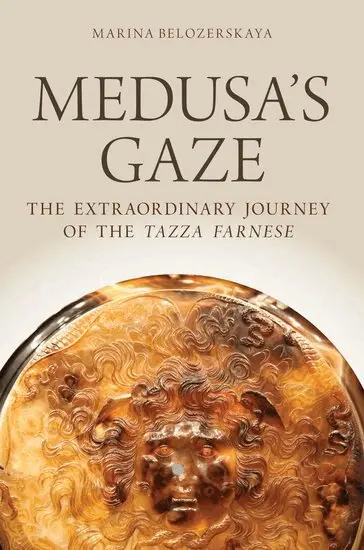
The banded agate bowl known as the Tazza Farnese is one of the most famous and admired objects from classical antiquity. That it has survived at all is a miracle. In this, the first book-length account of the "life" of this renowned masterpiece, art historian Marina Belozerskaya takes readers on a fascinating trip through history that spans two millennia and journeys from the court of Cleopatra to the sack of Constantinople in the Fourth Crusade, from Samarqand of Tamerlane to Renaissance Florence under Lorenzo de' Medici, from Baroque Rome to Enlightenment Naples. Along the way, the reader encounters the illustrious as well as the shady figures who have come into contact with this prized artifact, from emperors and conquerors, popes and princes, and artists like Botticelli and Raphael, to forgers, thieves, and a disgruntled museum guard who nearly destroyed the Tazza for all posterity. Through the prism of this most precious bowl, Medusa's Gaze brings history vividly and intimately to life.
425 kr
Skickas inom 5-8 vardagar
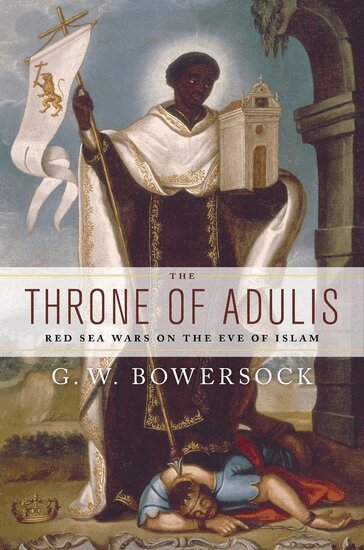
Just prior to the rise of Islam, in the sixth century AD, southern Arabia was embroiled in a holy war between Christian Ethiopians and Jewish Arabs. The Jewish kingdom, composed of ethnic Arabs who had converted to Judaism more than a century before, had launched a bloody pogrom against Christians in the region. The ruler of Ethiopia, who claimed descent from the union of Solomon and the Queen of Sheba and even was rumored to possess an object no less venerable than the Ark of the Covenant, aspired both to protect the persecuted Christians and to restore Ethiopian control in the Arabian Peninsula. Though little known today, this was an international war that involved both the Byzantine Empire, who had established Christian churches in Ethiopia beginning in the fourth century, and the Sasanian Empire in Persia, who supported the Jews in a proxy war with Byzantium.Our knowledge of these events derives mostly from an inscribed throne at the Ethiopian port of Adulis seen and meticulously described by a Christian merchant known as Cosmos in the sixth century. Trying to decipher and understand this monument takes us directly into religious conflicts that occupied the nations on both sides of the Red Sea in late antiquity. Using the writings of Cosmas and archaeological evidence from the period, historian G. W. Bowersock offers a narrative account of this fascinating but overlooked chapter in pre-Islamic Arabian history. The extraordinary story told in Throne of Adulis provides an important and much neglected background for the rise of Islam as well as the collapse of the Persian Empire before the Byzantines.
286 kr
Skickas inom 5-8 vardagar
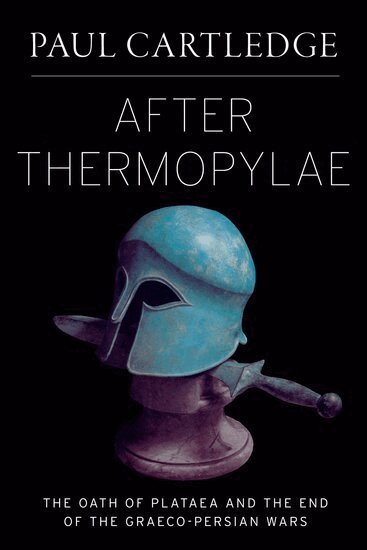
The Battle of Plataea in 479 BCE is one of world history's unjustly neglected events. It decisively ended the threat of a Persian conquest of Greece. It involved tens of thousands of combatants, including the largest number of Greeks ever brought together in a common cause. For the Spartans, the driving force behind the Greek victory, the battle was sweet vengeance for their defeat at Thermopylae the year before. Why has this pivotal battle been so overlooked?In After Thermopylae, Paul Cartledge masterfully reopens one of the great puzzles of ancient Greece to discover, as much as possible, what happened on the field of battle and, just as important, what happened to its memory. Part of the answer to these questions, Cartledge argues, can be found in a little-known oath reputedly sworn by the leaders of Athens, Sparta, and several other Greek city-states prior to the battle-the Oath of Plataea. Through an analysis of this oath, Cartledge provides a wealth of insight into ancient Greek culture. He shows, for example, that when the Athenians and Spartans were not fighting the Persians they were fighting themselves, including a propaganda war for control of the memory of Greece's defeat of the Persians. This helps explain why today we readily remember the Athenian-led victories at Marathon and Salamis but not Sparta's victory at Plataea. Indeed, the Oath illuminates Greek anxieties over historical memory and over the Athens-Sparta rivalry, which would erupt fifty years after Plataea in the Peloponnesian War. In addition, because the Oath was ultimately a religious document, Cartledge also uses it to highlight the profound role of religion and myth in ancient Greek life. With compelling and eye-opening detective work, After Thermopylae provides a long-overdue history of the Battle of Plataea and a rich portrait of the Greek ethos during one of the most critical periods in ancient history.