Emerging Industries in the United States - Böcker
Visar alla böcker i serien Emerging Industries in the United States. Handla med fri frakt och snabb leverans.
3 produkter
3 produkter
695 kr
Skickas inom 10-15 vardagar
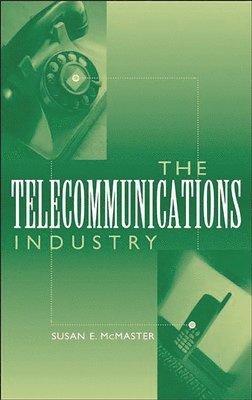
The telephone used to be a luxury item. Today, 95% of Americans have telephone service, and many carry their phones wherever they go. Few inventions have contributed more to modern culture and society than the telephone, yet almost no one recognized the true potential upon its introduction. This book presents the development of the telephone from its invention in 1875 to the present day. Over the course of the 20th century, the interactions between corporate, technological, and legislative and judicial factors determined the course of the industry. Battles were fought over patents, monopolies, regulation, and deregulation. AT&T became, for a time, the largest company in the world-and a protected monopoly. The move from monopoly to competitive services was long and difficult, and its complexity has only grown.McMaster considers the numerous roles of players who affected the industry, including telecommunications carriers—especially AT&T—the government and its agencies, and the courts. Technology's role is also examined throughout telephone's development and maturation. McMaster chronicles the fascinating story of the telephone's rise, its spread to ubiquity in today's society, and the billion-dollar industry it has engendered. This accessible history is ideal for students seeking a clear, concise introduction to one of the landmark American industries of the 20th century.
901 kr
Skickas inom 10-15 vardagar
It's hard to imagine a day passing without most Americans enjoying some form of entertainment, whether it's going to a football game, watching television at home, or listening to the radio on the way to work. At the start of the 20th century, however, the only form of entertainment was live theater. With the advent of radio, television, and ultimately the internet, entertainment could be found in our homes, quite literally at our fingertips. As American society changed and the economy grew over the 20th century, the entertainment industry evolved from vaudeville theater to big screen movies to DVDs playing in the living room. This book focuses on popular American entertainment that both appeals to and is accessible to the masses. Six forms of entertainment are covered: vaudeville, recorded sound, radio, movies, television, and spectator sports. Some forms of entertainment have changed considerably throughout the years, while others have disappeared all together as technology allowed new ones to take their place, but the desire of people to be entertained has not waned.Concepts, organizations, and individuals such as the jukebox, the Screen Actors Guild, Ted Turner, satellite television, free agents, Charlie Chaplin, made-for-TV movies, iPod, Superbowl commercials, vaudeville circuits, Columbia, FCC, Hollywood, Title IX, Amos and Andy, MTV, and the Palace Theater, among many others, are discussed. Ideal for students and general readers interested in the development and history of one of the largest and most lucrative industries today. Biographies of notable individuals in the entertainment industry and suggestions for further reading are included.
695 kr
Skickas inom 10-15 vardagar
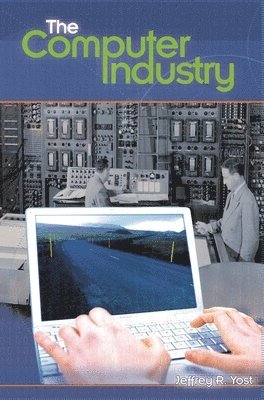
Originally a military and scientific computational tool of a small number of government, scientific, and corporate elites in the late 1940s, the computer has evolved significantly in less than 70 years to become a revolutionary technology and the basis for one the largest industries in America. The Internet, email and personal computer have become necessities in most offices and college dorm rooms and many homes. Narrative chapters trace the emergence and development of the computer industry in the United States as seen in the economic, historical, and social context of its times from the early 20th century to the present. From punched cards and tabulating machines to the first digital computer companies in the early 1950s, Yost clearly describes how the concept of the computer was born in the late 1800s but did not evolve into the personal computer until the late 1970s and 1980s. The computer has emerged from a relatively narrow scientific computational machine to a vast data processing and communication technology.Such well-known concepts and terms as IBM and Bill Gates, Apple and Macintosh, and the Internet and the World Wide Web, along with lesser known histories of the mainframe digital computer, the invention of the transistor, software development, supercomputing and minicomputing are discussed. Includes an appendix of over twenty company profiles of key businesses in the industry, a timeline, and suggestions for further reading and research. Ideal for students and general readers interested in the development of computers and related technology, such as its software and hardware, and the history of the computer industry.