Encounters: Explorations in Folklore and Ethnomusicology - Böcker
Visar alla böcker i serien Encounters: Explorations in Folklore and Ethnomusicology. Handla med fri frakt och snabb leverans.
5 produkter
5 produkter
308 kr
Skickas inom 7-10 vardagar
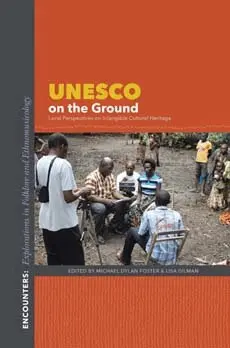
For nearly 70 years, the United Nations Educational, Scientific and Cultural Organization (UNESCO) has played a crucial role in developing policies and recommendations for dealing with intangible cultural heritage. What has been the effect of such sweeping global policies on those actually affected by them? How connected is UNESCO with what is happening every day, on the ground, in local communities? Drawing upon six communities ranging across three continents—from India, South Korea, Malawi, Japan, Macedonia and China—and focusing on festival, ritual, and dance, this volume illuminates the complexities and challenges faced by those who find themselves drawn, in different ways, into UNESCO's orbit. Some struggle to incorporate UNESCO recognition into their own local understanding of tradition; others cope with the fallout of a failed intangible cultural heritage nomination. By exploring locally, by looking outward from the inside, the essays show how a normative policy such as UNESCO's intangible cultural heritage policy can take on specific associations and inflections. A number of the key questions and themes emerge across the case studies and three accompanying commentaries: issues of terminology; power struggles between local, national and international stakeholders; the value of international recognition; and what forces shape selection processes. With examples from around the world, and a balance of local experiences with broader perspectives, this volume provides a unique comparative approach to timely questions of tradition and change in a rapidly globalizing world.
255 kr
Skickas inom 7-10 vardagar
Why is there no "Grand Theory" in the study of folklore? Talcott Parsons (1902–1979) advocated "grand theory," which put the analysis of social phenomena on a new track in the broadest possible terms. Not all sociologists or folklorists accept those broad terms; some still adhere to the empirical level. Through a forum sponsored by the American Folklore Society, the diverse answers to the question of such a theory arrived at substantial agreement: American folklorists have produced little "grand theory." One speaker even found all the theory folklorists need in the history of philosophy. The two women in the forum (Noyes and Mills) spoke in defense of theory that is local, "apt," suited to the audience, and "humble"; the men (Bauman and Fine) reached for something Parsons might have recognized. The essays in this collection, developed from the forum presentations, defend diverse positions, but they largely accept the longstanding concentration in American folkloristics on the quotidian and local.
255 kr
Skickas inom 7-10 vardagar
As part of this multilayered conversation about stigma, this volume discusses the relationship between the stigmatized individual and our role as researchers. Here we address our own perspectives as researchers struggling with stigma issues and tellability, as well as scholarly reflexive concerns dealing with what can't be said when working with stigmatized groups or topics. The disciplinary focus of folklore positions us well to concentrate on the vernacular experience of the stigmatized, but it also propels us toward analysis of the performance of stigma, the process of stigmatization, and the political representation of stigmatized populations. These perspectives come to the fore in this book, as does the multilayered nature of stigma—its ability to reproduce, overlap, and spread, not just in terms of replication but also in terms of the ethnographer's ability to apprehend it and her ability to research and write about it.
317 kr
Skickas inom 7-10 vardagar
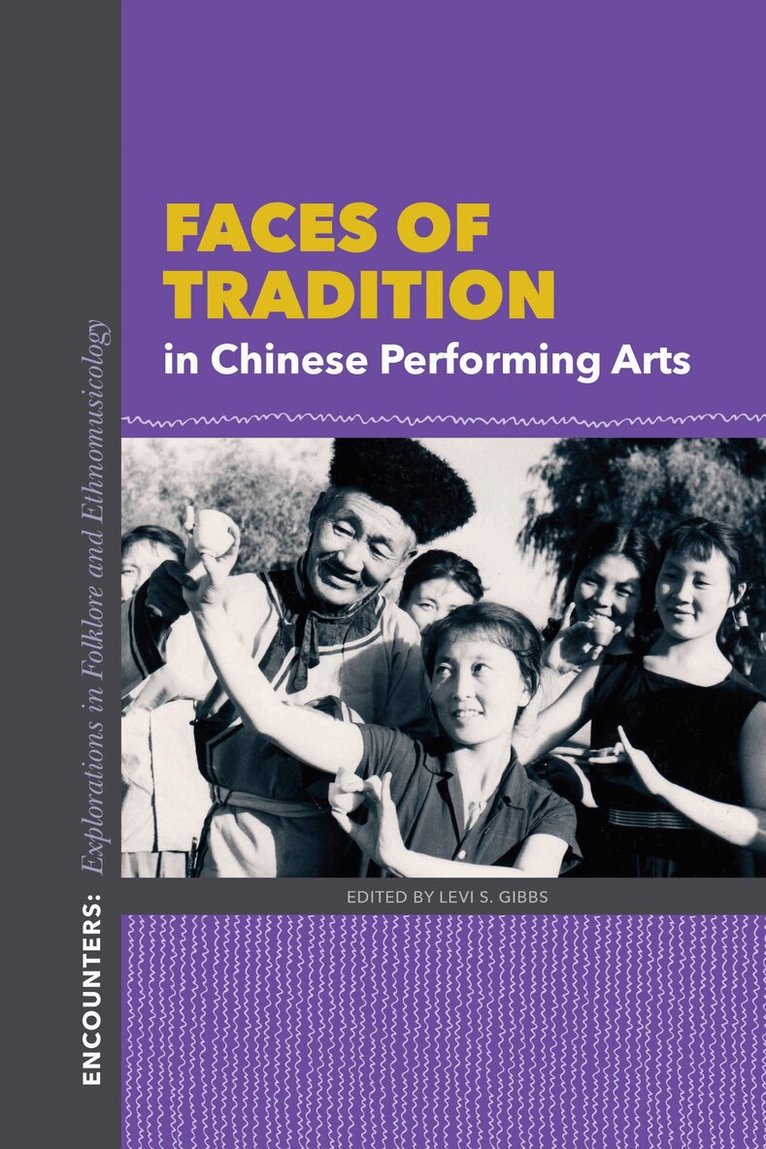
Faces of Tradition in Chinese Performing Arts examines the key role of the individual in the development of traditional Chinese performing arts such as music and dance. These artists and their artistic works–the "faces of tradition"–come to represent and reconfigure broader fields of cultural production in China today. The contributors to this volume explore the ways in which performances and recordings, including singing competitions, textual anthologies, ethnographic videos, and CD albums, serve as discursive spaces where individuals engage with and redefine larger traditions and themselves. By focusing on the performance, scholarship, collection, and teaching of instrumental music, folksong, and classical dance from a variety of disciplines–these case studies highlight the importance of the individual in determining how traditions have been and are represented, maintained, and cultivated.
474 kr
Skickas inom 7-10 vardagar
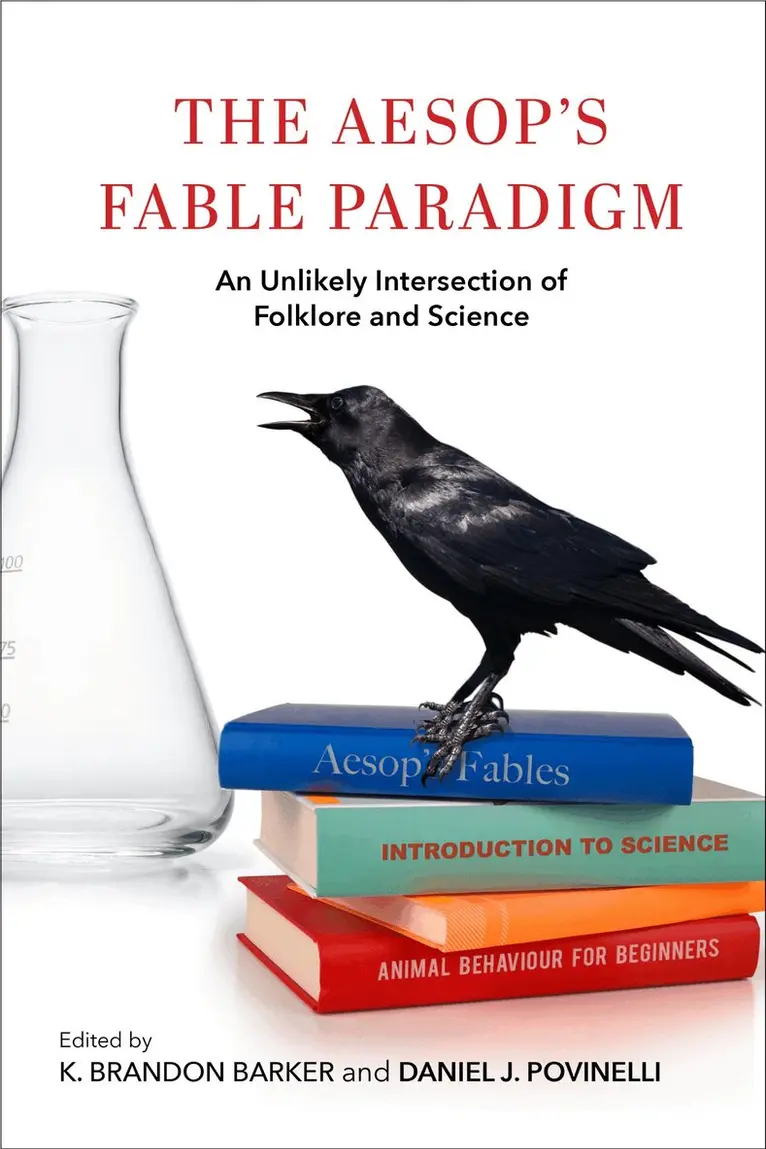
The Aesop's Fable Paradigm is a collection of essays that explore the cutting-edge intersection of Folklore and Science. From moralizing fables to fantastic folktales, humans have been telling stories about animals—animals who can talk, feel, think, and make moral judgments just as we do—for a very long time. In contrast, scientific studies of the mental lives of animals have professed to be investigating the nature of animal minds slowly, cautiously, objectively, with no room for fanciful tales, fables, or myths. But recently, these folkloric and scientific traditions have merged in an unexpected and shocking way: scientists have attempted to prove that at least some animal fables are actually true. These interdisciplinary chapters examine how science has targeted the well-known Aesop's fable "The Crow and the Pitcher" as their starting point. They explore the ever-growing set of experimental studies which purport to prove that crows possess an understanding of higher-order concepts like weight, mass, and even Archimedes' insight about the physics of water displacement.The Aesop's Fable Paradigm explores how these scientific studies are doomed to accomplish little more than to mirror anthropomorphic representations of animals in human folklore and reveal that the problem of folkloric projection extends far beyond the "Aesop's Fable Paradigm" into every nook and cranny of research on animal cognition.