Essays on Human Rights - Böcker
Visar alla böcker i serien Essays on Human Rights. Handla med fri frakt och snabb leverans.
7 produkter
7 produkter
373 kr
Skickas inom 7-10 vardagar
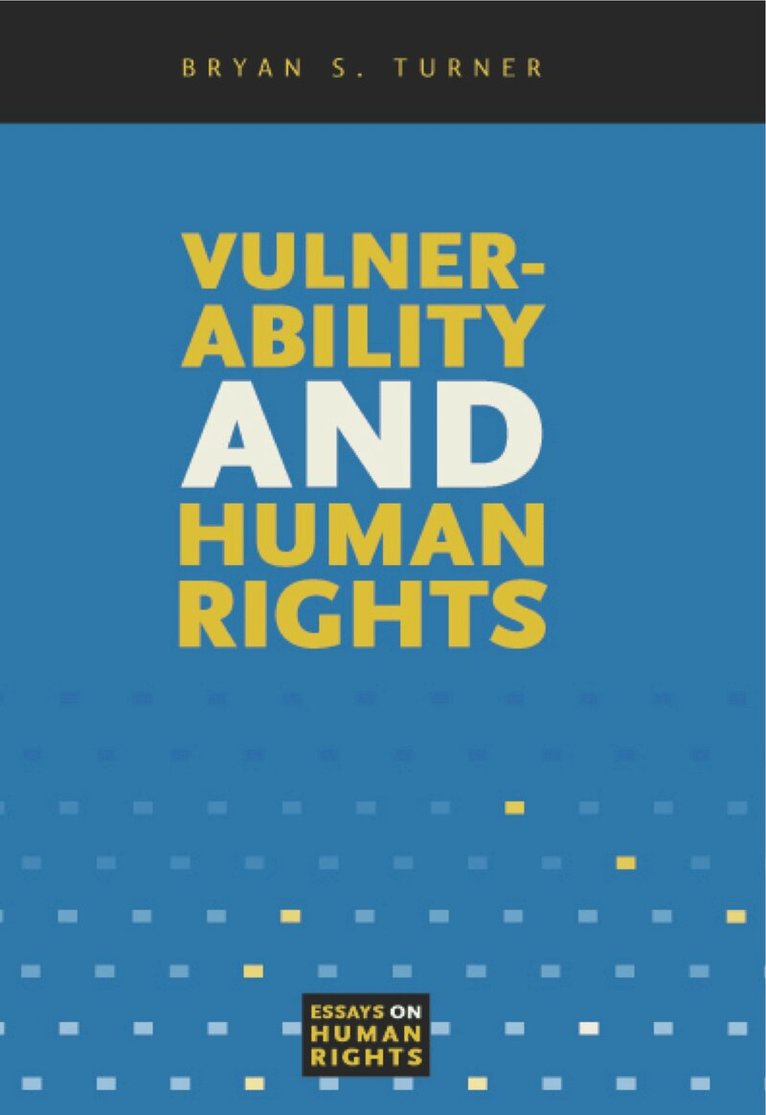
The mass violence of the twentieth century’s two world wars—followed more recently by decentralized and privatized warfare, manifested in terrorism, ethnic cleansing, and other localized forms of killing—has led to a heightened awareness of human beings’ vulnerability and the precarious nature of the institutions they create to protect themselves from violence and exploitation. This vulnerability, something humans share amid the diversity of cultural beliefs and values that mark their differences, provides solid ground on which to construct a framework of human rights.Bryan Turner undertakes this task here, developing a sociology of rights from a sociology of the human body. His blending of empirical research with normative analysis constitutes an important step forward for the discipline of sociology. Like anthropology, sociology has traditionally eschewed the study of justice as beyond the limits of a discipline that pays homage to cultural relativism and the “value neutrality” of positivistic science. Turner’s expanded approach accordingly involves a truly interdisciplinary dialogue with the literature of economics, law, medicine, philosophy, political science, and religion.
Del 4 - Essays on Human Rights
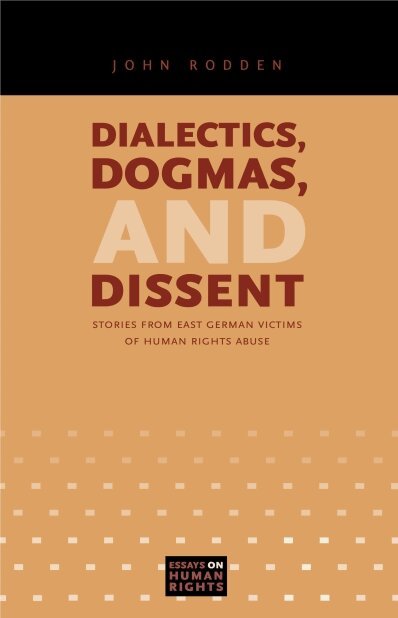
Dialectics, Dogmas, and Dissent
Stories from East German Victims of Human Rights Abuse
Häftad, Engelska, 2014
499 kr
Skickas inom 5-8 vardagar
Germany underwent two periods of dictatorial repression in the twentieth century, first under Hitler and the Nazis in the late 1930s and early 1940s and then under the communist German Democratic Republic from 1945 until the Berlin Wall fell in 1989. The abuses of human rights under the Nazis are well known and now abundantly documented. The abuses that occurred during the period of the GDR, however, are not so well known and are poorly documented. Through his interviews with survivors of GDR repression, John Rodden seeks to add to the history of this dark period. He reveals the many different ways in which ordinary people suffered at the hands of a brutal regime and its secret police enforcers, the Stasi. Some presented here are heroes; some are survivors, including those who played along to get along. As one teacher who conformed to stay safe admitted to Rodden, “It was a nation that, by cutting us off from the truth, made cowards of us all.”
484 kr
Skickas inom 5-8 vardagar
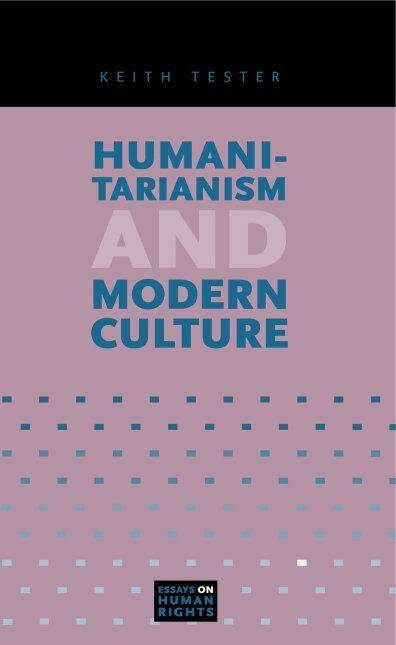
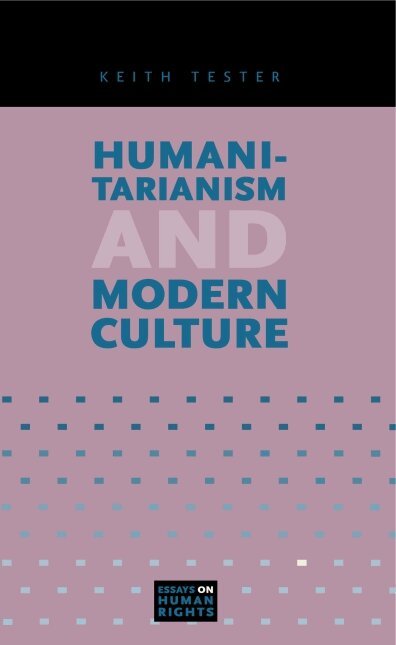
It seems paradoxical that in the West the predominant mode of expressing concern about suffering in the Third World comes through participation in various forms of popular culture—such as buying tickets to a rock concert like Live Aid in 1985—rather than through political action based on expert knowledge. Keith Tester’s aim in this book is to explore the phenomenon of what he calls “commonsense humanitarianism,” the reasons for its hegemony as the principal way for people in the West to relate to distant suffering, and its ramifications for our moral and social lives. As a remnant of the West’s past imperial legacy, this phenomenon is most clearly manifested in humanitarian activities directed at Africa, and that continent is the geographical focus of this critical sociology of humanitarianism, which places the role of the media at the center of its analysis.
415 kr
Skickas inom 5-8 vardagar
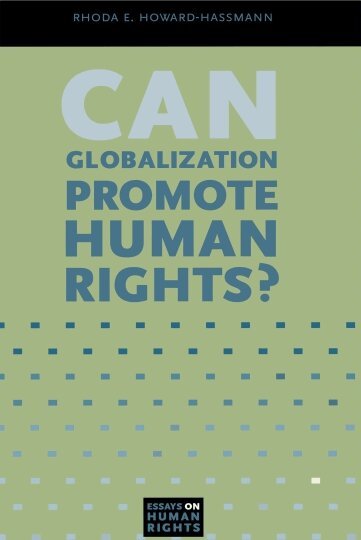
Globalization has affected everyone’s lives, and the reactions to it have been mixed. Legal scholars and political scientists tend to emphasize its harmful aspects, while economists tend to emphasize its benefits. Those concerned about human rights have more often been among the critics than among the supporters of globalization. In Can Globalization Promote Human Rights? Rhoda Howard-Hassmann presents a balanced account of the negative and positive features of globalization in relation to human rights, in both their economic and civil/political dimensions. On the positive side, she draws on substantial empirical work to show that globalization has significantly reduced world poverty levels, even while, on the negative side, it has exacerbated economic inequality across and within countries. Ultimately, she argues, social action and political decision making will determine whether the positive effects of globalization outweigh the negatives. And, in contrast to those who prefer either schemes for redistributing wealth on moral grounds or authoritarian socialist approaches, she makes the case for social democracy as the best political system for the protection of all human rights, civil and political as well as economic.
415 kr
Skickas inom 5-8 vardagar
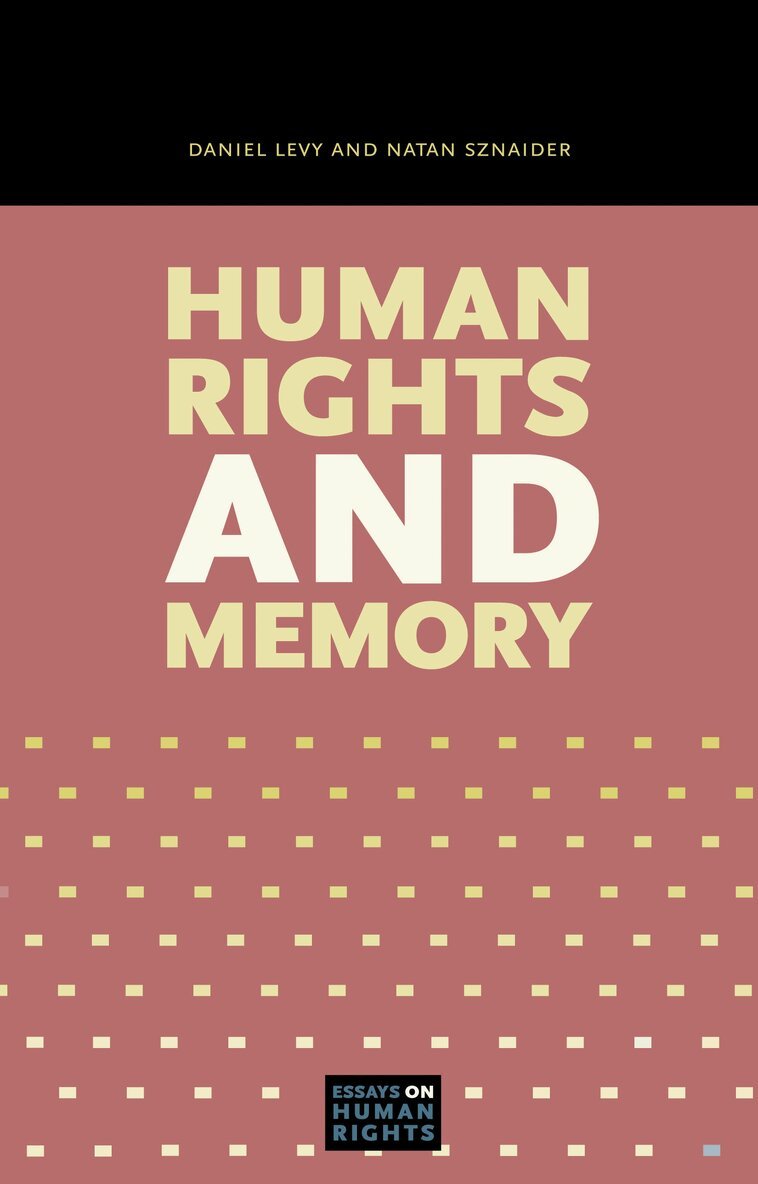
Memories of historical events like the Holocaust have played a key role in the internationalization of human rights. Their importance lies in their ability to bridge the universal and the particular—the universality of human values and the particularity of memories rooted in local human experiences. In Human Rights and Memory, Levy and Sznaider trace the growth of human rights discourse since World War II and interpret its deployment of memories as a new form of cosmopolitanism, exemplifying a dynamic through which global concerns become part of local experiences, and vice versa.
708 kr
Skickas inom 7-10 vardagar
Humanitarianism and Modern Culture is a timely and fascinating book which cuts across reportage of pop literary references to illuminate our understanding of the role of popular culture in shaping humanitarian discourse. --Ruti Teitel, Ernst C. Stiefel Professor of Comparative Law, New York Law School. ""In all the frenzy of celebrity humanitarianism, where famous idols call attention to the world's suffering--and to themselves--Keith Tester's trenchant book provides the critical eye necessary to understand how Western culture exploits humanitarian crisis. In the field of human rights today, there is a disturbing trend toward making human rights another cause celebre, packaged for the consumption of the world's fortunate consumers. How has the commercialization and consumerization of human rights affected the course of global emancipation from suffering? Tester's book provides some unsettling but crucial answers."" --Thomas Cushman, Wellesley College. It seems paradoxical that in the West the predominant mode of expressing concern about suffering in the Third World comes through participation in various forms of popular culture--such as buying tickets to a rock concert like Live Aid in 1985--rather than through political action based on expert knowledge. Keith Tester's aim in this book is to explore the phenomenon of what he calls ""commonsense humanitarianism,"" the reasons for its hegemony as the principal way for people in the West to relate to distant suffering, and its ramifications for our moral and social lives. As a remnant of the West's past imperial legacy, this phenomenon is most clearly manifested in humanitarian activities directed at Africa, and that continent is the geographical focus of this critical sociology of humanitarianism, which places the role of media at the center of its analysis.
708 kr
Skickas inom 7-10 vardagar
Memories of historical events like the Holocaust have played a key role in the internationalization of human rights. Their importance lies in their ability to bridge the universal and the particular—the universality of human values and the particularity of memories rooted in local human experiences. In Human Rights and Memory, Levy and Sznaider trace the growth of human rights discourse since World War II and interpret its deployment of memories as a new form of cosmopolitanism, exemplifying a dynamic through which global concerns become part of local experiences, and vice versa.