Everyday Communication Series - Böcker
Visar alla böcker i serien Everyday Communication Series. Handla med fri frakt och snabb leverans.
11 produkter
11 produkter
2 030 kr
Skickas inom 10-15 vardagar
A nostalgic interest in the past is a well-recognized feature of fast-changing, contemporary societies. It finds its expression in a variety of history-making practices of which the establishment of local heritage museums is a major manifestation in many parts of the world today. Katriel develops a communication-centered perspective on the study of heritage museums and -- by extension -- other tourist sites, highlighting the role of discourse in these institutionalized, yet vernacular contexts of cultural production, social legitimation, and identity formation. Descriptive and critical in orientation, this book combines a close analysis of museum discourse with an exploration of such larger issues as:* the socio-cultural role of museums as arenas for the production of collective memory, * the ideological and performative constraints that shape museum presentations, * the interfacing of verbal and visual codes of communication in the context of material displays, * the dialectical interplay of the local and the global in contemporary life, and * the interpenetration of the personal and the communal in vernacular processes of narrative production.Of interest to scholars in communication, linguistics, anthropology, history, museum studies, tourism, intercultural communication, middle eastern studies, or those with interests in narratives, material culture, and ethnography.
547 kr
Skickas inom 10-15 vardagar
A nostalgic interest in the past is a well-recognized feature of fast-changing, contemporary societies. It finds its expression in a variety of history-making practices of which the establishment of local heritage museums is a major manifestation in many parts of the world today. Katriel develops a communication-centered perspective on the study of heritage museums and -- by extension -- other tourist sites, highlighting the role of discourse in these institutionalized, yet vernacular contexts of cultural production, social legitimation, and identity formation. Descriptive and critical in orientation, this book combines a close analysis of museum discourse with an exploration of such larger issues as:* the socio-cultural role of museums as arenas for the production of collective memory, * the ideological and performative constraints that shape museum presentations, * the interfacing of verbal and visual codes of communication in the context of material displays, * the dialectical interplay of the local and the global in contemporary life, and * the interpenetration of the personal and the communal in vernacular processes of narrative production.Of interest to scholars in communication, linguistics, anthropology, history, museum studies, tourism, intercultural communication, middle eastern studies, or those with interests in narratives, material culture, and ethnography.
2 151 kr
Skickas inom 10-15 vardagar
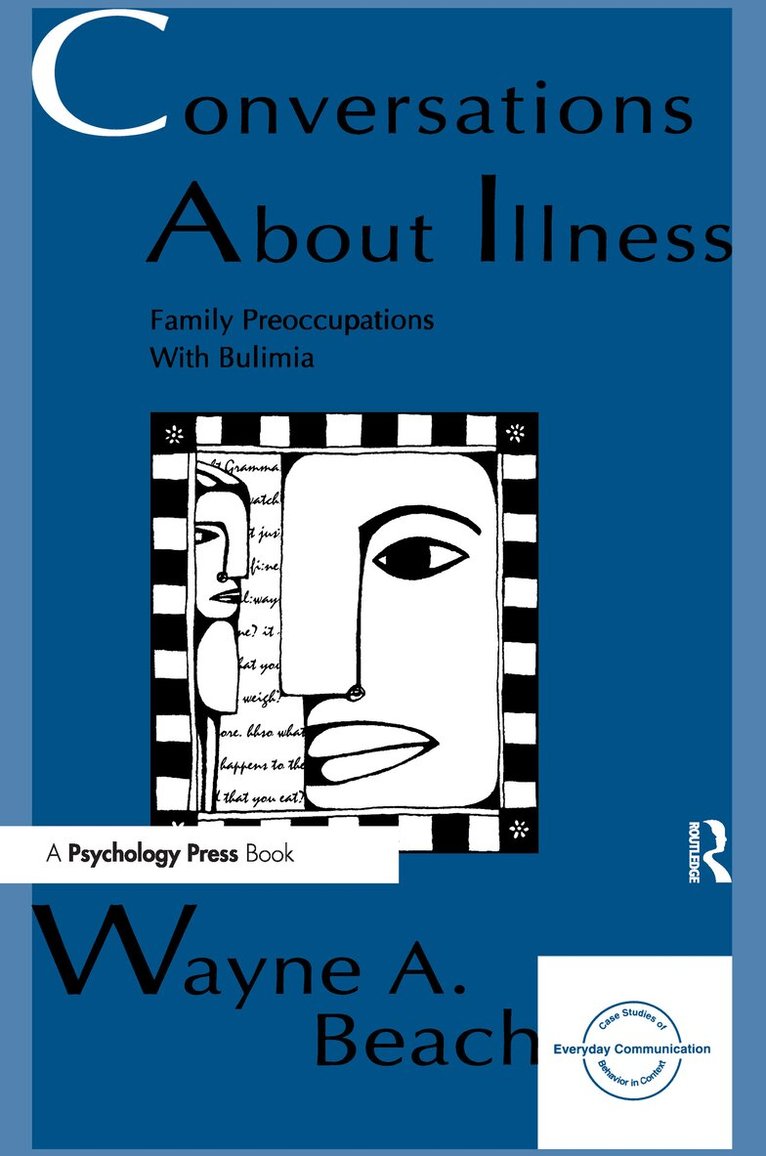
The grandmother granddaughter conversation examined in this book makes explicit what the detailed study of interaction reveals about two social problems--"bulimia" and "grandparent caregiving." For the first time, systematic attention is given to interactional activities through which family members display ordinary yet contradictory concerns about health and illness:* a grandmother's (who is also a registered nurse) attempts to initiate, confront, and remedy her granddaughter's lack of responsibility in admitting bulimic "problems" and committing to professional medical assistance;* a granddaughter's methods for avoiding ownership of the alleged bulimic problems by discounting the legitimacy of her grandmother's expressed concerns.Through analysis of a single audio-recorded and transcribed conversation, Wayne Beach reveals the altogether pervasive and often troubled talk surrounding family medical predicaments. From a careful review of extant theories that seek to explain eating disorders and grandparent caregiving, it becomes clear that an overreliance on self-report data has promoted underspecified understandings of "social contexts" -- conceptualizations void of real time practices and interactional consequences mirroring how families manage their daily affairs and understandings regarding health and illness. In contrast, this volume draws attention to family members' embodied interactional activities. Here it is seen, for example, how methods for expressing concern and caring by individuals may nevertheless eventuate in interactional troubles and problems between family members. The analysis reveals that, while displays of basic concerns for others' health and well being are routine occurrences between family members in home environments -- and of course, across friendship and various support networks -- even the delicate and well-intended management of such occasions guarantees neither agreement on the nature of the alleged "problems" nor, consequently, a commitment to seek professional help as a means of remedying a medical condition. In such cases, the very existence of an illness is itself a matter of some contention to be interactionally worked out. And it is perhaps both predictable and symptomatic that those explicitly denying (or as with the granddaughter, indirectly failing to admit) that problematic health behaviors exist, also somehow let it be made known that far too much attention is being given to possibilities and consequences of illness in the first instance.Implications of this investigation extend well beyond "bulimia" and "grandparent caregiving" to a vast array of casual and institutional involvements between family members, friends, and bureaucratic representatives such as those involved in long-term caregiving, dealing with cancer and Alzheimer's disease, or conducting psychiatric interviews and HIV/AIDS counseling sessions. Findings regarding the interactionally organized nature of talk about bulimia, as well as the problematic nature of caregiving, will be of value to researchers focusing on language and social interaction, health practitioners, and families alike.This volume includes the full transcript of the conversation in the case study. A copy of the audio-recording is available for classroom adoption and/or personal purchase by contacting: Wayne A. Beach, School of Communication, San Diego State University, San Diego, CA 92182-4516.
580 kr
Skickas inom 10-15 vardagar
The grandmother granddaughter conversation examined in this book makes explicit what the detailed study of interaction reveals about two social problems--"bulimia" and "grandparent caregiving." For the first time, systematic attention is given to interactional activities through which family members display ordinary yet contradictory concerns about health and illness:* a grandmother's (who is also a registered nurse) attempts to initiate, confront, and remedy her granddaughter's lack of responsibility in admitting bulimic "problems" and committing to professional medical assistance;* a granddaughter's methods for avoiding ownership of the alleged bulimic problems by discounting the legitimacy of her grandmother's expressed concerns.Through analysis of a single audio-recorded and transcribed conversation, Wayne Beach reveals the altogether pervasive and often troubled talk surrounding family medical predicaments. From a careful review of extant theories that seek to explain eating disorders and grandparent caregiving, it becomes clear that an overreliance on self-report data has promoted underspecified understandings of "social contexts" -- conceptualizations void of real time practices and interactional consequences mirroring how families manage their daily affairs and understandings regarding health and illness. In contrast, this volume draws attention to family members' embodied interactional activities. Here it is seen, for example, how methods for expressing concern and caring by individuals may nevertheless eventuate in interactional troubles and problems between family members. The analysis reveals that, while displays of basic concerns for others' health and well being are routine occurrences between family members in home environments -- and of course, across friendship and various support networks -- even the delicate and well-intended management of such occasions guarantees neither agreement on the nature of the alleged "problems" nor, consequently, a commitment to seek professional help as a means of remedying a medical condition. In such cases, the very existence of an illness is itself a matter of some contention to be interactionally worked out. And it is perhaps both predictable and symptomatic that those explicitly denying (or as with the granddaughter, indirectly failing to admit) that problematic health behaviors exist, also somehow let it be made known that far too much attention is being given to possibilities and consequences of illness in the first instance.Implications of this investigation extend well beyond "bulimia" and "grandparent caregiving" to a vast array of casual and institutional involvements between family members, friends, and bureaucratic representatives such as those involved in long-term caregiving, dealing with cancer and Alzheimer's disease, or conducting psychiatric interviews and HIV/AIDS counseling sessions. Findings regarding the interactionally organized nature of talk about bulimia, as well as the problematic nature of caregiving, will be of value to researchers focusing on language and social interaction, health practitioners, and families alike.This volume includes the full transcript of the conversation in the case study. A copy of the audio-recording is available for classroom adoption and/or personal purchase by contacting: Wayne A. Beach, School of Communication, San Diego State University, San Diego, CA 92182-4516.
2 088 kr
Skickas inom 10-15 vardagar
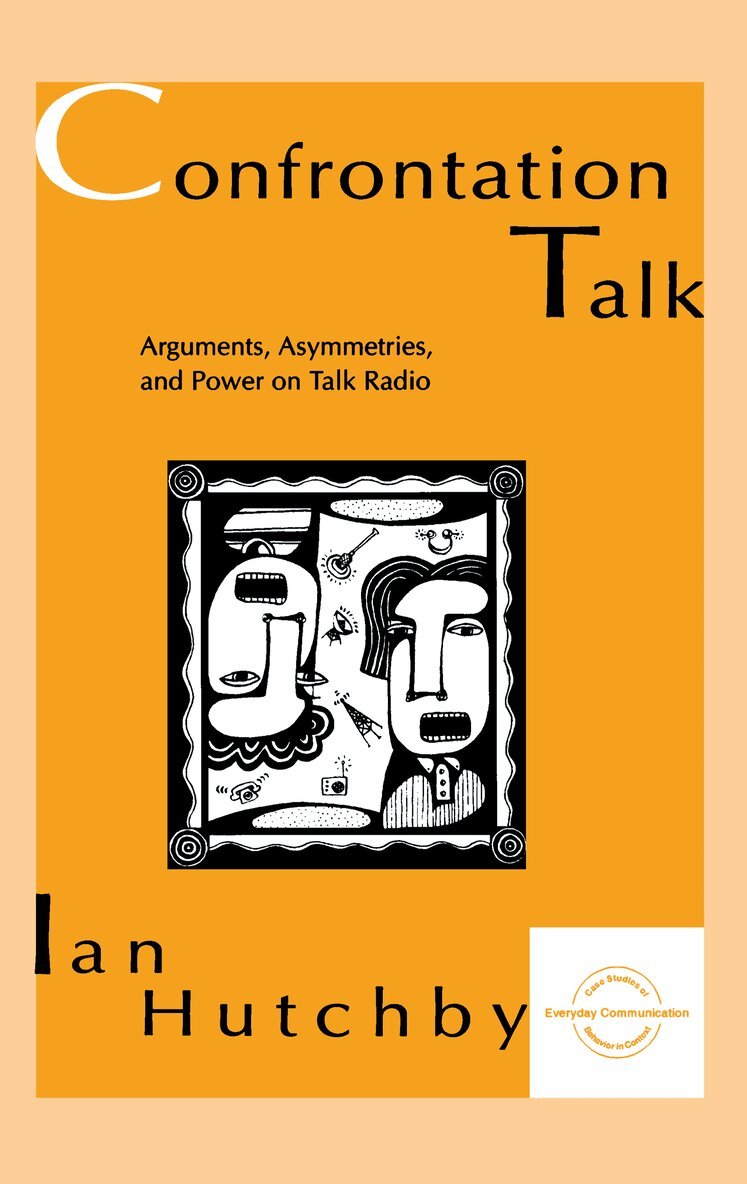
Using conversation analysis to explore the nature of argument, asymmetry, and power on talk radio, this book focuses on the interplay between the structures of talk in interaction and the structures of participation on talk radio. In the process, it demonstrates how conversation analysis may be used to account for power as a feature of institutional discourse.To address a number of key issues in the study of institutional communication and conflict talk, a case study of a British talk radio show is presented, stimulating some penetrating questions:* What is distinctive about interaction on talk radio?* What is the basis of the communicative asymmetries between hosts and callers?* How are their arguments constructed, and in what ways does the setting enable and constrain the production of conflict talk?These questions are answered through the detailed study of conversational phenomena, informed by a critical concern for the relationship between talk and social structure.This book will be of interest to a wide readership consisting of academics, advanced undergraduates, and postgraduate students in a range of courses in sociology, linguistics, media/communication/cultural studies, anthropology, and popular culture.
563 kr
Skickas inom 10-15 vardagar
Using conversation analysis to explore the nature of argument, asymmetry, and power on talk radio, this book focuses on the interplay between the structures of talk in interaction and the structures of participation on talk radio. In the process, it demonstrates how conversation analysis may be used to account for power as a feature of institutional discourse.To address a number of key issues in the study of institutional communication and conflict talk, a case study of a British talk radio show is presented, stimulating some penetrating questions:* What is distinctive about interaction on talk radio?* What is the basis of the communicative asymmetries between hosts and callers?* How are their arguments constructed, and in what ways does the setting enable and constrain the production of conflict talk?These questions are answered through the detailed study of conversational phenomena, informed by a critical concern for the relationship between talk and social structure.This book will be of interest to a wide readership consisting of academics, advanced undergraduates, and postgraduate students in a range of courses in sociology, linguistics, media/communication/cultural studies, anthropology, and popular culture.
in Search of A Voice
Karaoke and the Construction of Identity in Chinese America
Inbunden, Engelska, 1996
2 088 kr
Skickas inom 10-15 vardagar
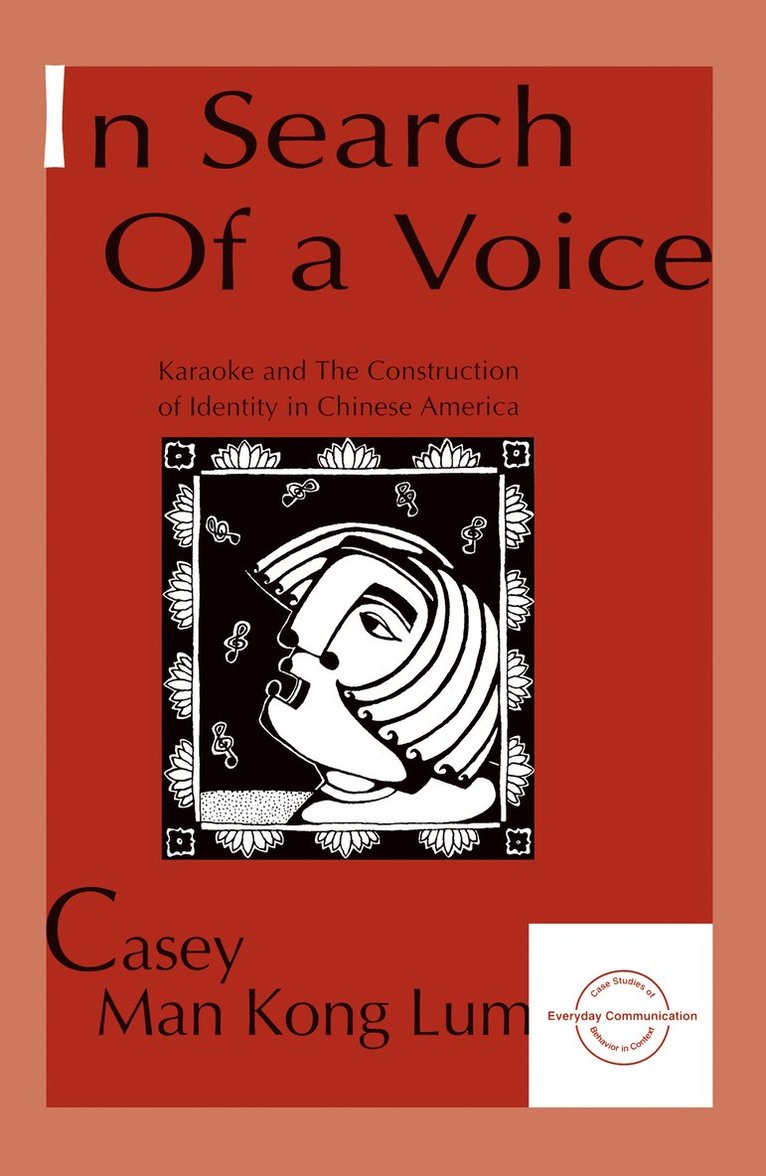
Originating in Japan early in the 1970s as a simple sing-along technology, karaoke has become a hybrid media form designed to integrate mass-mediated popular music, video images, computer graphics, and the live musical performance of its human users. Not only has karaoke become a multimillion-dollar entertainment industry, its varied uses have also evolved into diverse popular cultural and social practices among many people around the world. Based on a two-year ethnographic study, this book offers a penetrating analysis of how karaoke is used in the expression, maintenance, and (re)construction of social identity as part of the Chinese American experience. It also explores the theoretical implications of interaction between the media audience and karaoke as both an electronic communication technology and a cultural practice.This book analyzes the social origins of karaoke and the dramaturgical characteristics of karaoke events, and explains how various musical genres are reframed as karaoke music. It also visits the numerous karaoke scenes in their natural context -- the sites of the actual consumption of media products, such as expensive private homes and fancy hotel ballrooms in the affluent suburbs of New Jersey, working-class restaurants and nightclubs in the multiethnic neighborhoods in Flushing, Queens, and Cantonese opera music clubs in New York's Chinatown. Finally, the book offers an intimate analysis of how karaoke has been adopted by several interpretive communities of first-generation Chinese immigrants not only as popular entertainment but also as a means to help (re)define their social identity and way of life.
in Search of A Voice
Karaoke and the Construction of Identity in Chinese America
Häftad, Engelska, 1996
563 kr
Skickas inom 10-15 vardagar
Originating in Japan early in the 1970s as a simple sing-along technology, karaoke has become a hybrid media form designed to integrate mass-mediated popular music, video images, computer graphics, and the live musical performance of its human users. Not only has karaoke become a multimillion-dollar entertainment industry, its varied uses have also evolved into diverse popular cultural and social practices among many people around the world. Based on a two-year ethnographic study, this book offers a penetrating analysis of how karaoke is used in the expression, maintenance, and (re)construction of social identity as part of the Chinese American experience. It also explores the theoretical implications of interaction between the media audience and karaoke as both an electronic communication technology and a cultural practice.This book analyzes the social origins of karaoke and the dramaturgical characteristics of karaoke events, and explains how various musical genres are reframed as karaoke music. It also visits the numerous karaoke scenes in their natural context -- the sites of the actual consumption of media products, such as expensive private homes and fancy hotel ballrooms in the affluent suburbs of New Jersey, working-class restaurants and nightclubs in the multiethnic neighborhoods in Flushing, Queens, and Cantonese opera music clubs in New York's Chinatown. Finally, the book offers an intimate analysis of how karaoke has been adopted by several interpretive communities of first-generation Chinese immigrants not only as popular entertainment but also as a means to help (re)define their social identity and way of life.
563 kr
Skickas inom 10-15 vardagar
Before conclusions about Spanish in the United States can be drawn, individual communities must be studied in their own contexts. That is the goal of Puerto Rican Discourse. One tendency of previous work on Spanish in the United States has been an eagerness to generalize the findings of isolated studies to all Latino communities, but the specific sociocultural contexts in which people -- and languages -- live often demand very different conclusions. The results of Torres' work indicate that the Spanish of Puerto Ricans living in Brentwood continues to survive in a restricted context. Across the population of Brentwood -- for Puerto Ricans of all ages and language proficiencies -- the Spanish language continues to assume an important practical, symbolic, and affective role.An examination of the structural features of 60 oral narratives -- narrative components and the verbal tenses associated with each, overall Spanish verb use, and clause complexity -- reveals little evidence of the simplification and loss across generations found in other studies of Spanish in the United States. English-dominant Puerto Ricans are able Spanish language narrators demonstrating a wide variety of storytelling skills. The structure of their oral narratives is as complete and rich as the narratives of Spanish-dominant speakers.The content of these oral narratives of personal experience is also explored. Too often in studies on U.S. Spanish, sociolinguists ignore the words of the community; the focus is usually on the grammatical aspects of language use and rarely on the message conveyed. In this study, oral narratives are analyzed as constructions of gendered and ethnically marked identities. The stories demonstrate the contradictory positions in which many Puerto Ricans find themselves in the United States. All of the speakers in this study have internalized, to a greater or lesser extent, dominant ideologies of gender, ethnicity, and language, at the same time that they struggle against such discourse. The analysis of the discourse of the community reveals how the status quo is both reproduced and resisted in the members' narratives, and how ideological forces work with other factors, such as attitudes, to influence the choices speakers make concerning language use. A special feature of this book is that transcripts are provided in both Spanish and English.This volume combines ethnographic, quantitative, and qualitative discourse methodologies to provide a comprehensive and novel analysis of language use and attitudes of the Brentwood Puerto Rican community. Its rich linguistic and ethnographic data will be of interest to researchers and teachers in cultural communication, ethnic (Hispanic-American) studies, sociolinguistics, and TESL.
2 088 kr
Skickas inom 10-15 vardagar
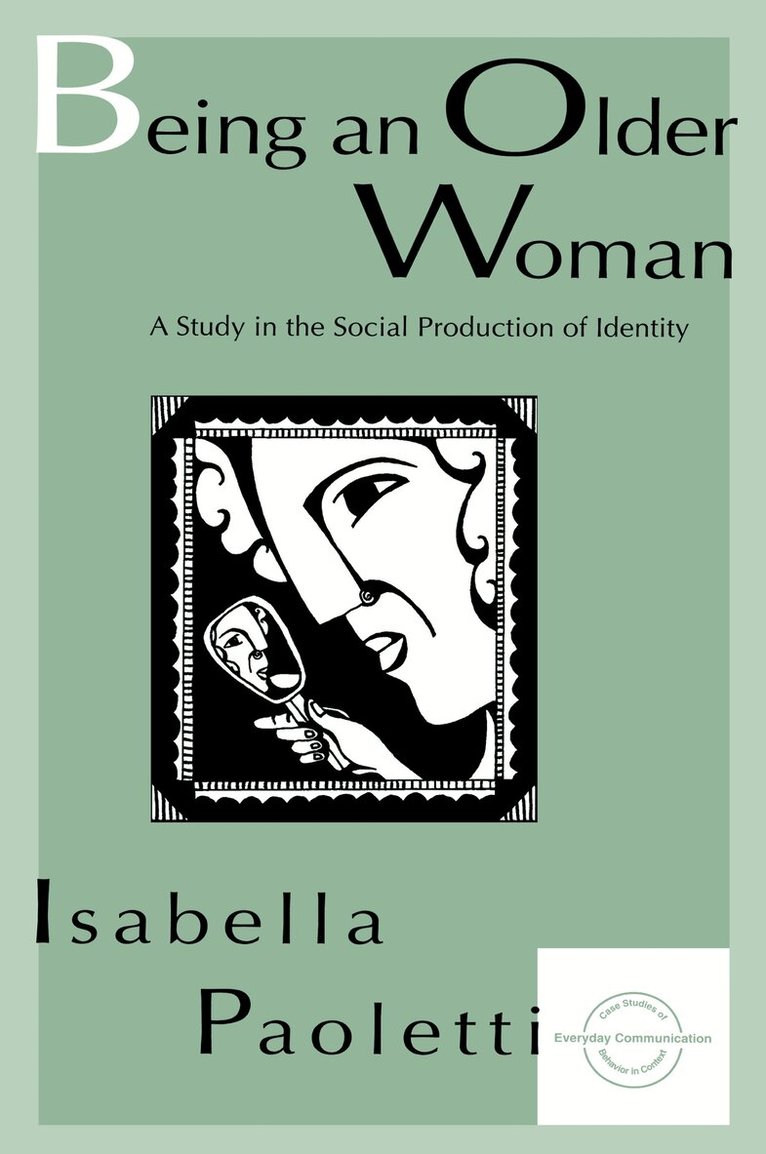
The study presented in this volume examines how older women's identities are socially constructed and, in particular, how they can be influenced by institutional intervention. The interest in identity production is not only theoretical, but also practical. Different perceptions of oneself as an older woman involve considerable differences in the definition of that person's possible sphere of action, and therefore, in her life perspectives. The data -- collected during a four-year project studying older women -- consist of video recordings of the committee meetings of the Older Women's Group of Perugia, Italy. Other video recordings of theater workshops and of the management committee meetings of the Senior Citizen Centers in Perugia are used as a source of comparison. Transcripts of the video material are analyzed through a detailed discourse analysis within an ethnomethodological framework. The data are used to explore how gender and age identities are interactionally constructed in specific institutional contexts. The first part of the book focuses on the interactional construction of aging. It shows how "being old" is constructed conversationally, in particular, through the use of membership categories. Distancing from the category "old" and denial of aging are frequently encountered conversational moves. However, the category is perceived as acceptable, even desired and invoked, when it becomes an institutionally relevant category, giving access to interesting activities or special benefits. The second part of the book explores gender identification. Conflict among different institutional subjects is shown to fade into gender conflict. The study analyzes how institutional interventions exert a powerful influence on older women's identities, giving them new opportunities for action. It also looks at how the conversational styles, attitudes, and activities of specific women influence the features of those very institutions.In short, this book describes the discourse and social practices that constitute older women's identities -- helping to identify and deconstruct stereotypes that tend to produce marginalization of older people. The book's existence is itself a contribution to the construction of older women as busy, lively, appealing human beings; it is the first research publication to emerge from The European Older Women's Project.Of interest to those in any discipline studying the topics of ethnomethodology, gender, aging, and identity.
563 kr
Skickas inom 10-15 vardagar
The study presented in this volume examines how older women's identities are socially constructed and, in particular, how they can be influenced by institutional intervention. The interest in identity production is not only theoretical, but also practical. Different perceptions of oneself as an older woman involve considerable differences in the definition of that person's possible sphere of action, and therefore, in her life perspectives. The data -- collected during a four-year project studying older women -- consist of video recordings of the committee meetings of the Older Women's Group of Perugia, Italy. Other video recordings of theater workshops and of the management committee meetings of the Senior Citizen Centers in Perugia are used as a source of comparison. Transcripts of the video material are analyzed through a detailed discourse analysis within an ethnomethodological framework. The data are used to explore how gender and age identities are interactionally constructed in specific institutional contexts. The first part of the book focuses on the interactional construction of aging. It shows how "being old" is constructed conversationally, in particular, through the use of membership categories. Distancing from the category "old" and denial of aging are frequently encountered conversational moves. However, the category is perceived as acceptable, even desired and invoked, when it becomes an institutionally relevant category, giving access to interesting activities or special benefits. The second part of the book explores gender identification. Conflict among different institutional subjects is shown to fade into gender conflict. The study analyzes how institutional interventions exert a powerful influence on older women's identities, giving them new opportunities for action. It also looks at how the conversational styles, attitudes, and activities of specific women influence the features of those very institutions.In short, this book describes the discourse and social practices that constitute older women's identities -- helping to identify and deconstruct stereotypes that tend to produce marginalization of older people. The book's existence is itself a contribution to the construction of older women as busy, lively, appealing human beings; it is the first research publication to emerge from The European Older Women's Project.Of interest to those in any discipline studying the topics of ethnomethodology, gender, aging, and identity.