Exxon Lecture Series – serie
Visar alla böcker i serien Exxon Lecture Series. Handla med fri frakt och snabb leverans.
2 produkter
2 produkter
142 kr
Skickas inom 7-10 vardagar
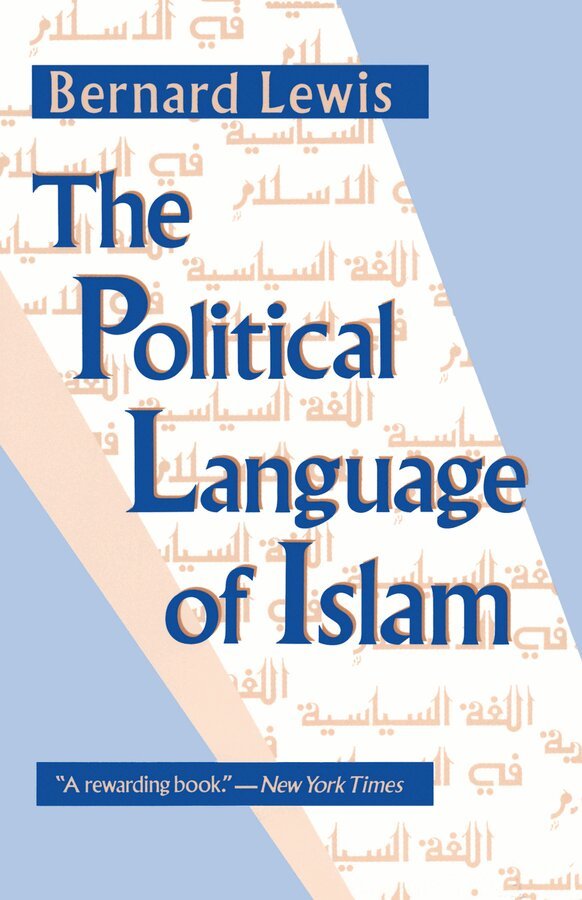
What does jihad really mean? What is the Muslim conception of law? What is Islam's stance toward unbelievers? Probing literary and historical sources, Bernard Lewis traces the development of Islamic political language from the time of the Prophet to the present. His analysis of documents written in Arabic, Persian, and Turkish illuminates differences between Muslim political thinking and Western political theory, and clarifies the perception, discussion, and practices of politics in the Islamic world."Lewis's own style, combining erudition with a simple elegance and subtle humor, continues to inspire. In an era of specialization and narrowing academic vision, he stands alone as one who deserves, without qualification, the title of historian of Islam."—Martin Kramer, Middle East Review"A superb effort at synthesis that presents all the relevant facts of Middle Eastern history in an eminently lucid form. . . . It is a book that should prove both rewarding and congenial to the Muslim reader."—S. Parvez Manzor, Muslim World Book Review"By bringing his thoughts together in this clear, concise and readable account, [Lewis] has placed in his debt scholars and all who seek to understand the Muslim world."—Ann K. S. Lambton, Bulletin of the School of Oriental and African Studies"[Lewis] constructs a fascinating account of the ways in which Muslims have conceived of the relations between ruler and ruled, rights and duties, legitimacy and illegitimacy, obedience and rebellion, justice and oppression. And he shows how changes in political attitudes and concepts can be traced through changes in the political vocabulary."—Shaul Bakhash, New York Review of Books
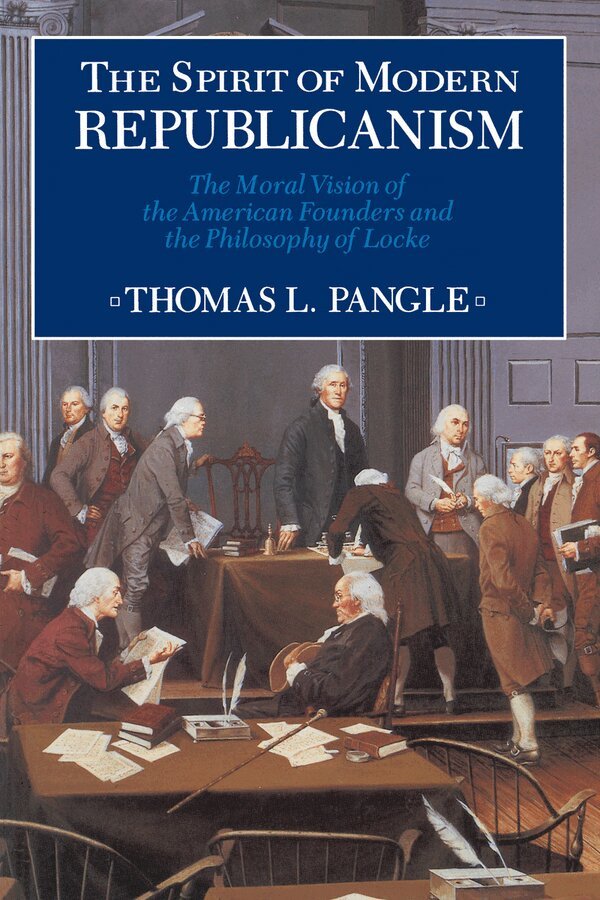
Spirit of Modern Republicanism
The Moral Vision of the American Founders and the Philosophy of Locke
Häftad, Engelska, 1990
355 kr
Skickas inom 7-10 vardagar
The Spirit of Modern Republicanism sets forth a radical reinterpretation of the foundations on which the American regime was constructed. Thomas L. Pangle argues that the Founders had a dramatically new vision of civic virtue, religious faith, and intellectual life, rooted in an unprecedented commitment to private and economic liberties. It is in the thought of John Locke that Pangle finds the fullest elaboration of the principles supporting the Founders' moral vision. "A work of extraordinary ambition, written with great intensity. . . . [Pangle offers] a trenchant analysis of Locke's writings, designed to demonstrate their remarkable originality and to clarify by doing so as much as the objective predicament as the conscious intentions of the Founding Fathers themselves."—John Dunn, Times Higher Education Supplement "A forcefully argued study of the Founding Fathers' debt to Locke. . . . What distinguishes Pangle's study from the dozens of books which have challenged or elaborated upon the republican revision is the sharpness with which he exposes the errors of the revisionists while at the same time leaving something of substantive value for the reader to consider."—Joyce Appleby, Canadian Journal of History "Breathtaking in its daring and novelty. . . . Pangle's book is tense and tenacious, a stunning meditation on America's political culture."—John Patrick Diggins, Transactions of the C. S. Peirce Society