Feminist and Queer International Law – Serie
Visar alla böcker i serien Feminist and Queer International Law. Handla med fri frakt och snabb leverans.
7 produkter
7 produkter
1 819 kr
Skickas inom 10-15 vardagar
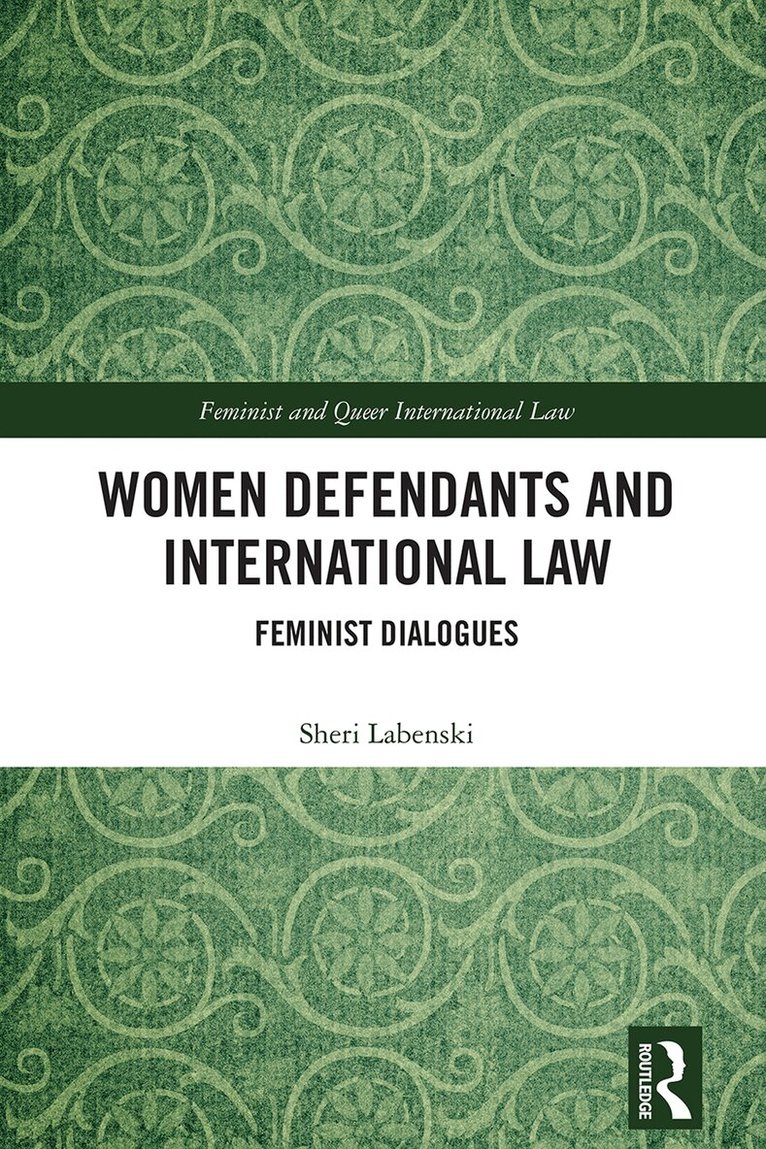
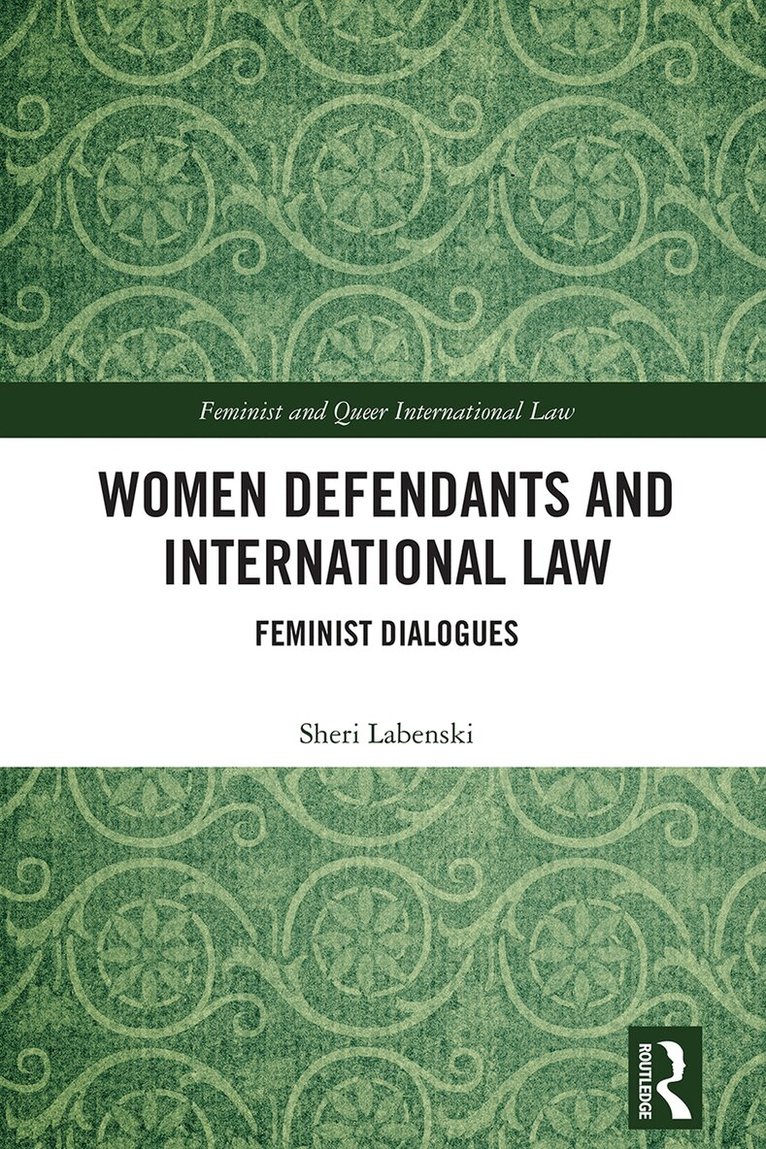
This book addresses the largely neglected place of women defendants in contemporary international criminal law, beyond the construction of women as victims, and asks what the analysis of women perpetrators, defendants and suspects reveals about international criminal law, the media and feminism.The book uses the topic of women perpetrators, defendants and suspects as a way to explore the concept of legal subjectivity via a gender analysis. It highlights how women perpetrators, defendants and suspects are constituted through three spheres, namely the areas of international criminal law, the media and feminism. In examining the relationship between women perpetrators, defendants and suspects and each of these spheres, the book exposes embedded gender biases and structural gender fractures. These reveal that problematic assumptions about how gender operates in conflict are embedded in the very foundations of legal imaginations. Ultimately, the book argues that this has far reaching consequences, beyond its impact on current understandings of armed conflict. Rather, these assumptions should be a concern for us all, even in times of peace.This book will be of use to legal academics and practitioners interested in gender within international criminal law, as well as those concerned with contemporary feminist approaches to law.
1 944 kr
Skickas inom 5-8 vardagar
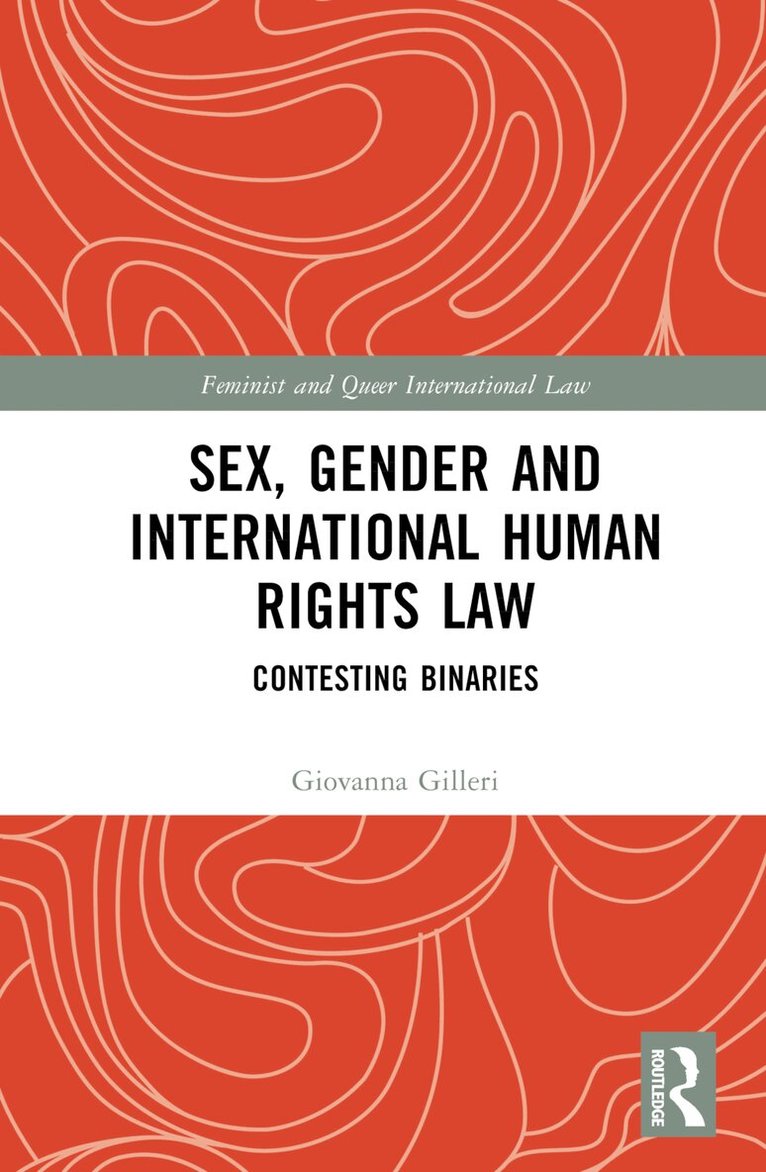
This book investigates the relationship between sex and gender under international human rights law, and how this influences the formation of individual subjects.Combining feminist, queer, and psychoanalytical perspectives, the author scrutinises the sexed/gendered human rights discourse, starting from the assumptions underpinning interpretations of sex, gender, and the related notions of gender identity, sex characteristics, and sexual orientation. Human rights law has so far offered only a limited account of the diversity of sexed/ gendered subjectivities, being based on a series of simplistic assumptions. Namely, that there are only two sexes and two genders; sex is a natural fact and gender is a social construct; gender is the metonymic signifier for women; and gender power relations take the asymmetrical shape of male domination versus female oppression. Against these assumptions, dominative and subordinate postures interchangeably attach to femininities and masculinities, depending on the subjects’ roles, their positionalities, and the situational meanings of their acts. The limits of an approach to gender which is based on rigid binaries are evident in two case studies, on the UN human rights treaty bodies’ vocabulary on medically unnecessary interventions upon intersex children and on the European Court of Human Rights’ narrative on sadomasochism.This examination of the impact of human rights on gendered subjectivities will be of interest to scholars, students, and researchers in international law, gender studies, queer studies, cultural studies, critical race theory, and psychoanalysis.
581 kr
Skickas inom 10-15 vardagar
This book investigates the relationship between sex and gender under international human rights law, and how this influences the formation of individual subjects.Combining feminist, queer, and psychoanalytical perspectives, the author scrutinises the sexed/gendered human rights discourse, starting from the assumptions underpinning interpretations of sex, gender, and the related notions of gender identity, sex characteristics, and sexual orientation. Human rights law has so far offered only a limited account of the diversity of sexed/ gendered subjectivities, being based on a series of simplistic assumptions. Namely, that there are only two sexes and two genders; sex is a natural fact and gender is a social construct; gender is the metonymic signifier for women; and gender power relations take the asymmetrical shape of male domination versus female oppression. Against these assumptions, dominative and subordinate postures interchangeably attach to femininities and masculinities, depending on the subjects’ roles, their positionalities, and the situational meanings of their acts. The limits of an approach to gender which is based on rigid binaries are evident in two case studies, on the UN human rights treaty bodies’ vocabulary on medically unnecessary interventions upon intersex children and on the European Court of Human Rights’ narrative on sadomasochism.This examination of the impact of human rights on gendered subjectivities will be of interest to scholars, students, and researchers in international law, gender studies, queer studies, cultural studies, critical race theory, and psychoanalysis.
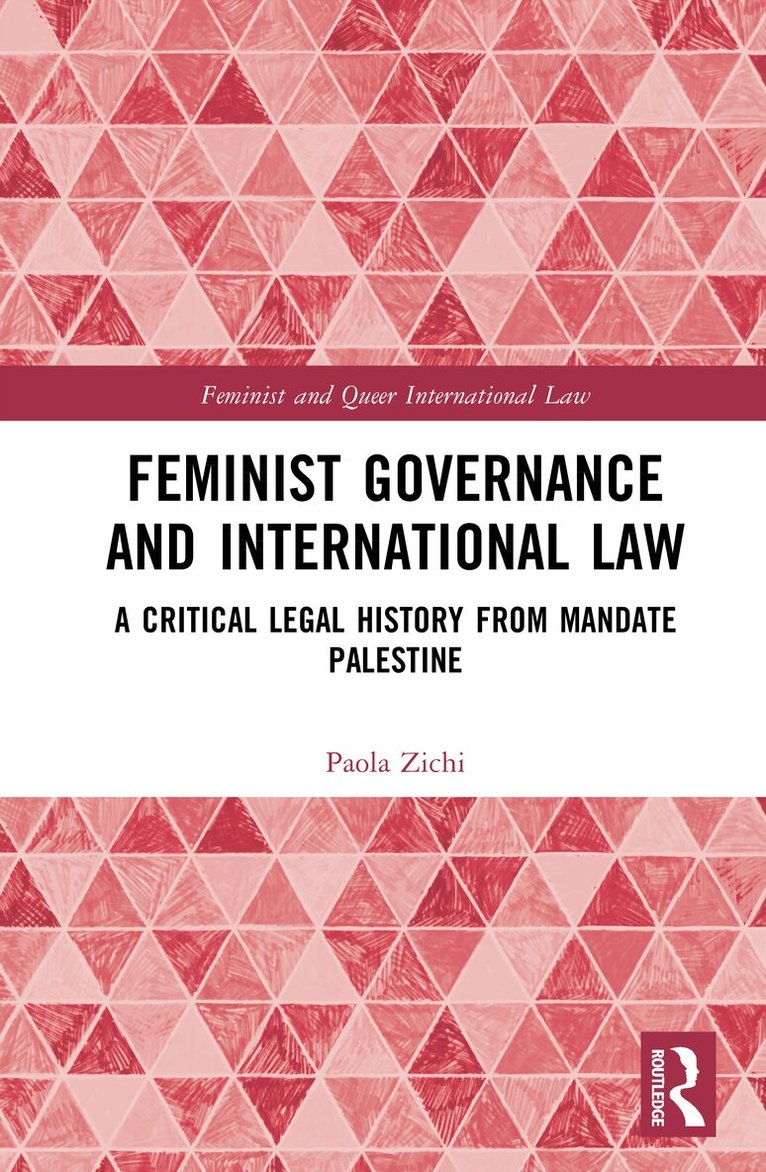
Feminist Governance and International Law
A Critical Legal History from Mandate Palestine
Inbunden, Engelska, 2025
1 944 kr
Skickas inom 10-15 vardagar
Documenting the intertwined history of international institutions and transnational feminism through the lens of Mandate Palestine in the inter-war period, this book elicits the historical formation of an early form of feminist governance at the international level. It is commonly accepted that ‘International Women’s Rights’ entered the halls of international institutions with the 1979 passage of the Convention on the Elimination of Discrimination Against Women. But as this book argues, feminist interventions in international law began much earlier. Engaging the history of feminist engagements with the first international institution of modern international law, the League of Nations, this book – based on archival research and drawing upon TWAIL and critical legal feminist approaches – focuses on the Arab-Palestinian feminist movement. Uncovering a peripheral feminist legal agenda, driven by women under colonial rule, the book interrogates feminist legal advances in three different fields: criminal and anti-trafficking laws, family and divorce laws, and human rights and prisoners’ laws. Detailing this early feminist legal activism, the book demonstrates how today’s feminists’ mission, as enshrined in the UN Charter and subsequent conventions, are the by-product of a much longer history of colonial resistance and contestation. This book will be of considerable interest to scholars and researchers in the fields of international law, international history, women’s and feminist history, and feminist legal studies.
2 274 kr
Skickas inom 10-15 vardagar
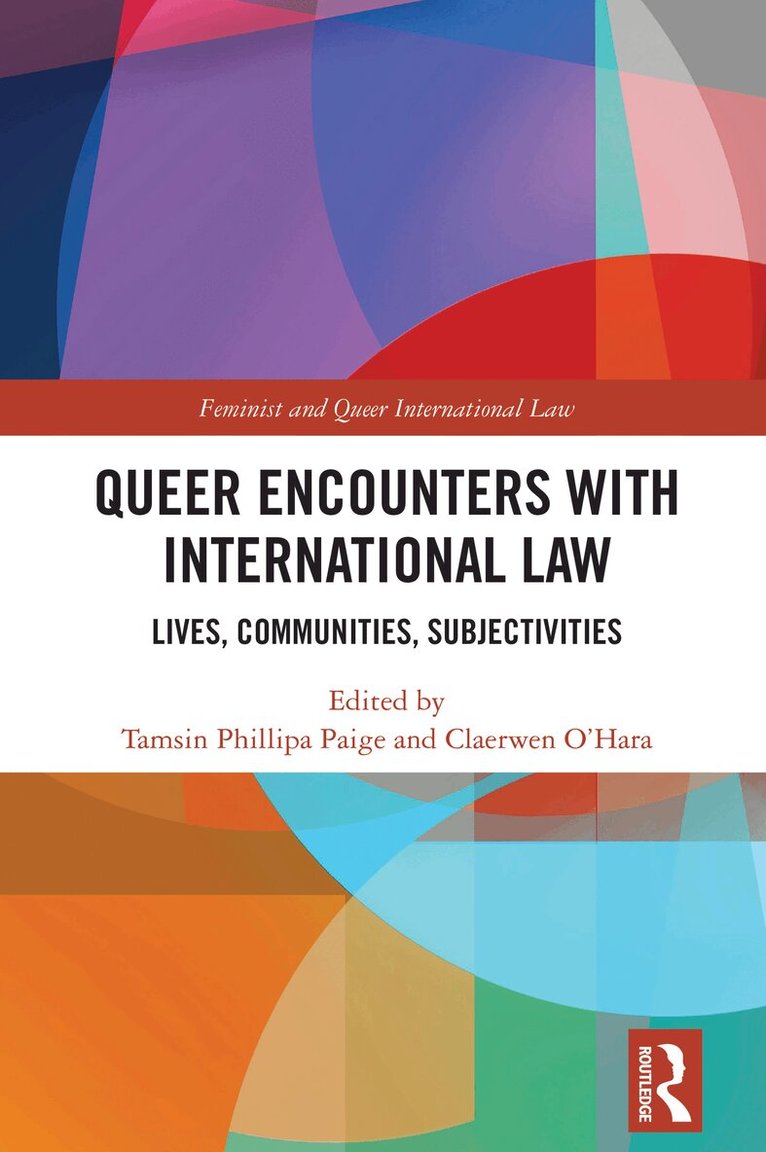
This book focuses on queer people and their encounters with international law.Traversing a wide range of topics, from trans discrimination and conversion therapy to sadomasochism and abolitionism, this book asks questions about the (im)possibility of freedom and equality for queer communities in the world and the role that different areas of international law have to play in such a pursuit. It considers how queer lives and bodies are rendered legible or illegible to the law through how we define concepts such as ‘gender [identity]’ or ‘private life’. It also reflects on whether legal activism focused on LGBTIQA+ rights can ever reflect the insights of queer theory. The book engages with new issues in international law, such as recent contestation over the meaning of ‘gender’ in international human rights law and international criminal law. It also showcases the diversity of approaches to queering international law that are emerging. While some chapters offer a critique of international law’s violent and exclusionary tendencies, others re-invest in international law as a tool in the struggle for queer liberation by seeking to re-imagine it in queer directions. The questions addressed in this book are wide-ranging and approached differently by the authors. However, all centre on the complex relationship between international law, queer theory, and queer lives and what the future holds for these encounters going forward.This collection of queer encounters with international law will be invaluable to scholars of international law, human rights, and international relations with an interest in critical approaches to these areas, as well as to researchers, activists, and practitioners working in cultural, gender, and sexuality studies.
1 819 kr
Skickas inom 10-15 vardagar
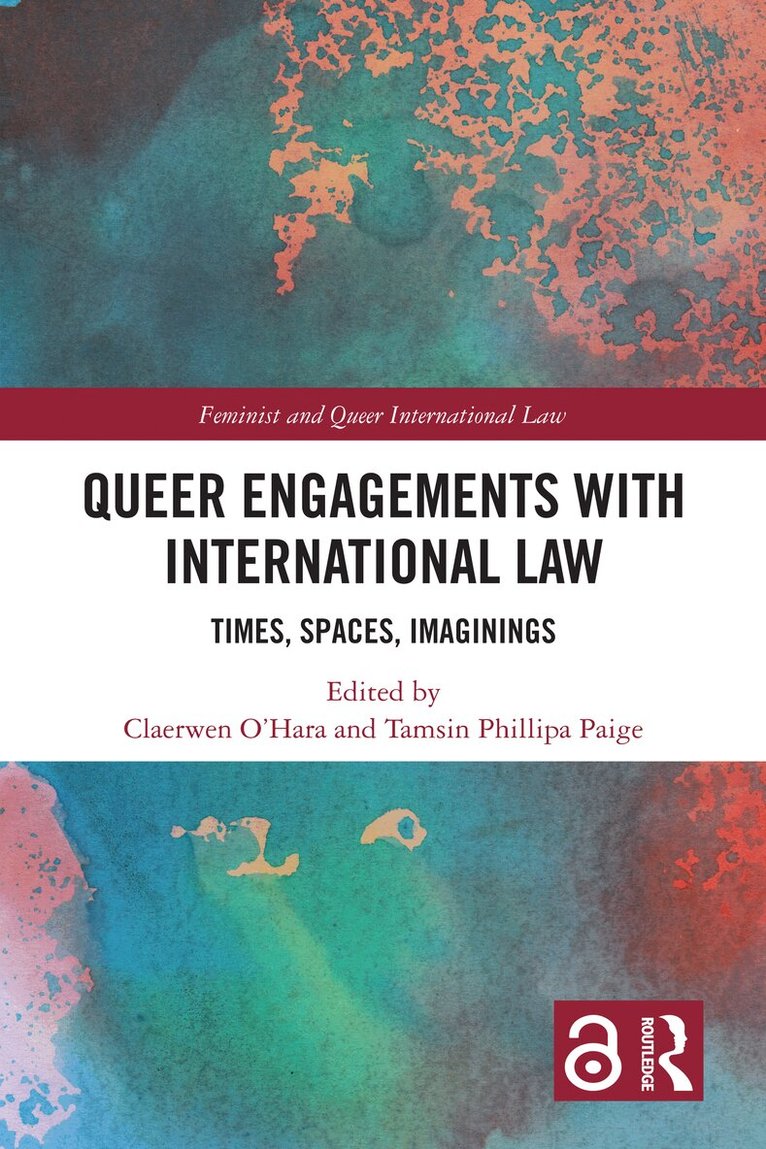
This book explores times, spaces and imaginings relating to international law through the lens of queer theory.For some time now, queer theorists and legal scholars who think with queer theory have asked, what happens when queer theory moves out of its home base of gender and sexuality? The chapters in this book begin to answer this question by applying insights from queer theory to a diverse array of international law topics, from travaux préparatoires and international judging to the environment, oceans and outer space. While some contributions maintain a focus on gender and sexual diversity, all are characterised by a shift away from questions about LGBTIQA+ people towards wider discussions about power, normality, difference and liberation in international law. Through these engagements, the book demonstrates how queer theory can provide insights into a range of international law issues by allowing us to ‘make strange’ the taken-for-granted and contributing to a broader practice of reading for difference rather than dominance. The book engages with contemporary challenges in international law, from the climate crisis to new military technologies, such as automated naval vessels. It also showcases the diversity of approaches to queering international law that are emerging, with some authors drawing attention to the violence of (neo-)colonial international law and others engaging in more utopian and reparative thinking.This collection of queer theoretical engagements with international law will be invaluable to scholars of international law and international relations with an interest in critical approaches to these areas; as well as to researchers, activists and practitioners working in cultural, gender, queer and/or postcolonial studies.
581 kr
Skickas inom 10-15 vardagar
This book addresses the largely neglected place of women defendants in contemporary international criminal law, beyond the construction of women as victims, and asks what the analysis of women perpetrators, defendants and suspects reveals about international criminal law, the media and feminism.The book uses the topic of women perpetrators, defendants and suspects as a way to explore the concept of legal subjectivity via a gender analysis. It highlights how women perpetrators, defendants and suspects are constituted through three spheres, namely the areas of international criminal law, the media and feminism. In examining the relationship between women perpetrators, defendants and suspects and each of these spheres, the book exposes embedded gender biases and structural gender fractures. These reveal that problematic assumptions about how gender operates in conflict are embedded in the very foundations of legal imaginations. Ultimately, the book argues that this has far reaching consequences, beyond its impact on current understandings of armed conflict. Rather, these assumptions should be a concern for us all, even in times of peace.This book will be of use to legal academics and practitioners interested in gender within international criminal law, as well as those concerned with contemporary feminist approaches to law.