film|minutes – serie
Visar alla böcker i serien film|minutes. Handla med fri frakt och snabb leverans.
2 produkter
2 produkter
266 kr
Skickas inom 5-8 vardagar
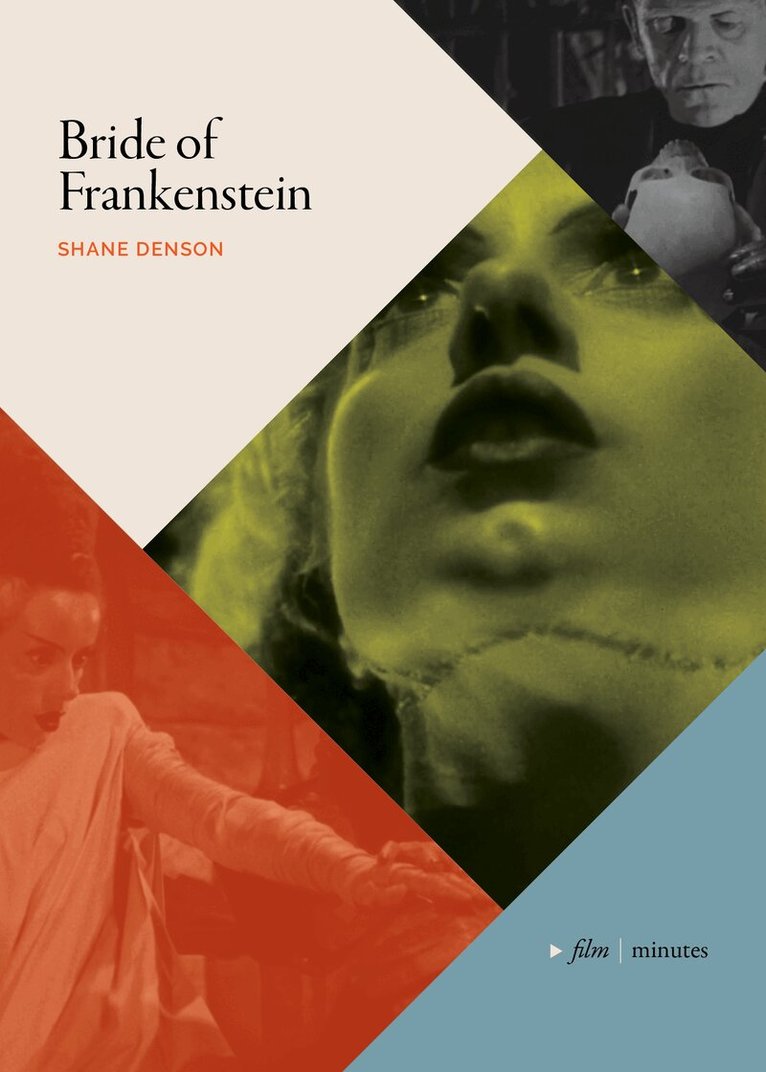
The inaugural volume in the film|minutes book series, this book offers a close, minute-by-minute analysis of director James Whale’s iconic 1935 masterpiece Bride of Frankenstein. Alternating between a variety of analytical lenses, including descriptive, historical, and philosophical, this study breaks from conventional forms of film-analytical writing and offers an experiment in defamiliarization and looking anew. In the 1930s, the film opened a space for reflection on the rapid normalization of filmic sound, which it both relies on and estranges. In the 2020s, Bride of Frankenstein brings forth questions of new technological mediums such as artificial intelligence and the transformation of human agency. Shane Denson argues that such associations should not be written off as mere anachronism, but seen, rather, as a strategy of serialization; that is, it is by means of such anachronism that a film like Bride of Frankenstein remains open to new developments and novel situations, and thus comes alive for future viewers. Volumes in the film|minutes series cut up films into segments of exactly one minute and transform each minute into an innovative tool for thinking with the film. Each volume works rigorously with the concept of “the minute” as a non-cinematic scale/quantity, a means to zoom in on (dis)orderly fragments that do not necessarily respect the confinements of cinematic form or meaning. As a critical practice, the focus on minutes causes disruptions and displacement that create novel connections and perspectives, and uncovers hidden traces, making it possible to watch each film anew.
435 kr
Kommande
This volume in the film|minutes series focuses on Alfréd Radok’s Daleká cesta (Distant Journey, 1948), a pioneering Czechoslovak film admired by figures such as André Bazin and Alain Resnais. Renowned for its bold experiments in cinematic montage, the film combines fictional scenes with newsreel footage, Nazi propaganda, and images of liberated concentration camps. Produced shortly after the war, Daleká cesta remains one of the earliest and most formally daring cinematic attempts to grapple with the Holocaust. Drawing on the creators’ ideas of editorial montage as a means of rescuing victims of atrocity—at least momentarily—from historical determinism, the book explores how a montage like experiment in film analysis can challenge not only deterministic narratives of history, but also the conventions of established theoretical frameworks and academic writing.Volumes in the film|minutes series cut up films into segments of exactly one minute and transform each minute into an innovative tool for thinking with the film. Each volume works rigorously with the concept of “the minute” as a non-cinematic scale/quantity, a means to zoom in on (dis)orderly fragments that do not necessarily respect the confinements of cinematic form or meaning. As a critical practice, the focus on minutes causes disruptions and displacement that create novel connections and perspectives, and uncovers hidden traces, making it possible to watch each film anew.