First Nations Languages - Böcker
Visar alla böcker i serien First Nations Languages. Handla med fri frakt och snabb leverans.
5 produkter
5 produkter
1 615 kr
Skickas inom 7-10 vardagar
This timely book is the first complete descriptive grammar of Lillooet, an indigenous Canadian language spoken in British Columbia, now threatened with extinction. The author discusses three major aspects of the language – sound system, word structure, and syntax – in great detail. The classical structuralism method of analysis, as developed in North America by Leonard Bloomfield and his followers, is used to look at every aspect of Lillooet in terms of its function and position within the whole structure of the language. Van Eijk explains terms and procedures in order to make the book accessible not only to the advanced linguist, but also to the undergraduate student with basic linguistic training. Written with great clarity, and well organized, the book is illustrated with copious examples drawn from many years of fieldwork in St'át'imc territory.A fully analysed and translated Lillooet text is included in an appendix to illustrate the grammatical patterns discussed in the main body. A second appendix has a conversion table comparing the standard Amerindian orthography used in the book with the practical orthography used in Lillooet-speaking communities.The Lillooet Language is an invaluable addition to other recent studies of neighbouring Salish languages such as Squamish, Halkomelem, Thompson, and Shuswap. It could be used both as a textbook for studies in the structure of a selected language, and as collateral reading for courses in phonology, morphology and syntax.
When I Was Small – I Wan Kwikws
A Grammatical Analysis of St'át'imc Oral Narratives
Inbunden, Engelska, 2005
1 490 kr
Skickas inom 11-20 vardagar
A collection of the personal life histories of four female St'at'imc elders: Beverley Frank, Gertrude (Gertie) Ned, Laura Thevarge, and Rose Agnes Whitley. Their stories are presented in the original St'at'imcets as well as in English translation. In addition, a morpheme-by-morpheme gloss is provided for the purposes of linguistic analysis.
1 791 kr
Skickas inom 7-10 vardagar
Witsuwit'en is an endangered First Nations language, spoken in western-central British Columbia. A member of the Athapaskan family of languages, the language had been known to have some intriguing characteristics of consonant-vowel interaction, the details of which have been in dispute among scholars.Witsuwit'en Grammar presents acoustic studies of several aspects of Witsuwit'en phonetics, including vowel quality, vowel quantity, ejectives, voice quality, and stress. Information about the sound system and word structure of Witsuwit'en is also provided, revealing many unusual features not previously described in this level of detail for an Athapaskan language.Witsuwit'en has elaborate morphology, even by the standards of the Athapaskan language family. Witsuwit'en Grammar will be of interest to anthropologists interested in the history of the Athapasakan language family, linguists interested in comparative Athapaskan grammar, or any linguist interested in phonetics-phonology or phonology-morphology interaction.
479 kr
Skickas inom 7-10 vardagar
A two-edged sword of reconciliation and betrayal, Chinook Jargon (aka Wawa) arose at the interface of "Indian" and "White" societies in the Pacific Northwest. Wawa's sources lie first in the language of the Chinookans who lived along the lower Columbia River, but also with the Nootkans of the outer coast of Vancouver Island. With the arrival of the fur trade, the French voyageurs provided additional vocabulary and cultural practices. Over the next decades, ensuing epidemics and the Oregon Trail transformed the Chinookans and their homeland, and Wawa became a diaspora language in which many communities seek some trace of their past. A previously unpublished glossary of Wawa circa 1825 is included as an appendix to this volume.
696 kr
Skickas inom 7-10 vardagar
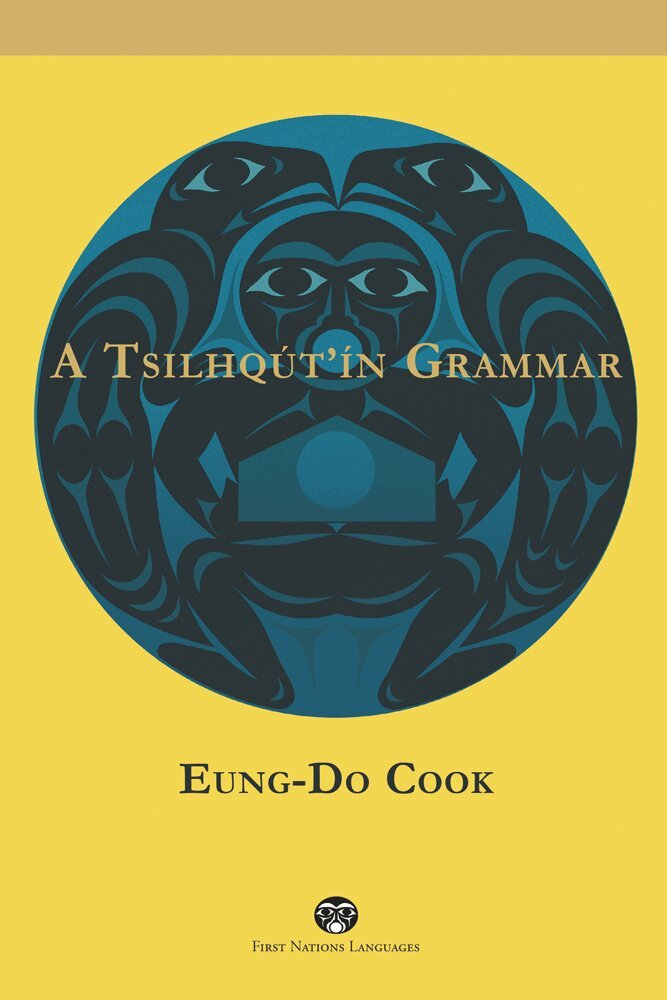
Tsilhqút'ín, also known as Chilcotin, is a northern Athabaskan language spoken by the people of the Chilco River (Tsilhqóx) in Interior British Columbia. This language is spoken by approximately two thousand adults in six reserves, and both spoken and written forms are taught as part of school curricula. Until now, the literature on Tsilhqút'ín contained very little description of the language. With forty-seven consonants and six vowels plus tone, the phonological system is notoriously complex.This book is the first comprehensive grammar of Tsilhqu´t'i´n. It covers all aspects of linguistic structure -- phonology, morphology, and syntax -- including negation and questions. Also included are three stories passed down by Tsilhqút'ín elders Helena Myers (translated by Maria Myers), William Myers, and Mabel Alphonse (translated by Bella Alphonse), which are annotated with linguistic analysis. The product of decades of work by linguist Eung-Do Cook, A Tsilhqút'ín Grammar makes an important contribution to the ongoing documentation of Athabaskan languages.