• Fri frakt över 249 kr
  • •
  • Snabba leveranser
  • •
  • Billiga böcker
Kundservice

Du är på sajten för privatpersoner.

Företag, bibliotek eller offentlig verksamhet?

Du handlar på classic.bokus.com, där alla dina funktioner finns intakta.
Till classic.bokus.com
Bokus logotyp. Gå till startsidan.
  • Erbjudanden
  • Student
  • Topplistor
  • Barn & ungdom
  • Bokus Play
  • E-böcker
  • Ljudböcker
  • Pocketböcker
  • Spel och pussel

Pocketfynda! Hundratals böcker för 49 kr/st →

Sidfot

Mina sidor

    Hjälp

    • Kundservice
    • Vanliga frågor och svar
    • Frakt och leverans
    • Retur vid ångerrätt
    • Reklamera vara
    • Betalning
    • Köpvillkor
    • Allmänna villkor
    • Information om webbplatsens tillgänglighet

    Om Bokus

    • Om oss
    • Pressrum
    • För studenter
    • För företag
    • För bibliotek och offentlig verksamhet
    • För leverantörer
    • Hållbarhet

    Populärt

    • Aktuella erbjudanden
    • Presentkort
    • Studentlitteratur
    • Nya böcker
    • Topplistor
    • Signerade böcker
    • Engelska böcker

    Inspiration

    • Boktips
    • BookTok
    • Barnbokskaraktärer
    • Populära författare
    Logotyp för Bokus
    Följ oss på Facebook (extern länk)Följ oss på Instagram (extern länk)Följ oss på YouTube (extern länk)Följ oss på TikTok (extern länk)
    bokus @ CookiesAnpassa cookiesIntegritetspolicyKöpvillkor
    Till Citymail hemsida (extern länk)Till Budbee hemsida (extern länk)Till Postnord hemsida (extern länk)Till Schenker hemsida (extern länk)Till Early Bird hemsida (extern länk)Till Walleys hemsida (extern länk)
    1. Språk och ordböcker
    2. Språkvetenskap och lingvistik

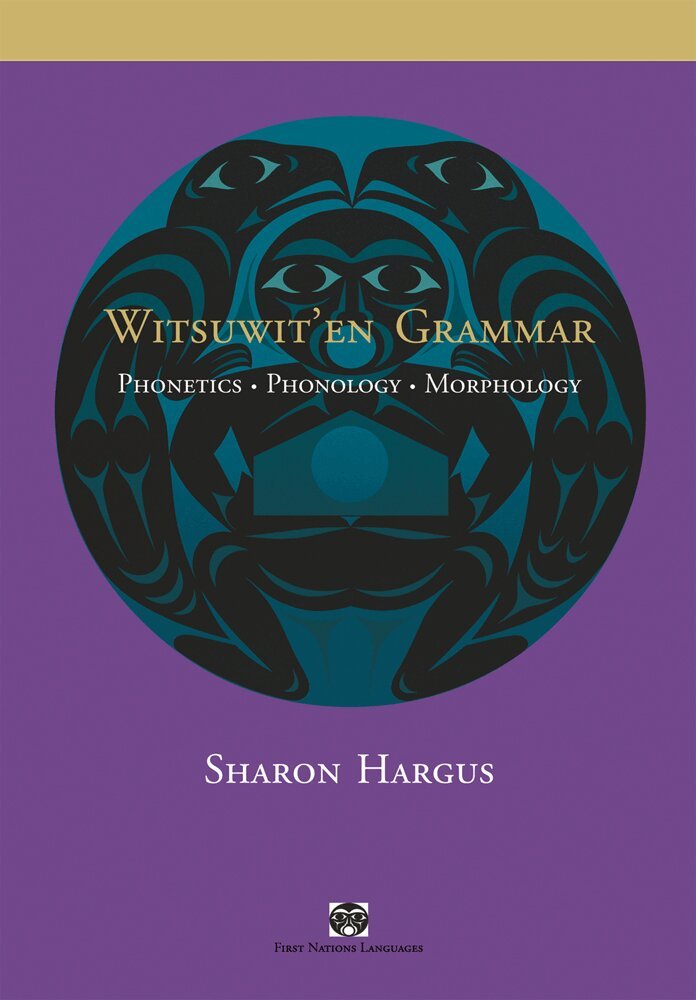
    Witsuwit'en Grammar

    Phonetics, Phonology, Morphology

    AvSharon Hargus

    Inbunden, Engelska, 2007

    Del i serien First Nations Languages

    1 858 kr

    Beställningsvara. Skickas inom 5-8 vardagar. Fri frakt över 249 kr.

    Beskrivning

    Witsuwit'en is an endangered First Nations language, spoken in western-central British Columbia. A member of the Athapaskan family of languages, the language had been known to have some intriguing characteristics of consonant-vowel interaction, the details of which have been in dispute among scholars.Witsuwit'en Grammar presents acoustic studies of several aspects of Witsuwit'en phonetics, including vowel quality, vowel quantity, ejectives, voice quality, and stress. Information about the sound system and word structure of Witsuwit'en is also provided, revealing many unusual features not previously described in this level of detail for an Athapaskan language.Witsuwit'en has elaborate morphology, even by the standards of the Athapaskan language family. Witsuwit'en Grammar will be of interest to anthropologists interested in the history of the Athapasakan language family, linguists interested in comparative Athapaskan grammar, or any linguist interested in phonetics-phonology or phonology-morphology interaction.

    Produktinformation

    • Utgivningsdatum:2007-03-15
    • Mått:178 x 254 x undefined mm
    • Vikt:1 560 g
    • Format:Inbunden
    • Språk:Engelska
    • Serie:First Nations Languages
    • Antal sidor:850
    • Förlag:University of British Columbia Press
    • ISBN:9780774813822

    Utforska kategorier

    • Språkvetenskap och lingvistik inom Språk och ordböcker

    Mer om författaren

    Sharon Hargus is a professor of linguistics at the University of Washington.

    Innehållsförteckning

    • ContentsAuthor's noteAbbreviationsAcknowledgementsPart 1: Language and Dialect1 Witsuwit'en1.1 Geography1.2 Demographics1.3 Previous research on Witsuwit'en-Babine1.4 Witsuwit'en-U'in Wit'en dialects1.5 Witsuwit'en dialects1.6 Carrier vs. Witsuwit'en-Babine1.7 Language namePart 2: Segmental Phonetics and Phonology2 Consonant contrasts2.1 Consonant inventory2.2 Labial consonants2.3 Nasal consonants2.4 Voiced vs. voiceless fricatives2.5 Labio-velar consonants2.6 /h/2.7 V2.8 Summary3 Consonant Phonetics3.1 Ejective stops3.2 Final glottalic consonants and voice quality3.3 T- qualifier prefix3.4 Summary4 Vowel Quality4.1 Introduction4.2 Previous analyses4.3 An acoustic study of vowel quality4.4 Summary4.5 Tables of numerical results5 Vowel Quantity5.1 Introduction5.2 Reduced vs. full vowels5.3 Long full vowels5.4 / / lengthening5.5 A phonetic study of /a/, /aa/ and lengthened / /5.6 Representation of the reduced and full vowel classes5.7 Summary6 Consonant and vowel classes6.1 Laryngeal features6.2 Place features6.3 Manner features6.4 SummaryPart 3: Morphology and Phonological Structure7 Nouns7.1 Possessive prefixes7.2 Pronouns7.3 Nominal roots7.4 Compounds7.5 Plural and vocative forms7.6 Noun classes7.7 Nouns derived from other lexical categories7.8 Loan words7.9 Summary8 Postpositions8.1 Inflection for object of postposition8.2 Postposition stems: phonological properties8.3 Postposition stems: semantic properties8.4 Noun phrases containing postpositional phrases8.5 Summary9 Directional system9.1 Introduction9.2 Directional morphemes9.3 Directional words9.4 Directional adverbs vs. postpositions9.5 Co-occurrence with verb prefixes9.6 Lexical items historically derived from directional adverbs9.7 Summary10 Adjectives10.1 Predicate adjectives10.2 Nominal adjectives10.3 Post-nominal adjectives10.4 Summary11 Numbers11.1 Cardinal numbers 1-1011.2 Ordinal forms of numbers11.3 Numbers: 11+11.4 Summary12 Overview of verb structure12.1 The lexical verb12.2 Inflection12.3 Derivation12.4 Prefix order restrictions12.5 Discontinuity12.6 The verb system13 Verb roots13.1 Overview13.2 The lexical root13.3 Number13.4 Ablaut13.5 Imperative suffixation14 Verb prefix position classes14.1 Introduction14.2 Voice/valence (classifier)14.3 Inner subject14.4 Tense/negative/conjugation14.5 Qualifier14.6 Pronominal14.7 Distributive: /n/14.8 Incorporated root14.9 Inceptive /ho/14.10 Negative: /we/14.11 Multiple: /ye/14.12 Iterative: /ne/14.13 Preverb: postposition/adverbial14.14 Summary14.15 Word external verb theme forming elements15 Aspectual verb suffixation15.1 Introduction15.2 Continuative15.3 Momentaneous15.4 Persistive15.5 Distributive15.6 Conclusive15.7 Durative15.8 Repetitive15.9 Neuter15.10 Semelfactive15.11 Customary15.12 Progressive15.13 Summary of aspectual stem variation16 Verb theme categories16.1 Introduction16.2 Active vs. neuter verb themes16.3 Active verb themes16.4 Neuter verb themes16.5 Summary17 Inflectionally defective verbs17.1 Third person subject only17.2 No perfective17.3 No perfective and no positive17.4 Suppletive perfective17.5 No imperfective17.6 Imperfective negative only17.7 Imperative only17.8 No negative17.9 No tense or subject17.10 Summary18 Phonological domains18.1 Word domain18.2 Stem domain18.3 Prefix domain18.4 Conjunct domain18.5 Qualifier domain?18.6 SummaryPart 4: Suprasegmental Phonology19 Syllables19.1 Syllable types19.2 Coda consonants19.3 Word-final rhymes19.4 Onsetless syllables19.5 Consonant clusters19.6 Antigemination19.7 Syllable weight19.8 [ ] ~ 0 alternations19.9 Glides19.10 Summary20 Stress20.1 Previous analyses20.2 Word stress: qualitative observations20.3 Phonetic correlates of stress in Witsuwit'en20.4 SummaryPart 5: Prefix Case Studies21 Morpheme-specific alternation21.1 Introduction21.2 Allomorphy as output optimization21.3 Co-phonologies vs. prespecification21.4 Summary22 First person plural subject prefix22.1 Introduction22.2 Overview22.3 ___V22.4 V___.C22.5 C___.C22.6 PWd[___.C22.7 ___C.22.8 PWd[C___22.9 Second person singular object + first person plural subject22.10 Summary22.11 Cross-linguistic perspective23 Areal prefix23.1 Introduction23.2 The areal prefix in Witsuwit'en23.3 The verbal areal prefix23.4 The areal prefix with nouns, postpositions, adjectives and directional adverbs23.5 Summary24 D- voice prefix24.1 Introduction24.2 The Witsuwit'en pattern24.3 First person dual subject24.4 OT analysis24.5 Thematic and iterative D- voice24.6 D- combinations24.7 SummaryPart 6: Conclusion25 Witsuwit'en in comparative and theoretical perspectiveAppendices26 Historical phonology26.1 Consonants26.2 Reflexes of vowel initial roots26.3 Vowels27 Writing systems for Witsuwit'en-Babine27.1 Introduction27.2 G j vs. gg g27.3 Cl vs. gil27.4 Long full vowels27.5 Front vowels27.6 Uwh, eeyh vs. uh, ïh27.7 Glottalized nasals27.8 Conclusion28 Verb paradigms28.1 Imperfective and customary28.2 Perfective28.3 Future28.4 Optative28.5 Perfective negative28.6 Non-perfective negative28.7 Irregular verbs29 Texts29.1 Alfred Joseph, 1 July 9, Witsuwit'en summit29.2 Mabel Forsythe and Lillian Morris talking together, September 7ReferencesIndex