For and Against - Böcker
Visar alla böcker i serien For and Against. Handla med fri frakt och snabb leverans.
12 produkter
12 produkter
334 kr
Skickas inom 7-10 vardagar
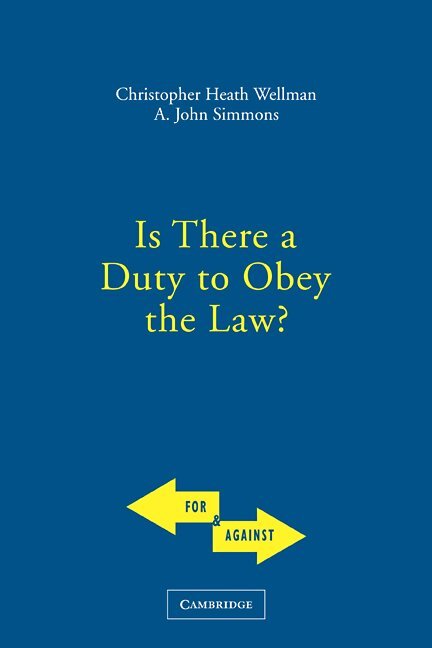
The central question in political philosophy is whether political states have the right to coerce their constituents and whether citizens have a moral duty to obey the commands of their state. In this 2005 book, Christopher Heath Wellman and A. John Simmons defend opposing answers to this question. Wellman bases his argument on samaritan obligations to perform easy rescues, arguing that each of us has a moral duty to obey the law as his or her fair share of the communal samaritan chore of rescuing our compatriots from the perils of the state of nature. Simmons counters that this, and all other attempts to explain our duty to obey the law, fail. He defends a position of philosophical anarchism, the view that no existing state is legitimate and that there is no strong moral presumption in favor of obedience to, or compliance with, any existing state.
347 kr
Skickas inom 7-10 vardagar
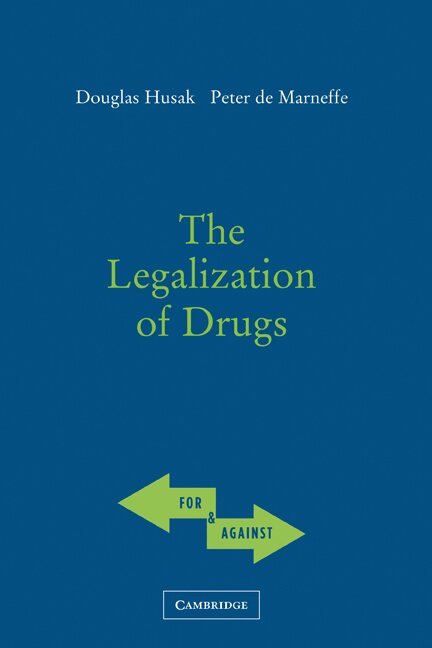
In the United States today, the use or possession of many drugs is a criminal offense. Can these criminal laws be justified? What are the best reasons to punish or not to punish drug users? These are the fundamental issues debated in this book by two prominent philosophers of law. Douglas Husak argues in favor of drug decriminalization, by clarifying the meaning of crucial terms, such as legalize, decriminalize, and drugs; and by identifying the standards by which alternative drug policies should be assessed. He critically examines the reasons typically offered in favor of our current approach and explains why decriminalization is preferable. Peter de Marneffe argues against drug legalization, demonstrating why drug prohibition, especially the prohibition of heroin, is necessary to protect young people from self-destructive drug use. If the empirical assumptions of this argument are sound, he reasons, drug prohibition is perfectly compatible with our rights to liberty.
410 kr
Skickas inom 7-10 vardagar
The issue of social welfare and individual responsibility has become a topic of international public debate in recent years as politicians around the world now question the legitimacy of state-funded welfare systems. David Schmidtz and Robert Goodin debate the ethical merits of individual versus collective responsibility for welfare. David Schmidtz argues that social welfare policy should prepare people for responsible adulthood rather than try to make that unnecessary. Robert Goodin argues against the individualization of welfare policy and expounds the virtues of collective responsibility.
639 kr
Skickas inom 7-10 vardagar
The moral issues involved in doctors assisting patients to die with dignity are of absolutely central concern to the medical profession, ethicists, and the public at large. The debate is fuelled by cases that extend far beyond passive euthanasia to the active consideration of killing by physicians. The need for a sophisticated but lucid exposition of the two sides of the argument is now urgent. This book supplies that need. Two prominent philosophers, Gerald Dworkin and R. G. Frey present the case for legalization of physician-assisted suicide. One of the best-known ethicists in the US, Sissela Bok, argues the case against.
271 kr
Skickas inom 7-10 vardagar
The moral issues involved in doctors assisting patients to die with dignity are of absolutely central concern to the medical profession, ethicists, and the public at large. The debate is fuelled by cases that extend far beyond passive euthanasia to the active consideration of killing by physicians. The need for a sophisticated but lucid exposition of the two sides of the argument is now urgent. This book supplies that need. Two prominent philosophers, Gerald Dworkin and R. G. Frey present the case for legalization of physician-assisted suicide. One of the best-known ethicists in the US, Sissela Bok, argues the case against.
547 kr
Skickas inom 7-10 vardagar
The central question in political philosophy is whether political states have the right to coerce their constituents and whether citizens have a moral duty to obey the commands of their state. In this 2005 book, Christopher Heath Wellman and A. John Simmons defend opposing answers to this question. Wellman bases his argument on samaritan obligations to perform easy rescues, arguing that each of us has a moral duty to obey the law as his or her fair share of the communal samaritan chore of rescuing our compatriots from the perils of the state of nature. Simmons counters that this, and all other attempts to explain our duty to obey the law, fail. He defends a position of philosophical anarchism, the view that no existing state is legitimate and that there is no strong moral presumption in favor of obedience to, or compliance with, any existing state.
586 kr
Skickas inom 7-10 vardagar
In the United States today, the use or possession of many drugs is a criminal offense. Can these criminal laws be justified? What are the best reasons to punish or not to punish drug users? These are the fundamental issues debated in this book by two prominent philosophers of law. Douglas Husak argues in favor of drug decriminalization, by clarifying the meaning of crucial terms, such as legalize, decriminalize, and drugs; and by identifying the standards by which alternative drug policies should be assessed. He critically examines the reasons typically offered in favor of our current approach and explains why decriminalization is preferable. Peter de Marneffe argues against drug legalization, demonstrating why drug prohibition, especially the prohibition of heroin, is necessary to protect young people from self-destructive drug use. If the empirical assumptions of this argument are sound, he reasons, drug prohibition is perfectly compatible with our rights to liberty.
1 192 kr
Skickas inom 7-10 vardagar
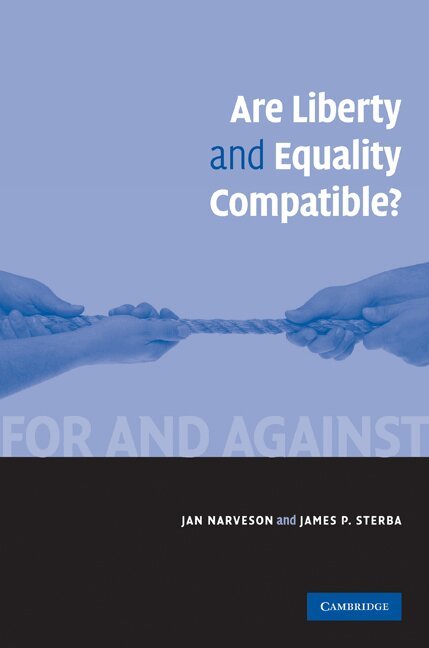
Are the political ideals of liberty and equality compatible? This question is of central and continuing importance in political philosophy, moral philosophy, and welfare economics. In this book, two distinguished philosophers take up the debate. Jan Narveson argues that a political ideal of negative liberty is incompatible with any substantive ideal of equality, while James P. Sterba argues that Narveson's own ideal of negative liberty is compatible, and in fact leads to the requirements of a substantive ideal of equality. Of course, they cannot both be right. Thus, the details of their arguments about the political ideal of negative liberty and its requirements will determine which of them is right. Engagingly and accessibly written, their debate will be of value to all who are interested in the central issue of what are the practical requirements of a political ideal of liberty.
278 kr
Tillfälligt slut
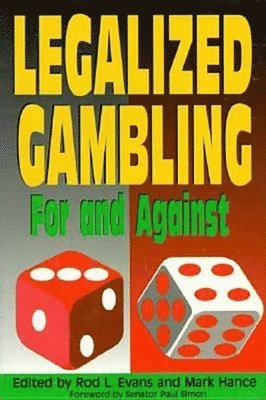
Legalized Gambling contains twenty-three articles focusing on different aspects of gambling policy by experts in the fields of public policy, law, psychiatry, rhetoric, religion, economics, and politics. The contributors address all areas of the debate.
345 kr
Tillfälligt slut
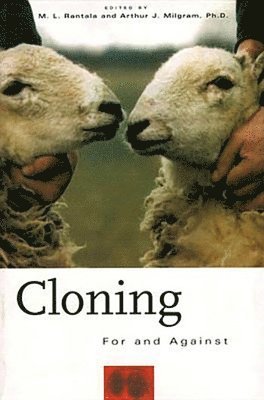
The announcement last spring that a lab in Scotland had successfully cloned a mammal captured the attention of the media and the imagination of the public. This culmination of decades of research has profound scientific and ethical implications. If applied to other species, cloning could further genetic engineering and greatly improve animal husbandry. Now that a sheep has been cloned, are humans next? Governments reacted swiftly with bans on funding for human cloning research. Churches united in calling for a complete ban on the cloning of higher animals. Critics immediately alluded to Mary Shelley's "Frankenstein" and the myth of Icarus. Has scientific sophistication outpaced our social and moral development? Can we "save" our society from this possible evil by banning any attempts to expand the knowledge? Does cloning really differ in spirit from the selective breeding that humankind has performed for centuries? "Cloning: For and Against" comprises 30 articles by scientists, ethicists, religious leaders and legal experts who explore the benefits and costs of cloning. Topics include: playing God: is cloning against human nature?; is cloning the salvation for endangered species?; no need for marriage: the separation of reproduction from human relationships; can you xerox a soul?and other theological issues; Brave New World: what's possible and what isn't; clones in medicine; and a million Michael Jacksons: eugenic/dysgenic and cultural consequences of human cloning.
175 kr
Tillfälligt slut
The announcement last spring that a lab in Scotland had successfully cloned a mammal captured the attention of the media and the imagination of the public. This culmination of decades of research has profound scientific and ethical implications. If applied to other species, cloning could further genetic engineering and greatly improve animal husbandry. Now that a sheep has been cloned, are humans next? Governments reacted swiftly with bans on funding for human cloning research. Churches united in calling for a complete ban on the cloning of higher animals. Critics immediately alluded to Mary Shelley's "Frankenstein" and the myth of Icarus. Has scientific sophistication outpaced our social and moral development? Can we "save" our society from this possible evil by banning any attempts to expand the knowledge? Does cloning really differ in spirit from the selective breeding that humankind has performed for centuries? "Cloning: For and Against" comprises 30 articles by scientists, ethicists, religious leaders and legal experts who explore the benefits and costs of cloning. Topics include: playing God: is cloning against human nature?; is cloning the salvation for endangered species?; no need for marriage: the separation of reproduction from human relationships; can you xerox a soul?and other theological issues; Brave New World: what's possible and what isn't; clones in medicine; and a million Michael Jacksons: eugenic/dysgenic and cultural consequences of human cloning.
428 kr
Skickas inom 7-10 vardagar
Are the political ideals of liberty and equality compatible? This question is of central and continuing importance in political philosophy, moral philosophy, and welfare economics. In this book, two distinguished philosophers take up the debate. Jan Narveson argues that a political ideal of negative liberty is incompatible with any substantive ideal of equality, while James P. Sterba argues that Narveson's own ideal of negative liberty is compatible, and in fact leads to the requirements of a substantive ideal of equality. Of course, they cannot both be right. Thus, the details of their arguments about the political ideal of negative liberty and its requirements will determine which of them is right. Engagingly and accessibly written, their debate will be of value to all who are interested in the central issue of what are the practical requirements of a political ideal of liberty.