Ford Lectures - Böcker
Visar alla böcker i serien Ford Lectures. Handla med fri frakt och snabb leverans.
7 produkter
7 produkter
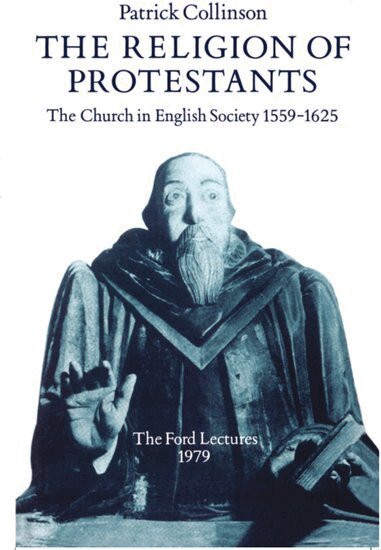
The Religion of Protestants
The Church in English Society 1559-1625 (Ford Lectures, 1979)
Häftad, Engelska, 1984, 6-9 år
956 kr
Skickas inom 5-8 vardagar
The Religion of Protestants The Church in English Society 1559-1625 (Ford Lectures, 1979)
773 kr
Skickas inom 5-8 vardagar
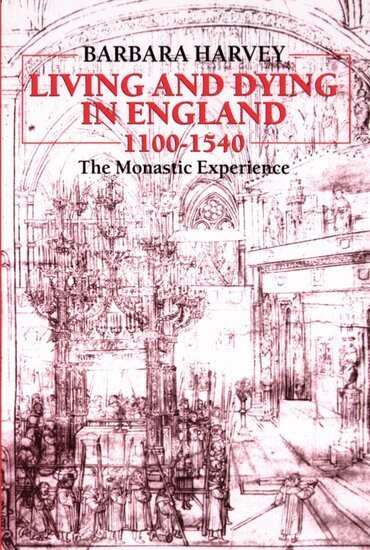
This is an authoritative account of daily life in Westminster Abbey, one of medieval England's greatest monastic communities. It is also a wide-ranging exploration of some major themes in the social history of the Middle Ages and early sixteenth century, by one of its most distinguished historians. Barbara Harvey exploits the exceptionally rich archives of the Benedictine foundation of Westminster to the full, offering numerous vivid insights into the lives of the Westminster monks, their dependants, and their benefactors. She examines the charitable practices of the monks, their food and drink, their illnesses and their deaths, the number and conditions of employment of their servants, and their controversial practice of granting corrodies (pensions made up in large measure of benefits in kind). All these topics Miss Harvey considers in the context both of religious institutions in general, and of the secular world. Full of colour and interest, Living and Dying in England is an original and highly readable contribution to medieval history, and that of the early sixteenth century.
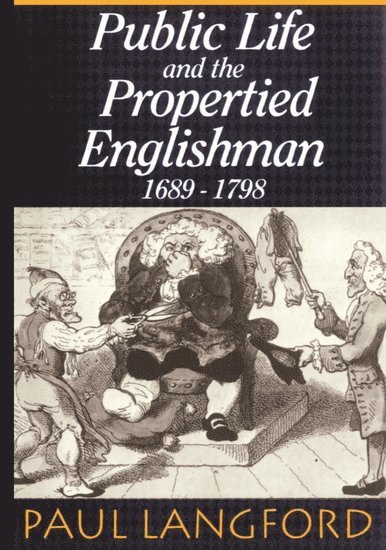
Public Life and the Propertied Englishman 1689-1798
The Ford Lectures Delivered in the University of Oxford 1990
Häftad, Engelska, 1994
1 682 kr
Skickas inom 7-10 vardagar
This book offers a major reassessment of the place of propertied people in eighteenth-century England. Common views of politics in this period postulate aristocratic dominance coexisting with plebian vitality. Paul Langford explores the terrain which lay between the high ground of elite rule and the low ground of popular politics, revealing the vigorous activity and institutional creativity which prevailed in it.Dr Langford shows us a society in which middle-class men and women increasingly enforced their social priorities, vested interests, and ideological preoccupations. In an age imbued with the propertied mentality the machinery, formal and informal, for managing public affairs was constantly revised. Political and religious prejudices are shown in retreat before the requirements of propertied association. Parliament appears as the willing tool of interests and communities which were by no means submissive to the traditional authority of the gentry. The nobility is seen obediently adapting to the demands of those whom it sought to patronize. This perceptive study makes a significant contribution to our understanding of eighteenth-century society and politics.'masterly book', Times Literary Supplement'impressive erudition and immense industry', Times Higher Education Supplement'as controversial as it is comprehensive . . . Langford . . . is a conscientious and scrupulous scholar', English Historical Review'written with great distinction and a certain aloof wit . . . an impressive piece of work . . . He has certainly given an old picture a new slant, and his thesis commands the attention of all students of 18th-century England', Spectator
Nineteenth-Century Britain
Integration and Diversity. The Ford Lectures Delivered in the University of Oxford 1986-1987
Häftad, Engelska, 1995
796 kr
Skickas inom 5-8 vardagar
This is a study of two conflicting trends in nineteenth-century Britain: the promotion of integration and unity, and the commitment to preserve regional diversity. In the last century communications between different parts of Britain improved enormously, through the spread of railways, the penny post, newspapers, and increased affluence which enabled more people to take holidays; but this did not necessarily lead to uniformity. The Scots and the Welsh in particular were concerned to retain their own 'nationality' and culture, yet in ways which would not lead to political separation. Professor Robbins examines the various aspects which served to unite or divide the regions: the role of the church and religious beliefs, patterns of eating and drinking, the political system, commercial development, the educational system, language, literature, and music. He concludes that there was a 'British' nation which was consolidated through the century. Although not uniform in character, it held together during the supreme test of the First World War, under the political guidance of a Welshman whose first language was not English and the spiritual guidance of an Archbishop of Canterbury who was a Scot. The relationship between region and state still lies at the heart of today's concerns with local government, devolution, and the North/South divide, and this stimulation account of the making of the modern nation will appeal to all interested in British history and politics.
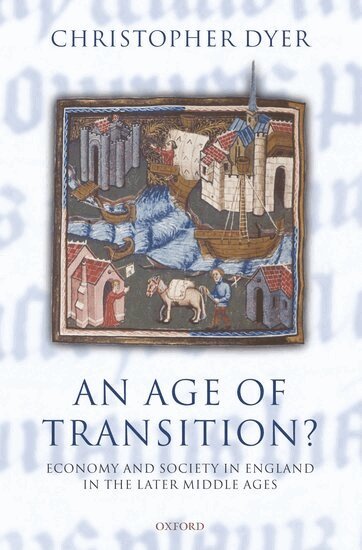
An Age of Transition?
Economy and Society in England in the Later Middle Ages
Inbunden, Engelska, 2005
1 648 kr
Skickas inom 5-8 vardagar
This significant new work by a prominent medievalist focusses on the period of transition between 1250 and 1550, when the wealth and power of the great lords was threatened and weakened, and when new social groups emerged and new methods of production were adopted. Professor Dyer examines both the commercial growth of the thirteenth century, and the restructuring of farming, trade, and industry in the fifteenth. The subjects investigated include the balance between individuals and the collective interests of families and villages. The role of the aristocracy and in particular the gentry are scrutinized, and emphasis placed on the initiatives taken by peasants, traders, and craftsmen. The growth in consumption moved the economy in new directions after 1350, and this encouraged investment in productive enterprises. A commercial mentality persisted and grew, and producers, such as farmers, profited from the market. Many people lived on wages, but not enough of them to justify describing the sixteenth century economy as capitalist. The conclusions are supported by research in sources not much used before, such as wills, and non-written evidence, including buildings.Christopher Dyer, who has already published on many aspects of this period, has produced the first full-length study by a single author of the 'transition'. He argues for a reassessment of the whole period, and shows that many features of the sixteenth, seventeenth, and eighteenth centuries can be found before 1500.
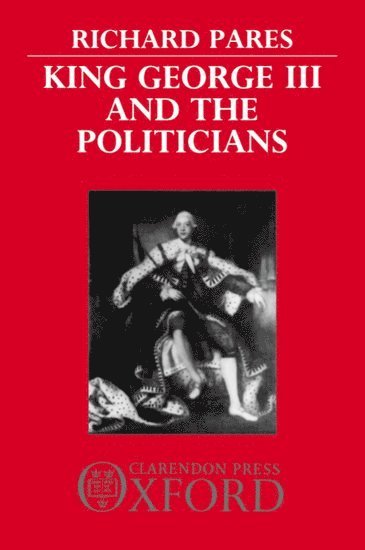
King George III and the Politicians
The Ford Lectures Delivered in The University of Oxford 1951-2
Häftad, Engelska, 1988
272 kr
Skickas inom 7-10 vardagar
This description of British politics from 1760 to 1832 deals with the reasons why people went into politics, the functions of party and patronage, and the balance of power between King, Lords and Commons. George III is the central figure of the work and the author discusses the King's conception of his mission and his struggles with "that hydra faction". The appointment and dismissal of ministries and the King's relations with the Cabinet are considered in more detail. The book concludes with some suggestions about the termination of the conflict and the development of a new order of things. This book was first published in 1953 and is being made available after 10 years out of print.
656 kr
Skickas inom 7-10 vardagar
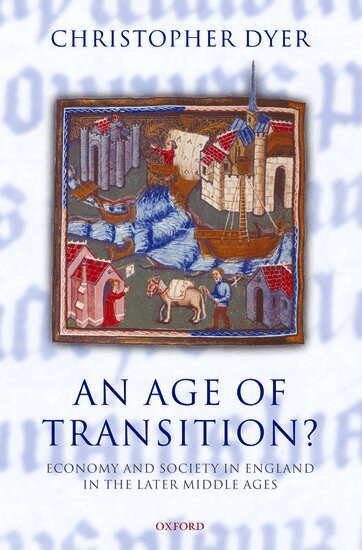
This significant work by a prominent medievalist focuses on the period of transition between 1250 and 1550, when the wealth and power of the great lords was threatened and weakened, and when new social groups emerged and new methods of production were adopted. Professor Dyer examines both the commercial growth of the thirteenth century, and the restructuring of farming, trade, and industry in the fifteenth century. The subjects investigated include the balance between individuals and the collective interests of families and villages. The role of the aristocracy and in particular the gentry are scrutinized, and emphasis placed on the initiatives taken by peasants, traders, and craftsmen. The growth in consumption moved the economy in new directions after 1350, and this encouraged investment in productive enterprises. A commercial mentality persisted and grew, and producers, such as farmers, profited from the market. Many people lived on wages, but not enough of them to justify describing the sixteenth century economy as capitalist. The conclusions are supported by research in sources not much used before, such as wills, and non-written evidence, including buildings. Dyer argues for a reassessment of the whole period, and shows that many features of the sixteenth, seventeenth, and eighteenth centuries can be found before 1500.