Foundations of Human Behavior - Böcker
Visar alla böcker i serien Foundations of Human Behavior. Handla med fri frakt och snabb leverans.
13 produkter
13 produkter
671 kr
Skickas inom 10-15 vardagar
The human race spends a disproportionate amount of attention, money, and expertise in solving, trying, and reporting homicides, as compared to other social problems. The public avidly consumes accounts of real-life homicide cases, and murder fiction is more popular still. Nevertheless, we have only the most rudimentary scientific understanding of who is likely to kill whom and why. Martin Daly and Margo Wilson apply contemporary evolutionary theory to analysis of human motives and perceptions of self-interest, considering where and why individual interests conflict, using well-documented murder cases. This book attempts to understand normal social motives in murder as products of the process of evolution by natural selection. They note that the implications for psychology are many and profound, touching on such matters as parental affection and rejection, sibling rivalry, sex differences in interests and inclinations, social comparison and achievement motives, our sense of justice, lifespan developmental changes in attitudes, and the phenomenology of the self. This is the first volume of its kind to analyze homicides in the light of a theory of interpersonal conflict. Before this study, no one had compared an observed distribution of victim-killer relationships to "expected" distribution, nor asked about the patterns of killer-victim age disparities in familial killings. This evolutionary psychological approach affords a deeper view and understanding of homicidal violence.
2 150 kr
Skickas inom 10-15 vardagar
Awarded the W. W. Howells Award for the Outstanding Book in Biological Anthropology, this volume presents a comprehensive, integrated, and up-to-date overview of the major physiological and behavioral factors affecting human reproduction. In attempting to identify the most important causes of variation in fertility within and among human populations, Wood summarizes data from a wide range of societies. Trained as an anthropologist as well as a demographer, he devotes special attention to so-called "natural fertility" populations, in which modern contraceptives and induced abortion are not used to limit reproductive output. Such an emphasis enables him to study the interaction of biology and behavior with particular clarity.The volume weaves together the physiological, demographic, and biometric approaches to human fertility in a way that will encourage future interdisciplinary research. Instead of offering a general overview, the focus is to answer one question: Why does fertility and the number of live births vary from couple to couple within any particular population, and from population to population across the human species as a whole?Topics covered include ovarian function, conception and pregnancy, intrauterine mortality, reproductive maturation and senescence, coital frequency and the waiting time to conception, marriage patterns and the initiation of reproduction, the fertility-reducing effects of breastfeeding, the impact of maternal nutrition on reproduction, and reproductive seasonality. This unique combination of comprehensive subject matter and an integrated analytical approach makes the book ideally suited both as a graduate-level textbook and as a reference work.
858 kr
Skickas inom 10-15 vardagar
Awarded the W. W. Howells Award for the Outstanding Book in Biological Anthropology, this volume presents a comprehensive, integrated, and up-to-date overview of the major physiological and behavioral factors affecting human reproduction. In attempting to identify the most important causes of variation in fertility within and among human populations, Wood summarizes data from a wide range of societies. Trained as an anthropologist as well as a demographer, he devotes special attention to so-called "natural fertility" populations, in which modern contraceptives and induced abortion are not used to limit reproductive output. Such an emphasis enables him to study the interaction of biology and behavior with particular clarity.The volume weaves together the physiological, demographic, and biometric approaches to human fertility in a way that will encourage future interdisciplinary research. Instead of offering a general overview, the focus is to answer one question: Why does fertility and the number of live births vary from couple to couple within any particular population, and from population to population across the human species as a whole?Topics covered include ovarian function, conception and pregnancy, intrauterine mortality, reproductive maturation and senescence, coital frequency and the waiting time to conception, marriage patterns and the initiation of reproduction, the fertility-reducing effects of breastfeeding, the impact of maternal nutrition on reproduction, and reproductive seasonality. This unique combination of comprehensive subject matter and an integrated analytical approach makes the book ideally suited both as a graduate-level textbook and as a reference work.
2 088 kr
Skickas inom 10-15 vardagar
"à required reading for anyone interested in the economy, ecology, and demography of human societies." --American Journal of Human Biology "This excellent book can serve both as a text¼book and as a scholarly reference." --American Scientist
685 kr
Skickas inom 10-15 vardagar
"à required reading for anyone interested in the economy, ecology, and demography of human societies." --American Journal of Human Biology "This excellent book can serve both as a text¼book and as a scholarly reference." --American Scientist
2 088 kr
Skickas inom 10-15 vardagar
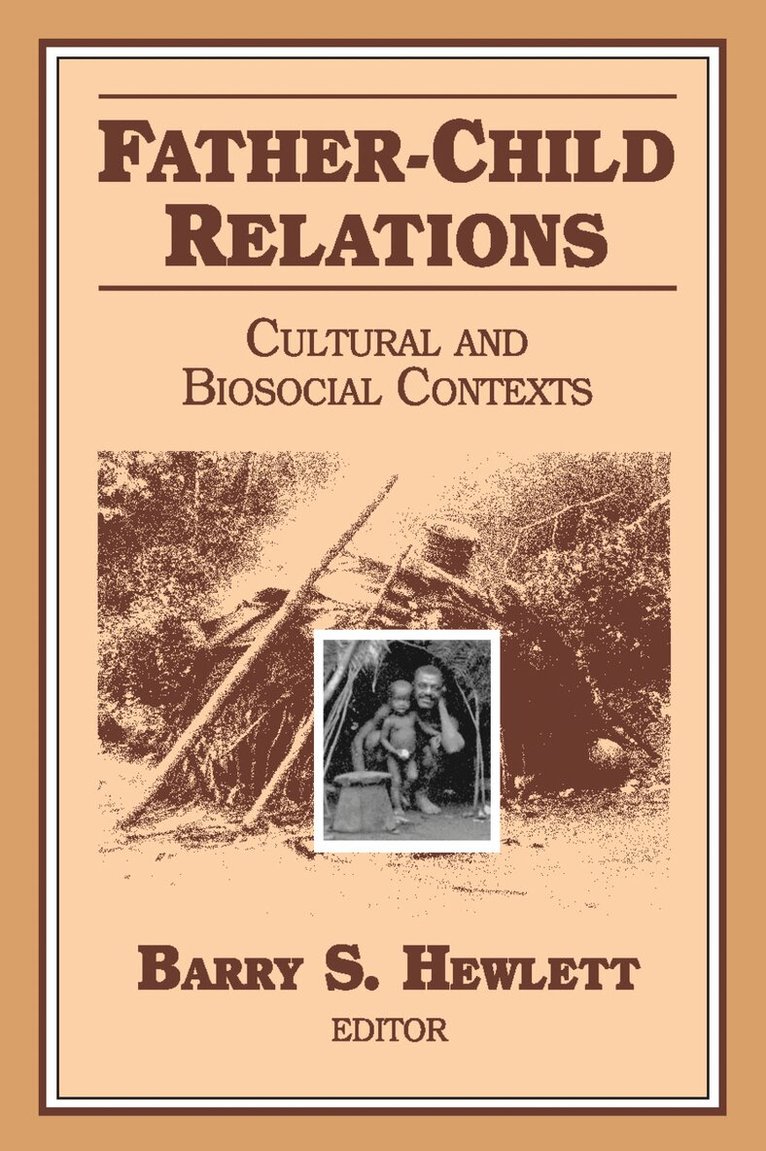
Due to a greater involvement of American fathers in the direct care of their children in recent years, interest in the impact and nature of the father's role in nurturing children has increased. While studies about fathers in the industrialized, literate West have proliferated, little is known about the role of fathers in the preliterate, non-Western world. This collection examines the diversity of paternal roles found in human cultures among various types of societies that are very peaceful and those that actively engage in warfare as a mode of existence.Father-Child Relations recognizes the importance of understanding both biological and cultural aspects of the father's role. Many of the contributors utilize evolutionary or biosocial models, including those of developmental psychology, to examine the father's role, while others rely upon the symbolic analysis of cultural and social anthropology. One chapter is devoted to male-infant relationships in nonhuman primates, a further largely ignored comparative perspective.The anthropologists who have contributed to this collection are field workers who have lived intimately over significant periods of time with the people about whom they are writing. These research reports from the field have been edited to make them wholly accessible to the non-specialist. The contributors of this volume recognize that biology and ideology are intertwined; both together influence the father's behavior and the effects of his behavior.
1 069 kr
Tillfälligt slut
Breastfeeding is a biocultural phenomenon: not only is it a biological process, but it is also a culturally determined behavior. As such, it has important implications for understanding the past, present, and future condition of our species. In general, scholars have emphasized either the biological or the cultural aspects of breastfeeding, but not both. As biological anthropologists the editors of this volume feel that an evolutionary approach combining both aspects is essential. One of the goals of their book is to incorporate data from diverse fields to present a more holistic view of breastfeeding, through the inclusion of research from a number of different disciplines, including biological and social/cultural anthropology, nutrition, and medicine. The resulting book, presenting the complexity of the issues surrounding very basic decisions about infant nutrition, will fill a void in the existing literature on breastfeeding.
733 kr
Skickas inom 10-15 vardagar
Breastfeeding is a biocultural phenomenon: not only is it a biological process, but it is also a culturally determined behavior. As such, it has important implications for understanding the past, present, and future condition of our species. In general, scholars have emphasized either the biological or the cultural aspects of breastfeeding, but not both. As biological anthropologists the editors of this volume feel that an evolutionary approach combining both aspects is essential. One of the goals of their book is to incorporate data from diverse fields to present a more holistic view of breastfeeding, through the inclusion of research from a number of different disciplines, including biological and social/cultural anthropology, nutrition, and medicine. The resulting book, presenting the complexity of the issues surrounding very basic decisions about infant nutrition, will fill a void in the existing literature on breastfeeding.
671 kr
Skickas inom 10-15 vardagar
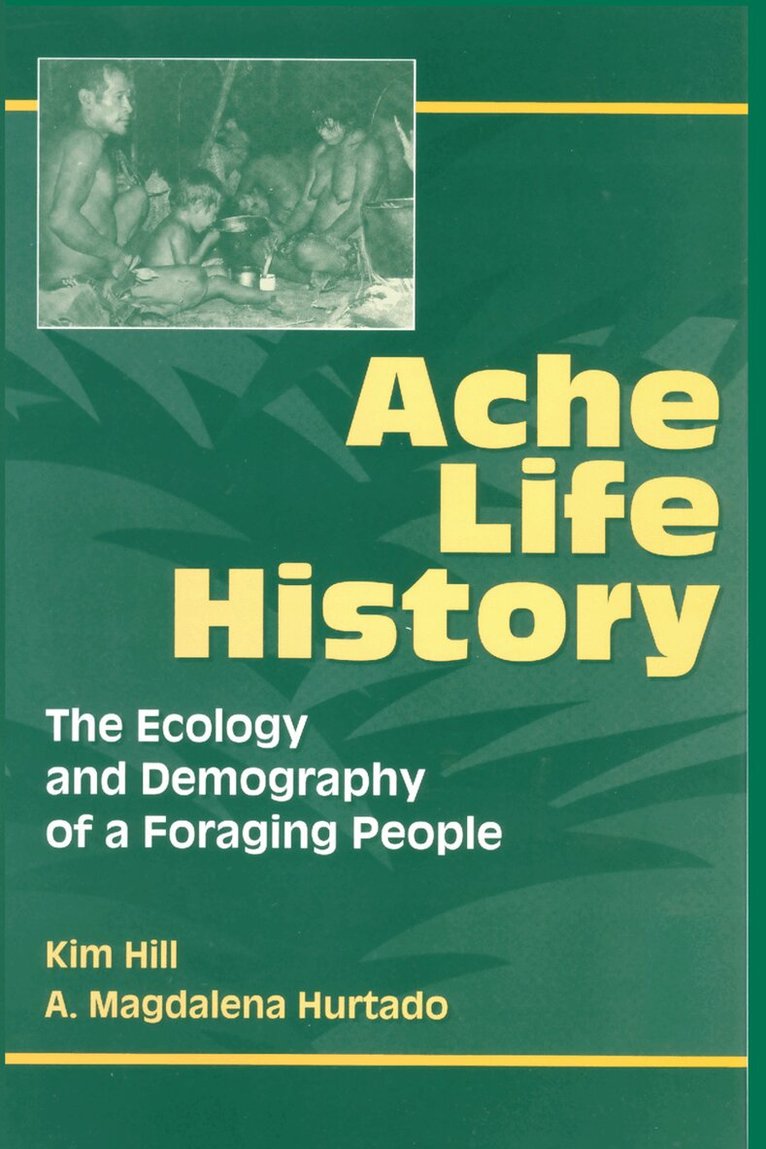
The Ache, whose life history the authors recounts, are a small indigenous population of hunters and gatherers living in the neotropical rainforest of eastern Paraguay. This is part exemplary ethnography of the Ache and in larger part uses this population to make a signal contribution to human evolutionary ecology.
1 115 kr
Tillfälligt slut
Research on parenting through the life course has developed around two separate approaches. Evolutionary biology provides fresh perspectives from life history theory using behavioral ecology and parental investment theory. At the same time, the social and behavioral sciences integrates research from long-term studies of individual development and from the collection of life histories.This path-breaking book advances evolutionary, life history research by integrating perspectives of these two approaches into a biosocial science of the life course. It examines parenthood as a commitment extending throughout life and focuses on the impact on parental and child behavior of changes in the timing, distribution, and intensity of parental investment. This perspective is particularly appropriate for research on parenting since the family is the universal human institution within which the bearing and rearing of children has been based and which transmits traditions, beliefs, and values to the young.
685 kr
Skickas inom 10-15 vardagar
Research on parenting through the life course has developed around two separate approaches. Evolutionary biology provides fresh perspectives from life history theory using behavioral ecology and parental investment theory. At the same time, the social and behavioral sciences integrates research from long-term studies of individual development and from the collection of life histories.This path-breaking book advances evolutionary, life history research by integrating perspectives of these two approaches into a biosocial science of the life course. It examines parenthood as a commitment extending throughout life and focuses on the impact on parental and child behavior of changes in the timing, distribution, and intensity of parental investment. This perspective is particularly appropriate for research on parenting since the family is the universal human institution within which the bearing and rearing of children has been based and which transmits traditions, beliefs, and values to the young.
685 kr
Skickas inom 10-15 vardagar
Due to a greater involvement of American fathers in the direct care of their children in recent years, interest in the impact and nature of the father's role in nurturing children has increased. While studies about fathers in the industrialized, literate West have proliferated, little is known about the role of fathers in the preliterate, non-Western world. This collection examines the diversity of paternal roles found in human cultures among various types of societies that are very peaceful and those that actively engage in warfare as a mode of existence.Father-Child Relations recognizes the importance of understanding both biological and cultural aspects of the father's role. Many of the contributors utilize evolutionary or biosocial models, including those of developmental psychology, to examine the father's role, while others rely upon the symbolic analysis of cultural and social anthropology. One chapter is devoted to male-infant relationships in nonhuman primates, a further largely ignored comparative perspective.The anthropologists who have contributed to this collection are field workers who have lived intimately over significant periods of time with the people about whom they are writing. These research reports from the field have been edited to make them wholly accessible to the non-specialist. The contributors of this volume recognize that biology and ideology are intertwined; both together influence the father's behavior and the effects of his behavior.
2 289 kr
Skickas inom 10-15 vardagar
The human race spends a disproportionate amount of attention, money, and expertise in solving, trying, and reporting homicides, as compared to other social problems. The public avidly consumes accounts of real-life homicide cases, and murder fiction is more popular still. Nevertheless, we have only the most rudimentary scientific understanding of who is likely to kill whom and why. Martin Daly and Margo Wilson apply contemporary evolutionary theory to analysis of human motives and perceptions of self-interest, considering where and why individual interests conflict, using well-documented murder cases. This book attempts to understand normal social motives in murder as products of the process of evolution by natural selection. They note that the implications for psychology are many and profound, touching on such matters as parental affection and rejection, sibling rivalry, sex differences in interests and inclinations, social comparison and achievement motives, our sense of justice, lifespan developmental changes in attitudes, and the phenomenology of the self. This is the first volume of its kind to analyze homicides in the light of a theory of interpersonal conflict. Before this study, no one had compared an observed distribution of victim-killer relationships to "expected" distribution, nor asked about the patterns of killer-victim age disparities in familial killings. This evolutionary psychological approach affords a deeper view and understanding of homicidal violence.